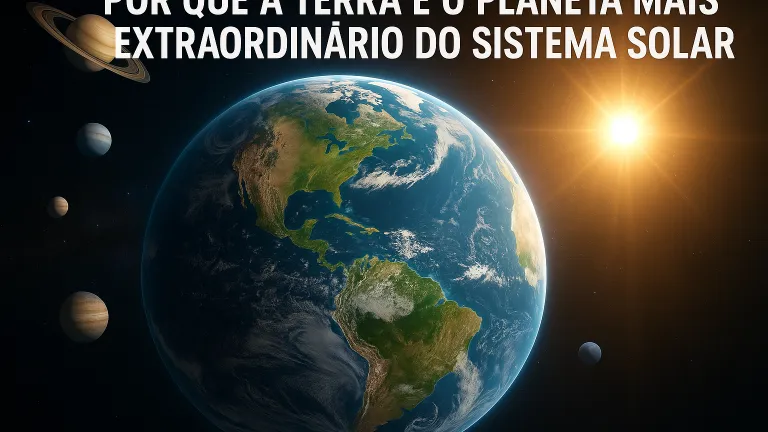
Why Earth is the Most Extraordinary Planet in the Solar System
# Why Earth is the Most Extraordinary Planet in the Solar System
When we gaze at the night sky, we see countless bright points that make us ponder our place in the cosmos. The Solar System hosts eight distinct planets, each with its unique and fascinating characteristics. However, among them all, one stands out incomparably: Earth. It’s not just planetary chauvinism to say this; there are solid scientific reasons and irrefutable evidence that prove why our blue planet is truly extraordinary.
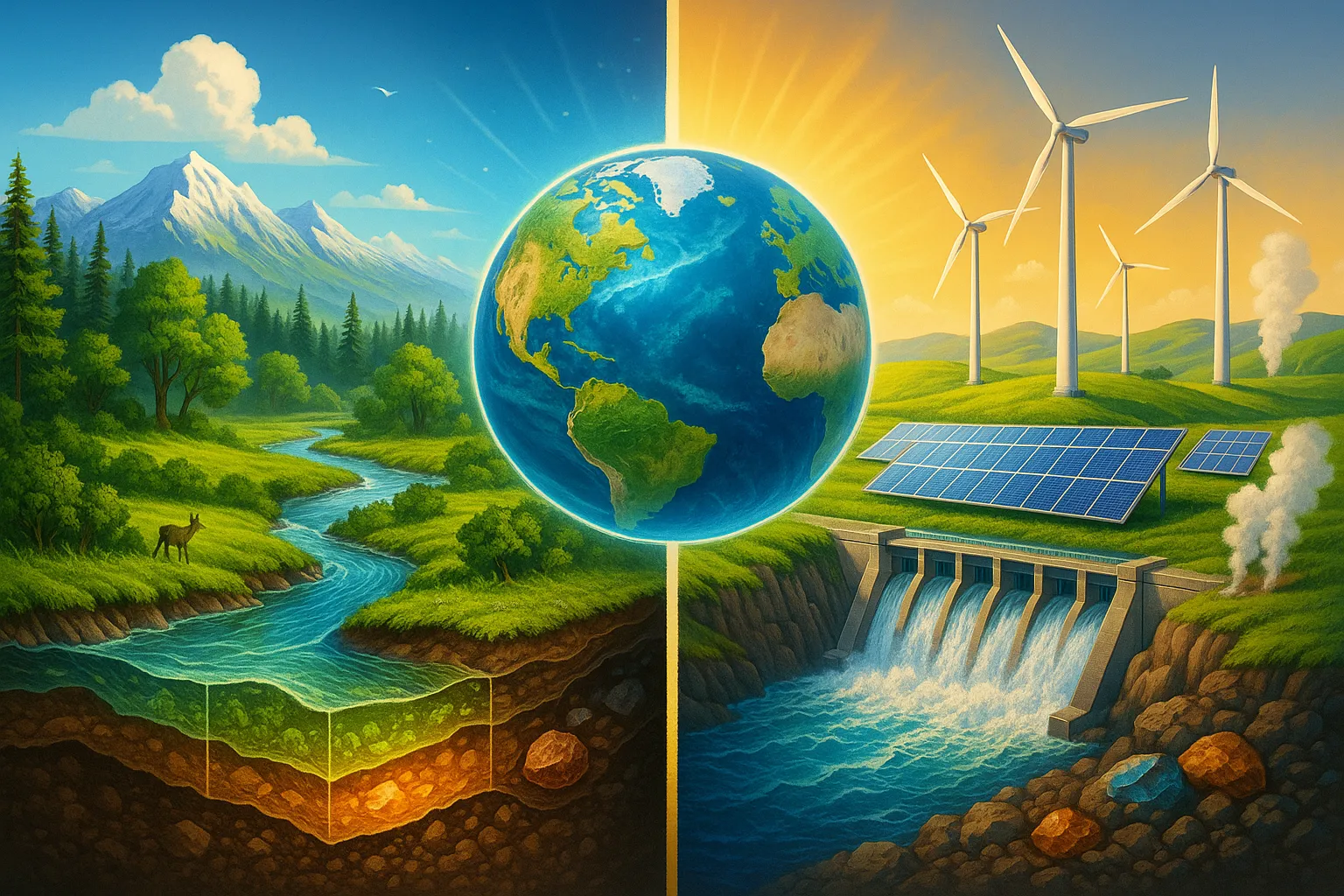
Earth is not just our home – it’s a singular world that combines unique conditions in such a rare configuration that, to date, we haven’t found anything similar anywhere else in the known universe. From the abundant presence of liquid water to the protective atmosphere surrounding us, through the impressive biodiversity and active geological processes, our planet represents a perfect combination of factors that have not only allowed the emergence of life but its proliferation in unimaginably diverse forms.
In this article, we will delve deeply into the characteristics that make Earth so special, comparing it to its planetary neighbors and understanding why we must value and protect this cosmic oasis we call home.
A Privileged Position in the Habitable Zone
One of the most fundamental factors that make Earth extraordinary is its precise location in what scientists call the “habitable zone” or “Goldilocks zone” – a region around the Sun where conditions are neither too hot nor too cold, but just right for the existence of liquid water on the surface.
Earth orbits the Sun at approximately 150 million kilometers, a distance that allows our planet to receive the ideal amount of solar radiation. If we were just 5% closer to the Sun, like Venus, we would experience a runaway greenhouse effect, with surface temperatures exceeding 450°C. If we were a bit further away, like Mars, the planet would be too cold, with most of the water permanently frozen.
This privileged position is not just a happy coincidence. It is the result of billions of years of Solar System evolution, where planets settled into stable orbits after the chaotic period of planetary formation. Earth’s orbit is remarkably circular, minimizing extreme temperature variations throughout the year, unlike other planets with more elliptical orbits.
Liquid Water: The Essential Element of Life
If there is something that truly differentiates Earth from all other planets in the Solar System, it is the abundant presence of liquid water on its surface. Approximately 71% of Earth’s surface is covered by oceans, seas, lakes, and rivers, creating a blue spectacle visible from space that inspired the nickname “Blue Planet”.
Water is essential for life as we know it. It acts as a universal solvent, allowing complex chemical reactions that are the basis of biological processes. Water regulates temperatures, transports nutrients, shapes landscapes through erosion and climate, and actively participates in virtually all of the planet’s biogeochemical cycles.
Earth’s atmosphere is another extraordinary feature that dramatically sets us apart from other planets. Composed of approximately 78% nitrogen, 21% oxygen, and traces of other gases, including argon, carbon dioxide, and water vapor, our atmosphere is unique in the Solar System.
Free oxygen, in particular, is a biological signature – almost all atmospheric oxygen was produced by photosynthetic organisms over billions of years. Without life, Earth would have a radically different atmosphere, probably dominated by carbon dioxide, like Venus and Mars.
Besides being breathable for countless forms of life, Earth’s atmosphere performs crucial protective functions. The ozone layer filters harmful ultraviolet radiation from the Sun, protecting life on the surface. Earth’s magnetic field, generated by the planet’s liquid metal core, interacts with the atmosphere to deflect charged particles from the solar wind, which would otherwise gradually erode our precious gas layer.
The natural greenhouse effect keeps Earth warm enough to sustain life – without it, the average temperature would be about 33°C colder, leaving much of the planet uninhabitable. This delicate atmospheric balance, developed over aeons, is something we do not find on any other planet in the Solar System.
Biodiversity: An Incomparable Spectacle of Life
Perhaps the most extraordinary feature of Earth is also the most obvious: life. Our planet hosts an impressive biological diversity, with estimates of 8 to 10 million different species, of which only about 1.5 million have been formally described by science.
Life on Earth has colonized virtually every imaginable environment – from the abyssal depths of the oceans, where organisms thrive in complete darkness around hydrothermal vents, to the highest mountain peaks; from the driest deserts to the humid tropical forests; from polar glaciers to volcanic hot springs. This remarkable adaptability demonstrates not only the resilience of life but also the diversity of habitable niches that Earth offers.
The complexity of terrestrial life has evolved over approximately 3.8 billion years, from the first unicellular organisms to the vast tapestry of life forms we know today. This process of biological evolution has created intricate ecosystems where organisms interact in complex webs of dependencies, competitions, and cooperations.
To date, despite decades of space exploration and astronomical observation, Earth remains the only place in the universe where we know for sure that life exists. This uniqueness makes our planet not only extraordinary but precious beyond measure.
Active and Dynamic Geological Processes
Unlike geologically “dead” celestial bodies like the Moon or Mercury, Earth is an extraordinarily active planet. Plate tectonics – the continuous movement of large sections of Earth’s crust – is a unique feature of Earth in the Solar System (although some moons may have similar processes on a smaller scale).
This geological dynamism has profound implications. Plate tectonics constantly recycles Earth’s crust, creating new land at ocean ridges and destroying old crust at subduction zones. This process regulates atmospheric composition in the long term, sequesters carbon in oceans and rocks, and creates mountain ranges that influence global climate patterns.
Volcanic activity, a direct result of these tectonic processes, plays a crucial role in releasing gases that feed the atmosphere and in creating fertile soil for agriculture. Earthquakes, although they can be destructive, are evidence of a living and dynamic planet, constantly reshaping itself.
Earth’s liquid outer core of iron and nickel, kept in motion by thermal convection, generates our protective magnetic field – the magnetosphere. This invisible shield is essential for protecting life and the atmosphere from harmful solar radiation. Mars, which lost its magnetic field billions of years ago, also lost much of its atmosphere, demonstrating the critical importance of this geological process.
The Earth-Moon System: A Stabilizing Cosmic Partnership
Earth has an exceptionally large moon relative to its size – an unusual planetary relationship in the Solar System. The Moon is not just a beautiful object in the night sky; it plays crucial roles in Earth’s stability and habitability.
The Moon’s gravitational influence creates ocean tides, which not only shape rich and diverse coastal ecosystems but may also have been fundamental for the transition of life from water to land hundreds of millions of years ago. The intertidal zones created by lunar tides provide unique environments where aquatic organisms can gradually adapt to terrestrial conditions.
More importantly, the Moon stabilizes Earth’s axial tilt. Our planet is tilted approximately 23.5 degrees relative to the orbital plane, creating the seasons we know. Without the Moon, this tilt could vary chaotically over millions of years, causing extreme and unpredictable climate changes that would make it much harder for complex life to evolve and thrive.
Computer simulations suggest that, without the Moon, Earth’s tilt could vary from 0 to 85 degrees, resulting in extremely unstable climates. The presence of our natural satellite, therefore, significantly contributes to making Earth the extraordinary and habitable planet we know.
Para fornecer as melhores experiências, usamos tecnologias como cookies para armazenar e/ou acessar informações do dispositivo. O consentimento para essas tecnologias nos permitirá processar dados como comportamento de navegação ou IDs exclusivos neste site. Não consentir ou retirar o consentimento pode afetar negativamente certos recursos e funções.
Funcional
Always active
O armazenamento ou acesso técnico é estritamente necessário para a finalidade legítima de permitir a utilização de um serviço específico explicitamente solicitado pelo assinante ou utilizador, ou com a finalidade exclusiva de efetuar a transmissão de uma comunicação através de uma rede de comunicações eletrónicas.
Preferências
O armazenamento ou acesso técnico é necessário para o propósito legítimo de armazenar preferências que não são solicitadas pelo assinante ou usuário.
Estatísticas
O armazenamento ou acesso técnico que é usado exclusivamente para fins estatísticos.O armazenamento técnico ou acesso que é usado exclusivamente para fins estatísticos anônimos. Sem uma intimação, conformidade voluntária por parte de seu provedor de serviços de Internet ou registros adicionais de terceiros, as informações armazenadas ou recuperadas apenas para esse fim geralmente não podem ser usadas para identificá-lo.
Marketing
O armazenamento ou acesso técnico é necessário para criar perfis de usuário para enviar publicidade ou para rastrear o usuário em um site ou em vários sites para fins de marketing semelhantes.