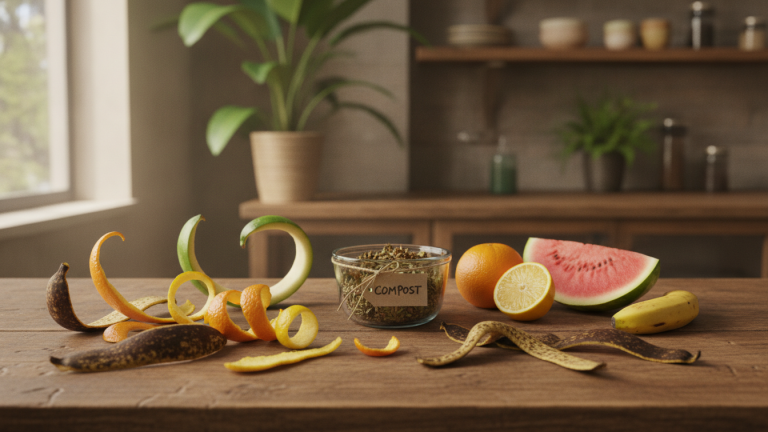
Why the banana peel you throw away is worth more than it seems
You peel an orange, a banana, or a mango and toss the peel straight into the trash without thinking twice. It seems like the most natural thing in the world. But that peel ends up in a landfill where, mixed with other waste, it releases methane, a gas with global warming potential far greater than CO₂, according to IPCC data. In Brazil, according to Abrelpe, organic waste represents the largest fraction of garbage generated by Brazilians, and the overwhelming majority still goes to landfills or dumps.
The good news is that fruit peel is not garbage. It’s a resource. Inside an apartment, without a backyard and without spare space, there are still several practical ways to use these peels, whether in the kitchen, caring for plants, cleaning, or even beauty. By the end of this article, you’ll know exactly what to do with the peels you generate every day, with solutions that fit on your countertop.
The real problem of peel waste in urban Brazil
Most people don’t realize it, but the peel is often the most nutritious part of the fruit. Apple peel, for example, concentrates much of the fruit’s fiber. Passion fruit peel is rich in pectin and compounds whose properties have been studied by Embrapa in projects for complete fruit utilization. We’re used to eating just the “flesh” and discarding the rest out of habit, not necessity.
The impact adds up. When organic matter goes to the landfill untreated, it doesn’t decompose cleanly. The lack of oxygen causes the process to produce methane, plus leachate, which can contaminate groundwater. Law 12.305/2010, the National Solid Waste Policy (PNRS), establishes as a goal the reduction of organic waste sent to landfills, but public composting infrastructure is still limited in most Brazilian cities.
This means that while the public system catches up, the solution begins in your kitchen. And it’s simpler than it seems.
What you can do with fruit peels: a practical map
Before diving into the details of each technique, it’s worth having an overview of the possibilities. Not every peel works for everything, and what you’ll use depends on the fruits you buy at the market. See the overview:
- Direct consumption: peels from apples, pears, mangoes, pineapples, and kiwis can be washed and eaten, whether raw, sautéed, or in teas.
- Broths and infusions: citrus fruit peels (orange, lemon, tangerine) flavor water, teas, and even homemade vinegars.
- Fertilizer for pots: banana, pineapple, and citrus in general help nourish the soil of apartment plants.
- Home cleaning: lemon and orange peel dissolves grease and can be used to make natural all-purpose cleaner.
- Home composting: even without a yard, it’s possible to compost in compact buckets or worm bins.
You don’t need to use all options at the same time. Start with one and see what fits your routine.
How to use fruit peels in the kitchen without waste
This is the most direct way to use what’s left over. Many peels have intense flavor and relevant nutritional properties, and Brazilian cuisine has used this for decades, without calling it “sustainability.”
Peels you can eat
The peel of silver banana and water banana, when well ripened, can be sautéed with garlic and olive oil and serves as a filling for tacos or a side dish. Pineapple peel makes an excellent digestive tea: just boil the peels for 10 minutes with cinnamon and cloves. Mango peel can be used in jams, but requires attention: those with an allergy to urushiol (the same substance in plums and cashews) should avoid direct consumption.
Peels for flavoring and cooking
Orange and lemon peels are versatile. You can:
- Wash the peel well with baking soda and water.
- Use a peeler to remove only the colored part, without the white part (which is bitter).
- Let air dry for two days or use the oven at minimum for 30 minutes.
- Store in a closed jar and use to flavor rice pudding, cakes, yogurts, and teas.
The cost is zero. The active prep time is less than 5 minutes. And you replace industrialized seasonings that are expensive and have plastic packaging.
Natural fertilizer for apartment plants
Anyone with pots at home, whether on a balcony, windowsill, or inside the house, has a source of nutrients just steps from the sink. Fruit peels can nourish soil effectively and without odor, as long as they’re used the right way.
Step-by-step banana peel fertilizer
Banana peel is rich in potassium and phosphorus, nutrients important for plant flowering.
- Take two or three peels from ripe bananas.
- Chop into small pieces (2 to 3 cm).
- Place in a jar with filtered or tap water (800 ml to 1 liter).
- Let rest for 48 hours at room temperature, away from direct sun.
- Strain the water and use to water your plants once a week.
The resulting liquid is a kind of “peel tea” with potassium available for the roots. No strong smell, no flies, no hassle.
Apartment composting: is it possible?
Yes, it is. There are compact worm bins made of plastic boxes that fit under the kitchen sink. The California red worm (Eisenia fetida) is the most used in enclosed spaces because it processes organic waste quickly and doesn’t produce odor when the system is balanced.
If you want to better understand how the habit of reducing and reusing connects to consumption more broadly, the article on conscious consumption: what it is and how to apply it daily explains this logic clearly.
Cleaning the house with citrus peels: cheap and effective
The cleaning industry uses limonene, a compound extracted from orange and lemon peels, in various products. You can make the homemade version with what’s left from your fruit.
Orange peel all-purpose cleaner
Materials: peels from 4 to 6 oranges, 500 ml white vinegar, glass jar with lid, reusable spray bottle.
Active prep time: 10 minutes. Waiting time: 2 weeks.
- Wash the peels and place in the glass jar.
- Cover with white vinegar.
- Cap and store in a dark place for 14 days.
- Strain the liquid, dilute in equal parts with water, and transfer to the spray bottle.
The result is an effective degreaser for stove, countertop, and tile. The cost is a fraction of the industrialized product, the packaging is reusable, and there’s no disposable plastic involved.
Common mistakes when using peels and how to avoid them
Just because the idea is simple doesn’t mean there aren’t pitfalls. Some frequent errors sabotage the process and create more work than necessary.
- Not washing peels before use: conventional fruits may have pesticide residues on the peel. Wash with water and a tablespoon of baking soda, scrub well, and rinse. For direct consumption, prefer organic fruits when possible.
- Leaving peels to accumulate without refrigeration: on hot days, peels ferment quickly and attract flies. Store in a sealed bag in the refrigerator if you won’t use them the same day.
- Using moldy fruit peels in fertilizer: mold can harm plants. Discard peels as soon as visible fungi appear.
- Mixing excessive citrus peels in the worm bin: excess acidity from citrus unbalances the worm bin’s pH and harms worms. Use in small amounts, alternating with dried leaves or cardboard.
- Waiting for the “perfect situation” to start: one pot, a banana peel, and a cup of water are enough for your first homemade fertilizer.
Frequently asked questions about fruit peels in apartments
Can I use fruit peels on indoor plants without creating odors?
Yes, as long as you use the right techniques. Banana peel liquid fertilizer, for example, has no perceptible odor after straining. Peel pieces buried directly in the pot can ferment and smell bad in enclosed spaces, so always prefer the liquid version or a well-balanced worm bin.
Can every fruit peel be eaten?
No. Avocado, papaya, and conventional citrus peels have limited use for direct consumption due to bitter taste, texture, or pesticide presence. Apple, pear, mango (with caution), and banana peels are widely used in cooking. Careful washing is always the first step.
Won’t an apartment worm bin create flies or bad smells?
When properly maintained, no. Problems arise when the worm bin gets too wet, when it receives meat, dairy, or excess citrus, or when exposed to very high temperatures. With a layer of wet paper or dried leaves on top of the waste and balance in the amount added, the system works without odor and without flies.
Where can I find worms to start a worm bin at home?
You can buy California worms from fishing shops, community composting groups in neighborhood apps, organic markets, or municipal composting initiatives. In cities like São Paulo and Curitiba there are public programs that distribute or facilitate access to home worm bins.
Start today with what you already have
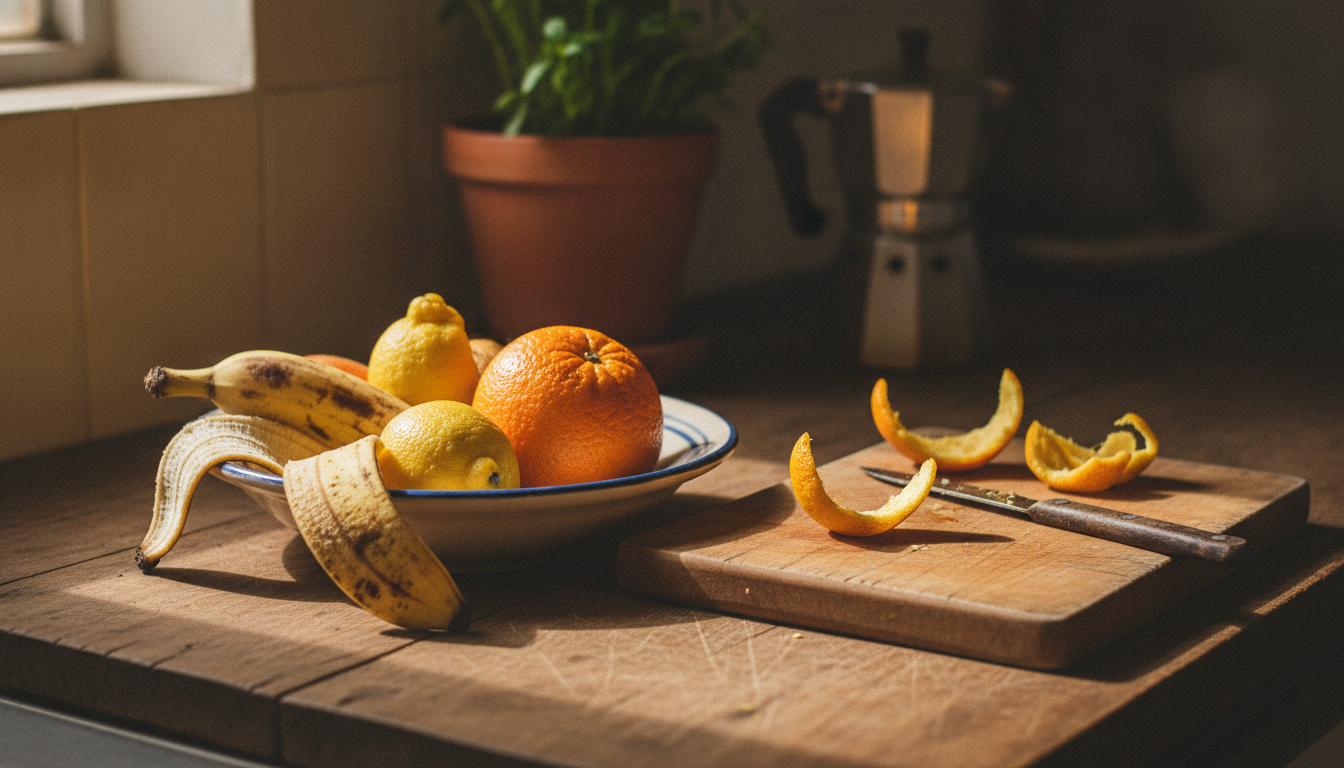
The peel you’ll generate at tonight’s dinner is already an opportunity. You don’t need to buy anything, you don’t need extra space, and you don’t need to wait until Monday. Save the banana peel in the refrigerator, fill a jar with water, and let it rest. In two days you have fertilizer for the living room pot.
Small changes like this, repeated over time, form a habit that reduces the garbage you generate, saves money on industrialized products, and still nourishes the plants that make your apartment feel more alive. If you want to expand this logic to other daily choices, the topic of conscious consumption has much more to offer.
The peel is not the waste. It’s the beginning.
