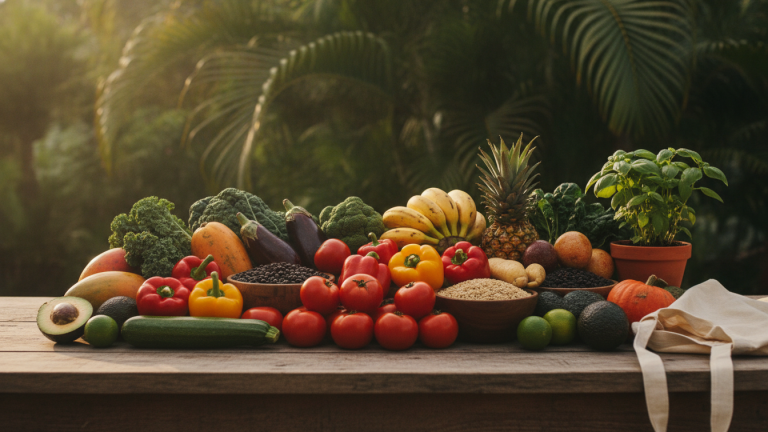
Sustainable Diet: What It Is and How to Adopt It Daily
Have you ever stopped to think that what’s on your plate has as much impact on the planet as the car you drive? Food production accounts for about a quarter of global greenhouse gas emissions, according to the IPCC. And the good news is that small changes in your diet can make a real difference, both for the environment and for your health and your wallet.
A sustainable diet doesn’t mean becoming vegan overnight or giving up the dishes you love. In practice, it’s about choosing foods that generate less environmental impact, waste fewer resources, and preferably come from nearby. By the end of reading this article, you’ll know exactly where to start, without needing to overhaul your entire refrigerator at once.
Brazil has a privileged position in this story. With one of the world’s most diverse agricultures and an incredibly rich food culture, the country already has many of the foundations of sustainable eating in its tradition. The problem is that in recent decades, part of this heritage has been lost to ultra-processed foods and waste.
What Makes Eating Truly Sustainable
Food sustainability goes beyond eating salad. The UN, through its environmental program (UNEP), defines a sustainable diet as one that causes low environmental impact, is nutritious, accessible, and culturally accepted. In other words, there is no single universal sustainable diet: it depends on the context of each place and each person.
Four pillars help understand the concept in practice:
- Food origin: the closer to you it was produced, the lower the transportation emissions and the greater the chance it will be fresh
- Type of protein: beef production, for example, generates much more greenhouse gases than legumes like beans, lentils, and chickpeas
- Waste: according to Embrapa, Brazil loses and wastes about 30% of food produced throughout the entire chain
- Packaging and processing: ultra-processed foods typically require more energy to manufacture and generate more packaging waste
These four aspects connect. When you buy bulk beans at your neighborhood farmers market, you’re reducing transportation emissions, cutting plastic packaging, and consuming a food with a carbon footprint much lower than an industrialized burger.
Why Beef Weighs So Heavily in This Equation
It’s not about demonizing barbecue, but about understanding the math behind it. Cattle produce methane during digestion, a gas that, according to the IPCC, has much greater global warming potential than CO2 in the short term. Additionally, pasture expansion is one of the main causes of deforestation in Brazil, according to INPE data.
This doesn’t mean eliminating meat from your diet. It means reducing frequency and varying protein sources. Chicken and fish generally have a smaller environmental footprint than beef. Eggs, dairy in moderation, and especially plant-based proteins like beans, lentils, chickpeas, and tofu complete nutritional needs very well.
Brazil has a historical advantage here: beans and rice is, nutritionally, an almost perfect combination of essential amino acids. According to Embrapa, this traditional dish offers good-quality protein and is still much cheaper than any cut of meat. Recovering this habit is already a big step.
How to Adopt a Sustainable Diet Without Complicating Your Life
The transition doesn’t need to be radical. An effective path is to start with simple substitutions and expand at your own pace. See a practical step-by-step guide:
- Map what you already eat during a week: note how many times red meat, processed foods, and fresh foods appear. This quick diagnosis shows where the biggest opportunities for change are.
- Choose one day a week without red meat: the “Meatless Monday” initiative already exists in Brazil for years and has growing support. One less day per week already represents a significant reduction over the course of a year.
- Include a new plant-based protein each month: lentils, chickpeas, peas, mushrooms. Research a simple recipe, try it, and if you like it, repeat. Don’t try to change everything at once.
- Prioritize seasonal and regional foods: fruits and vegetables out of season travel longer distances and consume more energy in storage. At the market, ask the vendor what’s in season.
- Reduce waste in your home: plan your weekly shopping, store food correctly, and use stems, peels, and leaves in broths and sautés. Zero waste starts in the kitchen.
- Choose less packaging when possible: buying in bulk, using reusable bags, and preferring products with fewer layers of plastic are choices that add up. If you want to better understand how to reduce waste in your daily life, the concept of zero waste explains this logic well and how to start.
- Cook more at home: home-cooked food tends to be more nutritious, less processed, and cheaper. An IBGE study showed that households that cook more frequently consume fewer ultra-processed foods.
Common Mistakes When Wanting to Eat More Sustainably
The first mistake is thinking that “sustainable” is synonymous with expensive. Beans, rice, eggs, seasonal vegetables, and regional fruits are affordable foods with a low environmental footprint. What usually drives up the cart total is precisely the ultra-processed and imported product out of season.
The second mistake is focusing on just one aspect and ignoring the others. Buying an “organic” product packaged in multiple plastics and coming from another state can be less sustainable than buying a conventional fresh product at your neighborhood market. Context matters.
The third mistake is seeking perfection. You don’t need to get 100% of your choices right all the time. A diet that is 70% more conscious over many years is infinitely more effective than a “perfect” diet that lasts three weeks.
The Real Impact on Your Wallet and Your Health
Reducing red meat and ultra-processed foods isn’t just good for the planet. The World Health Organization (WHO) associates excessive consumption of processed meats with a higher risk of cardiovascular disease and some types of cancer. Eating more vegetables, legumes, and whole grains is associated with a lower risk of these diseases.
The wallet effect also shows up. Beef cuts are among the most expensive items in the shopping cart. Replacing some of this consumption with beans, lentils, and eggs can reduce your monthly food spending without compromising nutritional quality.
Another practical dimension: zero waste in the kitchen is money that stays in your wallet. When you fully use the food you buy and plan meals for the week, you throw away less and spend less.
Frequently Asked Questions About Sustainable Diet
Is a sustainable diet necessarily vegan?
No. A sustainable diet can include meat, eggs, dairy, and seafood, as long as in moderate quantities and from responsible sources. What matters is the overall balance of the diet and gradual reduction of foods with greater environmental impact.
Are organic foods always more sustainable?
Not always. An organic packaged in plastic and transported from far away can have greater impact than a conventional one bought from a local producer. The ideal is to combine: organic when possible, local when accessible, and with minimum packaging.
How do you know which foods are in the right season?
Embrapa provides harvest calendars by region of Brazil. A practical tip: if a fruit or vegetable is very cheap at the market, it’s probably because it’s in season. Price and seasonality go hand in hand.
Does it make sense to worry about cooking oil in this equation?
Yes. Incorrect disposal of used oil contaminates rivers and soil, and also represents waste of a resource that can become biodiesel. Knowing where to dispose of used cooking oil without polluting is part of the logic of a more sustainable kitchen routine.
A First Step for Today
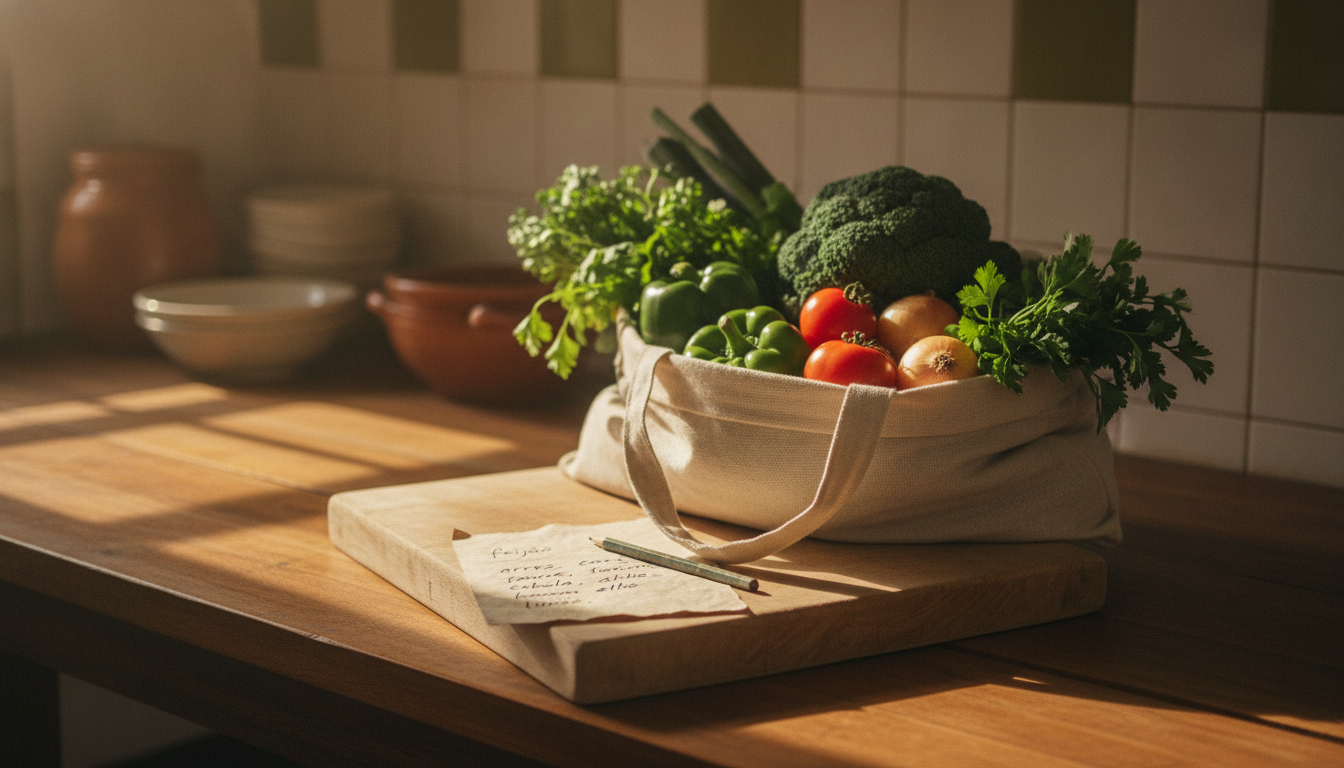
You don’t need to change your entire diet tomorrow. Start with something simple: on your next trip to the market, choose a vegetable you don’t usually buy and research a recipe for it. It could be seasoned lentils, roasted squash, or a chickpea sauté.
This small gesture, repeated regularly, creates a new habit. And new habits, combined with those of other people doing the same, have a real impact on the food system as a whole. The planet thanks you, your wallet does too, and your body even more so.
