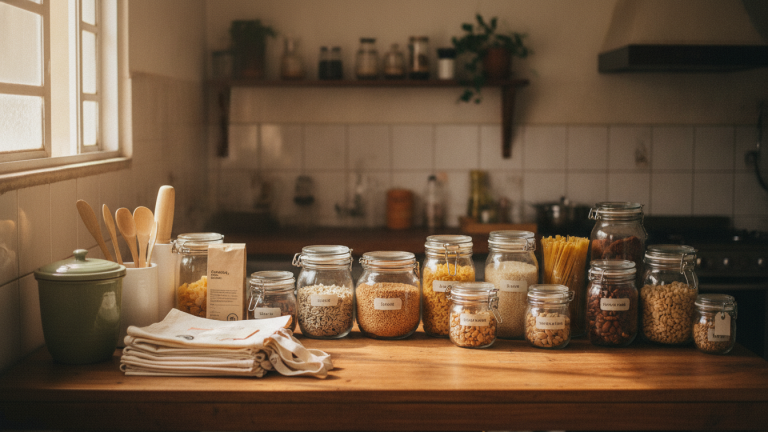
You open the cabinet under the sink and realize: one overflowing trash bin, another for plastic, a bag of glass, a stack of crushed cardboard in the corner. And the question that lingers is — where does all this trash come from in one week? According to data from Abrelpe (Brazilian Association of Public Cleaning and Solid Waste Companies), Brazil generates more than 80 million tons of solid waste per year. Only a small portion of this is actually recycled. The rest goes to landfills, dumps, or ends up thrown in rivers and vacant lots.
The concept of zero waste emerged as a response to this scenario, but it’s not about perfection. It’s not about having a small jar of waste at the end of the year as seen on social media. It’s a practical philosophy that changes how you buy, consume, and dispose — with real results in your wallet, your health, and the planet.
By the end of reading this article, you’ll understand what zero waste truly means, why it makes sense in the Brazilian context, and most importantly, how to take your first practical steps without turning your routine into an engineering project.
What zero waste really means
Zero waste is not a destination, it’s a direction. The term was popularized by the NGO Zero Waste International Alliance, which defines the concept as redesigning product life cycles so all materials are reused, without burning or burying them. In daily practice, it means prioritizing reduction and reuse before thinking about recycling.
There is a hierarchy that helps organize thinking, known as the 5 Rs (adapted from the original proposal by Bea Johnson, one of the movement’s pioneers): Refuse, Reduce, Reuse, Recycle, and Rot (compost). The order matters. Recycling, which is usually the only step most people know about, appears near the end of the list — because it still consumes energy and generates waste in the process.
In Brazil, this topic gains legal weight through Law 12.305/2010, the National Policy on Solid Waste (PNRS), which already establishes shared responsibility among manufacturers, distributors, merchants, and citizens. In other words, you’re not alone in this equation, but you can influence the system through your wallet and habits.
Why the current model doesn’t work
The logic of “produce, use, and throw away” was designed for a time when the planet seemed infinite. Today we know, from UNEP (United Nations Environment Programme) data, that solid waste contributes significantly to greenhouse gas emissions, especially methane released from landfills.
In Brazil, there is still a serious infrastructure problem. Many Brazilian municipalities, especially smaller ones, still operate open-air dumps, which was prohibited by PNRS but remains reality in parts of the country. Selective collection, when it exists, is not always efficient — and material that citizens carefully separated can end up mixed back into regular garbage due to failures in the chain.
This is not a reason to give up. It means each choice you make carries double weight: it reduces direct impact and creates demand for better alternatives. When you stop buying products in disposable packaging, you send a signal to the market.
How to start: first steps in Brazilian daily life
The most effective change begins with observation. Before buying any new “eco” product, spend a week looking at your trash. What appears most frequently? Plastic food packaging? Disposable cups? Bags? This diagnosis will show you where to focus energy.
- Make an inventory of your trash. Separate waste by category for seven days: organic, plastic, paper, glass, rejects. This reveals your actual consumption patterns.
- Replace one disposable item at a time. Start with what appears most. If plastic bags lead, adopt a sturdy reusable bag. If it’s disposable cups at work, bring a mug.
- Reorganize your shopping. Open markets allow you to buy fruits and vegetables without packaging, often paying less than supermarkets. Bulk grains at natural markets also cut packaging and cost.
- Dispose of organic matter correctly. Food scraps represent, according to Abrelpe, more than half the weight of household waste in Brazil. Composting this material at home transforms the problem into fertilizer. If you live in an apartment, a worm bin at home is a compact solution, odor-free and easy to maintain.
- Learn about selective collection in your neighborhood. Many municipalities have specific days and times to collect recyclables. Finding this schedule is free and prevents your separation efforts from being wasted.
- Dispose correctly of items without regular collection. Batteries, electronics, and light bulbs have mandatory drop-off points under PNRS. Supermarket chains, computer shops, and pharmacies usually have collection containers.
Common mistakes when starting
The first mistake is trying to change everything at once. Frustration comes quickly when someone buys ten “zero waste” products in a week, spends more than their budget allows, and can’t maintain the routine. Sustainable change, in every sense, is gradual.
The second mistake is believing that recycling solves everything. Recycling is important, but has real limits. Not everything that seems recyclable is actually processed in Brazil, due to lack of market or local technology. Plastics numbered 3 (PVC), 6 (styrofoam), and 7 (others) rarely have proper destinations in most Brazilian cities.
The third mistake is buying new products to “be more sustainable.” A brand-new stainless steel bottle from e-commerce has considerable production footprint. If you already have a bottle at home, use it. The most sustainable object is what you already own.
- Avoid buying “eco” versions of something you don’t need
- Prefer replacing only when the old item becomes unusable
- Reuse glass jars from jam and olives before buying new containers
- Don’t underestimate the power of refusing: disposable gifts, straws, store bags, printed receipts that go straight to trash
Zero waste and your wallet: how much can you save
Those who consistently adopt zero waste practices notice, in the first months, a drop in impulse purchases. This happens because the movement encourages reflection before each purchase: “Do I need this?”, “Can I borrow or rent?”, “Is there a packaging-free version?”.
Replacing disposables with durable items has an upfront cost, but returns come with time. A stainless steel lunch container lasts years and eliminates hundreds of packages. A cloth coffee filter, which costs a few reais, replaces hundreds of paper filters per year.
Composting organic scraps can also generate fertilizer for plants at home or on a balcony, eliminating the need to buy fertilized soil. Small? Yes. But multiplied by 365 days, it makes a difference in your wallet and the amount of waste generated.
Fashion, consumption, and what you wear has to do with waste
Your wardrobe is one of the least obvious sources of waste. The textile industry is one of the most polluting in the world, according to UNEP, and discarding wearable clothing is a growing problem in Brazil. Vintage shops, swaps with friends, and simple repairs extend the life of garments and reduce textile waste volume.
If you want to understand more about how fashion choices connect to sustainability, the article on sustainable fashion deepens this path with practical examples. The logic is the same as zero waste: refuse the superfluous, value what already exists, and choose with intention.
Frequently asked questions about zero waste
Do I need to spend a lot to adopt zero waste?
No. Most initial changes cost nothing or very little. Stopping to grab a bag at the market, using containers you already have at home, shopping at the market without packaging are free actions. Investments in durable products can be made gradually, as disposables run out.
Does zero waste work in a small apartment?
It works well. Apartments require adaptations, such as compact vertical worm bins for composting, and organization to separate recyclables without taking up space. Many apartment dwellers have better results than large houses, because limited space already discourages accumulation.
What if my city doesn’t have selective collection?
You can still reduce the volume of waste generated, compost organic matter, and seek voluntary drop-off points for recyclables, which exist in many cities even without door-to-door collection. Waste pickers’ associations also receive material directly and play a central role in the Brazilian recycling chain.
Is zero waste possible with young children?
It’s possible and often easier than it seems. Cloth diapers, homemade baby food stored in glass containers, and toys shared or acquired at swap fairs are real paths. It’s not necessary to eliminate all disposables at once; each change already represents less waste.
One step for today
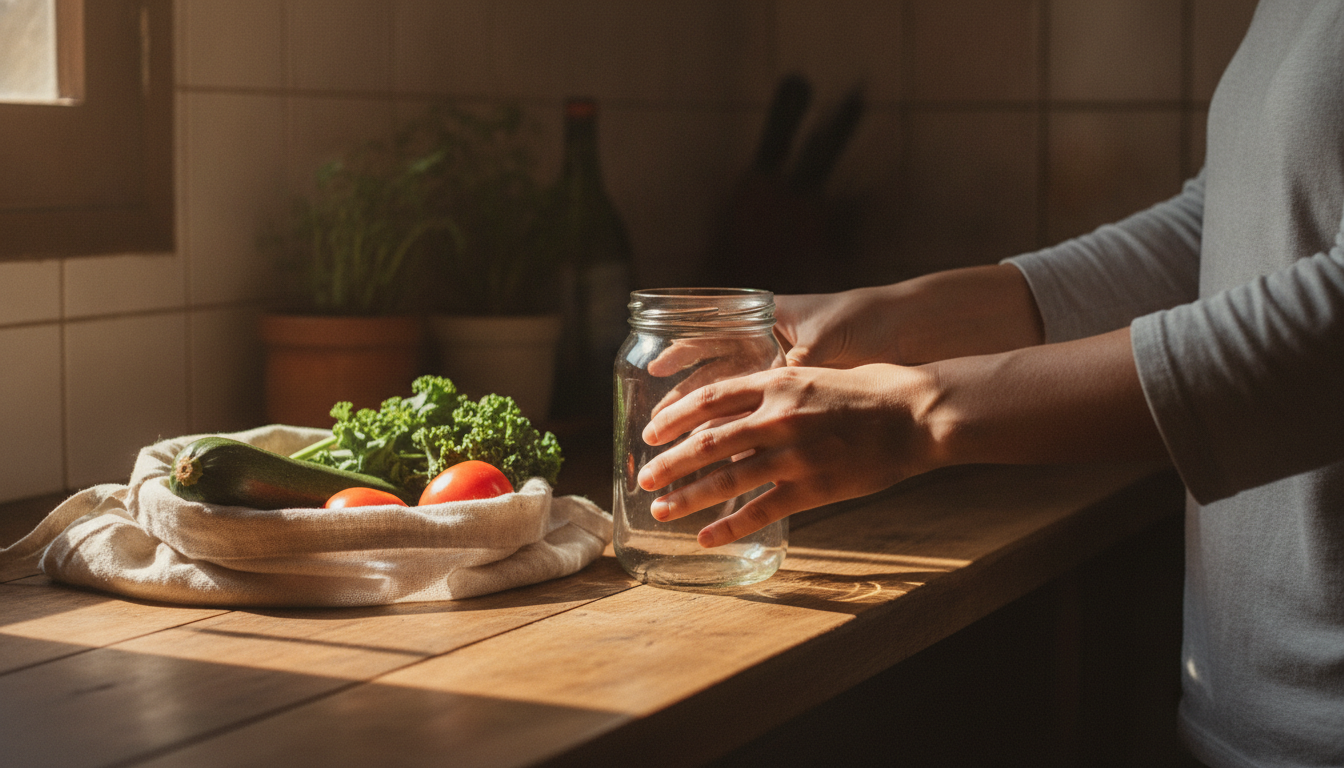
You don’t need to change everything tomorrow. Choose just one thing: look at the trash you threw away today and identify one item that could have been avoided. A package, a disposable, a product you bought without needing. This simple question, asked regularly, is the true beginning of zero waste. Habit builds this way, one decision at a time.
