Why Reducing Meat Is One of the Best Things You Can Do for the Planet
Have you ever stopped to think that today’s lunch choice could have consequences for forests thousands of miles away? It’s not an exaggeration: beef production is one of the main drivers of deforestation in the Amazon and one of the sectors that contributes most to global greenhouse gas emissions. According to the IPCC, the food system as a whole is responsible for about 21 to 37% of global GHG emissions — and livestock plays a central role in this equation.
But here’s the good news: you don’t need to become vegan overnight, give up Sunday barbecue, or get into conflicts with your family to make a difference. Reducing meat consumption — even partially — already generates a real and measurable impact on the environment. And the best part: you can do it without suffering, without deprivation, and with plenty of delicious food on your plate.
In this article, you’ll find practical strategies, based on science and everyday life, to reduce animal protein consumption with ease, autonomy, and even savings in your pocket.
The Real Impact of Meat on the Environment
To make informed decisions, it’s important to understand what’s at stake — without catastrophism, but with clarity.
Cattle ranching is the activity that occupies the most space in Brazilian territory. According to data from Embrapa, Brazil has the largest commercial cattle herd in the world, with more than 230 million head of cattle. A large portion of deforested areas in the Amazon is converted into pasture or soybean crops to feed this herd.
Beef is also the animal protein with the highest carbon footprint per kilogram produced. This occurs because cattle emit methane during digestion (a process called enteric fermentation), and methane is a greenhouse gas dozens of times more potent than CO₂ in the short term. Additionally, feed production, transportation, and associated deforestation amplify this impact.
Chicken and pork have significantly lower carbon footprints than beef — which means that, even without eliminating meat from your diet, shifting part of your consumption to other proteins already makes a difference.
To better understand the relationship between livestock and forests, it’s worth reading about Amazon deforestation and its consequences for the planet.
The Logic of “Less, Not Zero”: Why Gradual Change Works
One of the biggest traps in the debate about sustainable eating is perfectionism. Many people give up on any change because they believe it’s only worth it if it’s total — all or nothing. Behavioral science shows the opposite.
Gradual changes have a much higher long-term adherence rate. A person who reduces meat consumption from 14 meals per week to 9 is already generating a concrete impact — and with a much better chance of maintaining this habit for years than someone who tries to become vegan in a week and gives up on the tenth day.
The most effective strategy is not the most radical one. It’s the one you can sustain.
Movements like “Meatless Monday,” which has a presence in dozens of countries, are based on exactly this logic: one day per week without meat already represents a reduction of about 14% in weekly consumption. Multiply that by 52 weeks and the result is significant.
How to Replace Meat Without Missing It: A Practical Guide
The main reason people resist reducing meat is the fear of being hungry or unsatisfied. But this happens when the substitution is done incorrectly — replacing protein with salad and nothing else. The key is to substitute with substance.
Plant proteins that truly satisfy
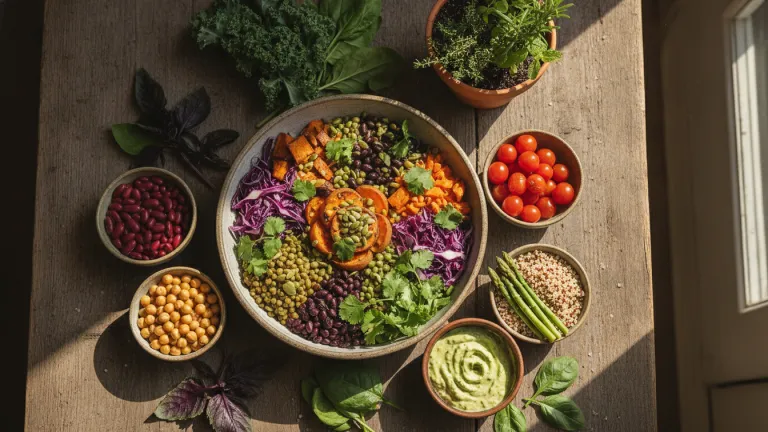
- Beans, lentils, chickpeas, and peas: rich in protein and fiber, they are the basis of traditional diets worldwide
- Tofu and tempeh: excellent protein sources with good culinary versatility
- Eggs: high-quality animal protein with a much lower environmental impact than beef
- Mushrooms: not complete proteins, but they have a meaty texture and umami flavor that satisfy the desire for “something substantial”
- Peanuts and nuts: practical, caloric, and nutritious
Step-by-step guide to start reducing today
- Make an honest assessment: write down how many times per week you eat meat. Not to judge yourself, but to have a real starting point.
- Choose a fixed day to not eat meat. Meatless Monday is a good start. Keep this day for at least four weeks before adding another.
- Substitute, don’t remove. Instead of “removing meat” from the plate, think about which protein will occupy that space. Rice and beans together already form a complete protein combination.
- Explore one new ingredient per month. Lentils, chickpeas, tofu… Try a new recipe with each one. The unfamiliarity decreases with familiarity.
- Reduce beef before other meats. The environmental impact difference between beef and chicken, for example, is enormous. This swap alone represents great progress.
- When you eat meat, prioritize quality. Eating less but better — choosing products with traceable origin, from local producers, or with environmental responsibility certifications — is a way to use your purchasing power.
- Celebrate every small change. You’re not failing if you still eat meat. You’re making progress if you’re eating less than before.
Recipes and Combinations That Convince Even the Most Resistant
Many cuisines already have, at their base, extraordinary dishes that are naturally less dependent on meat — or that are equally delicious without it.
Meatless meal ideas that work
- Bean stew without sausage, with plenty of garlic, greens, and eggs
- Chickpea shepherd’s pie instead of traditional meat pie
- Lentil meatballs with fresh tomato sauce
- Stuffed omelet with cheese, tomato, and herbs
- Mushroom risotto with parmesan
- Breakfast wrap with scrambled eggs and cheese
- Pasta with tomato sauce and grilled eggplant
None of these recipes require advanced technique, expensive ingredients, or much time. They are meals that anyone can prepare at home with what can be found at any local market or supermarket.
The Impact on Your Wallet: Reducing Meat Also Saves Money
Beef is one of the most expensive items in the family shopping cart. Replacing part of consumption with beans, eggs, lentils, and chickpeas represents concrete savings in the household budget — especially during periods of food inflation.
This is a dimension often ignored in the debate about sustainable eating: eating less meat is not a financial sacrifice; it’s often an advantage.
A family that replaces dinner meat with two legume-based meals per week can save significant amounts over the month, depending on the cut and usual quantity. The money saved can be redirected to fruits, vegetables, and other fresh foods that often get left out of the menu due to cost.
Growing Part of Your Food Also Helps
Another way to reduce dependence on industrialized proteins — and to connect more with what you eat — is to grow part of your food. Aromatic herbs, seasonings, leafy greens, and even vegetables can be produced on balconies, windowsills, and small urban spaces.
This doesn’t replace protein, but it transforms your relationship with food: when you grow, you start to value what’s on your plate more and reflect more carefully about your food choices. To learn how to start, check out the article on urban agriculture: how to grow food in your city.
Tips for Dealing with Social Pressure and Cultural Context
In many cultures, meat has enormous cultural weight — barbecues, traditional stews, Sunday roast chicken. Reducing consumption doesn’t mean giving up your cultural identity or isolating yourself socially.
Some strategies that work:
- Don’t declare war. You don’t need to announce that you’re “eating less meat.” Simply serve yourself with more moderation or choose other dishes when possible.
- Be the protagonist in the kitchen. When you prepare the meal, you have control over the menu. Propose tasty vegetarian dishes and let people discover they’re delicious.
- Flexibility at social events. If you’re at a barbecue, enjoy it — and compensate in the following meals. Long-term sustainability is worth more than episodic perfection.
- Talk without judgment. People change behaviors when they feel respected, not guilty. If you want to influence someone around you, silent example is more powerful than discourse.
Start Today: A Small Change with Great Potential

You don’t need to change everything at once. You don’t need to be vegan, you don’t need to feel guilty about the weekend barbecue, and you don’t need to wage philosophical battles at the table.
What you can do — today, now, at your next meal — is make a slightly more conscious decision. Swap beef for chicken once. Prepare seasoned beans instead of a hamburger. Try that lentil recipe you’ve always postponed.
Every choice counts. Every plate matters. When millions of people make small, consistent changes, the collective effect is enormous — in carbon emissions, deforestation, water consumption, and preserved ecosystems.
Sustainability doesn’t have to be suffering. It can be, and should be, something that fits into your real life, with pleasure, flavor, and lightness. Give it a try. The planet thanks you — and so does your wallet.
