Biodiversity: What It Is and Why You Should Care
Imagine waking up in a silent world. No birds singing in the morning, no bees in your garden flowers, no fish in the rivers. It sounds like science fiction, but that’s exactly the path we’re heading down if we continue ignoring one of the greatest environmental challenges of our time: biodiversity loss. This topic may seem distant from your daily routine, something for scientists and environmentalists to debate at international conferences, but the truth is it’s connected to the food on your plate, the water you drink, and the air you breathe every day.
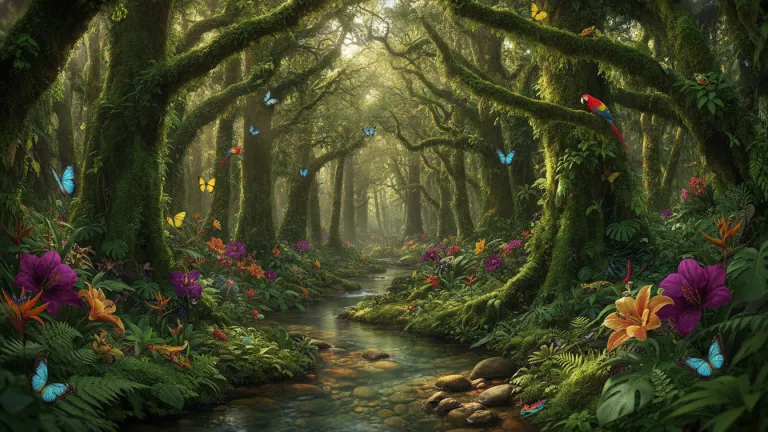
Biodiversity isn’t just a list of exotic species in tropical rainforests. It’s the invisible web that sustains life on Earth — including yours. Every time a species disappears, a thread in that web breaks. And like any network, when too many threads snap, it collapses. The good news is that you have a real role to play in protecting this system. And this article exists to show you how.
In the following sections, you’ll understand what biodiversity really is, why it’s threatened, what the concrete consequences are for your life, and most importantly, what you can do starting today to be part of the solution.
What is biodiversity, anyway?
Biodiversity is the variety of life on Earth in all its forms. The concept encompasses three main levels:
- Species diversity: the variety of animals, plants, fungi, bacteria, and other organisms that inhabit the planet.
- Genetic diversity: the genetic variation within each species, which allows populations to adapt to environmental changes.
- Ecosystem diversity: the variety of habitats, such as forests, coral reefs, mangroves, savannas, and wetlands, each with its unique structure and functions.
These three levels work together. A healthy forest, for example, needs species diversity to function: trees, fungi, insects, birds, and mammals fulfill specific and interdependent roles. Remove one link in the chain and the entire structure can become destabilized.
Brazil is an exemplary case. The country harbors the greatest biodiversity on the planet, with more than 120,000 invertebrate species, around 9,500 species of vascular plants in the Amazon alone, and extraordinarily rich fauna in the Cerrado, Atlantic Forest, Pantanal, and other biomes. This richness isn’t just a geographical detail: it’s a strategic asset for climate, agriculture, and global public health.
Why is biodiversity disappearing?
Biodiversity loss isn’t a natural phenomenon at this scale and speed. It’s driven by human activities. The International Union for Conservation of Nature (IUCN) maintains the Red List, the main global inventory of species conservation status, and the data is concerning: tens of thousands of species are classified as threatened with extinction.
The main causes of this crisis are:
- Habitat destruction and fragmentation: deforestation for agriculture, livestock, mining, and urban expansion is the primary factor. The Atlantic Forest, for example, has already lost more than 85% of its original cover over the centuries.
- Climate change: global warming alters rainfall patterns, temperature, and seasons, forcing species to migrate or face extinction. The IPCC documents that warming is already directly impacting species distribution on all continents.
- Pollution: pesticides, plastics, heavy metals, and sewage contaminate soils, rivers, and oceans, affecting species that depend on these environments.
- Invasive species: animals and plants introduced to ecosystems where they didn’t evolve can displace native species, unbalancing the system.
- Overhunting and overfishing: exploitation beyond populations’ recovery capacity leads to the collapse of entire species.
- Illegal wildlife trade: Brazil is one of the countries most affected by wildlife trafficking, which pressures already vulnerable populations.
These factors rarely act in isolation. Most of the time, a species faces two, three, or more of these drivers simultaneously, which drastically accelerates the risk of extinction.
What you lose when biodiversity disappears
Here’s the point that matters most for your daily life: biodiversity isn’t just about saving beautiful animals. It delivers essential services for human life, called ecosystem services. When these systems degrade, you feel the consequences — in your wallet, your health, and on your table.
Pollination and food security
About 75% of the world’s main food crops depend, at least partially, on pollinators — bees, butterflies, beetles, bats. Without them, the production of fruits, vegetables, oilseeds, and seeds plummets. The decline in bee populations is already monitored in several countries and represents a real threat to global food security.
Climate and water regulation
Intact forests regulate the water cycle, stabilize local and regional climate, and sequester carbon from the atmosphere. The Amazon’s “flying rivers,” for example, are fundamental for rainfall across much of Brazil, including agricultural regions in the Central-West and South. Deforesting the Amazon isn’t just an Amazonian environmental problem — it’s a problem for Mato Grosso’s agribusiness and São Paulo’s water reservoirs.
Medicine and biotechnology
A significant portion of medicines in use derive from compounds discovered in plants, fungi, or animals. Mass extinctions mean losing molecules we never got to study — potential treatments for diseases that don’t even exist yet.
Public health
Habitat destruction increases contact between humans and wild animals, raising the risk of zoonoses — diseases that jump from animals to humans. This mechanism is widely recognized by researchers as a risk factor for future pandemics.
The state of biodiversity in Brazil in 2026
Brazil maintains an ambiguous position on the global stage: it’s the country with the greatest biodiversity on the planet and, at the same time, faces intense pressures on its ecosystems. The Amazon remains under constant monitoring, with deforestation data tracked by INPE through the PRODES system. The Cerrado — the country’s most threatened biome in proportional terms, with more than half of its original cover already converted — harbors about 5% of all global terrestrial biodiversity and remains a critical attention zone.
The Atlantic Forest, despite historical devastation, has shown signs of recovery in some regions thanks to restoration policies and mobilization of farmers and local communities. This proves that reversal is possible — but it requires continuous and coordinated effort.
How you can help protect biodiversity
Protecting biodiversity doesn’t depend only on governments and large corporations. Individual choices, when multiplied by millions of people, generate real impact. Here’s what you can do:
Rethink what you eat
Food production is one of the main causes of habitat destruction and biodiversity loss in the world. Reducing meat consumption — especially beef — decreases pressure on biomes like the Cerrado and Amazon. This doesn’t necessarily mean giving up everything at once. Small gradual changes already make a difference. To start this process without suffering, our guide Reduce meat consumption without suffering offers practical and accessible tips.
Grow native plants and welcome pollinators
If you have a garden, balcony, or even a pot, you can create small refuges for local wildlife. Prefer native plants from your region — they attract pollinators adapted to the local ecosystem and require less water and maintenance. Starting to produce some of your food at home is also a way to reconnect with nature. The article Urban Agriculture: grow food in your city can be a great starting point.
List of practical and actionable steps
- Buy products with sustainable certification: look for labels like Rainforest Alliance, FSC (for wood and paper), and certified organic.
- Avoid pesticides at home and in the garden: opt for biological pest control and natural methods.
- Reduce single-use plastic: plastics reach rivers and oceans and affect entire aquatic ecosystems.
- Support conservation organizations: NGOs like SOS Mata Atlântica, Instituto Socioambiental (ISA), and WWF Brazil work directly on protecting Brazilian ecosystems.
- Report environmental crimes: Brazil has official channels like IBAMA and the ICMBio app to register complaints about deforestation, illegal hunting, and wildlife trafficking.
- Choose responsible ecotourism: when traveling to natural areas, value operators that practice low-impact tourism and contribute to local communities.
- Educate yourself and share: talking about biodiversity with family, friends, and on social media amplifies collective awareness without additional effort.
Biodiversity and climate change: an inseparable relationship
It’s impossible to talk about biodiversity without mentioning climate change — and vice versa. The two crises feed each other. Global warming threatens ecosystems and species; ecosystem destruction accelerates warming by releasing carbon stored in forests and soils. Therefore, protecting biodiversity is also a front-line climate strategy.
Nature-based solutions — such as forest restoration, mangrove protection, and sustainable soil management — are recognized by the IPCC as essential tools to mitigate climate change while preserving the diversity of life. They’re not alternative solutions: they’re complementary to emission reductions and energy transition.
Conclusion: you are part of this web
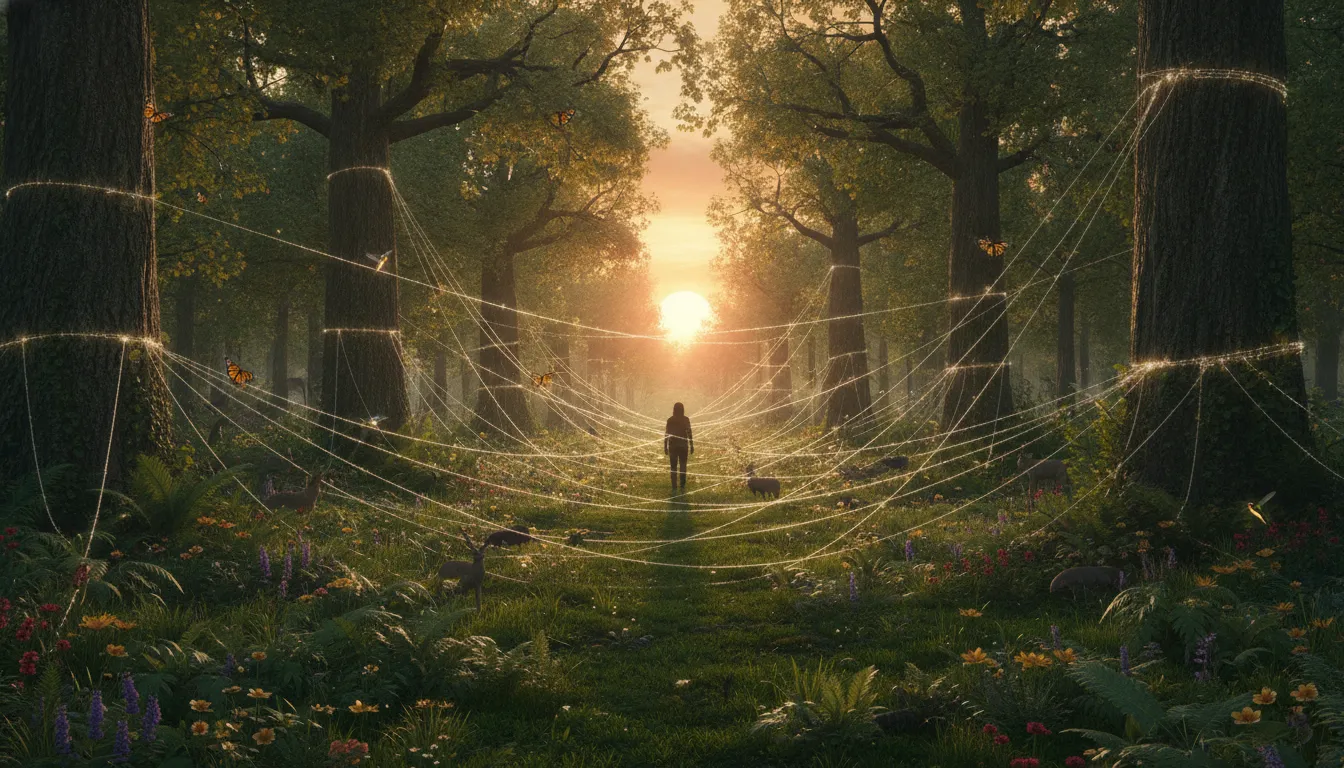
Biodiversity isn’t a niche problem. It’s the foundation upon which all human economy, health, and culture were built. Losing this foundation would be like demolishing a house’s foundations while living in it.
But environmental history is also full of examples of recovery. Species reintroduced to restored habitats, forests that grow back, animal populations that recover when human pressure decreases. Nature has an extraordinary capacity to regenerate — if we give it a chance.
You don’t need to be a scientist, environmentalist, or have great resources to contribute. Everyday choices — what you eat, what you buy, how you dispose of waste, how you vote, and what you support — carry real weight. Start with one small change today. And then another. The web thanks every thread you help preserve.
