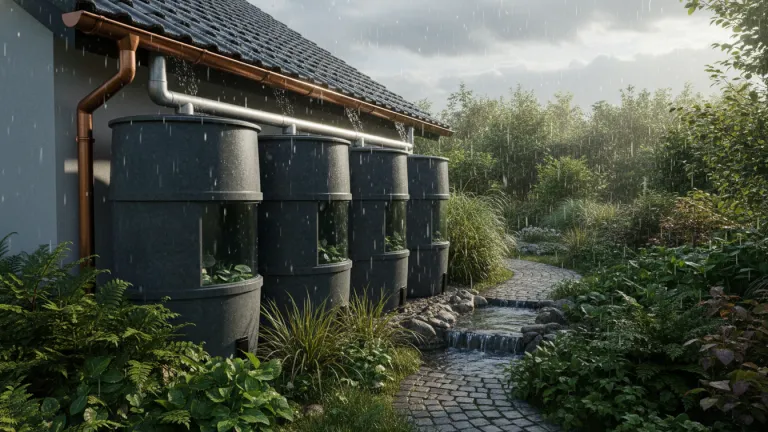
Rainwater Harvesting System: How It Works and Benefits
Water is one of the planet’s most precious resources — and also one of the most underutilized. While reservoirs face critical levels in various regions of Brazil, tons of rainwater run off rooftops, fall into gutters, and end up in drains without any use. It’s a paradox that defies common sense, but one that can be resolved with an accessible and increasingly popular technology: the rainwater harvesting system.
In recent years, the combination of prolonged droughts, rising water bills, and increased environmental awareness has led households, businesses, and even public agencies to pay more attention to this solution. In Brazil, a country with one of the largest water availabilities in the world in absolute terms, but with extremely unequal distribution, rainwater harvesting has shifted from being an option to becoming a strategic necessity.
In this article, you will understand how a rainwater harvesting system works in practice, what the essential components are, how much you can save, and how to install a simple system in your home. The idea is not to complicate: it’s to show that small changes in how we manage water can make a real difference — both financially and environmentally.
Why Rainwater Harvesting Makes Sense in Brazil
Brazil holds about 12% of the world’s surface freshwater, according to the National Water and Basic Sanitation Agency (ANA). Yet, access to quality potable water is not universally guaranteed, and extreme weather events — such as severe droughts in the Northeast and Midwest — have become more frequent and intense.
The Intergovernmental Panel on Climate Change (IPCC), in its latest reports, indicates that rainfall variability tends to increase with climate change: already rainy regions may receive more rain in concentrated periods, while dry regions face even longer droughts. This reinforces the logic of capturing water when it’s available, to use it when it’s not.
From an economic standpoint, the benefit is also tangible. Depending on the region, reservoir volume, and household consumption, a harvesting system can significantly reduce the consumption of treated water from the public network — especially for uses that do not require potability, such as garden irrigation, sidewalk washing, toilet flushing, and laundry (with proper filtration).
How a Rainwater Harvesting System Works
A rainwater harvesting system, also known as a pluvial water utilization system, follows a logical and well-defined flow. Essentially, it collects water that falls on impermeable surfaces — mainly rooftops — filters impurities, and stores the liquid for later use.
The operation can be summarized in four main stages:
- Collection: Rain falls on the roof (or other capturing surface) and is directed by gutters and downspouts to the system’s piping.
- First flush diversion: The first millimeters of rain carry dust, leaves, bird droppings, and other pollutants accumulated on the roof. A device called a first flush diverter automatically eliminates this initial volume before allowing water into the reservoir.
- Filtration: Water passes through physical filters (screens, sand filters, activated carbon filters) that remove solid particles and some impurities.
- Storage and distribution: Filtered water is stored in a cistern or reservoir and distributed by gravity or a pump to points of use.
Essential Components of the System
Knowing each part of the system helps when planning the installation and choosing the right components for your situation.
Collection Surface
The roof is the most common surface. The roof material influences the quality of the harvested water:
- Ceramic and concrete tiles: good option; require periodic cleaning
- Metal tiles (galvanized steel, aluminum): efficient but may release metal traces; water analysis recommended
- Asbestos cement tiles: not recommended due to health risks
- Flat roofs and coverings: work well but require efficient drainage systems
Gutters and Downspouts
Gutters collect water from the roof edges and channel it to the downpipes. They should be kept clean and free of leaves to prevent blockages and contamination.
First Flush Diverter
This is one of the most important and often overlooked components in improvised systems. The diverter automatically retains the first liters of rain — which are the dirtiest — and diverts them to the sewer or garden. The general rule used in practice is to discard about 1 liter per square meter of the catchment area, although this value may vary depending on local pollution levels and the time since the last rain.
Filters
There are different levels of filtration, depending on the final use of the water:
- Screen/mesh filter: removes leaves and large particles
- Sand filter: removes smaller particles and improves clarity
- Activated carbon filter: improves odor and taste (necessary if used for human consumption after additional treatment)
Reservoir (Cistern)
It can be buried, semi-buried, or surface-mounted. The most common materials are:
| Type | Advantages | Disadvantages |
|---|---|---|
| Polyethylene (water tank) | Cheap, easy installation | Lower capacity, exposed to light |
| Fiberglass | Durable, lightweight | Medium cost |
| Reinforced concrete | High capacity, durable | High cost, civil work |
| Vitrified steel | Hygienic, modular | High cost |
For households, cisterns of 500 to 5,000 liters are the most common. Government programs like the historic Cistern Program, operated by the Ministry of Social Development, have already installed hundreds of thousands of cisterns in Brazil’s semi-arid regions, demonstrating the scale and effectiveness of the technology.
Pumping and Distribution System
If the reservoir is buried or at a lower level than the point of use, a hydraulic pump will be necessary. In well-planned systems, the reservoir is elevated to allow gravity distribution, eliminating electricity costs.
Step-by-Step: How to Install a Basic System at Home
If you live in a house with a roof and have space for a reservoir, you can set up a functional system with an affordable investment. Here’s how:
- Calculate the catchment area: Measure the roof’s projected area on the horizontal plane (in square meters). The larger the area, the more water you can capture.
- Estimate the capturable volume: Use the simplified formula: Volume (liters) = Area (m²) × Precipitation (mm) × 0.8. The factor 0.8 represents losses due to evaporation, first flush diversion, and system inefficiencies. Check your city’s average precipitation data on the INMET (National Institute of Meteorology) website.
- Choose and position the reservoir: Determine the size based on the capturable volume and your consumption for non-potable uses. Place it in a shaded area to avoid algae growth.
- Install the first flush diverter: It can be purchased ready-made or assembled with PVC pipes. Install it before the reservoir inlet.
- Install the filters: Place a protective screen on the gutters and an inlet filter on the reservoir.
- Connect the gutters to the system: Redirect the roof downpipe to the diverter and then to the reservoir.
- Define the points of use: Connect the reservoir outlet (with tap or pump) to the points where the water will be used — garden hose, toilet flushing, car washing.
- Seal and protect the reservoir: Keep the cistern always closed to prevent insects, sunlight, and external contaminants from entering.
Appropriate Uses for Harvested Rainwater
It’s crucial to understand that rainwater collected from rooftops is not, by default, potable. Without proper treatment (filtration, disinfection with chlorine or UV, and laboratory analysis), it should not be consumed directly by humans or domestic animals.
However, it is excellent for a wide range of non-potable uses:
- Irrigation of gardens, lawns, and plants
- Washing sidewalks, patios, and vehicles
- Toilet flushing (accounting for a significant portion of domestic consumption)
- Laundry (with adequate filtration)
- General cleaning of the house (outdoor areas)
- Firefighting reserve
- Pool filling (supplemental)
- Use in construction and civil works
If you want to know more about reducing environmental impact also in water use in the bathroom, check out our article Transform Your Bathroom with Sustainable Products.
Maintenance: What Cannot Be Neglected
A system without maintenance can become a public health issue, especially as a breeding ground for the Aedes aegypti mosquito. Preventive maintenance is simple and should include:
- Gutter cleaning: at least twice a year, or after heavy leaf falls
- Filter inspection and cleaning: every three to six months
- Internal cistern cleaning: annually, removing sediments from the bottom
- Diverter check: ensure it is working correctly before each rainy season
- Water analysis: recommended at least once a year if there is direct contact with people
Legislation and Incentives in Brazil
Rainwater harvesting is regulated by ABNT NBR 15527, which sets requirements for rainwater utilization systems from roofs in urban areas. Cities like São Paulo, Curitiba, and Salvador already have municipal laws that encourage or require the installation of harvesting systems in new constructions or large buildings.
By 2026, with increasing pressure on water resources, states and municipalities have expanded subsidy programs and credit lines for residential cistern installation. It’s worth checking with your city’s government and water utilities about possible incentives available in your region.
Conclusion: Every Drop Counts — and You Can Start Today
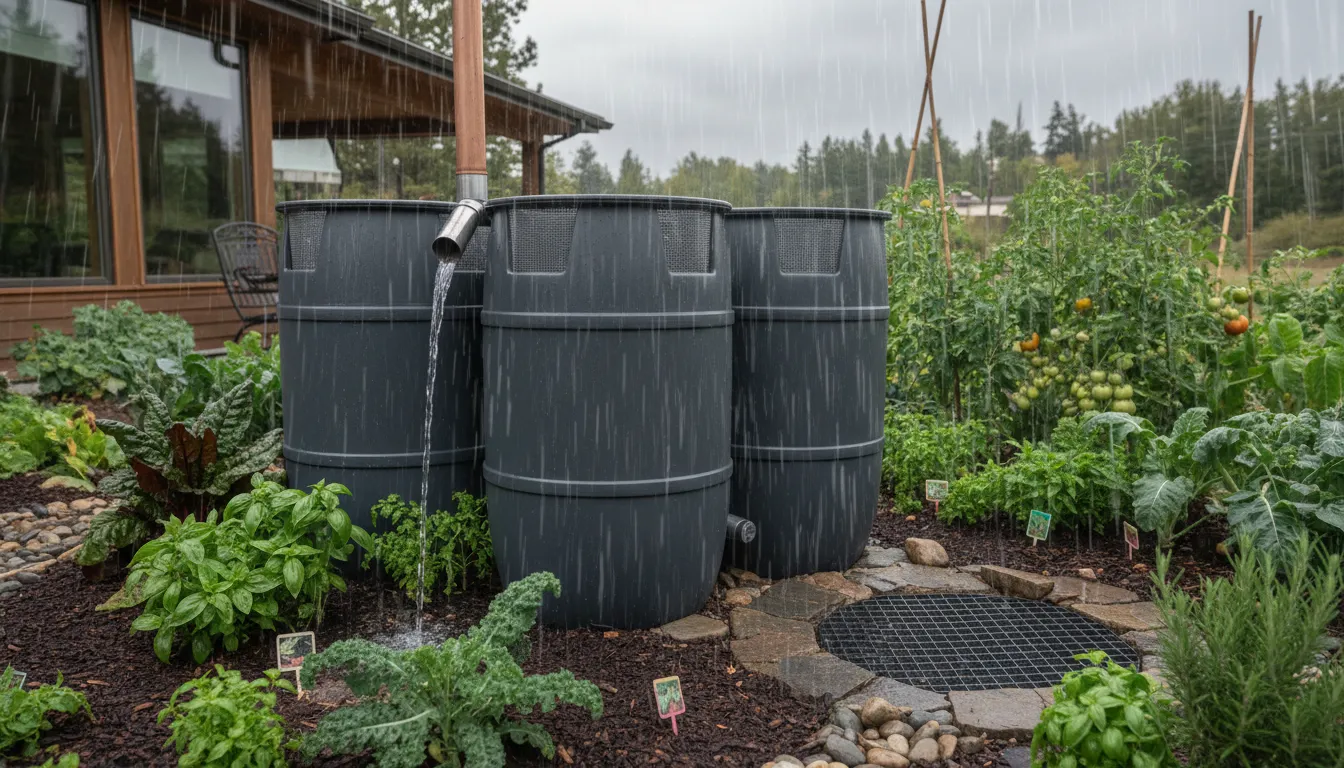
Harvesting rainwater is not a magic solution to the water crisis, but it is a concrete, measurable contribution within reach of anyone with a roof over their head. It’s a way to take responsibility for your own consumption, reduce pressure on public supply systems, and often save on water bills.
Start simple: a 500-liter reservoir connected to the garage roof already represents a real change. Then, as you understand the system and see the results, you can gradually expand it. The technology exists, the rain falls — what is often missing is just taking the first step.
Just as we rethink our urban mobility to make it more sustainable (learn more in Sustainable Urban Mobility: What It Is and Why It Matters), rethinking how we use water at home is part of the same movement: individual choices that, together, build a more balanced planet. And this transformation begins with information — and with action.
