What Is Sustainable Urban Mobility
Imagine waking up in the morning, leaving home, and arriving at work without facing traffic jams, without inhaling exhaust fumes, and without spending half your salary on fuel. This scenario might seem utopian for those living in large Brazilian cities, but it has a name: sustainable urban mobility. Contrary to what many people think, it’s not a distant concept or restricted to wealthy countries — it’s a reality in the making, with real examples here in Brazil and around the world.
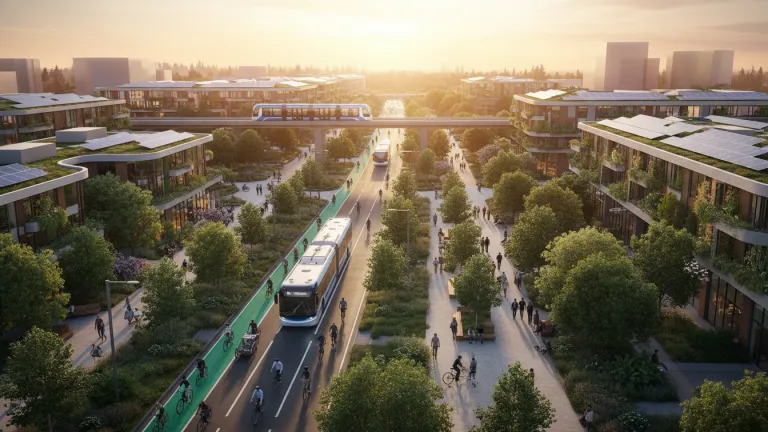
Sustainable urban mobility is a set of practices, policies, and technologies that aim to organize the movement of people in cities in an efficient, accessible, safe, and environmentally low-impact manner. It puts humans — not cars — at the center of urban planning. This involves everything from the quality of sidewalks and bike lanes to the type of fuel used in buses, including the integration of public transport systems.
The topic has never been more urgent. According to the Intergovernmental Panel on Climate Change (IPCC), the transport sector is responsible for about 16% of global greenhouse gas emissions, and in cities, this number can be even higher. In Brazil, road transport has historically been one of the main sources of CO₂ emissions. With more than half of the world’s population living in cities — a proportion expected to grow in the coming decades, according to the UN — rethinking how we move in urban spaces is crucial for any serious climate agenda.
Why Urban Mobility Is an Environmental Issue
When we talk about sustainability, it’s common to think of solar energy, recycling, or conscious consumption. Transport, however, often takes a back seat in popular debate — despite being one of the biggest climate villains in urban daily life.
The dominant model in Brazilian cities is still the individual fossil-fueled car. This has cascading consequences:
- CO₂ emissions and local pollutants, contributing to global warming and respiratory diseases
- Chronic traffic jams, reducing productivity and quality of life
- Unplanned urban sprawl, pushing low-income populations to the outskirts, far from jobs and services
- Soil impermeabilization with asphalt and parking lots, increasing the risk of flooding
- Noise and stress as often underestimated public health issues
Moreover, there’s a component of social justice that cannot be ignored: those who suffer most from poor public transport quality are the most vulnerable populations, who depend on overcrowded buses, spend hours on daily commutes, and live in areas with less infrastructure. Sustainable mobility, therefore, is also just mobility.
The Pillars of Sustainable Mobility in Cities
To understand the concept in practice, it’s useful to know the elements that make up a truly sustainable mobility system:
Quality and Integrated Public Transport
A good public transport system — metro, BRT (Bus Rapid Transit), trains, and electric buses — is the backbone of sustainable mobility. When efficient, it removes thousands of cars from the streets per trip. Cities like Curitiba are international references for their BRT system, serving as models for projects in other countries.
Active Mobility: Walking and Cycling
Walking and cycling are the most sustainable ways to move. For this, accessible, safe, and shaded sidewalks are necessary, along with a connected and protected bike lane network. Cities like São Paulo and Fortaleza have significantly expanded their cycling infrastructures in recent years, although there is still much progress to be made.
Fleet Electrification
Replacing combustion vehicles with electric or hydrogen-powered ones is an irreversible global trend. In the urban bus sector, several Brazilian cities already operate or test electric fleets, reducing emissions and noise simultaneously.
Car Sharing and Rational Use
Carpooling services, car sharing, and electric scooters make up the so-called shared mobility ecosystem, reducing the total number of vehicles on the roads and optimizing the use of each one.
Transport-Oriented Urban Planning
Compact cities with mixed land uses (housing, commerce, and services nearby) reduce the need for long commutes. The concept of the “15-minute city” — where everything you need is within 15 minutes by foot or bike — has gained global traction in recent years and guides urban projects in various capitals.
The Brazilian Scenario in 2026
Brazil presents a contradictory picture: while it has some pioneering initiatives, it still faces enormous structural challenges.
On the positive side, the country has advanced in electrifying bus fleets in capitals like São Paulo, Recife, and Fortaleza. The National Urban Mobility Policy (Law 12.587/2012) establishes principles that prioritize non-motorized and collective transport over individual transport. Bicycle lane and accessible sidewalk programs have been expanded in several cities.
On the challenge side:
- Public transport is still seen as “transport for the poor” by much of the population, reflecting years of underinvestment and poor quality
- Urban planning continues, in many municipalities, to be car-oriented
- Electrification of private vehicle fleets is advancing but is still incipient compared to the size of the national fleet
- Integration between different modes (bus, metro, bicycle, train) is still precarious in many medium and large cities
It’s important to acknowledge these advances and challenges without falling into greenwashing discourses — when superficial initiatives are presented as definitive solutions. If you want to understand better how to identify empty promises in the environmental area, check out our article on Greenwashing: What It Is and How to Identify It.
Inspiring Examples: What Works Around the World
Looking outside Brazil also helps visualize what’s possible:
City Highlight Initiative Result Amsterdam (Netherlands) Integrated cycling network with public transport Over 60% of daily commutes by bicycle Bogotá (Colombia) TransMilenio BRT system + bike lanes Significant emission reduction in the central corridor Shenzhen (China) Complete electrification of the public bus fleet Fleet of over 16,000 electric buses since 2017 Oslo (Norway) Car restriction policies in the center + electric vehicles One of the highest electric vehicle adoption rates in the world These examples show that transformation is possible — and usually starts with clear political decisions combined with consistent infrastructure investment.
What You Can Do Today: Practical Actions
Systemic change depends on public policies, but each person has a real role to play. Here’s a practical and actionable list of attitudes you can adopt now:
In daily life:
- Prioritize walking for short distances (up to 1 km). It’s free, healthy, and has zero emissions
- Use a bicycle whenever infrastructure is available — and push for its expansion
- Adopt public transport as the first option before the car, even if it’s less convenient at first
- Try sharing services like bicycles or electric scooters available in many cities
- Organize or participate in carpooling schemes with colleagues or neighbors
In your community:
- Participate in public hearings and municipal urban mobility councils — your voice matters in city planning
- Support local businesses to reduce the need for long commutes
- Share information about sustainable mobility with friends and family — awareness is the first step to cultural change
If you own a vehicle:
- Keep up with maintenance to reduce emissions and consumption
- Consider electrification when renewing your vehicle, evaluating options available in the Brazilian market
- Reduce unnecessary trips and group commitments to optimize routes
Why Sustainable Mobility Is Also a Health Issue
The benefits of sustainable mobility go far beyond the climate. Cities with fewer cars and more spaces for pedestrians and cyclists present:
- Improved air quality, reducing respiratory diseases like asthma and bronchitis
- More physical activity in daily life, combating sedentarism and cardiovascular diseases
- Reduction in traffic accidents, one of the leading causes of premature death in Brazil
- More public space for socializing, leisure, and mental well-being
- Reduction in chronic stress caused by hours lost in traffic
The World Health Organization (WHO) recommends that adults engage in at least 150 minutes of moderate physical activity per week. Incorporating walking and cycling into daily commutes is one of the simplest — and most accessible — ways to achieve this goal.
Conclusion: Better Cities Begin with Our Choices
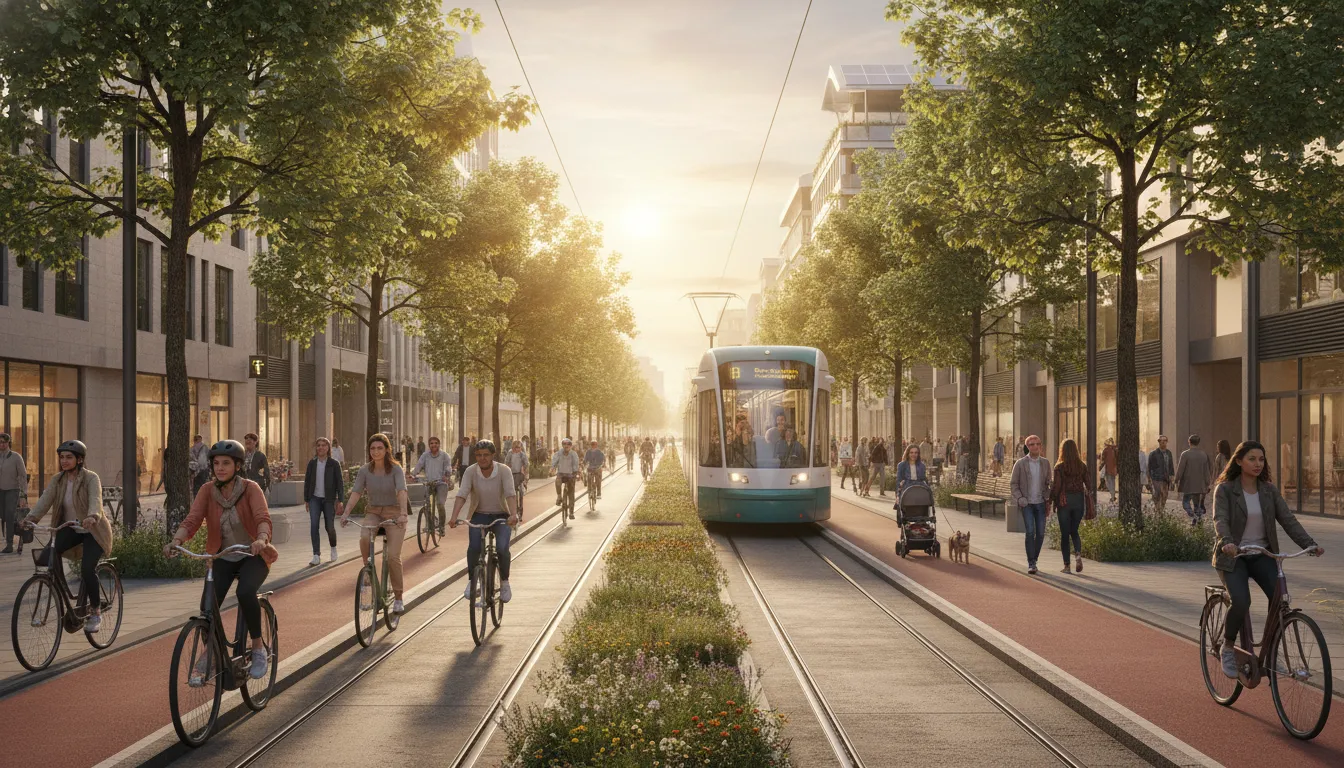
Sustainable urban mobility is neither a luxury nor a utopia. It’s a real necessity, with concrete solutions and proven examples worldwide. The good news is that the transition is already happening — in electric bus fleets, in bike lanes that gain kilometers each year, in policies that begin to prioritize people over cars.
Every transportation choice we make in daily life has a real impact — on the climate, on health, on the quality of life in cities. It’s not about perfection, but direction: progressing, one bike ride, one metro trip, one shared ride at a time.
And when each of us does our part, while also holding public managers accountable for the necessary policies, the transformation of cities becomes not only possible — but inevitable.
Start today. Choose a more sustainable mobility habit and adopt it for a week. You might be surprised by what you discover along the way.
Back To Top
