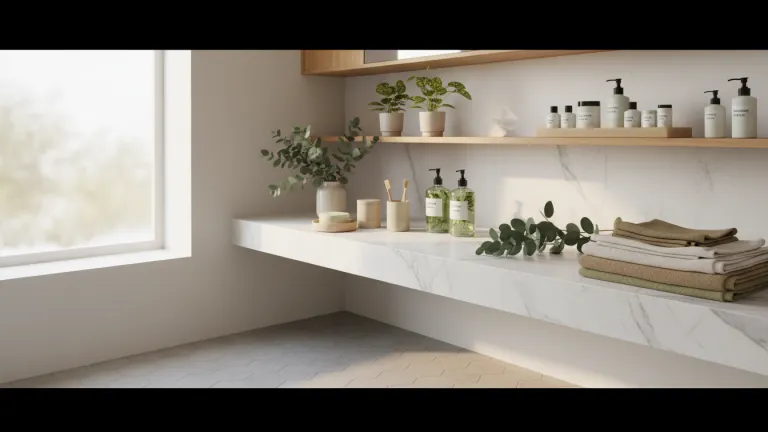
Why the Bathroom is the Ideal Starting Point for a More Sustainable Life
Think about your bathroom for a moment. It’s one of the most visited rooms in the house — on average, each person visits it between 6 and 8 times a day. Now multiply that by the products you use: shampoo, conditioner, soap, toothpaste, moisturizer, sanitary pads, razor… Each of these items has a story before reaching your hands and a destination after it goes down the drain or into the trash.
The good news is that the bathroom is also one of the environments where small changes can make real and consistent impacts. Unlike a kitchen renovation or buying an electric car, transforming your bathroom with sustainable products doesn’t require a large initial investment — and often results in financial savings in the medium term. It’s an accessible gateway to a more conscious routine.
In this article, you’ll find practical, evidence-based guidance to replace the main bathroom products with more sustainable alternatives. The goal is not perfection, but progress. Every change counts.
The Problem of Plastic Packaging in a Sustainable Bathroom
Before discussing solutions, it’s worth understanding the scenario. Disposable plastic is one of the biggest global environmental challenges — and the bathroom is one of the main domestic sources of this type of waste.
Shampoo bottles, conditioner containers, cream jars, liquid soap refills, conventional toothbrushes: much of this material is made from virgin petroleum-derived plastic and has a very short lifespan. In Brazil, according to data from the Panorama of Solid Waste in Brazil published by Abrelpe, the country generates tens of millions of tons of solid waste per year, and a significant portion still does not receive proper disposal.
Besides packaging, there’s the issue of ingredients. Many conventional products contain microplastics (particles smaller than 5 mm added as exfoliants or thickeners), which escape sewage treatment plants and reach rivers, oceans, and even the food chain. The European Union has advanced with restrictions on the use of intentionally added microplastics in cosmetics starting in 2023, and the regulatory debate in Brazil is still ongoing. Choosing products that declare the absence of these ingredients is a concrete way to reduce this impact.
Solid Hygiene Products: The Simplest and Most Efficient Replacement
If you want to start with just one change, let it be this: replace liquid products in plastic packaging with solid versions.
High-quality shampoo bars, conditioner bars, and soap bars eliminate plastic packaging almost completely — most come in recycled paper or no packaging at all. Additionally, they are more concentrated than liquid versions, meaning they last longer with the same amount of product.
How to Choose a Good Solid Shampoo
- Check the ingredients: avoid harsh sulfates like sodium lauryl sulfate (SLS) in excess, parabens, and undeclared synthetic fragrances.
- Observe the pH: a good solid shampoo should have a pH close to that of the scalp (between 4.5 and 5.5). Some brands provide this information on the label or website.
- Test for at least two weeks: hair goes through an adaptation period when abandoning products with silicone and sulfates. A different sensation at first is normal.
- Store properly: use a soap dish with drainage so the product dries between uses and lasts longer.
- Prefer brands that declare the complete list of ingredients and have recognized certifications, such as COSMOS (international standard for natural and organic cosmetics) or Ecocert approval.
In Brazil, there is already a growing offer of national brands that produce solid cosmetics with natural ingredients and compostable packaging. Researching local producers — as you can read in Buying from Local Producers is Good for You and the Planet — can reveal quality options with a smaller transportation footprint.
Toothbrush and Oral Hygiene with Less Environmental Impact
The conventional toothbrush is predominantly made with virgin plastic (nylon and polypropylene) and, with dentists’ recommendation to replace it every three months, represents about four units of plastic discarded per person per year.
Alternatives worth considering:
- Bamboo toothbrush with nylon bristles: the handle is biodegradable, although the bristles still need to be discarded separately. It’s a considerable improvement over the fully plastic model.
- Brush with certified recycled handle: some brands use post-consumer recycled plastic in the handle, reducing the demand for virgin plastic.
- Replaceable head refills: models with a permanent handle and only the replaceable head significantly reduce the volume of discarded material.
For toothpaste, there are options in solid tablets (without plastic packaging) or in glass jars. Check if the formula contains fluoride, if your dentist recommends it — some “natural” versions do not include it, which may be unsuitable depending on your oral health.
Sustainable Menstruation: Durable and Safe Options
This is a topic that deserves attention because the accumulated impact is significant, and the alternatives are already consolidated and accessible.
Conventional disposable pads combine plastic, chlorine-bleached cellulose, and other materials that take decades to decompose. A person who menstruates uses thousands of disposable pads over their fertile life.
The main sustainable alternatives are:
- Menstrual cup: made of medical silicone or latex, it can last from 5 to 10 years with proper care. It’s reusable, produces no monthly waste, and after the initial cost, represents significant financial savings.
- Menstrual disc: similar to the cup, with a different shape. Also reusable.
- Cloth pad (washable pad): made of organic cotton or flannel, it’s washable and reusable. A good option for those not yet comfortable with internal collectors.
- Period underwear: panties with integrated absorbent layers, washable and reusable.
All these options have safety studies and are approved by health agencies in various countries. Adaptation may take one or two cycles — the result, besides environmental, is often financial.
Towels, Makeup Removers, and Cotton: Small Changes, Big Difference
Disposable cotton pads used to remove makeup or apply tonics are another item that accumulates volume over the months.
Practical substitutions:
- Reusable cotton pads: made of organic cotton or microfiber fabric, they are machine washable and last for years.
- Cotton flannel or muslin: pieces of soft fabric work equally well as makeup removers.
- Reusable spatulas and applicators for creams and masks, instead of disposable plastic swabs and applicators.
About cotton swabs: in Brazil, Law No. 14.300/2022 (Legal Framework for Sanitation and subsequent regulations) and ANVISA standards follow the global movement to restrict single-use plastics. Plastic-stemmed cotton swabs have already been banned in several European countries. Alternatives with paper or bamboo stems are already available in the national market.
How to Assemble a Transition Kit for a Sustainable Bathroom
Transforming the bathroom all at once can seem intimidating — and financially heavy. The most effective strategy is the gradual transition: as a product runs out, you replace it with the more sustainable version.
Step-by-Step for the Transition
- Make an inventory: list all the products you currently use in the bathroom.
- Prioritize those with higher turnover: shampoo, soap, and toothpaste run out faster — start with them.
- Research one alternative at a time: don’t try to change everything at once. One new product per month is already an excellent pace.
- Test before buying in bulk: many brands sell smaller or sample versions.
- Consider the cost per use, not the price per unit: a solid shampoo costing R$ 30 that lasts three months may be cheaper than two plastic bottles costing R$ 15 each.
- Dispose of old products correctly: don’t throw plastic bottles in regular trash if selective collection is available in your city. The CEMPRE (Corporate Commitment to Recycling) portal can help locate collection points.
- Record your changes: noting what you’ve changed helps maintain motivation and perceive real progress.
Water Care in a Sustainable Bathroom
No article about a sustainable bathroom would be complete without discussing water consumption. Bathing is one of the largest domestic uses of water — and in Brazil, where the water issue is increasingly relevant, this is a real point of attention.
Habits that make a difference:
- Reduce shower time: each minute less can save several liters, depending on the shower’s flow rate.
- Install an aerator on the sink faucet: simple and inexpensive devices that mix air with water and reduce consumption without perceptible pressure loss.
- Fix leaks quickly: a simple constant drip can waste dozens of liters per day.
- Use the faucet only when necessary: turn it off while brushing your teeth or soaping your face.
The combination of sustainable products with conscious water use habits makes the bathroom a truly aligned environment with a lower environmental impact lifestyle.
Conclusion: Your Bathroom Can Be a Space for Conscious Choices
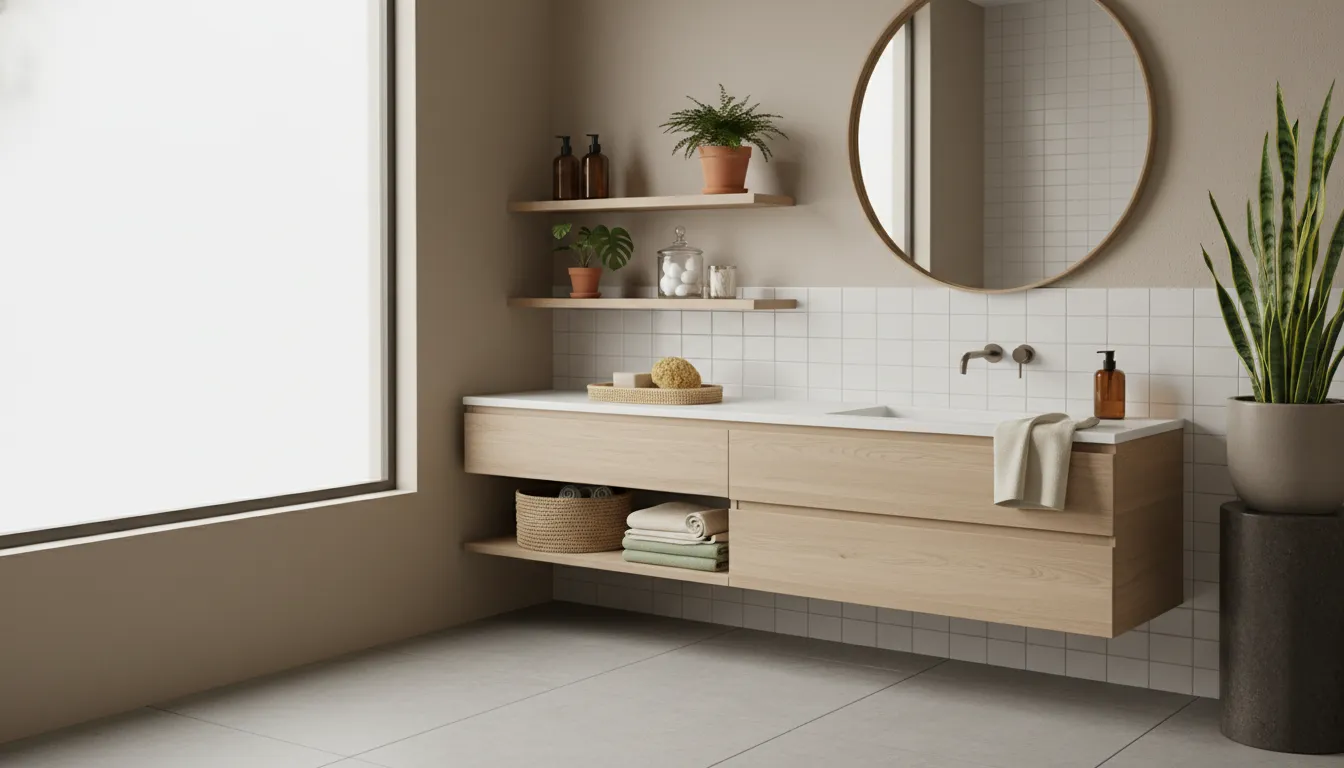
Transforming the bathroom with sustainable products is not about giving up comfort or quality. In most cases, it’s about discovering alternatives that work just as well — or better — than conventional versions, with the advantage of generating less waste, less exposure to unnecessary ingredients, and often, less long-term expense.
You don’t have to do everything at once. Start with one change. Then another. Over time, your bathroom will reflect your values — and this sense of coherence between what you believe and what you consume has a value that goes beyond the environmental.
If you’re thinking of expanding your sustainable choices beyond the bathroom and want to understand how solar energy can complement this lifestyle at home, it’s worth checking out How Much Does It Cost to Install Solar Energy at Home in 2026?. Every space in your home is an opportunity. The bathroom is just the beginning.
