Did you open the fridge today and throw away something you didn’t remember buying? This scene happens frequently in Brazilian homes. According to the United Nations Food and Agriculture Organization (FAO), about one-third of all food produced in the world ends up in the trash before being consumed. In Brazil, Embrapa estimates that waste occurs throughout the entire chain, from the farm to the kitchen, with the domestic stage being one of the most significant.
The good news is that storing food well at home is a simple skill that doesn’t require expensive equipment or technical knowledge. With a few changes in habits and organization, you reduce the organic waste going to landfills, spend less at the market and supermarket, and still eat better quality food. By the end of this text, you’ll know exactly which techniques work, how to organize them into your Brazilian routine, and which common mistakes to avoid.
Why food waste at home matters so much to the planet
When food goes to the trash, it’s not just food that’s lost. The water used for irrigation, the energy for transportation, the agrochemicals from cultivation, and the work of those who produced it all go too. According to data from the United Nations Environment Programme (UNEP), food waste accounts for a significant portion of global greenhouse gas emissions, because organic matter in landfills decomposes without oxygen and releases methane, a gas with much greater warming power than CO2.
In Brazil, Law 12.305/2010, known as the National Solid Waste Policy (PNRS), establishes guidelines to reduce waste generation and encourages composting of organic materials. Even so, Abrelpe surveys show that organic waste still represents the largest fraction of waste sent to Brazilian landfills. In other words, much of what you throw away could have been used, or at least sent to composting instead of regular trash.
Preserving food well is, therefore, an act with real consequences: less methane in the landfill, less pressure on agricultural production, and more money in your pocket.
How the Brazilian refrigerator becomes an ally (or enemy) of food preservation
The refrigerator is the main preservation equipment in almost every home in the country, but most people don’t know that temperature and shelf position make a huge difference. The coldest zone is at the bottom, near the vegetable compartment. Raw meat should always stay there, well wrapped, to prevent cross-contamination.
The middle part is ideal for leftovers, dairy products, and opened eggs. The door, contrary to what it seems, is the area with the greatest temperature variation, so don’t store milk or yogurt there. Embrapa recommends keeping the refrigerator set between 1 and 4 degrees Celsius for proper preservation of perishables.
Another practical issue: an overstuffed refrigerator doesn’t circulate air and loses efficiency; an almost empty refrigerator also wastes more energy to maintain temperature. A middle ground works better, and organizing by categories helps you see what’s about to expire before going to the market to buy more of the same.
Practical preservation techniques you can use right now
Freezing: the most accessible method
The freezer is underutilized in most Brazilian homes. Day-old bread, ripe banana, meat bought on sale, cooked rice, ready-made beans: almost everything can be frozen if you follow a few basic precautions.
- Wait for the food to cool completely before closing the container.
- Use airtight containers or freezer bags, removing as much air as possible.
- Label with the food name and freezing date.
- Respect the time limits: raw meat lasts 3 to 6 months; prepared dishes, 1 to 3 months; blanched fruits and vegetables, up to 12 months.
Blanching, which consists of dipping the vegetable in boiling water for 2 to 3 minutes and then passing it through ice water, preserves color, texture, and nutrients before freezing. It’s well worth it for broccoli, green beans, and corn.
Preserves and fermented foods: tradition that became a trend
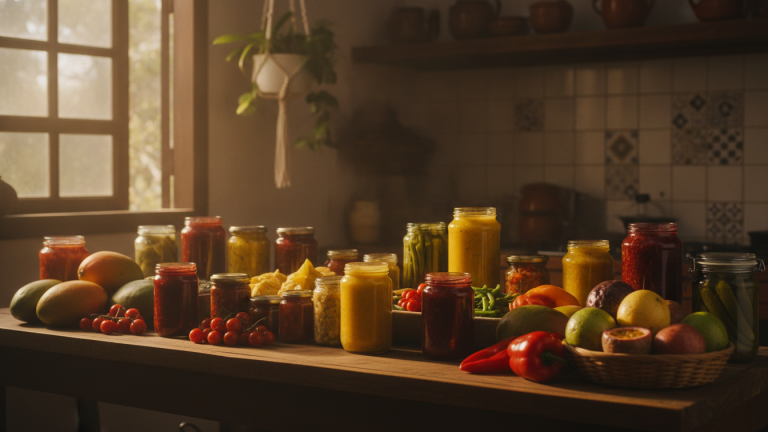
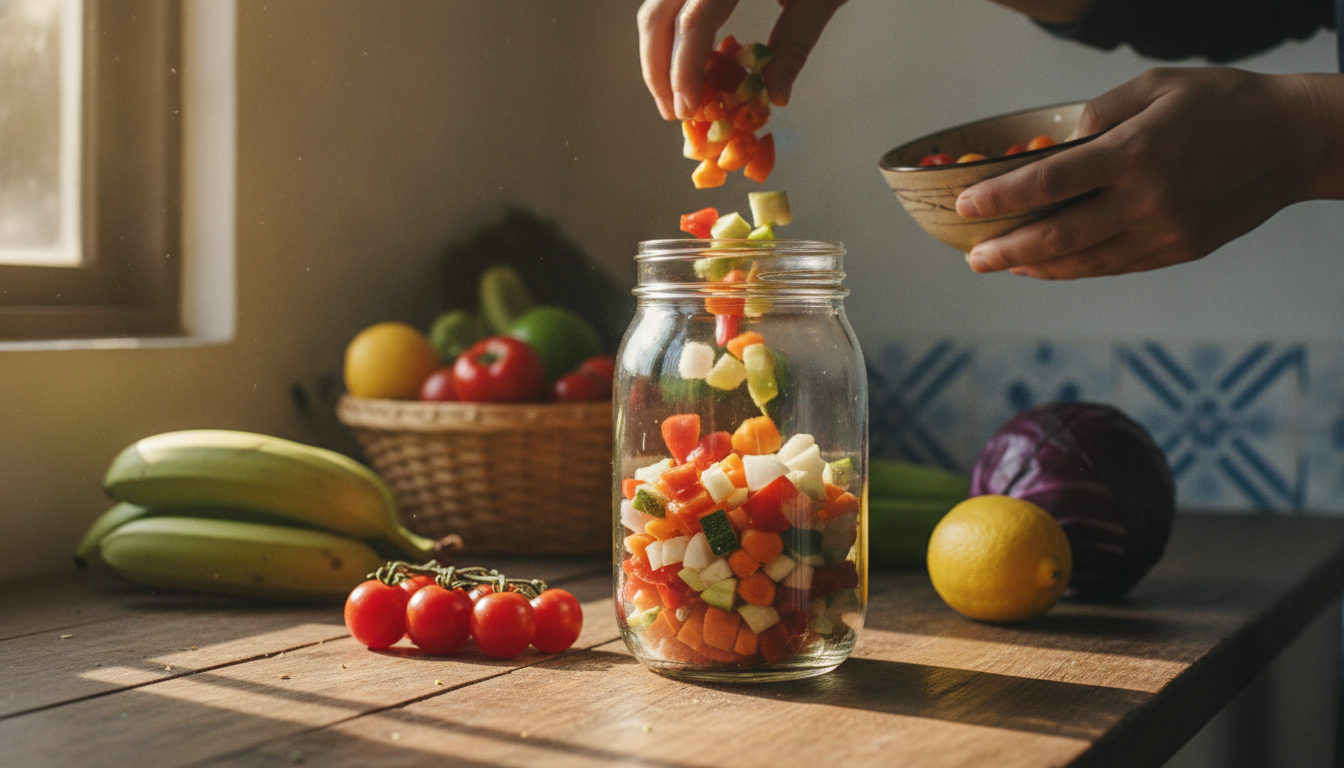
Making preserves at home is an old practice in Brazil, especially in Minas Gerais and the South of the country. Peppers in olive oil, onions in vinegar, vegetables in brine: besides lasting weeks or months, these preparations add flavor and reduce waste from leftover market purchases.
Natural fermentation, like sauerkraut made with cabbage and salt, doesn’t require any special equipment. Just a glass jar, cabbage, non-iodized salt, and a few days of patience. The result has natural probiotics and the vegetable that was wilting gets a new life.
Dry storage: organization and the right containers
Flour, beans, rice, oats, and other grains last much longer in airtight glass or BPA-free plastic containers, away from light and moisture. The number one enemy of Brazilian pantries is humidity, especially in coastal cities like Salvador, Recife, and Santos. A small silica gel packet inside cookie or flour containers helps a lot.
Common mistakes that shorten food life
- Storing fruits and vegetables together in the drawer: the ethylene released by fruits like apples, bananas, and tomatoes accelerates ripening of everything around them.
- Washing strawberries before storing: moisture favors mold. Wash only when consuming.
- Leaving leftovers uncovered in the refrigerator: besides absorbing odors, exposed food dries out and spoils faster.
- Not following the “first in, first out” rule: when you buy new foods, put the older ones in front to consume them first.
- Confusing “expiration date” with “manufacturing date”: the expiration date indicates how long the product is guaranteed by the manufacturer under ideal storage conditions. If a sauce jar was left open and poorly closed in the refrigerator, the actual timeframe is shorter.
Shopping planning: the most effective prevention
No food preservation technique replaces the habit of shopping in a planned way. A list made based on what already exists at home avoids duplicates and impulse purchases. Before going to the market, open the refrigerator and pantry and note what needs to be consumed first.
Another simple strategy is weekly menu planning. You don’t need to be rigid, but having an idea of what you’re going to cook from Monday to Sunday helps you buy the right quantities. For those living in apartments and frequenting neighborhood markets, buying vegetables and fruits twice a week in smaller quantities usually generates less waste than a large biweekly stock.
If you have space and interest in growing some fresh herbs like parsley, chives, and basil, a small apartment herb garden is a natural extension of this logic: you pick what you need and avoid throwing away the entire bunch that was left over.
The impact on your wallet: how much you can save
It’s difficult to generalize the exact amount without individual data, but the logic is straightforward: every kilogram of food that doesn’t go to the trash is money that stayed in your account. If a family wastes just 200 grams of meat per week, over the course of a year that represents several kilos of protein paid for but not consumed.
The calculation becomes even more relevant when considering food inflation in Brazil, which has historically been higher than general inflation, according to IBGE data. Preserving what you’ve already bought well is, in practice, a silent adjustment in the household budget.
For those who want to go further and think about food more broadly, understanding what a sustainable diet is can help combine healthy food choices with lower environmental impact, which generally also means reducing waste from the time of purchase.
Frequently asked questions about food preservation at home
Can I refreeze food that has already been thawed?
It depends. If the food was thawed in the refrigerator and is still cold, you can refreeze it without safety concerns, but the texture may worsen. If it was thawed at room temperature for more than two hours, the microbiological risk increases and refreezing is not recommended.
Glass container or plastic container: which preserves better?
Glass is inert, doesn’t absorb odors or dyes, and can be sterilized in boiling water, which facilitates hygiene. Plastic is lighter and more resistant to falls, useful in the freezer. For acidic preserves (vinegar, lemon), always prefer glass, as acid can interact with some types of plastic.
How long does cooked rice last in the refrigerator?
According to Embrapa guidelines and health authorities, cooked rice should be consumed within 4 days when kept in a closed container between 1 and 4 degrees Celsius. After this period, the risk of bacterial proliferation increases.
Can the butcher’s styrofoam tray go straight to the freezer?
It’s not ideal. The styrofoam and plastic wrap from supermarket trays are not designed for the intense cold of the freezer and can trap air around the meat, favoring the appearance of ice crystals and freezer burn. Transfer the meat to freezer bags or airtight containers before freezing.
Start today with a small step
Reorganize your refrigerator now: put leftovers and what’s closest to expiration at eye level. Label containers with dates. Set aside what can go to the freezer before it spoils.
It’s five minutes of attention that can prevent waste this week. And when that becomes a habit, the result shows up both in your conscience and in your grocery bill.
