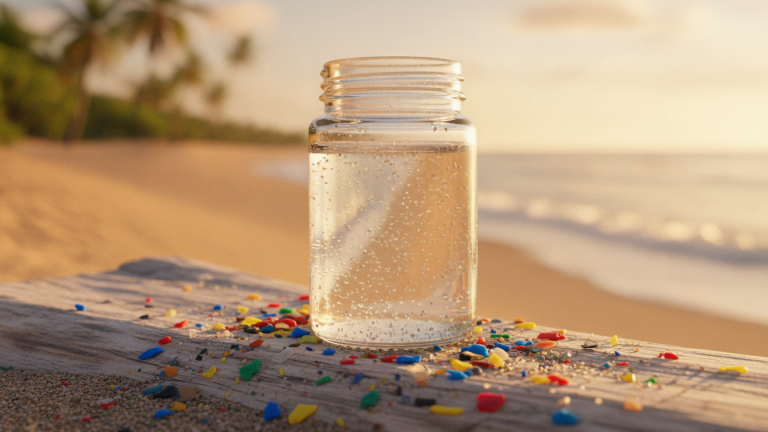
Microplastics: What They Are and Why They’re Risky
Have you ever stopped to think that you might be drinking plastic right now? Research published in recent years has identified plastic particles in bottled mineral water samples, table salt, honey, and even in the air we breathe at home. It’s no exaggeration: UNEP (United Nations Environment Programme) estimates that plastic pollution is today one of the most urgent environmental crises on the planet, and microplastics are at the center of this issue.
The subject may seem distant, but it reaches you through the tap, on your plate, and in the fabric of the clothes you wear. The good news is that understanding the problem is already half the battle, because the other half lies in simple choices that anyone can make at the supermarket, laundromat, or kitchen, without needing to change everything at once.
By the end of reading this text, you’ll know what microplastics are, where they come from, what risks they pose to your health and the environment, and what concrete actions reduce your exposure and the amount you release into the world.
What exactly are microplastics
Microplastics are solid fragments of plastic material less than five millimeters in length. Some are so small they only appear under a microscope. Science still divides this category into two main groups.
The primary ones are manufactured small on purpose: microspheres used in facial scrubs, toothpaste with “microbeads,” and industrial pellets (those pellets that serve as raw material for plastic industries and frequently escape into rivers and oceans during transport). The secondary ones emerge when larger objects fragment over time: a PET bottle exposed to the sun, a plastic bag battered by water currents, or a polyester garment that sheds fibers during washing.
The difference matters because it changes the combat strategy. For primary microplastics, the solution is to ban products containing them. For secondary ones, the solution involves reducing plastic consumption in general and treating what already exists more carefully.
Where microplastics come from in Brazil
Brazil is one of the world’s largest producers of solid waste. According to Abrelpe (Brazilian Association of Public Cleaning and Special Waste Companies), a significant portion of collected garbage still goes to landfills or, worse, to inappropriate locations. When plastic is not disposed of and recycled correctly, it fragments in the environment and becomes microplastic.
The main sources identified by researchers include:
- Washing synthetic clothing: each wash cycle of a polyester garment can release hundreds of thousands of microfibers that pass through washing machine filters and reach rivers
- Worn tires: synthetic rubber that sheds during braking is one of the largest sources of microplastics in urban environments, according to UNEP
- Irregular disposal of plastic packaging: bottles, bags, and styrofoam that reach rivers and the ocean and fragment with sunlight and water movement
- Industrial pellets: small plastic pellets that escape from ports and industries during handling
- Paints and coatings: released as painted surfaces wear away, including boats and urban infrastructure
In Brazil, rivers like the Tietê and Guanabara Bay have been the subject of studies that identified concerning concentrations of microplastics, although data remains fragmented due to lack of systematic monitoring on a national scale.
Why microplastics pose health risks
For a long time, conventional wisdom said that plastic was inert, that it passed through the body without doing anything. Science has accumulated evidence that complicates this idea considerably.
Microplastics are concerning for three main reasons. First, the particles themselves can cause inflammation in the tissues where they deposit. Second, they carry chemical additives used in plastic manufacturing, such as plasticizers and stabilizers, which can interfere with the hormonal system. Third, the particles have a porous surface that adsorbs environmental contaminants, such as pesticides and heavy metals, concentrating them and delivering them directly to the body.
Studies published in scientific journals have identified microplastics in human blood, lungs, placenta, and even breast milk. The World Health Organization has already classified the topic as an area requiring more research and regulatory attention, recognizing that there is no consensus yet on the exact level of risk, but that the precautionary principle applies.
For the environment, the problem is equally serious. Marine animals ingest microplastics confusing them with food, which causes false satiation, malnutrition, and death. As they move up the food chain, these particles reach the fish you eat at a restaurant or farmers market.
How microplastics reach you in everyday life
You don’t need to go to a contaminated beach to be exposed. Exposure happens in everyday situations.
Heating food in plastic containers is one of them: heat accelerates the release of particles and chemical substances into food. Drinking water from plastic bottles left in the sun, inside the car, also increases exposure. Foods packaged in plastic for long periods, especially fatty ones, tend to absorb more particles.
Tap water, depending on the treatment system, may contain microplastics. But an important fact: bottled water, according to comparative research, frequently contains more microplastics than tap water, precisely because of contact with the plastic container during storage and transport. This means that switching from a bottle to a filtered tap can be, at the same time, cheaper, healthier, and less polluting.
In the kitchen, one simple change has a double impact: using glass or stainless steel containers to store food reduces exposure and prevents waste. If you want to deepen this habit, the article on storing food at home prevents waste and saves money provides practical tips for better organizing your pantry and refrigerator.
What you can do to reduce your exposure and your footprint
No one needs to eliminate all plastic from their life overnight. Gradual and consistent changes make more difference than a radical shift that lasts two weeks.
Start with the most impactful:
- Change the container, not the food: use glass, stainless steel, or ceramic to store and heat food. Avoid plastic in the microwave.
- Prefer the tap with a filter: a good quality activated charcoal filter reduces microplastics and comes out much cheaper in the long run than buying small bottles every week.
- Put a microfiber filter on your washing machine: there are washing bag models and external filters that retain a good portion of synthetic fibers released by clothes. The investment is low and the effect is immediate.
- Reduce polyester and similar clothing: when shopping, prefer organic cotton, linen, or wool. When washing synthetics, wash at lower temperatures and with shorter cycles.
- Dispose of plastic correctly: separate it for your neighborhood’s selective collection. Plastic that goes to recycling doesn’t go to the river.
- Avoid products with microspheres: read the label on scrubs and cosmetics; look for the terms “polyethylene,” “polypropylene,” or “nylon” in the ingredient list.
- Reduce the use of disposables: straws, plastic utensils, disposable plastic cups. Each piece you refuse is one less piece in the fragmentation cycle.
Another change that seems small but accumulates: growing herbs at home reduces the amount of plastic packaging you buy. A pot of basil, chives, or parsley on the window already makes a difference. If this idea interests you, the guide on vegetable garden in a small apartment: where to start can be a good next step.
The role of legislation and what’s still missing in Brazil
Brazil has Law 12.305/2010, known as PNRS (National Solid Waste Policy), which establishes principles such as shared responsibility for the product lifecycle and priority for reducing waste generation. In practice, implementation is still uneven among municipalities, and selective collection does not reach all regions of the country efficiently.
In the specific field of microplastics, Brazil still has no federal regulation banning microspheres in cosmetics, something that countries like the United States and European Union members have already advanced. Ibama and MMA (Ministry of Environment) have discussed the topic, but without approved legislation by 2026 that addresses the issue comprehensively.
This means that for now, much of the power to create change lies in consumer choices and the pressure that organized buyers exert on manufacturers.
Frequently asked questions about microplastics
Are microplastics in tap water more dangerous than in bottles?
Comparative research suggests that bottled water tends to contain higher concentrations of microplastics than treated tap water, due to prolonged contact with the plastic container. Using a quality filter on the tap is an alternative that reduces exposure and eliminates the recurring cost of buying small bottles.
Does washing polyester clothing really contaminate water?
Yes. Each wash releases synthetic microfibers that pass through conventional sewage treatment plants without being retained and reach rivers and oceans. Microfiber filters installed on the washing machine retain a significant portion of these fibers before they enter the sewage system.
Do children run a higher risk of microplastic exposure?
Children have behaviors that increase accidental ingestion of particles, such as putting objects in their mouths, and their developing bodies may be more sensitive to chemical disruptors. For this reason, prioritizing BPA-free bottles and utensils and avoiding plastic when heating children’s food are especially important measures.
Does recycling plastic solve the microplastics problem?
Recycling reduces the amount of plastic that goes into the environment and fragments, but doesn’t completely eliminate the problem. The ideal is a combination of recycling what already exists and reducing consumption of new plastics, especially disposables.
Start with one thing today
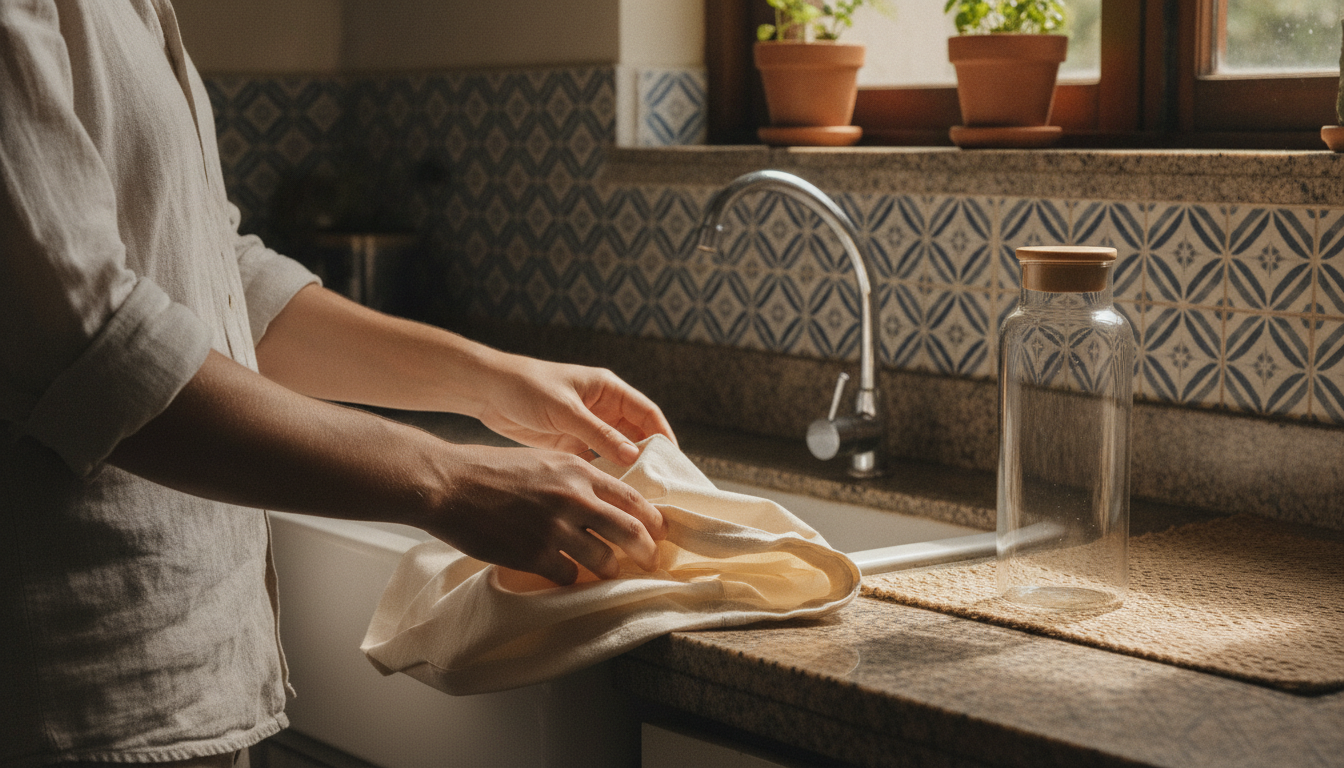
You don’t need to renovate your kitchen or replace your entire wardrobe. Choose one action from the list above and put it into practice this week. It could be bringing a stainless steel bottle when you go out, or simply stop heating food in a plastic container.
Each small choice adds up with those of other people and creates real pressure on manufacturers and public policies. The planet doesn’t improve in one turn, but it improves with each decision made with more awareness.
