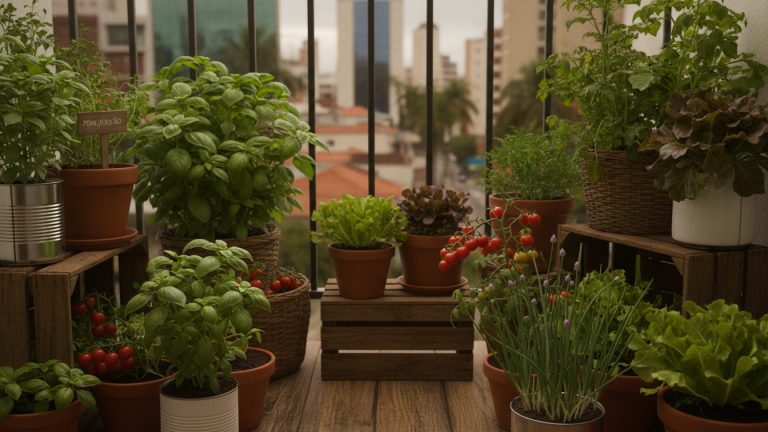
Small Apartment Vegetable Garden: Where to Start
Have you ever come home from the market carrying a bunch of fresh greens, used a couple of sprigs, and watched the rest rot in your refrigerator the following week? This scene repeats in millions of Brazilian homes. According to IBGE, about 87% of the Brazilian population lives in urban areas, which means most of us are increasingly distant from any piece of land. But that doesn’t have to stop you from having fresh herbs, lettuce, or even cherry tomatoes readily available in your own kitchen.
A vegetable garden in a small apartment is simpler than it seems. It doesn’t require a garden, doesn’t require entire free weekends, and doesn’t require any technical knowledge to get started. With a few pots, quality soil, and a little attention to the light available in your space, you can harvest enough to season most of your meals, reduce food waste, and even save money on your grocery bills.
By the end of this guide, you’ll know exactly what to buy, where to place it, how to water it, and which plants adapt best to the reality of a Brazilian apartment. Let’s start from the beginning.
Why a Home Vegetable Garden Makes Sense for City Dwellers
Cultivating at home goes far beyond a hobby. Embrapa, which has researched food production systems in Brazil for decades, points to urban agriculture as a real strategy for food security and waste reduction. When you harvest only what you’ll use at that moment, there’s practically no loss.
From a financial perspective, the impact shows up in household budgets. Herbs like basil, chives, cilantro, and parsley are purchased weekly by a large portion of Brazilian families, and the accumulated cost over the year is considerable. A well-maintained pot of basil can last months and produce much more than a bunch bought at the supermarket.
There’s also the health aspect. Plants grown at home without pesticides and consumed shortly after harvest preserve more nutrients and flavor. This complements the idea of a sustainable diet: what it is and how to adopt it in daily life, which begins precisely with more conscious choices about what we put on our plate.
Before Planting: Evaluate Your Space Honestly
The most common mistake for those starting a vegetable garden in an apartment is buying seedlings before understanding the environment. Light, air circulation, and temperature determine the success or failure of any cultivation.
Sunlight is the most critical factor. Most herbs and vegetables need at least four hours of direct sun per day. If your apartment only receives indirect light, or if the windows face south (which in Brazil means good shade most of the day), some plants simply won’t thrive. Do the test: observe where direct sun hits your balcony or window during morning and afternoon, and for how long.
- Direct sun for more than 4 hours: cherry tomato, bell pepper, eggplant, basil
- Direct sun from 2 to 4 hours: lettuce, arugula, parsley, chives, mint
- Indirect light or very protected environment: chives, mint, cilantro (with more difficulty)
If you live on a lower floor with little natural light, grow lights are an affordable option available in gardening stores and online. They simulate the spectrum of sunlight and work well for smaller herbs.
Materials to Get Started: What You Really Need
You don’t need a specialized store to set up your first vegetable garden. Much of the basic material is available in supermarkets, agricultural stores, and even construction shops.
List of essential materials:
- Pots with drainage holes at the bottom (clay, recycled plastic, or fabric)
- Saucers under the pots to avoid staining the floor
- Substrate specific for vegetable gardens (a mix of black soil and earthworm humus works very well)
- Small watering can or adapted PET bottle
- Seedlings or seeds of chosen plants
- Liquid or powdered organic fertilizer (earthworm humus, for example)
Approximate cost to start with three pots:
| Item | Cost estimate (2026) |
|---|---|
| 3 medium pots (2 to 5 liters) | R$ 30 to R$ 60 |
| Bag of substrate (10 liters) | R$ 20 to R$ 35 |
| 3 herb seedlings | R$ 15 to R$ 30 |
| Simple watering can | R$ 15 to R$ 25 |
| Initial total | R$ 80 to R$ 150 |
This cost pays for itself in just a few weeks with savings on fresh herbs alone. And the pots and watering can last for years.
Step-by-Step Guide to Setting Up Your First Vegetable Garden
This routine is for those starting from scratch. Follow the sequence and you’ll avoid the most common mistakes.
- Choose the location: Identify where there’s the most light on your balcony, deck, or window. Prefer the east or north side of the apartment, which receive morning and daytime sun.
- Decide which plants to grow: For beginners, start with two or three easy herbs, like chives, parsley, and mint. They tolerate small watering irregularities and grow quickly.
- Prepare the pots: Place a piece of mesh or small stones at the bottom of the pot to prevent clogging the drainage hole. Fill with substrate to about 2 centimeters below the rim.
- Plant the seedlings: Open a hole in the center of the pot, carefully place the seedling without compressing the roots too much, and cover with substrate. Press lightly and water immediately afterward.
- Establish a watering routine: The general rule is: water when the top layer of substrate is dry to the touch. In apartments with heat and low humidity, this may be daily. In cooler environments, every two days.
- Fertilize every 15 days: Use liquid humus diluted in water, following package instructions. Without nutrients in the substrate, plants grow weak.
- Harvest frequently: Always cut the older branches, leaving new shoots to develop. Regular harvesting stimulates growth and extends the plant’s life.
Time to first harvest: 3 to 6 weeks, depending on the plant and available light.
Mistakes That Sabotage Apartment Vegetable Gardens (And How to Avoid Them)
The good news is that most problems in apartment vegetable gardens have simple solutions, and almost all are resolved by adjusting watering or light.
Overwatering is the number one cause of plant death in pots. Waterlogged roots rot. If the substrate stays waterlogged for more than two days, the pot probably doesn’t have sufficient drainage, or you’re watering too early.
Inadequate substrate is the second major culprit. Common garden soil compacts inside the pot and suffocates roots. Always use substrate specific for pots or vegetable gardens, which is lighter and more porous.
Pots that are too small limit growth. Lettuce needs a pot with at least 5 liters. Cherry tomato requires 10 liters or more. Herbs like chives and parsley fit well in 2 to 3-liter pots.
Another point: don’t place heavy pots on balconies without checking the structure’s weight capacity. When in doubt, prefer fabric or lightweight plastic pots, which weigh much less than clay ones.
Making Use of Waste: Composting and Recycling in Apartments
A home vegetable garden becomes even more sustainable when you close the cycle of organic waste. Law 12.305/2010, known as the National Solid Waste Policy (PNRS), encourages home composting as a way to divert organic matter from landfills. According to Abrelpe data, organic waste represents more than half of the domestic garbage generated in Brazil.
Apartment composting is done with compact worm bins, which take up the space of a medium bucket and have no smell when properly maintained. Worms process fruit peels, coffee grounds, and vegetable scraps and produce humus, which is exactly the fertilizer your vegetable garden needs.
You can also reuse containers like milk cartons, small PET bottles, and cans to plant smaller seedlings. Just make holes at the bottom for drainage and you’re set. It’s a way to give new use to materials before disposal, which makes sense for both your wallet and the environment.
Frequently Asked Questions About Apartment Vegetable Gardens
Can I grow tomatoes in a small apartment?
Yes, but it requires specific conditions. Cherry tomato is the most suitable variety for pots because it’s smaller and more adaptable. It needs at least six hours of direct sun per day and a pot with a minimum of 10 liters of substrate. On well-lit balconies, production can be quite generous.
How many times per week do I need to water?
There’s no fixed number because it depends on climate, pot size, and the plant. The most reliable way is to check the substrate with your finger: if the top two centimeters are dry, it’s time to water. In São Paulo in summer, this may happen every day; in Curitiba in winter, it may be every two or three days.
Does an apartment vegetable garden work for people who travel frequently?
It works with some planning. Larger pots retain moisture longer. Simple capillary watering systems, made with inverted PET bottles, can keep the substrate moist for two to three days without watering. For longer absences, ask a neighbor or family member to check on it.
Do I need special soil or can I use soil from street flower beds?
Always use substrate sold in packaging for pots or vegetable gardens. Garden bed soil or sidewalk soil usually has texture that’s too dense for pots, compacts over time, and may contain contaminants or weed seeds. Investing in good substrate makes a real difference in results.
Start Today With Just One Pot
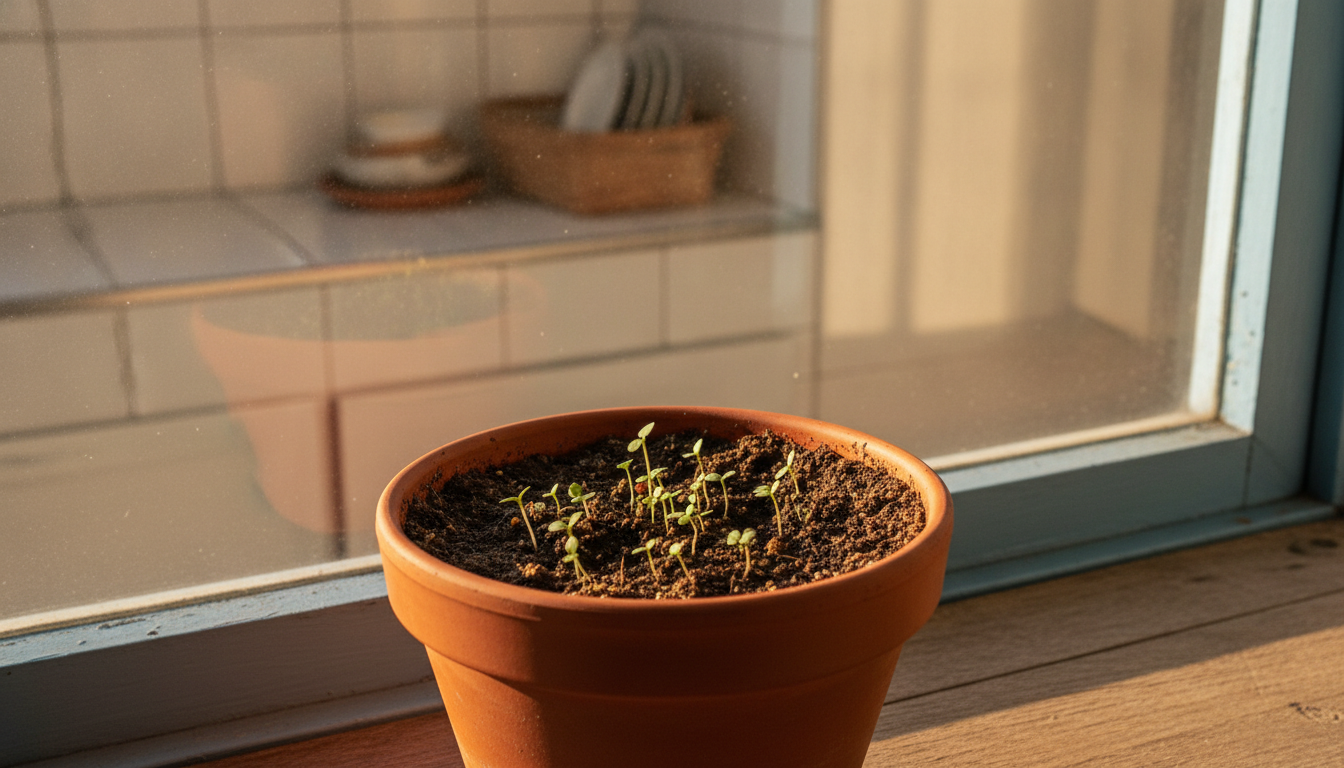
You don’t need to set up a complete vegetable garden all at once. Buy one chive or mint seedling, a small pot, and a bag of substrate. Place it in the window with the most light. Water when the soil is dry. In less than a month, you’ll harvest your first handful of fresh seasoning, cultivated by you, without pesticides, without plastic packaging, and without waste.
This first pot changes how you see the space you live in. And who knows, gradually, you might want to expand to other corners of your apartment, explore new crops, and even connect your vegetable garden to other sustainable changes in your daily life.
