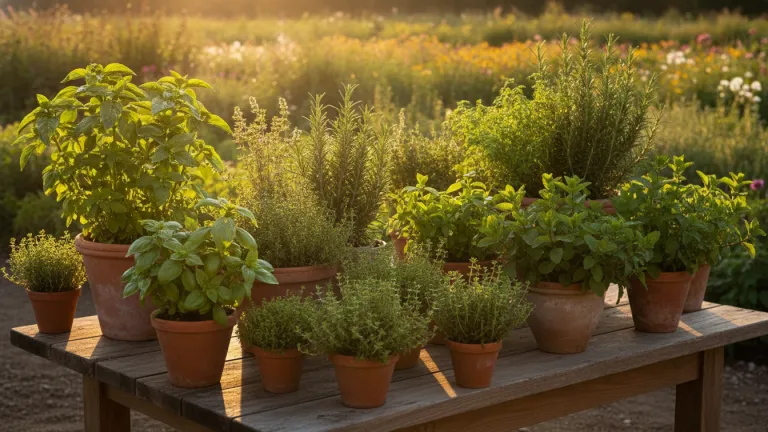
Imagine plucking a fresh basil sprig straight from the pot on your windowsill, breathing in that intense aroma, and knowing it will go from stem to plate in a matter of seconds. No plastic packaging, no transport over hundreds of miles, no waste. This simple scene captures something that goes far beyond cooking: it’s a small act of autonomy, health, and care for the planet that anyone can practice, regardless of available space.
Home herb production is experiencing significant growth in Brazil. The search for apartment and balcony gardens has increased considerably in recent years, driven by the COVID-19 pandemic and growing awareness about the environmental impact of ultra-processed foods and conventional supply chains. According to Embrapa, interest in urban and peri-urban agriculture continues to expand in the country, with particular emphasis on aromatic herb cultivation, which requires little space, little water, and returns much in flavor and nutrition.
And the most encouraging part? You don’t need to be an agronomist, have a backyard, or invest fortunes in equipment. With four simple steps — which we’ll detail here — anyone can set up their own herb garden and harvest real results in just a few weeks.
Why Having a Home Herb Garden Makes a Difference
Before getting your hands dirty, it’s worth understanding the concrete impact of this choice. Food travels enormous distances before reaching your table. Fresh herbs like basil, cilantro, and parsley are particularly vulnerable during this journey: they quickly lose aroma, nutrients, and freshness, generating a considerable volume of waste along the chain.
The global food system accounts for a significant portion of greenhouse gas emissions, considering production, transportation, refrigeration, and disposal. When you grow your own herbs, you eliminate virtually this entire chain for that specific item. It’s not a solution to the climate crisis on its own — but it’s a concrete choice, repeatable every day, that adds up with other sustainable practices.
There’s also the plastic aspect. Fresh herb bunches sold in supermarkets usually come wrapped in plastic bags or trays. By growing at home, you permanently eliminate this waste. And from a health perspective, herbs grown without pesticides at home reach your diet with maximum concentration of bioactive compounds — essential oils, antioxidants, and vitamins that degrade over time after harvest.
Step 1 — Choose the Right Herbs for Your Space
The first step is one of the most important and most frequently overlooked: choosing the right herbs for your reality, not for your dream garden.
Consider three factors before buying any seedling or seed:
- Available light: how many hours of direct sunlight or bright light does your space receive per day?
- Your region’s climate: are you in a humid, hot city like Manaus, or in a cooler region like Serra Gaúcha?
- Frequency of use: which herbs do you actually use in the kitchen every week?
Herbs by Light Level
| Herb | Ideal light | Growing difficulty |
|---|---|---|
| Basil | Full sun (6h+/day) | Easy |
| Parsley | Partial shade to sun | Easy |
| Chives | Partial shade to sun | Very easy |
| Cilantro | Full sun | Moderate |
| Mint | Partial shade | Very easy |
| Thyme | Full sun | Easy |
| Rosemary | Full sun | Easy |
| Oregano | Full sun | Easy |
For absolute beginners, chives and mint are the best choices: they grow fast, tolerate minor watering irregularities, and recover well from frequent harvesting. Basil, despite its popularity, is more sensitive to cold and overwatering.
Step 2 — Prepare the Pots and Ideal Growing Medium
Many people associate home gardening with high equipment investment. In practice, you can start with items you already have at home or find low-cost solutions.
Which Containers to Use
Almost any container with drainage works: terracotta pots, sanitized cans, cut PET bottles, wooden crates, or even repurposed tires. What cannot be missing is a drainage hole at the bottom — waterlogged roots are the main cause of death for home-grown herbs.
Minimum recommended size:
- Shallow-rooted herbs (parsley, chives, basil): pots at least 6 inches (15 cm) deep
- Deeper-rooted herbs (rosemary, thyme, oregano): pots 8 to 10 inches (20 to 25 cm) deep
The Right Growing Medium Makes All the Difference
Avoid using only garden soil in pots — it compacts easily and impairs drainage. The ideal substrate for aromatic herbs in pots combines:
- Base mix: commercial potting mix or worm castings
- Aeration: perlite, coarse sand, or vermiculite (about 20 to 30% of the volume)
- Extra fertility (optional): homemade compost or worm castings
If you already compost at home, this is the perfect time to use the fertilizer you’ve produced. Otherwise, worm castings found at garden stores are an accessible and organic option.
Step 3 — Plant with Intention: Seedlings or Seeds?
Now comes the practical part: putting the plant in the pot. But first, you need to decide between starting with seeds or seedlings.
Seeds vs. Seedlings: When to Choose Each
Start with seeds if:
- You want lower cost and greater variety of choice
- You have patience to wait 3 to 8 weeks until the first harvest
- You want to experiment with different cultivars (like purple or lemon basil)
Start with seedlings if:
- You want faster results (harvest in 2 to 3 weeks)
- You’re a beginner and want to reduce the margin of error
- You found healthy seedlings at local farmers’ markets or nurseries
Step-by-Step Planting Guide
- Moisten the growing medium before placing it in the pot — it should be moist, not soaked
- Fill the pot leaving about 1 inch (2 cm) free at the rim to facilitate watering
- For seeds: make small holes 0.2 to 0.4 inches (0.5 to 1 cm) deep, place 2 to 3 seeds per hole, and cover lightly; keep moist until germination
- For seedlings: open a central space, position the seedling with its root ball, gently press the substrate around it, and water
- Label your pots with the plant name and planting date — it seems basic, but it helps a lot when you’re expanding your garden
- Position in the final location paying attention to the light requirements of each species
An important detail: don’t mix herbs with very different needs in the same pot. Mint, for example, is watered more frequently and can “drown” rosemary, which prefers drier soil between waterings.
Step 4 — Care for Your Garden Simply and Consistently
The biggest myth about home gardens is that they require a lot of time. In practice, a well-set-up herb garden demands just a few minutes per day — enough to water, observe, and harvest.
Watering: Less is More (In Most Cases)
- Finger test: stick your finger 1 inch (2 cm) into the substrate; if it’s still moist, don’t water
- Mediterranean herbs (rosemary, thyme, oregano): prefer drier soil between waterings
- Tropical herbs (basil, cilantro): like more constant moisture, but without waterlogging
- Water in the morning, if possible — this reduces evaporation and decreases the risk of fungi
Harvesting: The Most Important Part of Maintenance
Frequent harvesting doesn’t harm your herbs — on the contrary, it stimulates growth. To harvest correctly:
- Always cut above a pair of leaves, never pulling out the entire stem
- For basil, remove flower buds as soon as they appear — this greatly extends the plant’s life
- Always harvest in the morning, when the concentration of essential oils is highest
Simple Fertilizing
Every 30 to 45 days, add a thin layer of worm castings or use a diluted liquid organic fertilizer. Potted herbs deplete substrate nutrients over time, and light, regular fertilizing keeps plants vigorous without excess.
Integrate Your Garden into a More Sustainable Lifestyle
Your herb garden can be the starting point for a series of practices that connect and reinforce each other. When you start growing your own food — even if it’s just three small herb pots — your relationship with what you eat changes organically.
Many urban gardeners report that when they start growing, they begin to waste less food, shop more consciously, and become interested in other sustainable practices. This cascading effect is well documented in environmental behavior studies: a small, successful change tends to open doors to others.
If you want to deepen this path, it’s worth reflecting on other daily consumption habits — as we discuss in our article on compra consciente: pequenas escolhas que mudam tudo. The garden and responsible consumption complement each other naturally.
Common Mistakes You Can Avoid from the Start
To save time and frustration, it’s worth knowing the most frequent mistakes beginners make:
- Overwatering: the number one cause of death for potted herbs is too much water, not too little
- Pot without drainage: without a hole at the bottom, roots rot
- Too little light: even partial shade plants need real brightness — north or east-facing windows are usually good options
- Not harvesting: letting the plant grow without harvesting causes it to flower and decline faster
- Using pure garden soil: it compacts in pots and impairs root development
- Mixing incompatible plants: respect the individual needs of each species
Conclusion: Your Garden Starts Today
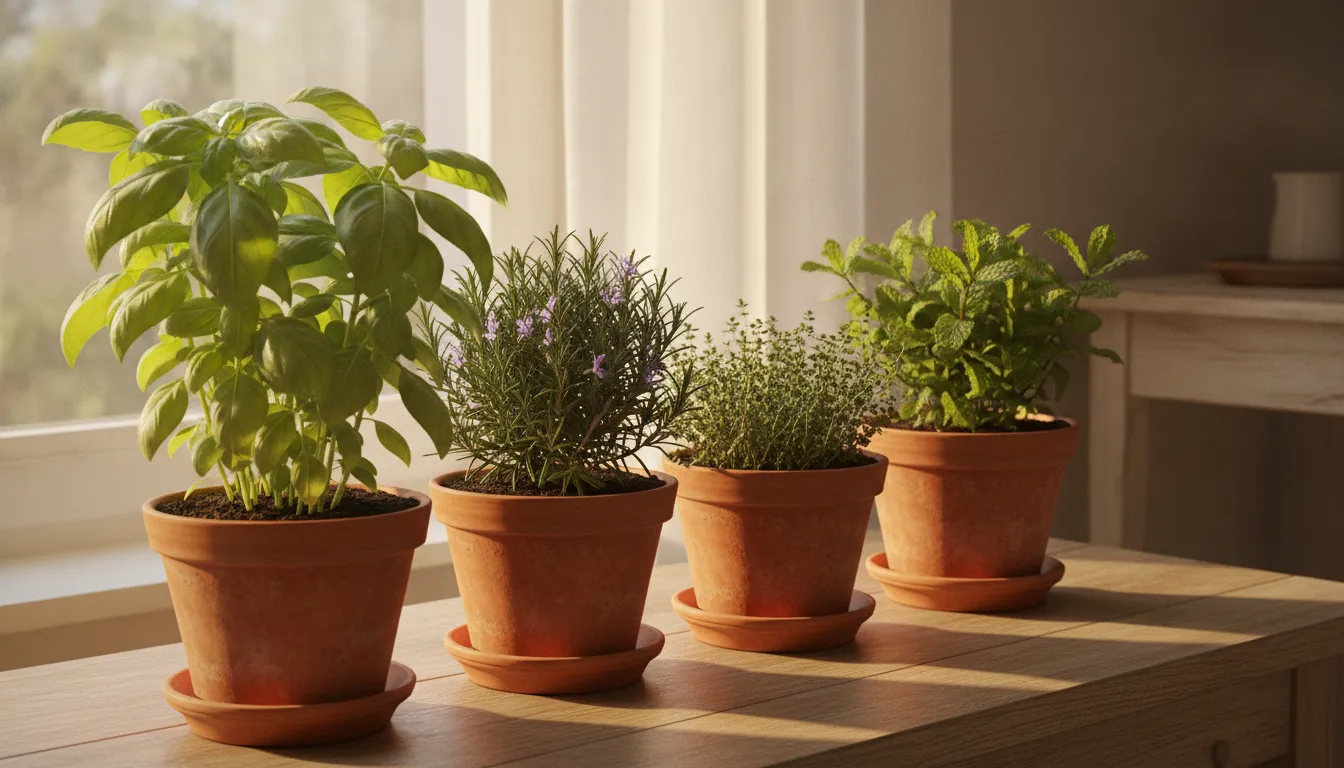
Four steps. A few pots. A handful of soil and seeds or seedlings. And a window with light. That’s all you need to start your own herb garden and transform something as everyday as cooking into an act of caring for the planet.
Don’t wait to have the perfect space, the ideal budget, or the right moment. Start with what you have — even if it’s just a single pot of chives on the windowsill. The important thing is to take the first step, observe, learn from the plant, and expand at your own pace.
And if you want to continue this journey with more practical resources, we’ve prepared a complete guide on home herb gardens for beginners with additional tips on cultivation and space organization.
Your garden is waiting for you. So is the planet.
