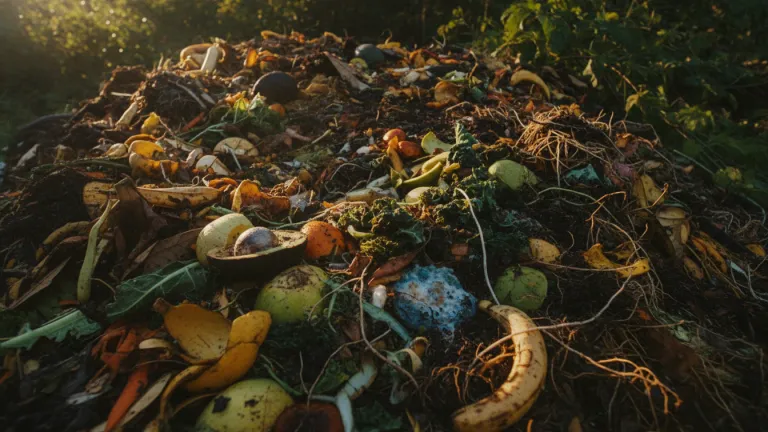
What is composting and why it matters so much
Have you ever stopped to think about what happens to fruit peels, vegetable stems, and food scraps that go into the regular trash every day? Most of the time, these materials end up in landfills, where they decompose improperly and release gases that worsen climate change. Now imagine transforming exactly these waste materials into a rich fertilizer capable of nourishing plants and regenerating soils. That’s composting: a natural, ancient, and surprisingly simple process.
Composting is the controlled decomposition of organic matter — food scraps, dry leaves, peels, coffee grounds — through the action of microorganisms, fungi, and small invertebrates like worms. The end result is organic compost, a dark material with an earthy smell and packed with nutrients that work as an extremely high-quality natural fertilizer. Unlike what happens in a landfill, composting is done under aerobic conditions (with oxygen present), which drastically reduces methane emissions.
At a time when countries around the world are seeking concrete ways to reduce emissions and close the loop on natural resources, composting emerges as one of the most accessible and effective practices anyone can adopt — whether in a small apartment in a big city or on a rural property in the countryside.
Why organic waste is a serious climate problem
Before understanding the solution, it’s worth grasping the scale of the problem. According to environmental data, urban solid waste generated globally amounts to hundreds of millions of tons per year, and the organic fraction represents approximately half of this total — making it the largest category of discarded waste.
When organic matter is deposited in landfills without proper treatment, it decomposes under anaerobic conditions (without oxygen). This process generates methane (CH₄), a gas with significantly greater global warming potential than carbon dioxide over a 20-year horizon, according to IPCC reports. Landfills are therefore significant sources of greenhouse gas emissions — and much of this could be avoided with proper composting of organic waste.
Beyond the climate impact, there’s another invisible cost: when we throw away food scraps, we’re discarding nutrients that the soil needs. Degraded soils produce less, require more chemical inputs, and become more vulnerable to erosion. Composting closes this cycle, returning to the earth what came from it.
How composting works: the science behind the process
The magic of composting lies in biology. When you pile organic matter under the right conditions, communities of bacteria, fungi, and actinomycetes start working — literally — devouring the materials and releasing heat, carbon dioxide, and water in the process.
For composting to work well, it depends on four basic elements:
- Carbon (“brown materials”): dry leaves, unprinted cardboard, sawdust, straw, eggshells. These are the “energy” of the process.
- Nitrogen (“green materials”): fruit and vegetable scraps, coffee grounds, fresh herbs, grass clippings. These are the “nutrients” for the microorganisms.
- Moisture: the compost should have moisture similar to a well-wrung sponge — moist, but not waterlogged.
- Oxygen: turning the pile regularly ensures the process remains aerobic and prevents bad odors.
The ideal ratio between carbon-rich and nitrogen-rich materials is usually indicated as approximately 3 parts brown to 1 part green, although composting is tolerant of variations and common sense practically always works.
How to compost at home: step by step
The good news is that you don’t need a huge backyard or expensive equipment. Here’s how to get started:
- Choose the method appropriate for your space.
- Garden or backyard composter: bins or open structures on the ground, ideal for those with outdoor space.
- Home composter (worm bin): stackable boxes with red wiggler worms (Eisenia fetida), perfect for apartments. Produces compost and liquid humus (excellent fertilizer).
- Bokashi: fermentation of organic waste with bran inoculated with effective microorganisms, recommended for those who want a fast, odor-free process.
- Separate organic waste in the kitchen.
Keep a small container with a lid near the sink. Add fruit and vegetable scraps, peels, coffee grounds, paper filters, and eggshells.
- Build layers in the composter.
Alternate layers of green materials (food scraps) with brown materials (dry leaves, shredded cardboard). Always start and finish with a brown layer — this prevents odors and pests.
- Maintain the right moisture.
If it’s too dry, add a little water. If it’s waterlogged or smelly, add more dry material and turn it.
- Turn periodically.
In garden composters, turn every 1 to 2 weeks to speed up the process. In worm bins, turning is not necessary.
- Wait and observe.
The compost is ready in weeks (worm bin and bokashi) to a few months (garden composter), depending on temperature, moisture, and variety of materials. The final product has a dark color and earthy smell.
- Use the compost.
Mix it into potting soil, apply to garden beds or vegetable gardens. If you have a home herb garden, homemade compost will make all the difference in the vigor of your plants.
What can and what CANNOT go in the composter
A very common question among beginners is knowing exactly what to put in the composter. Here’s a quick reference:
| Can compost | Avoid composting |
|---|---|
| Fruit and vegetable peels | Meat, fish, and dairy (attract pests) |
| Coffee grounds and filters | Oils and fats in large quantities |
| Tea bags (paper) | Feces from carnivorous pets |
| Eggshells | Diseased plants or those with fungi |
| Dry leaves and grass clippings | Colored or laminated paper |
| Cardboard and non-glossy newspaper | Cigarette butts |
| Wilted herbs and flowers | Chemically treated wood |
Concrete benefits of composting for you and the planet
Practicing composting generates positive impacts on multiple fronts:
- Reduction of waste sent to landfills: families that compost can divert a significant portion of their weekly trash from improper disposal.
- Savings on inputs: homemade compost replaces purchased chemical fertilizers, reducing costs and dependence on industrial products.
- Soil improvement: compost increases water retention capacity, improves soil physical structure, and stimulates microbial life — fundamental factors for agricultural resilience, especially in the face of climate change.
- Reduction of methane emissions: by diverting organic waste from landfills, composting directly contributes to decreasing greenhouse gas emissions.
- Environmental education: for families with children, the composter becomes a powerful learning tool about natural cycles and environmental responsibility.
Agricultural research institutions worldwide emphasize in technical publications the importance of organic compost in recovering degraded soils and in agroecological-based agriculture — areas of growing interest in the context of global climate change.
Community and urban composting: when individual action becomes collective
Composting doesn’t have to be a solitary practice. In many cities around the world, community composting initiatives have been gaining momentum — apartment buildings, schools, farmers’ markets, and urban gardens that centralize the collection of organic waste and produce compost for collective use.
Some municipalities have also implemented or are expanding programs for selective collection of organic waste and municipal-scale composting facilities. These initiatives show that the impact can be much greater when individual practices connect with public policies.
If you live in an apartment and don’t have space for a composter, it’s worth researching whether there’s an organic waste collection point near your home or whether your building would be interested in implementing a collective worm bin. Often, a conversation with the building manager is the first step.
By the way, composting combines very well with other conscious choices in daily life — like rethinking what we buy and where our food comes from. If you haven’t yet read about conscious consumption and how small choices make a difference, it’s worth checking out.
Taking the first step: start today
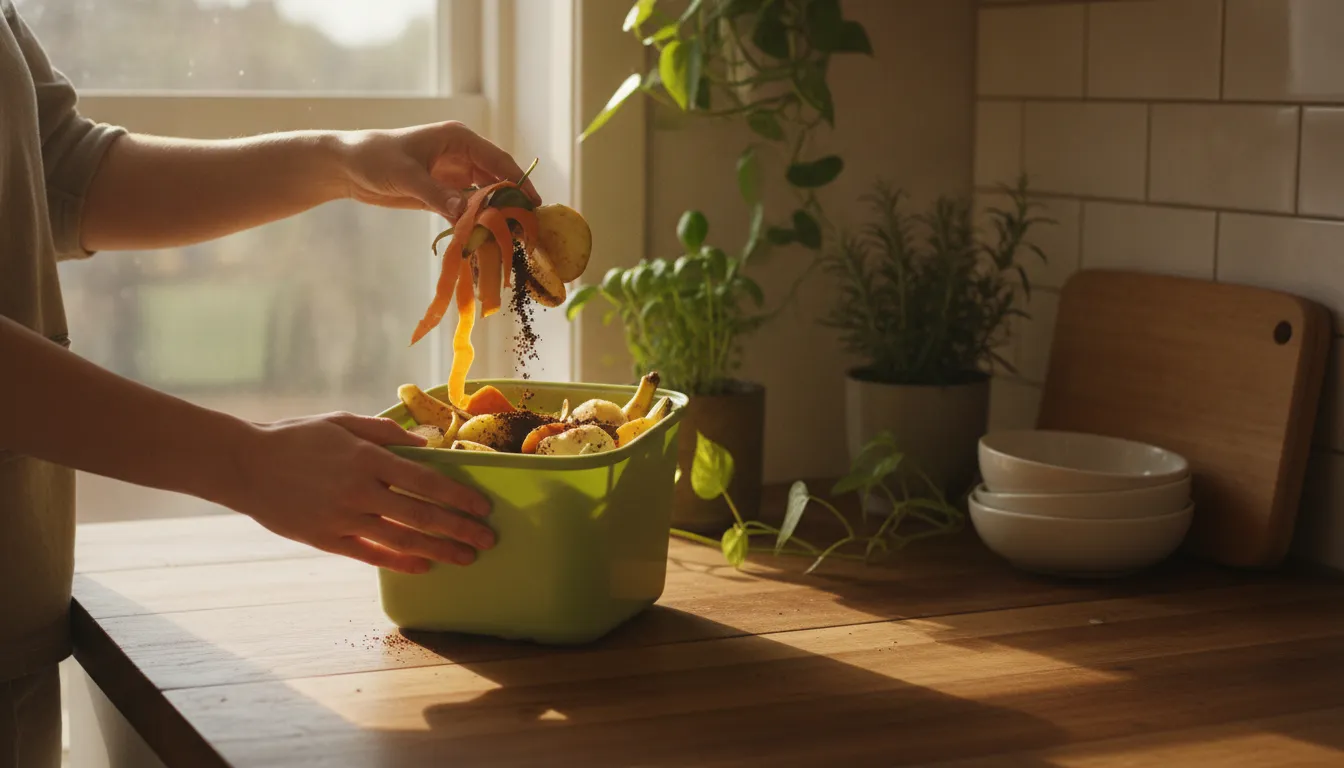
Composting is one of those practices that seems complicated before you start and, once you begin, becomes a natural part of your routine. You don’t need to get everything right from the beginning — nature is resilient and forgives temporary imbalances in material proportions or moisture.
You can start today with a simple container, some dry leaves from the garden or sidewalk sweepings, and the scraps from your next meal. Over time, you’ll learn to “read” the composter: the smell, the texture, the decomposition speed — and this practical learning is genuinely satisfying.
Every person who starts composting is making a real contribution: to the soil, to the climate, and to the chain of life that sustains us. And when these choices multiply — in neighborhoods, cities, and countries — the collective effect becomes immense.
Grab a bin, set aside your first peels, and start your cycle. The planet thanks you, and your soil does too.
