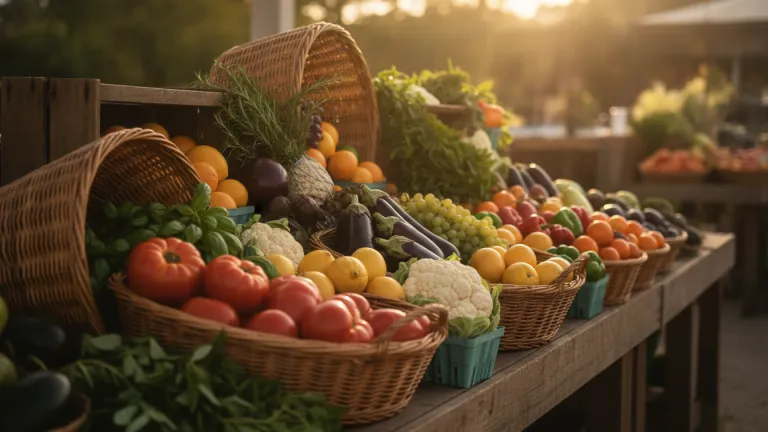
Every time we open our wallets, we’re casting a vote. Voting for the kind of world we want to live in, for the production model we want to support, and for the future we’ll leave to the next generations. It might sound like an exaggeration, but science and economics confirm it: consumer purchasing power is one of the most transformative forces in the market. And the good news is that you don’t need to change everything at once to start making a difference.
In 2026, the debate about conscious consumption has definitively moved from the margins to center stage. Supermarkets are reformulating packaging, fashion brands are publishing environmental impact reports, and apps help track the origin of products. But amid all this noise, it’s easy to get lost between what constitutes real change and what’s merely green marketing — the infamous greenwashing. This article exists to help you navigate this landscape with clarity, practicality, and without excessive guilt.
The goal isn’t to achieve perfection. It’s to make slightly better choices, more frequently, in areas that truly matter. Small repeated decisions create habits; habits at scale create markets; markets transform industries. Shall we begin?
What Conscious Consumption Is — and What It Isn’t
Conscious consumption is the practice of considering the social, environmental, and economic impacts of a purchase before making it. It’s not about consuming less out of obligation or living in deprivation. It’s about consuming better: with more intention, more information, and more alignment with your own values.
It’s important to dispel a common misconception: conscious consumption isn’t a privilege reserved for those with high incomes. Some of the most impactful practices — buying fewer unnecessary things, choosing bulk products, preferring local markets, repairing instead of discarding — are also the most economically accessible. Well-practiced conscious consumption, in fact, often saves money.
It also doesn’t mean boycotting all large companies or only buying imported organic products. It means creating personal criteria, applying them progressively, and celebrating every advance, no matter how small.
Why Our Consumption Choices Matter So Much
The global production and consumption system is at the center of the climate and environmental crisis. According to the IPCC (Intergovernmental Panel on Climate Change), consumption and production patterns are responsible for a significant portion of global greenhouse gas emissions — with particular emphasis on food systems, textiles, and construction.
In Brazil, the scenario has important nuances. Deforestation — strongly linked to agricultural expansion to meet food demand — continues to be one of the country’s largest sources of emissions. Understanding this connection between what goes on your plate and what happens in the forests is fundamental. For a deeper dive into this topic, it’s worth reading about climate change in Brazil: what’s already changing.
Beyond climate, there are issues of biodiversity, water use, decent work, and public health involved in every product we buy. The production chain of a simple pair of jeans, for example, can involve intensive water use, chemicals, and precarious working conditions across different countries. Understanding these chains — even partially — makes us more critical and more powerful consumers.
Food: The Area with the Greatest Daily Impact
If you could choose only one area to change, let it be food. Food systems account for a significant fraction of global greenhouse gas emissions, in addition to being the main driver of deforestation in biomes like the Cerrado and the Amazon, according to data from MapBiomas and INPE.
How to Make More Conscious Food Choices
- Reduce (not necessarily eliminate) beef consumption. Extensive cattle ranching is among the activities with the largest environmental footprint. Reducing frequency already represents real impact.
- Prefer seasonal and locally produced foods. They travel shorter distances, require less refrigeration, and generally use fewer agrochemicals.
- Shop at farmers’ markets and from small producers. Besides reducing intermediaries and packaging, you strengthen family farming, which according to IBGE’s Agricultural Census is responsible for a large portion of the food that reaches Brazilian tables.
- Avoid waste. Food waste is a serious environmental problem: food thrown away in landfills produces methane, a potent greenhouse gas. Plan your shopping, use leftovers creatively, and store properly.
- Consider growing herbs at home. Even in small apartments, an herb garden is feasible and reduces plastic packaging. Check out this simple and practical guide for an herb garden at home.
Fashion and Clothing: The Wardrobe as a Political Act
The fashion industry is one of the most polluting in the world. The fast fashion model — new collections every few weeks, low prices, and disposable quality — generates enormous amounts of textile waste and emissions. According to UN Environment, the textile industry is among the most intensive in water use and generation of chemical effluents globally.
Practices for a More Sustainable Wardrobe
- Buy less and better: invest in versatile, quality pieces that last longer.
- Explore thrift stores and swaps: the second-hand clothing market has grown significantly in recent years in Brazil, with digital platforms and in-person swap events.
- Take care of the clothes you already have: washing in cold water, air drying, and fixing small defects greatly extends the lifespan of garments.
- Research brands before buying: some Brazilian companies already publish sustainability reports. Prefer those with verifiable commitments, not just slogans.
- Question trends: sustainable fashion is often about stepping away from seasonal logic and building your own lasting style.
Packaging and Plastic: Small Swaps, Big Results
Single-use plastic still dominates shelves and deliveries, but there are concrete alternatives within any consumer’s reach. The packaging issue is one of the fields where individual action most quickly meets the market: when many consumers avoid certain packaging, companies respond.
Practical and Accessible Substitutions
| Disposable product | Sustainable alternative |
|---|---|
| Plastic bag | Fabric tote bag or reusable bag |
| PET water bottle | Stainless steel or glass bottle |
| Plastic straw | Stainless steel, bamboo, or paper straw |
| Individual shampoo bottle | Shampoo bar or bulk shampoo |
| Disposable cups | Reusable silicone or stainless steel cup |
The key here is not to try to swap everything at once. Choose one item per month to replace. In a year, you’ll have eliminated at least twelve sources of waste from your daily life — and probably spent less money in the process.
How to Identify Greenwashing and Avoid Traps
With the growth of interest in sustainability, greenwashing has also grown: the practice of companies using “green” language and imagery without real commitments. Recognizing this phenomenon is an essential part of conscious consumption.
Warning Signs
- Vague claims: terms like “eco-friendly,” “natural,” or “environmentally friendly” without any explanation or certification are red flags.
- Focus on one aspect, silence on others: a company might use recycled packaging but have a problematic labor chain or high water consumption.
- Absence of verifiable data: serious companies cite goals, reports, and certifications audited by third parties.
- Legitimate certifications to know: in Brazil, seals like FSC (for wood and paper products), Rainforest Alliance, Orgânico Brasil, and ABNT in different categories offer reliable references.
Be suspicious of miraculous promises and prefer brands that acknowledge their impacts and show concrete improvement plans. No company is perfect; the best ones are those that are honest about it.
Technology and Electronics: The Invisible Waste
Electronic waste — cell phones, computers, appliances — is one of the fastest-growing waste streams in the world. It contains toxic substances and also valuable materials that, when improperly discarded, contaminate soil and water.
What to Do with Your Electronics
- Extend the lifespan of devices: a replaced battery or repaired screen can give years more use to a phone.
- Before buying new, assess if it’s necessary: does your current device still work? Can it be updated?
- Dispose correctly: manufacturers and retailers are required by law (National Solid Waste Policy, Law 12.305/2010) to offer electronic collection points. Research the nearest points to you.
- Donate or sell: working devices can have a second life with other people.
Conclusion: Your Purchase, Your Vote, Your Change
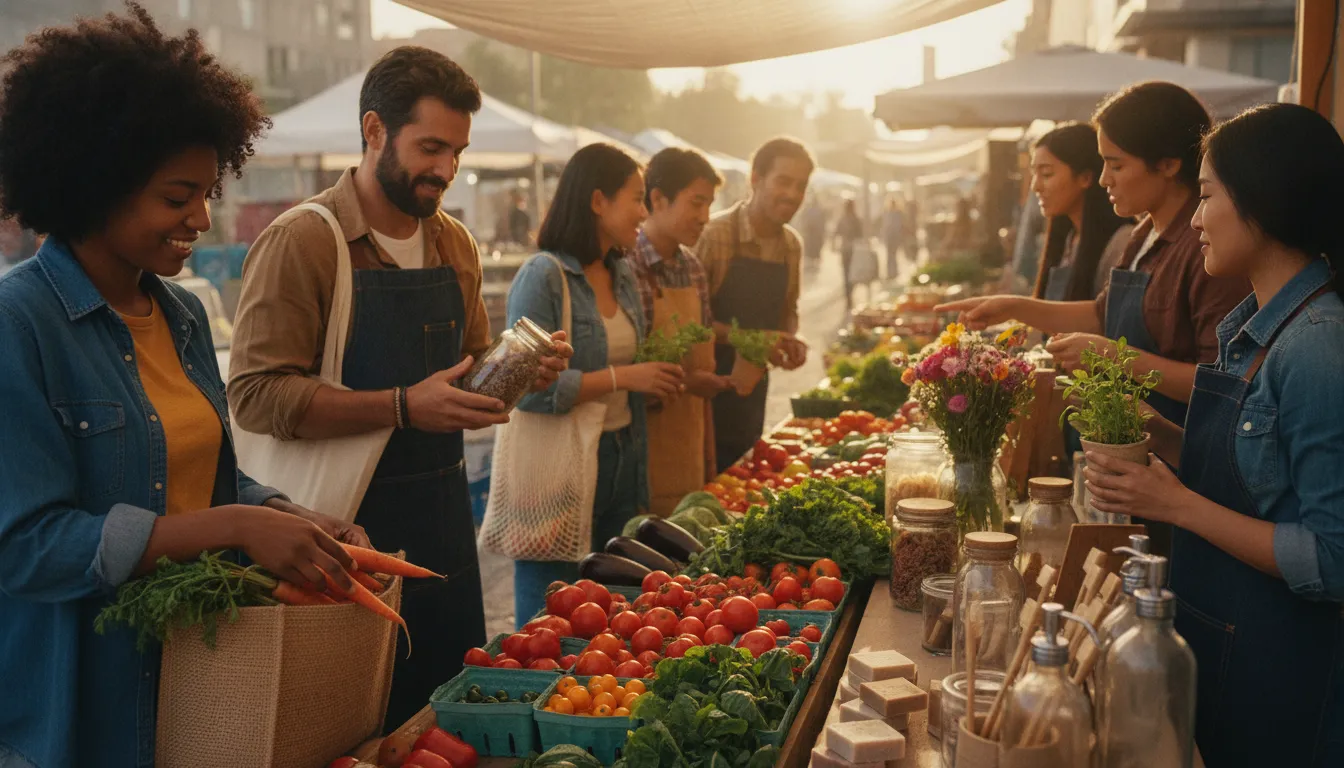
Consuming consciously isn’t a perfect state you reach one day. It’s a continuous process of learning, questioning, and adjusting. And every choice — no matter how small it seems — sends a signal to the market, supports a producer, prevents waste, or preserves a piece of forest.
Start wherever you feel ready. Maybe it’s bringing a tote bag to the supermarket. Maybe it’s visiting a farmers’ market near your home. Maybe it’s simply not buying something you don’t need. There’s no step too small.
And remember: conscious consumption isn’t about individual perfection, but about collective participation. When millions of people make slightly better choices more frequently, the result is transformative. You’re already reading about this topic — that’s the first step. The next one is yours.
