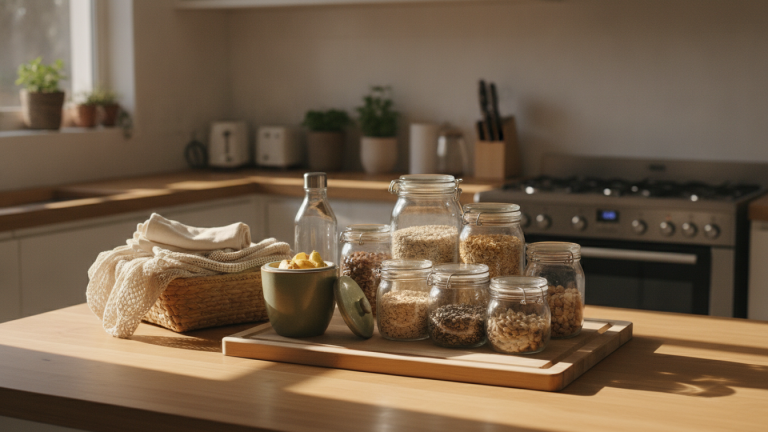
Zero waste is not perfection: it’s a daily choice that fits into your routine
Have you ever stopped to see how much trash your house produces in a week? Separate the plastic bags, shampoo bottles, yogurt containers, milk cartons, candy wrappers. The pile grows quickly. According to Abrelpe, Brazil generated more than 80 million tons of urban solid waste in 2023 alone, and most of it still goes to landfills or open-air dumps. That’s a lot, but the point here is not to scare you.
The zero waste lifestyle emerged as a practical response to this scenario. It doesn’t require you to become a different person overnight, nor does it demand you live on an organic farm. The central idea is simple: reduce to the maximum what goes to trash, prioritizing what can be reused, composted, or recycled. By the end of this article, you’ll know exactly where to start, which changes make the most difference in everyday Brazilian life, and how to avoid the most common mistakes of those who try to change everything at once.
The gains are real and appear quickly: less trash to dispose of, less money spent on disposable products, and a more organized home. Let’s get to what matters.
What zero waste means in Brazilian practice
The concept was popularized internationally by activist Bea Johnson, who in the early 2010s began fitting an entire year’s worth of trash in a small glass jar. Sounds impossible? For most people, it is, and that’s okay. What works for a family in California may not work in a two-bedroom apartment in São Paulo or a townhouse in Salvador.
In Brazil, the scenario has important particularities. The Law 12.305/2010, known as the National Solid Waste Policy (PNRS), already establishes guidelines for reduction, reuse, and recycling, in addition to holding manufacturers responsible for the disposal of certain products. In practice, however, selective collection is still irregular in many municipalities, and public composting infrastructure is still incipient in much of the country.
This means adopting zero waste here requires a local perspective. Before buying imported reusable products you won’t use, it’s worth knowing what your city offers: is there a voluntary delivery point (PEV) for recyclables near you? Is there selective collection in your neighborhood? Has any neighbor or community already started collective composting? These questions are worth their weight in gold.
Where to start: audit your household trash
Before changing anything, look at what you discard. This sounds simple, but few people do it. Spend a week without throwing anything away before separating and observing: what appears most frequently? Food packaging? Cleaning plastics? Papers and boxes?
This trash audit is the real starting point for zero waste. It shows where your biggest discard sources are and prevents you from wasting money on solutions to problems that aren’t yours. If most of your trash is food packaging, it makes more sense to focus on shopping than to go out buying bamboo kits.
Do it this way:
- Get a large box or set aside an area of your kitchen.
- For seven days, throw all household trash into it without compacting.
- At the end of the week, classify by category: plastic, paper, glass, organic, rejection (what has no destination).
- Write down the three categories that appear most.
- Start making changes with one of them.
This process takes less than 30 minutes of attention throughout the week and costs nothing.
The changes that most reduce household waste
With the audit done, it’s easier to choose where to start. The changes below are those that usually generate the greatest waste reduction with the least effort, and all are viable in Brazil in 2026.
In the kitchen and shopping
- Reusable bags: the most obvious, but still effective. A cloth bag kept in your purse eliminates dozens of plastic bags per month.
- Bulk shopping: farmers markets and bulk stores allow you to buy the exact amount you need, without packaging. You bring your own containers or cloth bags.
- Reused glass containers: jars from olives, hearts of palm, or jam washed well store beans, rice, pasta, and seasonings nicely.
- Meal planning: food waste is one of the biggest generators of organic trash. Knowing what you’ll cook for the week reduces what spoils in the refrigerator. Learning to preserve food at home is one of the most practical skills to reduce waste and save money at the same time.
In the bathroom
- Shampoo and conditioner bar: lasts longer than liquids and eliminates plastic bottles.
- Stone deodorant or metal container: durable options with less packaging.
- Bamboo toothbrush: the handle is compostable; the head needs to be replaced normally.
- Cloth pads or menstrual cup: besides generating much less waste, they represent considerable savings over time.
In home cleaning
- Vinegar and baking soda: replace most chemical cleaning products that come in plastic packaging. Effective for most surfaces.
- Kitchen cloths and old flannel: replace disposable paper towels.
- Bar soap or powder soap: usually comes in smaller, more recyclable packaging.
Home composting: turning waste into resources
According to Abrelpe estimates, organic waste represents more than half of everything we throw away. Fruit peels, coffee grounds, food scraps, kitchen paper: all of this can be composted and turned into fertile fertilizer.
Composting in an apartment used to scare many people, but today there are compact and odor-free options. The worm composter (vermicomposting) fits under the sink, quickly processes food scraps, and produces rich compost that you use in plants or donate to neighbors and community gardens.
To start a simple compost bin at home:
- Buy or assemble a box with a lid and ventilation holes (used plastic boxes work well).
- Place a layer of dry leaves or shredded paper at the bottom.
- Add organic scraps without meat, dairy, or fat.
- Always cover with dry material (sawdust, paper, dry leaves) in a one-to-two ratio to the wet material.
- Mix lightly every two or three days.
- In four to eight weeks, the compost is ready.
Initial cost: between R$ 0 (with reused box) and R$ 80 for a purchased composter. Maintenance time: less than five minutes per day.
Common mistakes for beginners and how to avoid them
The first mistake is trying to change everything at once. Frustration hits quickly when the expectation is immediate zero waste. Start with one area of the house and only advance when that change feels natural.
The second mistake is buying too much to be sustainable. The market for
