What’s at Stake: Ecosystems on the Edge
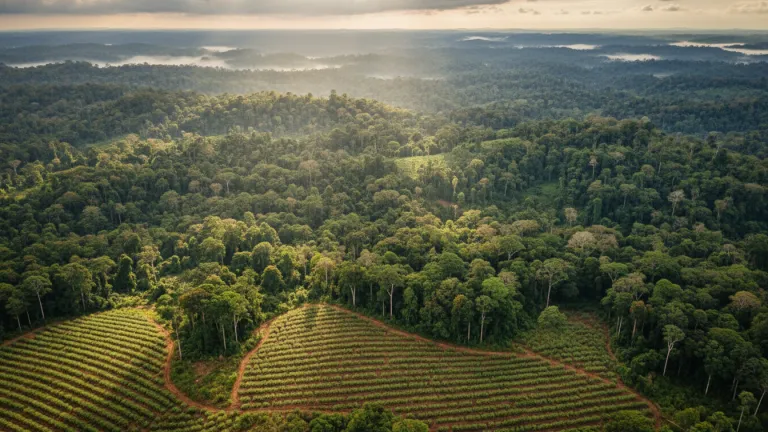
Imagine waking up one day to find that the forest that once stood just a few kilometers from your home is gone. Not as a metaphor, but as a concrete reality experienced by millions of Brazilians and people in other countries over the past decades. Forests, savannas, mangroves, and floodplains that took thousands of years to form are disappearing at a speed no previous generation has witnessed. When an ecosystem collapses, it doesn’t just take away trees: it takes away water, soil, climate, biodiversity, and ultimately, the conditions that make human life possible in that area.
The good news — and there is some — is that science and field practice increasingly show that well-executed reforestation can reverse part of this process. It’s not a magic solution and doesn’t work when applied in isolation. But when combined with serious public policies, community participation, and conscious individual choices, the act of planting and protecting trees has the real power to rebuild what was lost. Ecosystems considered “dead” have returned to functioning. Springs that had dried up began to flow again. Species that had disappeared from entire regions were spotted once more.
This article explores why reforestation is one of the most powerful tools we have today, how it works in practice, and — most importantly — what you can do right now to be part of this turnaround.
Why Ecosystems Are Collapsing
Before talking about solutions, we need to understand the problem honestly. Ecosystem collapse doesn’t happen overnight: it’s a gradual process of degradation that, at a certain point, crosses a threshold beyond which the system can no longer recover on its own.
The main causes are well-documented:
- Deforestation for agricultural expansion, livestock, and urbanization
- Fires, often deliberate, that destroy layers of soil and organic matter accumulated over centuries
- Habitat fragmentation, which isolates animal and plant populations, preventing reproduction and genetic flow
- Predatory exploitation of resources like timber, water, and minerals
- Climate change, which alters rainfall patterns, temperature, and the frequency of extreme events
In Brazil, the Cerrado — considered the most biodiverse savanna in the world — has already lost more than half of its native vegetation. The Atlantic Forest, which covered about 15% of the national territory, today has less than 12% of its original coverage preserved, according to MapBiomas data. The Amazon, despite still being the largest tropical biome on the planet, faces a process of “savannization” in parts of its territory, where the combination of deforestation and climate change is beginning to make the local climate unable to support dense forest.
What Reforestation Really Does for Ecosystems
Reforestation is not just “planting trees”. When done correctly, it is a process of reconstructing complex living systems. And the results go far beyond what most people imagine.
Water Restoration: Reforestation Recovers Springs
Trees are biological machines for capturing and distributing water. Their deep roots act like sponges that absorb rain and slowly release it to the soil and aquifers. Riparian forests — those that grow along rivers and streams — are especially critical for maintaining water flow even during dry periods.
Restoration projects of riparian forests in Brazil have documented the return of springs that had completely dried up. Embrapa and organizations like SOS Mata Atlântica have concrete records of this phenomenon in different regions of the country.
Carbon Sequestration: Reforestation and Global Climate
Mature and regenerating forests absorb carbon dioxide from the atmosphere and store it in biomass and soil. The IPCC (Intergovernmental Panel on Climate Change) recognizes reforestation as one of the nature-based solutions with the greatest potential to contribute to global climate goals.
It’s important to be honest here: reforestation complements, but does not replace, the reduction of fossil fuel emissions. Planting trees while continuing to emit carbon at an accelerated rate does not solve the problem. But as part of an integrated strategy, it is irreplaceable.
Biodiversity Return: Species That Come Back with the Forest
When vegetation recovers, animals follow. Pollinators like bees and butterflies return, directly benefiting surrounding agriculture. Birds that disperse seeds help accelerate natural regeneration. Top predators reappear and regulate herbivore populations that, without control, can prevent vegetation regeneration.
This virtuous cycle has been documented in various restored areas in Brazil and around the world. The Ibura National Forest in Sergipe is a national example of how deeply degraded areas can be revitalized with strategic reforestation.
Reforestation Methods: Not All Planting Is Equal
Here’s a critical point that many people don’t know: reforestation with exotic species in monoculture can cause more harm than good. Eucalyptus or pine plantations where native forest once stood do not rebuild ecosystems — they merely cover the soil with green without restoring ecological functions.
The methods that truly work include:
| Method | How It Works | Best For |
|---|---|---|
| Nucleation | Planting in clusters that attract fauna and stimulate regeneration around | Areas with some nearby remnants |
| Seed Muvuca Restoration | Mix of native seeds sown directly into the soil | Large degraded areas in the Cerrado and Atlantic Forest |
| High Diversity Planting (PATI) | Use of many native species, including pioneers and climax | Atlantic Forest and Amazon areas |
| Assisted Natural Regeneration | Protection and management of vegetation already trying to recover on its own | Where there is a seed bank in the soil |
The right method depends on the biome, the level of degradation, and the resources available. But the fundamental principle is always the same: use native species of the region and respect the local ecological dynamics.
Real Examples That Prove It Works
Skepticism is healthy, but field data is encouraging.
Oasis Project (São Paulo): an initiative that pays rural landowners to preserve and restore native vegetation in watersheds. Documented results show improvement in the quality and quantity of water available for urban supply.
Reforestation in the Atlantic Forest: the BioAtlantic Institute and partners have restored tens of thousands of hectares in the biome. Independent monitoring confirms the return of fauna and flora species and the recovery of ecosystem functions.
20×20 Initiative in Latin America: a coalition of countries and organizations committed to restoring 20 million hectares of degraded land in the region by 2030. Brazil is among the participants.
Globally, the UN Decade on Ecosystem Restoration (2021–2030) mobilizes governments, businesses, and communities on a global scale, with ambitious goals and monitoring mechanisms to ensure commitments are met.
If you want to understand more about the impact and importance of this practice, this comprehensive guide on Reforestation: Understanding Its Importance and Impact delves into the concepts with additional examples.
How You Can Act: Practical Guide to Participating in Reforestation
You don’t need to be a forest engineer or own a farm to be part of this change. Here’s how to act at different levels:
Step by Step: How to Participate in Reforestation Today
- Donate to reputable reforestation organizations. Research NGOs with a verifiable track record, such as SOS Mata Atlântica, Instituto Terra, Apremavi, or Rede de Sementes do Xingu. Check if they publish transparency and monitoring reports.
- Join planting mutirões. Many municipalities, NGOs, and local groups organize public planting days. A simple search for “reforestation mutirão” + your city or state already shows concrete opportunities.
- Collect and donate native seeds. Seed networks like the Rede de Sementes do Cerrado or regional initiatives teach how to identify, collect, and process seeds of native species for restoration use.
- Adopt practices in your garden or yard. Planting native species attracts pollinators and birds, creates urban ecological corridors, and contributes to local biodiversity — even in small spaces.
- Pressure companies and governments. Consume from companies with real restoration and zero deforestation commitments. Participate in public consultations on master plans and environmental licensing.
- Reduce your impact through diet. The expansion of agricultural areas is the main cause of deforestation. Reducing beef consumption, especially from areas of recent conversion, has a measurable impact.
- Share quality information. Misinformation about ecosystems and climate is a real obstacle. Sharing accurate content with your network contributes to a culture of more informed decisions.
The Role of Public Policies in Effective Reforestation
Individual actions matter, but the scale of the problem requires systemic responses. The Brazilian Forest Code, when enforced, obliges rural landowners to maintain and restore Permanent Preservation Areas (APPs) and Legal Reserves. The Rural Environmental Registry (CAR) was created to map and monitor this compliance.
The National Plan for the Recovery of Native Vegetation (Planaveg) defines goals and strategies for forest restoration in the country. The effectiveness of these policies depends on enforcement, adequate funding, and political will — and that’s where civil society pressure makes a real difference.
Programs for payment for environmental services, which remunerate rural landowners for the conservation and restoration of native vegetation, have shown positive results in state and municipal experiences. The expansion of these initiatives depends on public and private funding and clear legal frameworks.
Conclusion: Every Tree Counts, and You Can Plant the Next One
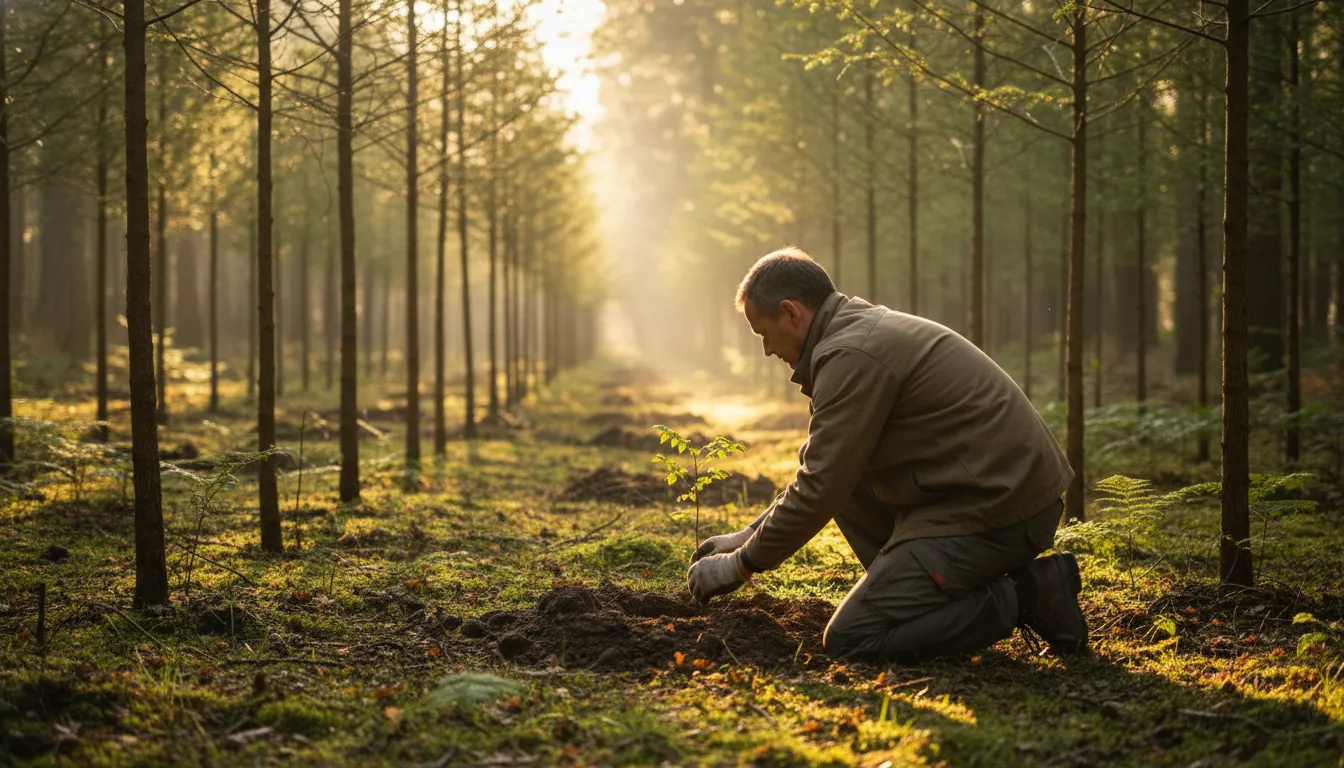
Collapsing ecosystems are not irreversible condemnations. They are living systems that, with the right conditions, have the capacity to reorganize, recover, and function again. Reforestation — when done with the right species, appropriate methods, and long-term commitment — has already proven that recovery is possible in different biomes, in varied climates, on scales ranging from private backyards to national policy.
We are in 2026, and the window to act is still open. The coming decades will be decisive in determining which ecosystems will recover and which will be permanently lost. The difference between these two scenarios will not be decided solely by governments or large corporations — it will also be determined by the sum of individual choices, collective pressures, and concrete actions by people who decided not to be spectators.
Plant a tree. Support those who plant. Demand that those who should plant and don’t. And remember: forests don’t grow overnight, but they also don’t grow without someone planting the first seed.
