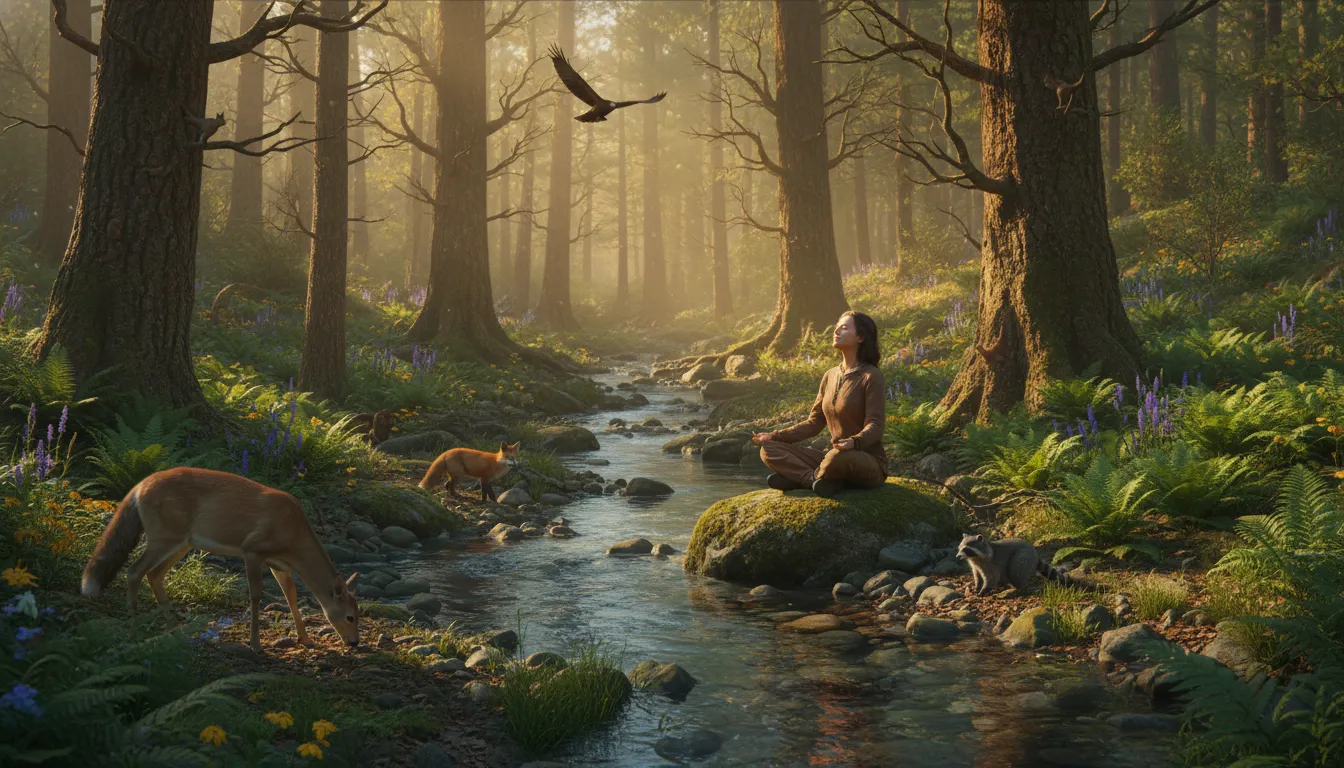
Imagine pulling a single thread from an intricate tapestry. At first glance, it seems insignificant — after all, thousands of other threads hold the design together. But pull enough threads, and the entire image begins to unravel. This is exactly how an ecosystem works: a living, interconnected network where every element, no matter how small, plays an irreplaceable role.
The word “ecosystem” frequently appears in news, documentaries, and environmental discussions, yet many people are still unsure of what it practically means. Do you know, for instance, why the extinction of a type of bee can affect the price of your food? Or why deforestation in a distant forest can influence the rainfall in your city? All these connections are part of the logic of ecosystems.
In this article, we will unravel this concept in a simple and direct way, understand how ecosystems function, why they are threatened, and — most importantly — what each of us can do to protect them. Because, in the end, taking care of ecosystems is taking care of ourselves.
What Is an Ecosystem: A Simple and Direct Definition
An ecosystem is the set formed by all living beings in a specific area — plants, animals, fungi, bacteria, insects — and the physical environment they inhabit: soil, water, air, temperature, sunlight. The term was coined by British ecologist Arthur Tansley in 1935 and remains one of the central concepts in biology and ecology.
What makes an ecosystem special is not its isolated components, but the relationships between them. A forest is not just a collection of trees — it is a network of constant exchanges: trees producing oxygen and absorbing carbon, roots filtering the water that reaches rivers, fungi in the soil helping plants feed, animals dispersing seeds and controlling insect populations.
These interactions create what scientists call ecosystem services: the benefits that nature offers humanity for free, such as water purification, climate regulation, crop pollination, and erosion protection. When an ecosystem is degraded, these services weaken — and the cost of artificially replicating them is extremely high, when possible.
Types of Ecosystems: From the Ocean to Your Backyard
Ecosystems are divided into two major groups: terrestrial and aquatic. Within each group, there is a vast diversity of environments, each with unique characteristics, species, and functions.
Major Terrestrial Ecosystems
- Tropical forests — like the Amazon, which houses between 10% and 15% of all known terrestrial species on the planet, according to estimates from IBGE and INPA researchers.
- Savannas — the second-largest biome in Brazil and considered one of the most biodiverse savannas in the world, with about 5% of the planet’s species concentrated in its territory.
- Grasslands and prairies — essential for sustainable livestock and maintaining aquifers.
- Deserts — despite their arid appearance, they have adapted biological communities and play a fundamental role in the wind and heat cycle.
- Mangroves — transition zones between sea and land, natural nurseries for fish and crustaceans, and barriers against coastal erosion.
Aquatic Ecosystems
- Oceans — cover about 71% of the Earth’s surface and produce more than half of the oxygen we breathe, according to NOAA (U.S. National Oceanic and Atmospheric Administration).
- Rivers and lakes — direct sources of drinking water for billions of people.
- Coral reefs — known as the “rainforests of the sea,” they house about 25% of all marine species in less than 1% of the oceanic space.
- Wetlands (swamps and marshes) — natural water filters and flood regulators.
It is important to note that no ecosystem is too small to matter. The soil in your garden, a tree-lined square in the city center, or an urban stream are reduced-scale ecosystems — and each fulfills real functions for the surrounding environment.
How an Ecosystem Works: Energy, Chains, and Cycles
To understand how an ecosystem stays alive, you need to know three basic concepts: energy flow, food chains, and biogeochemical cycles.
The energy flow starts with the sun. Plants and other photosynthetic organisms (like algae) capture solar energy and transform it into organic matter — they are the producers. Herbivores eat plants and become primary consumers. Carnivores that eat herbivores are secondary consumers, and so on. When organisms die, decomposers like fungi and bacteria break down organic matter and return nutrients to the soil.
This system is incredibly efficient but fragile in its interdependence. Removing a link from the chain — for example, drastically reducing the population of top predators — can cause a cascading effect that destabilizes the entire set.
Meanwhile, biogeochemical cycles are the circuits through which elements essential to life — carbon, nitrogen, phosphorus, water — circulate between living beings and the physical environment. The carbon cycle, for example, is central to the debate on climate change: when forests are cut down and burned, the carbon stored in trees is released into the atmosphere as CO₂, intensifying the greenhouse effect.
Why Ecosystems Are Threatened
Science is clear: the planet’s ecosystems are under increasing pressure. The main threats identified by organizations like IUCN (International Union for Conservation of Nature) and IPCC include:
- Deforestation and habitat conversion — the destruction of forests for agriculture, livestock, and urbanization is the leading cause of global biodiversity loss.
- Climate change — rising global average temperatures alter rainfall patterns, cause coral bleaching, and displace species from their natural habitats.
- Pollution — plastic waste, pesticides, untreated sewage, and air pollution contaminate aquatic and terrestrial ecosystems.
- Invasive species — animals and plants introduced outside their native environment can unbalance entire ecosystems by having no natural predators.
- Overexploitation — predatory fishing, illegal hunting, and unsustainable extraction of natural resources reduce species populations below recovery levels.
In Brazil, the deforestation of the Cerrado — often overshadowed by the debate around the Amazon — remains a serious concern documented by INPE (National Institute for Space Research). The Cerrado has already lost more than half of its original vegetation cover over the past decades.
To delve into how habitat restoration can reverse part of this scenario, it is worth reading about how reforestation can save collapsing ecosystems.
Ecosystem Services: What Nature Does For Us (For Free)
Perhaps the most powerful argument for protecting ecosystems is simply understanding what they offer us. The so-called ecosystem services are classified into four main categories:
Service Type
Practical Examples
Provisioning
Food, fresh water, wood, fibers, natural medicines
Regulating
Climate control, air and water purification, pollination, flood prevention
Supporting
Soil formation, nutrient cycling, oxygen production
Cultural
Recreation, ecotourism, mental well-being, spiritual and aesthetic value
Pollination is a concrete and impactful example: about 75% of the world’s food crops depend, to some extent, on pollinators like bees, butterflies, and bats, according to FAO (Food and Agriculture Organization of the United Nations) data. The decline of these populations poses a direct threat to global food security.
What You Can Do to Protect Ecosystems
The good news is that protecting ecosystems does not require grand heroic gestures. Everyday actions, when combined, have a real impact. Here’s what you can start doing today:
Aquatic Ecosystems
- Oceans — cover about 71% of the Earth’s surface and produce more than half of the oxygen we breathe, according to NOAA (U.S. National Oceanic and Atmospheric Administration).
- Rivers and lakes — direct sources of drinking water for billions of people.
- Coral reefs — known as the “rainforests of the sea,” they house about 25% of all marine species in less than 1% of the oceanic space.
- Wetlands (swamps and marshes) — natural water filters and flood regulators.
It is important to note that no ecosystem is too small to matter. The soil in your garden, a tree-lined square in the city center, or an urban stream are reduced-scale ecosystems — and each fulfills real functions for the surrounding environment.
How an Ecosystem Works: Energy, Chains, and Cycles
To understand how an ecosystem stays alive, you need to know three basic concepts: energy flow, food chains, and biogeochemical cycles.
The energy flow starts with the sun. Plants and other photosynthetic organisms (like algae) capture solar energy and transform it into organic matter — they are the producers. Herbivores eat plants and become primary consumers. Carnivores that eat herbivores are secondary consumers, and so on. When organisms die, decomposers like fungi and bacteria break down organic matter and return nutrients to the soil.
This system is incredibly efficient but fragile in its interdependence. Removing a link from the chain — for example, drastically reducing the population of top predators — can cause a cascading effect that destabilizes the entire set.
Meanwhile, biogeochemical cycles are the circuits through which elements essential to life — carbon, nitrogen, phosphorus, water — circulate between living beings and the physical environment. The carbon cycle, for example, is central to the debate on climate change: when forests are cut down and burned, the carbon stored in trees is released into the atmosphere as CO₂, intensifying the greenhouse effect.
Why Ecosystems Are Threatened
Science is clear: the planet’s ecosystems are under increasing pressure. The main threats identified by organizations like IUCN (International Union for Conservation of Nature) and IPCC include:
- Deforestation and habitat conversion — the destruction of forests for agriculture, livestock, and urbanization is the leading cause of global biodiversity loss.
- Climate change — rising global average temperatures alter rainfall patterns, cause coral bleaching, and displace species from their natural habitats.
- Pollution — plastic waste, pesticides, untreated sewage, and air pollution contaminate aquatic and terrestrial ecosystems.
- Invasive species — animals and plants introduced outside their native environment can unbalance entire ecosystems by having no natural predators.
- Overexploitation — predatory fishing, illegal hunting, and unsustainable extraction of natural resources reduce species populations below recovery levels.
In Brazil, the deforestation of the Cerrado — often overshadowed by the debate around the Amazon — remains a serious concern documented by INPE (National Institute for Space Research). The Cerrado has already lost more than half of its original vegetation cover over the past decades.
To delve into how habitat restoration can reverse part of this scenario, it is worth reading about how reforestation can save collapsing ecosystems.
Ecosystem Services: What Nature Does For Us (For Free)
Perhaps the most powerful argument for protecting ecosystems is simply understanding what they offer us. The so-called ecosystem services are classified into four main categories:
Service Type
Practical Examples
Provisioning
Food, fresh water, wood, fibers, natural medicines
Regulating
Climate control, air and water purification, pollination, flood prevention
Supporting
Soil formation, nutrient cycling, oxygen production
Cultural
Recreation, ecotourism, mental well-being, spiritual and aesthetic value
Pollination is a concrete and impactful example: about 75% of the world’s food crops depend, to some extent, on pollinators like bees, butterflies, and bats, according to FAO (Food and Agriculture Organization of the United Nations) data. The decline of these populations poses a direct threat to global food security.
What You Can Do to Protect Ecosystems
The good news is that protecting ecosystems does not require grand heroic gestures. Everyday actions, when combined, have a real impact. Here’s what you can start doing today:
It is important to note that no ecosystem is too small to matter. The soil in your garden, a tree-lined square in the city center, or an urban stream are reduced-scale ecosystems — and each fulfills real functions for the surrounding environment.
How an Ecosystem Works: Energy, Chains, and Cycles
To understand how an ecosystem stays alive, you need to know three basic concepts: energy flow, food chains, and biogeochemical cycles.
The energy flow starts with the sun. Plants and other photosynthetic organisms (like algae) capture solar energy and transform it into organic matter — they are the producers. Herbivores eat plants and become primary consumers. Carnivores that eat herbivores are secondary consumers, and so on. When organisms die, decomposers like fungi and bacteria break down organic matter and return nutrients to the soil.
This system is incredibly efficient but fragile in its interdependence. Removing a link from the chain — for example, drastically reducing the population of top predators — can cause a cascading effect that destabilizes the entire set.
Meanwhile, biogeochemical cycles are the circuits through which elements essential to life — carbon, nitrogen, phosphorus, water — circulate between living beings and the physical environment. The carbon cycle, for example, is central to the debate on climate change: when forests are cut down and burned, the carbon stored in trees is released into the atmosphere as CO₂, intensifying the greenhouse effect.
Why Ecosystems Are Threatened
Science is clear: the planet’s ecosystems are under increasing pressure. The main threats identified by organizations like IUCN (International Union for Conservation of Nature) and IPCC include:
- Deforestation and habitat conversion — the destruction of forests for agriculture, livestock, and urbanization is the leading cause of global biodiversity loss.
- Climate change — rising global average temperatures alter rainfall patterns, cause coral bleaching, and displace species from their natural habitats.
- Pollution — plastic waste, pesticides, untreated sewage, and air pollution contaminate aquatic and terrestrial ecosystems.
- Invasive species — animals and plants introduced outside their native environment can unbalance entire ecosystems by having no natural predators.
- Overexploitation — predatory fishing, illegal hunting, and unsustainable extraction of natural resources reduce species populations below recovery levels.
In Brazil, the deforestation of the Cerrado — often overshadowed by the debate around the Amazon — remains a serious concern documented by INPE (National Institute for Space Research). The Cerrado has already lost more than half of its original vegetation cover over the past decades.
To delve into how habitat restoration can reverse part of this scenario, it is worth reading about how reforestation can save collapsing ecosystems.
Ecosystem Services: What Nature Does For Us (For Free)
Perhaps the most powerful argument for protecting ecosystems is simply understanding what they offer us. The so-called ecosystem services are classified into four main categories:
Service Type Practical Examples Provisioning Food, fresh water, wood, fibers, natural medicines Regulating Climate control, air and water purification, pollination, flood prevention Supporting Soil formation, nutrient cycling, oxygen production Cultural Recreation, ecotourism, mental well-being, spiritual and aesthetic value Pollination is a concrete and impactful example: about 75% of the world’s food crops depend, to some extent, on pollinators like bees, butterflies, and bats, according to FAO (Food and Agriculture Organization of the United Nations) data. The decline of these populations poses a direct threat to global food security.
What You Can Do to Protect Ecosystems
The good news is that protecting ecosystems does not require grand heroic gestures. Everyday actions, when combined, have a real impact. Here’s what you can start doing today:
- Climate change — rising global average temperatures alter rainfall patterns, cause coral bleaching, and displace species from their natural habitats.