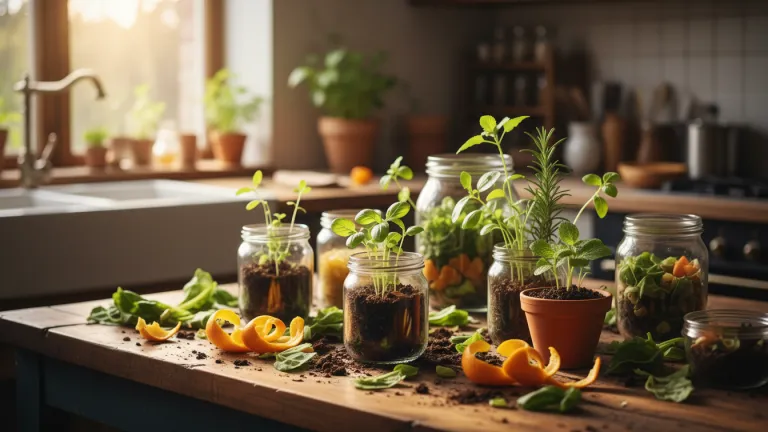
Why Reusing Food Scraps Is a Revolutionary Act
Have you ever stopped to think about how much food ends up in the trash before it even reaches your plate? Carrot peels, broccoli stems, stale bread, leftovers from last night’s dinner — items many people discard without a second thought. But these “scraps” hold enormous potential: nutritional, economic, and environmental.
Food waste is one of the biggest socio-environmental issues of our time. According to the Food and Agriculture Organization of the United Nations (FAO), about one-third of all food produced worldwide is wasted. In Brazil, estimates based on studies by Embrapa and the Brazilian Institute of Geography and Statistics (IBGE) indicate that losses occur throughout the chain — from production to domestic consumption — with a significant portion of this waste happening at home, in the form of leftovers and prematurely discarded food.
The good news is that small changes in kitchen habits can make a real difference, both for your wallet and for the planet. This guide was created to be practical, accessible, and applicable today. No complications, no exotic ingredients, and no need for advanced culinary skills.
The Real Impact of Food Waste on the Environment
Before diving into the tips, it’s worth understanding why this topic matters so much from an environmental perspective.
When food is wasted, it’s not just the food itself that is lost — it’s all the energy, water, land, and human labor invested in its production. A head of lettuce, for example, requires irrigation, transportation, and refrigerated storage before reaching your table.
Moreover, when organic waste ends up in landfills without proper treatment facilities, it decomposes in low-oxygen conditions and releases methane, a gas with a global warming potential much higher than CO₂ in the short term. The Intergovernmental Panel on Climate Change (IPCC) recognizes food waste as a significant contributor to global greenhouse gas emissions.
Reusing leftovers and underutilized parts of food is, therefore, a concrete and accessible way to reduce your environmental footprint — complementing other actions like opting for renewable energy and supporting reforestation: what it is and why it matters.
Identifying Types of Scraps That Can Be Reused
The first step is to change how you view leftovers. There are basically three categories of scraps that are often unnecessarily discarded:
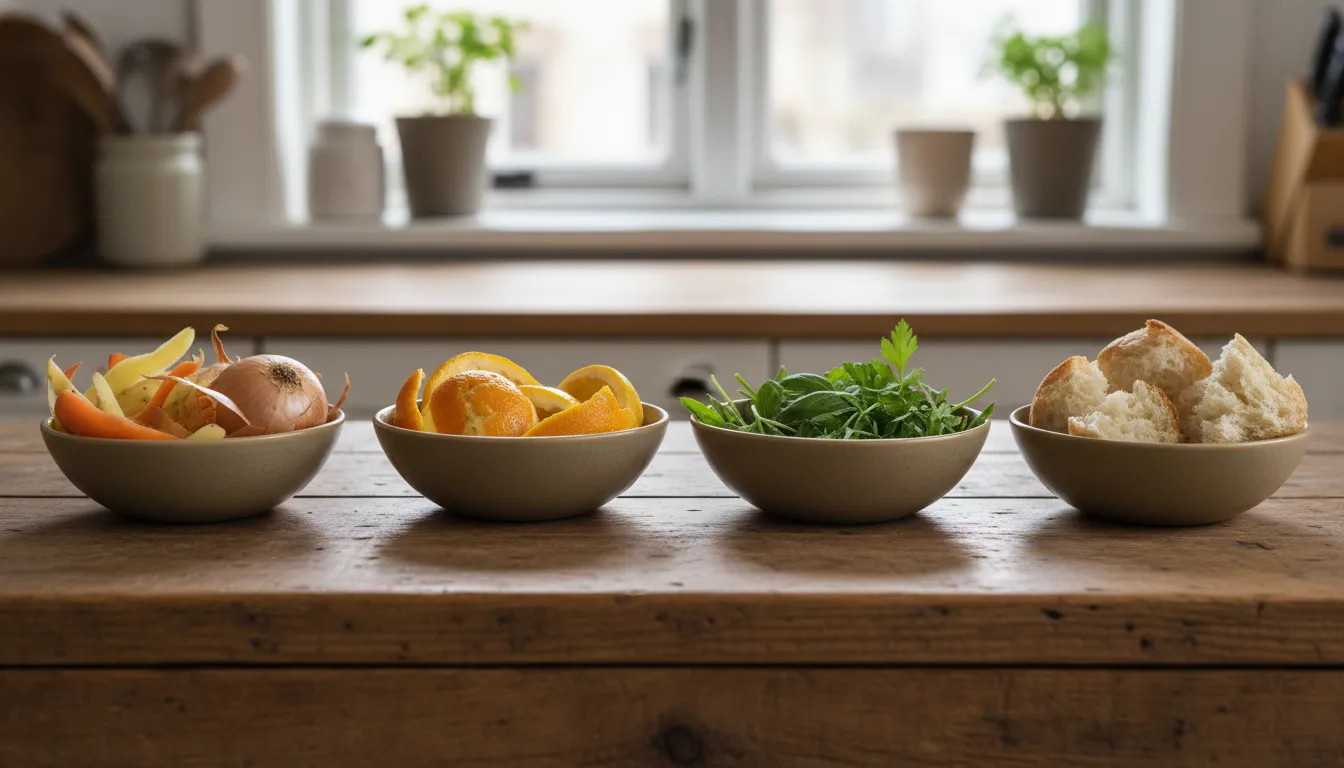
“Unconventional” Parts of Foods
- Peels: from potatoes, carrots, zucchini, beets, and cucumbers are edible and nutritious
- Stems and leaves: from broccoli, cauliflower, beets, carrots, and parsley have intense flavor and nutritional value
- Seeds: from pumpkin, watermelon, and passion fruit can be roasted and consumed as snacks
- Bread core: stale bread is a valuable ingredient in cooking
Leftover Prepared Meals
- Cooked rice, beans, pasta, sautéed vegetables, and meats can be transformed into new dishes
Liquids and Broths
- Water from cooking vegetables and grains, chickpea brine (aquafaba), and bone broths can be used as bases for soups, sauces, and even baking recipes
How to Organize Your Fridge to Reduce Waste
Reusing starts before cooking. A poorly organized fridge is one of the main causes of household waste — food disappears at the back of the shelf and only reappears spoiled weeks later.
Step-by-step to Organize Your Fridge Smartly
- Conduct a weekly “audit”: before shopping, check what you already have in the fridge and pantry. List items that need to be used first.
- Adopt the FIFO method: “First In, First Out.” Place older foods in front and new ones at the back.
- Store visible leftovers: use transparent containers so you can see what’s stored without opening everything.
- Label with date: put the date you stored the leftover. This way, you know exactly how long you have to consume it.
- Designate a “use first” shelf: any item with a nearby expiration date or already opened goes on this priority shelf.
- Freeze before it spoils: if you realize you won’t consume something in time, freeze it. Rice, beans, bread, meats, and many cooked vegetables freeze well.
Creative Recipes with Food Scraps
This is where the magic happens. You don’t need to follow an elaborate recipe — the idea is to improvise with what you have on hand.
Simple Recipes to Transform Leftovers
Rice Cakes Use cooked rice from the previous day, mix with egg, grated cheese, seasonings, and fry or bake. It’s quick, tasty, and uses up that forgotten pot of rice.
“Clean-the-fridge” Soup Put in a pot the vegetables that are starting to wilt, add broth (can be made with peels and stems), season, and cook. Blend for a cream or serve in pieces.
Peel Chips Sweet potato, regular potato, or beet peels can be seasoned with olive oil, salt, and spices, and baked until crispy. They become a snack.
Stale Bread Crumbs Grate hard bread and toast in a pan with olive oil, garlic, and salt. It replaces traditional crumbs and is delicious.
Aquafaba in Recipes The liquid from canned chickpeas can be whipped like egg whites and used in mousses, meringues, and doughs. It’s a functional and free vegan alternative.
Stem Pesto Cilantro, parsley, or basil stems blended with olive oil, garlic, nuts, and lemon make a tasty pesto that can season pasta, toast, and grilled vegetables.
Composting: When Scraps Can’t Go in the Pot
Not all scraps can be reused in the kitchen — and that’s okay. For these cases, composting is the most sustainable solution.
Composting transforms organic waste into nutrient-rich compost, preventing these materials from reaching landfills and producing methane. You can set up a composter at home with a low investment, even in apartments, using compact worm bins available on the market.
What Can Go in the Composter
- Fruit and vegetable peels
- Coffee grounds and paper filters
- Tea bags
- Napkins and non-plasticized papers
- Cooked food scraps (in moderate amounts, without excess fat)
What to Avoid in Domestic Composters
- Large quantities of meat and fish (attract pests)
- Excess dairy products
- Synthetic or plasticized materials
If you don’t have a composter yet, research organic collection points in your city — many Brazilian municipalities already offer this service, and the number has been growing in recent years.
Menu Planning: The Strategy That Prevents Waste
Reusing is great, but preventing waste is even better. Weekly meal planning is the most effective tool for this.
How to Plan Your Menu Practically
- Set aside 15 minutes a week to think about meals for the coming days.
- List what you already have at home before planning any purchase.
- Create chained meals: plan to use Monday’s roast chicken as Tuesday’s wrap filling and Wednesday’s soup base.
- Make an objective shopping list based on the menu — and stick to it in the supermarket.
- Buy less and more frequently if possible, especially fresh fruits and vegetables.
- Include a “clean-the-fridge” meal in the weekly menu, preferably before shopping day.
This simple habit can significantly reduce the items that end up in the trash — and still save money at the end of the month.
Building a More Sustainable Kitchen Day by Day
Reusing food scraps is one piece of a larger puzzle. When this habit is combined with other practices — such as preferring local and seasonal products, reducing plastic packaging consumption, and choosing efficient appliances — the impact multiplies.
If you’re thinking about structuring a more broadly sustainable home routine, the guide on essential items for a sustainable home can be a great next step. Small decisions in the kitchen, living room, and bathroom add up to create a lifestyle more aligned with caring for the planet.
Quick Tips for Everyday Kitchen Life:
- Use glass containers instead of plastic for storing leftovers
- Prefer cloth dish towels and natural sponges over disposables
- Buy “ugly” or imperfect fruits and vegetables — they’re as nutritious as the pretty ones and often cheaper
- Learn to use your nose and eyes before throwing away: many “expired” foods are still perfectly safe to consume
Start Today: Every Scrap Counts
Reusing food scraps doesn’t require perfection. It doesn’t have to be every day, at every meal, with impeccable execution. What matters is creating a new way of looking at what’s in the kitchen — with creativity, curiosity, and awareness.
Start with the simplest: the next time you’re about to throw away a carrot peel or a broccoli stem, pause for a second and ask: “can this become something else?” Often, the answer is yes.
Every portion of food saved is less waste in the landfill, fewer greenhouse gas emissions, less waste of natural resources, and a little more money in your pocket. This is real sustainability — accessible, practical, and done at home, with what you already have.
Try a new recipe with leftovers this week and share it with someone who also wants to help the planet. Small acts, repeated by many people, change the world.
