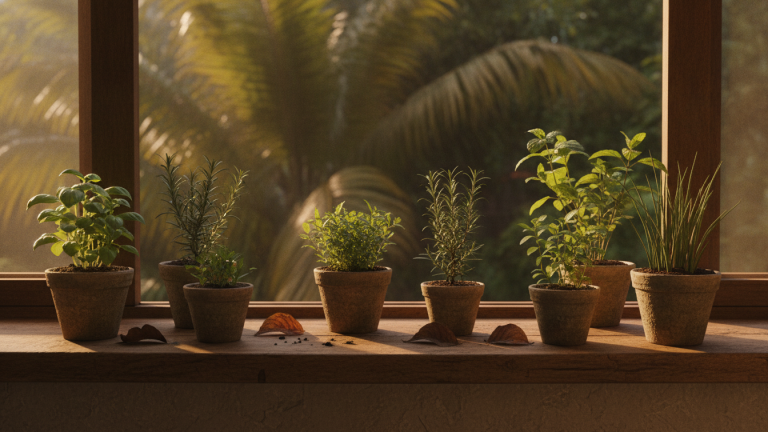
Why does a bunch of parsley at the market cost R$ 3 and spoil in two days?
You buy fresh herbs at the market, use half in your weekend recipe and watch the rest wilt in your fridge drawer a few days later. This scene repeats in most Brazilian homes. The waste is real, expenses add up, and there’s the plastic packaging to throw away. Now imagine arriving in your kitchen, cutting a few branches directly from a pot on your windowsill and seasoning your beans right away. This switch is simpler than it seems.
By the end of this article, you’ll know exactly how to start an herb garden at home, even if you live in an apartment, have never planted anything in your life, and don’t have spare time. The initial investment is low, results appear quickly, and the impact on your daily life is concrete: less spending, less waste, and a different connection with what you eat.
Growing herbs at home is also a gesture of more conscious consumption. When you produce part of what you consume, you reduce packaging, transportation, and the entire environmental impact chain that comes with a simple industrialized bunch of cilantro. Small in scale, true in practice.
What you’ll need before getting your hands dirty
Before rushing out to buy seedlings and bags of soil, it’s worth understanding what really makes a difference in a home herb garden. It’s not the size of the space. It’s the right combination of light, substrate, and watering.
Most mistakes made by beginners happen by skipping this observation step. Look at your window or balcony before anything else. How many hours of direct sun does it receive per day? This number will determine which plants have the best chance of thriving in your space.
Understanding available light
Herbs like basil, thyme, and rosemary need at least four to six hours of direct sun per day. Cilantro and chives, on the other hand, tolerate indirect light environments and do well in south-facing windows or partially shaded spaces, common in urban apartments.
If your window receives less than three hours of sun, don’t be discouraged. Chives, mint, and watercress are resistant options for this condition. There’s also the possibility of using grow lights, which cost between R$ 40 and R$ 120 in gardening stores or online, but for starting from scratch this isn’t necessary.
What materials you need
- Pots with drainage holes at the bottom (recycled PET bottles work, but ensure they have holes)
- Substrate specific for vegetables or a mix of garden soil with humus
- Trays to prevent leaks on counters
- Small watering can or adapted PET bottle
- Seeds or seedlings (seedlings are recommended for beginners)
The initial cost to set up three or four pots is around R$ 50 to R$ 80, depending on the city and where you buy. At farmers markets, it’s common to find chive and parsley seedlings for R$ 3 to R$ 5 each.
Which herbs to plant first: choices that work in Brazil
Brazil has a favorable climate for most aromatic herbs, but each region has its particularities. Embrapa, which researches crops adapted to Brazilian territory, recommends for beginner home gardens species that are easy to manage and have short cycles, precisely because quick returns maintain motivation.
For those starting out, these are the best choices:
- Chives: grows quickly, tolerates little light, lasts for months if well cared for
- Parsley: great for those who cook beans, meats, and broths; prefers partial sun
- Basil: essential for pastas and sauces; loves heat, which is an advantage in Brazil
- Mint: spreads easily, ideal for teas and drinks; keep in a separate pot to prevent it from invading others
- Cilantro: widely used in Northeastern and Northern Brazilian cuisine; prefers mild climate and dislikes intense heat
- Rosemary: drought-resistant, perfect for those who forget to water; goes well with meats and roasts
If you live in the Northeast or in cities with very hot summers, cilantro can be planted during the cooler period of the year. In the South and Southeast, it does well most of the year with some protection on very sunny days.
Step-by-step guide to setting up your garden from scratch
This process takes about an hour to set up and the first results appear between two and four weeks, depending on the species chosen.
Materials needed: pots with drainage, substrate for vegetables, seedlings or seeds, collection tray, watering can.
Estimated cost: R$ 50 to R$ 100 to start with three species.
- Choose the location by observing the number of hours of sun. Windows facing north or east are usually the most recommended in Brazilian apartments.
- Prepare the pots by placing a thin layer of gravel or small stones at the bottom before the substrate. This improves drainage and prevents roots from becoming waterlogged, the main cause of herb death at home.
- Buy seedlings instead of seeds to start. Seeds require more patience and technique. Chive, parsley, and basil seedlings are easily found at markets, florists, and even some supermarkets.
- Plant each species in a separate pot. Mixing everything in the same container seems practical, but competition for nutrients and differences in watering needs compromise results.
- Water with moderation. Most herbs die from excess water, not lack. A good rule is to stick your finger two centimeters into the soil: if it’s moist, wait another day.
- Always harvest from the tips of the branches, without pulling the entire plant. This technique stimulates lateral growth and makes the herb last much longer.
- Fertilize every 30 days with earthworm humus or granulated organic fertilizer. This replenishes the nutrients that watering removes over time.
Common mistakes that kill the garden before it grows
Those who start full of enthusiasm often encounter the same problem: the plant does well in the first few weeks and then starts to wither. The cause is almost always one of these:
Excess water is the leading cause of death. Pots without drainage holes or trays full of water create an environment for root fungi. If the soil is always waterlogged, the plant rots from below before you notice.
Lack of sufficient light is the second most common factor. Many people place pots in hallways or in a decorative corner far from any window. Herbs are not shade ornamental plants; they need light to produce the essential oils that give them flavor.
Not harvesting regularly also harms the plant. It seems contradictory, but the more you harvest (correctly, from the tips), the more the plant grows. Leaving it to grow without pruning makes it flower and lose the flavor of its leaves.
Using pure garden soil without proper substrate results in compacted soil that doesn’t drain well. The investment in substrate for vegetables, found in any agricultural or garden store, makes a real difference.
The real impact of having herbs at home
Thinking about sustainability doesn’t have to be abstract. A home herb garden solves practical, measurable problems in your daily life.
First, waste drops. When you have the living herb at home, you use only what you need at the moment. No more half a bunch of cilantro rotting in the fridge. Second, plastic packaging disappears from your routine. Each bunch of herbs you stop buying is one less package in the trash. If you want to understand how other parts of foods can also be reused, the article about fruit peels in the apartment: how to use them well brings ideas that combine well with this practice.
Third, the quality of what you eat changes. Fresh herbs have a much higher concentration of aromatic compounds than dried or frozen versions, and you control what was used in cultivation. No pesticides you didn’t choose.
Producing part of your own food, even if it’s just the seasoning, is also an exercise in conscious consumption: you stop being a passive consumer and start understanding better what’s on your plate.
Adapting the garden to different spaces
Apartment without balcony
Use window sills, shelves near windows, or the top of the refrigerator if there’s enough light. Medium-sized pots, between 15 and 20 cm in diameter, are sufficient for chives, parsley, and mint. Collection trays are essential to avoid wetting the floor.
House with backyard or balcony
The space favors larger vegetable beds. A practical option is to use recycled wooden pallets as a vertical structure for pots, which saves floor space and organizes the garden well. In exposed backyards, watch out for excess rain: pots that accumulate water at the base can damage the roots.
Condominiums with collective area
Some condominiums in Brazil have already adopted community gardens in the yard or on the roof. If yours doesn’t, it could be a proposal to present at the next assembly. The initiative reduces costs for everyone and creates a meeting space.
Frequently asked questions about home herb gardens
Can I start with seeds instead of seedlings?
Yes, but the process is slower and requires a bit more care at the beginning. Seeds need moist substrate, stable temperature, and can take between 10 and 20 days just to germinate. For those starting from scratch, pre-rooted seedlings reduce the risk of frustration and show results faster.
How much time per week do I need to dedicate to the garden?
On average, 10 to 15 minutes per week are enough to water, observe the plants, and make occasional harvests. The greatest care happens in the first days after planting, when you’re still calibrating the ideal watering frequency for your space.
Can herbs be planted year-round in Brazil?
It depends on the species and region. In general, spring and summer favor basil and rosemary. Cilantro prefers milder temperatures, being more indicated for fall and winter in hot cities. Chives and parsley are the most tolerant and can be cultivated almost year-round in most Brazilian cities.
Does the garden attract insects or pests into the house?
Small insects like aphids may appear, especially on weakened plants. The best prevention is to keep plants healthy with adequate watering and good light. If aphids appear, a solution of water with diluted neutral soap, applied with a spray bottle, usually works without needing pesticides.
Start today with a chive seedling
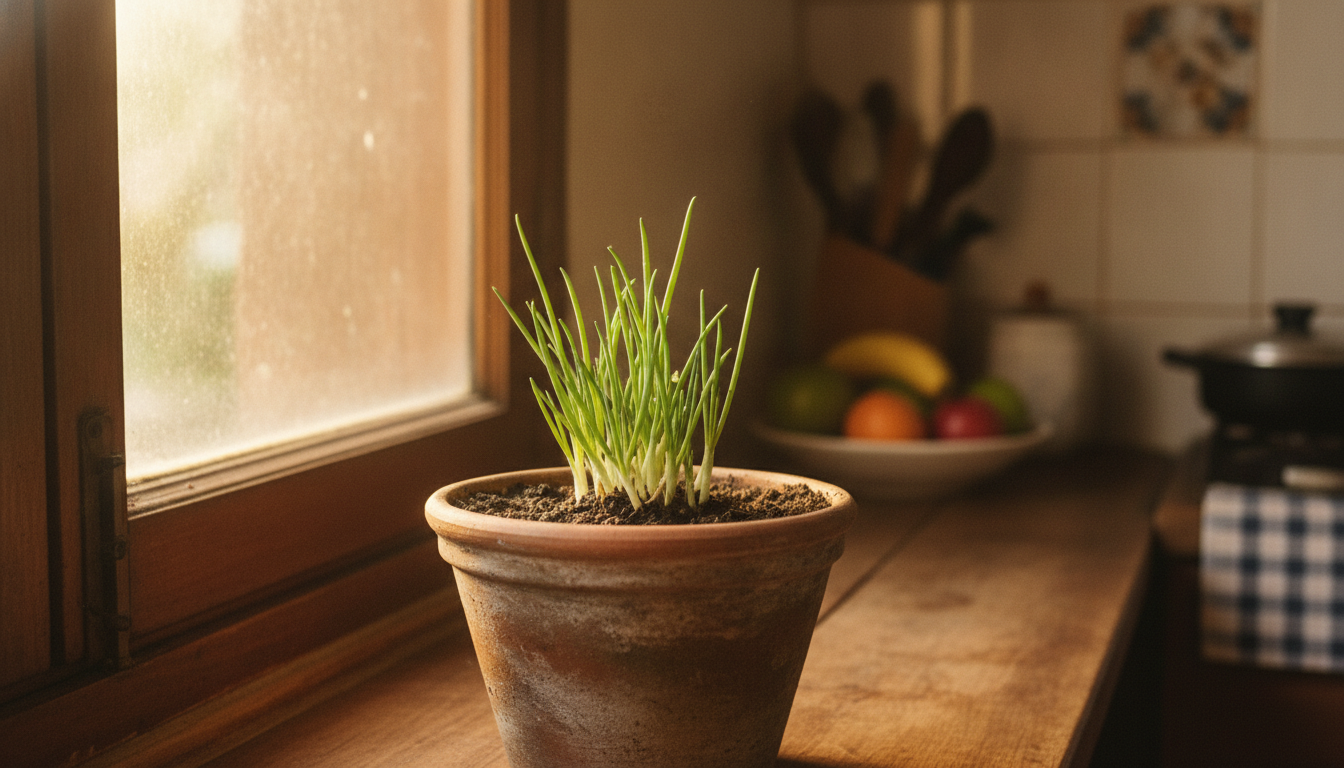
You don’t need to set up a complete garden tomorrow. The simplest beginning is to buy a chive seedling the next time you go to the market, put it in a pot with substrate, and leave it near the most well-lit window in your house.
In less than a month, you’ll be cutting fresh chives straight from the pot for your lunch rice. This small experience changes the way you think about what you consume. And you’ll hardly want to go back to the plastic bunch after that.
