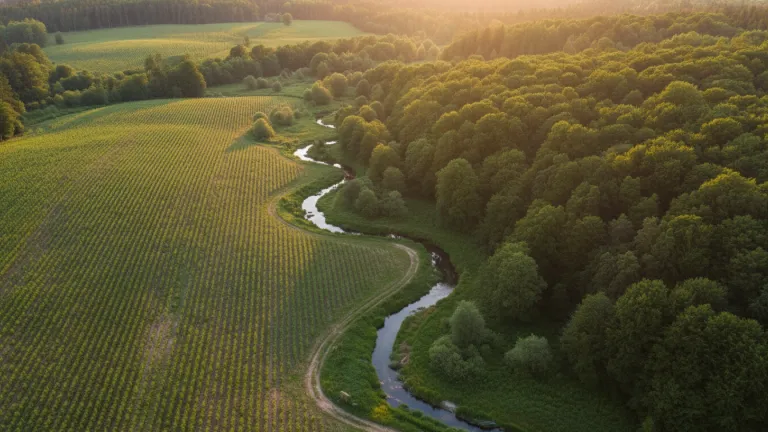
Every time a forest is destroyed, the planet loses much more than trees. It loses biodiversity, climate regulation, river protection, soil balance, and ultimately, quality of life for millions of people. The good news is that there is a powerful response to this process: reforestation. Simple in concept, complex in execution, and absolutely essential for the future we want to build.
You may have heard the word reforestation in environmental campaigns, political speeches, or company announcements promising to “plant trees” to offset their emissions. But what does this concept really mean? What are its concrete benefits? And more importantly, how can you — an ordinary person — contribute to this movement? This article answers these questions clearly, evidence-based, and action-oriented.
We’re in 2026, and the topic has never been more urgent. Global climate goals require not only emission reductions but also active restoration of degraded ecosystems. Reforestation is at the center of this equation — and understanding it is the first step to being part of the solution.
What Reforestation Is — and What It Is Not
The term reforestation refers to the process of replanting trees and restoring vegetation in areas that were previously deforested or degraded. The central idea is to return a forest cover to the territory that was lost due to human action or natural disasters.
It is important to distinguish reforestation from other related concepts:
- Reforestation (in the strict sense): replanting in areas that were previously forests.
- Afforestation: planting trees in areas that were never forests — a practice that can even be harmful to local biodiversity if done with inappropriate species.
- Ecological restoration: a broader process that seeks to recover not only the vegetation cover but the entire structure and functionality of the original ecosystem, including fauna, flora, fungi, and microorganisms.
- Tree monoculture: plantations of eucalyptus or pine for commercial purposes that, although sometimes called “reforestation” by some companies, have a very limited ecological impact compared to diverse native forests.
The distinction matters because not every tree planting recovers an ecosystem. The quality of reforestation — the species used, the methodology applied, and the ecological context — defines its real impact.
Why Forests Are Irreplaceable
Before talking about how to restore forests, it’s worth understanding why they are so important.
Forests and Climate Regulation
Forests act as giant carbon reservoirs. As trees grow, they absorb carbon dioxide from the atmosphere and store it in their biomass. When they are cut down and burned, this carbon is released back into the air. Deforestation is therefore one of the main sources of greenhouse gas emissions in the world — and in Brazil, historically, it is among the largest contributors to national emissions.
The Intergovernmental Panel on Climate Change (IPCC) consistently points out that the protection and restoration of forests is one of the climate mitigation strategies with the greatest potential and lowest relative cost. This does not mean that replacing carbon with forests alone is sufficient, but that reforestation is an essential piece in the mosaic of solutions.
Biodiversity and Ecosystem Services
Tropical forests, like those covering much of Brazil, harbor a disproportionate share of global biodiversity. The Amazon, for example, is recognized as one of the biomes with the greatest diversity of species on the planet — and its balance directly affects rainfall in distant regions, a phenomenon known as “flying rivers.”
Moreover, healthy forests:
- Regulate the hydrological cycle and protect springs
- Prevent erosion and landslides
- Pollinate agricultural crops (in partnership with insects like bees — learn more at Why Bees Are Vital for the Environment)
- Provide medicinal, food, and material resources for local communities
- Regulate local temperature, reducing urban heat islands
The Deforestation Scenario and Restoration Goals
Brazil has the largest forest restoration commitments in Latin America. The country is a signatory to international agreements such as the Glasgow Declaration on Forests and Land Use (2021) and has formal restoration goals under its Nationally Determined Contributions (NDCs) under the Paris Agreement.
The Atlantic Forest Law and the Brazilian Forest Code establish obligations for the maintenance and recovery of Permanent Preservation Areas (APPs) and Legal Reserves. In practice, however, there is a huge gap between what is required and what is effectively restored.
Initiatives such as the Atlantic Forest Restoration Pact and federal and state payment programs for environmental services have advanced in recent years, but the pace still needs to be accelerated to meet the goals.
Reforestation Methods: From Simple to Complex
There is no single way to reforest. The choice of method depends on the type of degraded area, the biome, the resources available, and the final objective.
Assisted Natural Regeneration (ANR)
In many situations, the forest can recover on its own — as long as the pressures that caused the degradation are removed (such as excessive grazing or recurring fire). ANR involves supporting this natural process, controlling invasive species, protecting sprouts, and facilitating the arrival of seeds by fauna. It is a low-cost method with high ecological potential.
Planting Native Seedlings
When natural regeneration is not enough, planting seedlings of native species is the most common option. Ideally, a combination of pioneer species (which grow quickly and prepare the soil) and climax species (which make up the mature forest in the long term) should be used. Community nurseries and municipal programs often offer seedlings for free or at low cost.
Nucleation and Low-Cost Techniques
Nucleation is an approach that creates small “nuclei” of vegetation at strategic points in the degraded area, attracting fauna and facilitating the natural dispersal of seeds. Techniques such as installing artificial perches (for birds to land and deposit seeds) have proven effective and economical.
Agroforestry Systems (AFS)
AFSs combine tree species with agricultural crops or livestock. In addition to restoring vegetation cover, they generate income for farmers. They are especially relevant for small rural producers who need to reconcile conservation and subsistence.
How You Can Contribute to Reforestation
Civic participation is an indispensable part of any large-scale effort. Here are concrete ways to get involved:
Step-by-Step to Start Now
- Learn about the biome in your region. Each biome — Amazon, Cerrado, Atlantic Forest, Caatinga, Pantanal, Pampas — has unique characteristics. Plant and support initiatives that use native species from your local context.
- Look for municipal nurseries or local projects. Many city halls, NGOs, and institutes offer seedlings for free. Research initiatives near you.
- Donate to reliable restoration organizations. Ensure that the entity is transparent, uses native species, and monitors plantings. Ask about reports and impact.
- Participate in planting mutirões. It’s a transformative — and social — experience. Environmental groups, schools, and companies frequently organize these events.
- Avoid products associated with deforestation. By consuming more consciously, you reduce the economic pressure on forests. Learn more at Sustainable Home: Essential Items to Start.
- Pressure and vote. Public policies for forest protection and restoration depend on social pressure and representatives committed to the environmental agenda.
- Share knowledge. Talking about the topic with family, friends, and on social media multiplies the impact of your individual action.
Practical Action List for Different Profiles
- Urban resident: plant native trees in the yard, support green squares in the neighborhood, donate to restoration projects.
- Student: start or participate in school restoration projects, produce educational content.
- Farmer or rural property owner: regularize the Legal Reserve, explore AFSs, access payment programs for environmental services.
- Business owner: go beyond “compensatory planting” and invest in restoration with real monitoring; support suppliers with sustainable practices.
- Teacher or educator: bring the topic to the classroom with practical examples and visits to restoration areas.
Real Challenges of Reforestation
It’s important to be honest about the obstacles. Reforesting is neither simple nor cheap when done correctly:
- Cost and labor: planting, maintenance, and monitoring require continuous investment, especially in the early years.
- Land pressures: in many regions, land grabbing and agrarian conflicts prevent the regeneration of protected areas.
- Climate change: more intense droughts and extreme events threaten the survival of newly planted seedlings.
- Greenwashing: companies that “plant trees” as marketing without real monitoring or considering the ecological context contribute little — and may mislead consumers.
The solution involves robust public policies, enforcement, applied science, and, of course, societal engagement.
Conclusion: Each Tree Is an Act of Hope
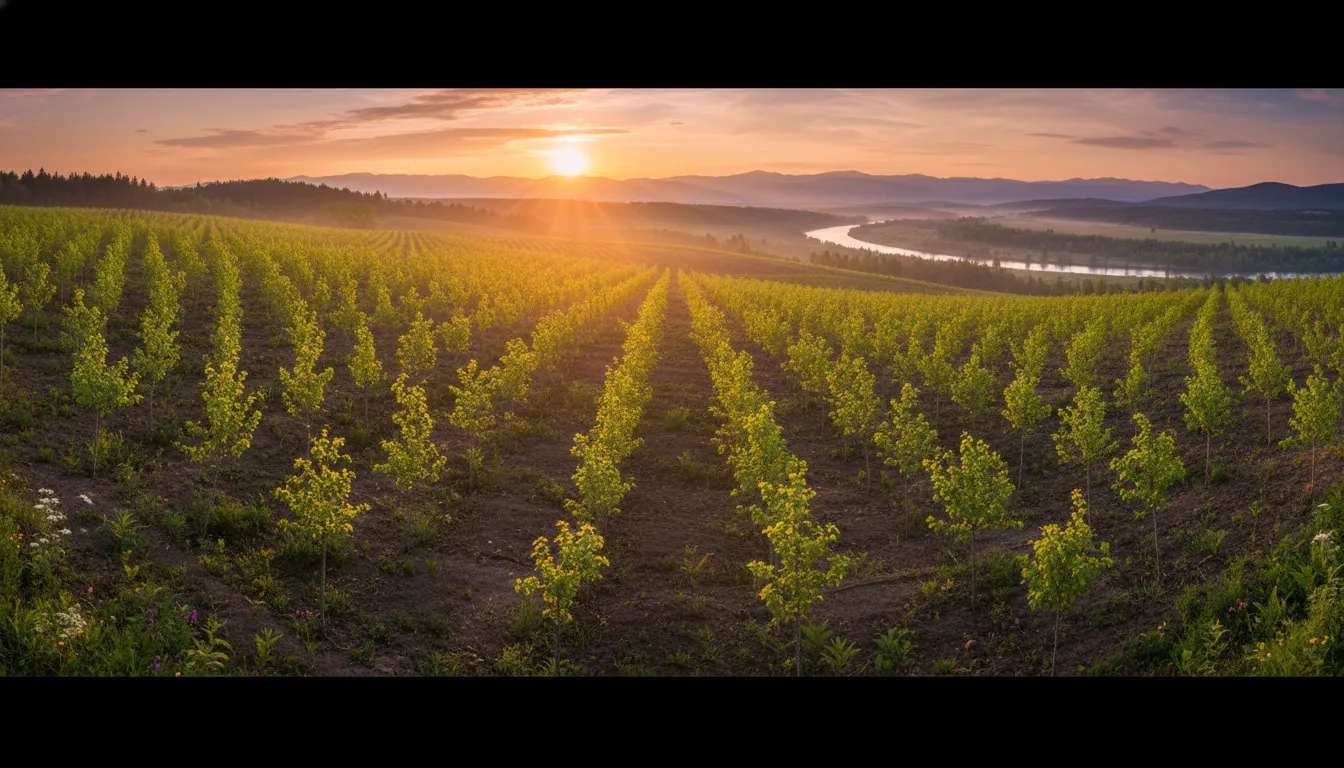
Reforestation will not solve the climate crisis or biodiversity loss alone. But it is a powerful, proven, and accessible tool that anyone can support — regardless of where they live or how much they have in their pocket.
In 2026, we are at a moment of choice. The coming decades will define the type of planet we leave for future generations. And forests — alive, diverse, restored — are a fundamental part of that legacy.
You don’t need to be an expert or own a large rural property to be part of this transformation. You can start small: a seedling in the yard, a monthly donation, a weekend mutirão, a conversation that plants an idea in someone’s mind. The forest begins this way — seed by seed, gesture by gesture.
Take care of the planet. It takes care of you.
- Land pressures: in many regions, land grabbing and agrarian conflicts prevent the regeneration of protected areas.
- Student: start or participate in school restoration projects, produce educational content.
- Look for municipal nurseries or local projects. Many city halls, NGOs, and institutes offer seedlings for free. Research initiatives near you.
- Afforestation: planting trees in areas that were never forests — a practice that can even be harmful to local biodiversity if done with inappropriate species.
