# Harnessing Solar, Wind, and Water: How Renewable Energy is Shaping Our Planet’s Future
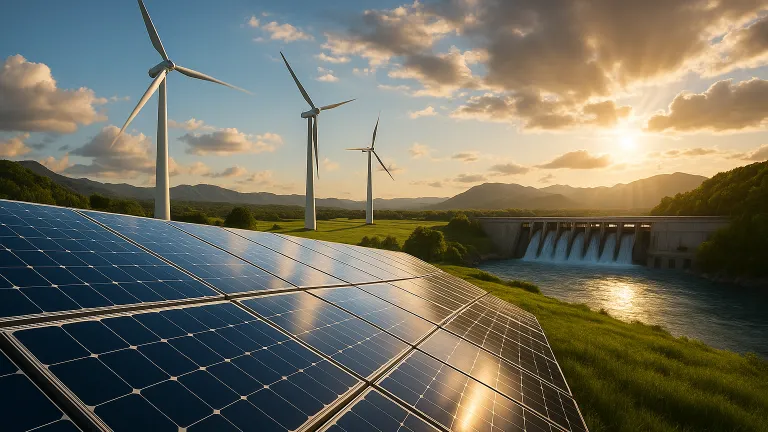
Humanity is experiencing one of the most significant energy transformations in its history. After more than a century of intensive reliance on fossil fuels, the world is finally recognizing that the sustainable future of the planet fundamentally depends on transitioning to clean and renewable energy sources. The sun, wind, and water are not only abundant natural resources but also genuine solutions to the climate and energy challenges we currently face.
The climate crisis has become an undeniable reality, with rising global temperatures, increasingly frequent extreme weather events, and entire ecosystems under threat. In this context, renewable energy emerges as an essential protagonist in redefining how we produce, distribute, and consume energy. This energy revolution is not only an environmental necessity but also an unprecedented economic opportunity, capable of generating millions of jobs and driving technological innovations that will shape the coming decades.
Understanding how the sun, wind, and water are being harnessed to generate clean energy is crucial for anyone concerned about the planet’s future. Just as understanding our ecological footprint helps us make more conscious decisions, knowing renewable energy technologies empowers us to support and actively participate in this crucial transformation.
## The Solar Revolution: Harnessing the Sun’s Energy
Solar energy represents one of the most promising and accessible forms of renewable energy available today. The sun radiates more energy onto Earth in one hour than all of humanity consumes in an entire year. This phenomenal abundance makes solar energy not only viable but potentially capable of meeting all global energy needs.
Photovoltaic technology, which converts sunlight directly into electricity through solar panels, has experienced spectacular advances in recent decades. The cost of solar panels has dropped by more than 90% since 2010, making solar energy competitive or even cheaper than fossil fuels in many regions of the world. This dramatic cost reduction has democratized access to solar energy, allowing homes, businesses, and governments to adopt this technology on an increasing scale.
In addition to traditional photovoltaic generation, concentrated solar thermal energy represents another innovative approach. This technology uses mirrors or lenses to concentrate sunlight on a specific point, generating intense heat that can be used to produce steam and drive electricity-generating turbines. Solar thermal plants have the added advantage of being able to store thermal energy in molten salts, allowing electricity generation even after sunset.
Countries like China, the United States, and India lead the installation of global solar capacity, but smaller nations are also making significant contributions. Germany, for example, has managed to make solar energy a substantial percentage of its energy matrix, even though it is not a particularly sunny country, demonstrating that solar technology is viable in various geographic contexts.
## Wind Energy: Capturing the Power of the Winds
Wind has been harnessed by humanity for millennia, from traditional windmills to sophisticated modern turbines. Wind energy has become one of the fastest-growing renewable energy sources in the world, with increasingly larger and more efficient turbines being installed both onshore and offshore.
Modern wind turbines are true engineering marvels. Some towers reach heights of over 200 meters, with blades extending over 100 meters in length. These giants capture stronger and more consistent winds found at higher altitudes, converting kinetic energy into electricity with impressive efficiency. A single rotation of the blades of a large offshore turbine can generate enough electricity to power a home for two days.
Offshore wind energy, installed in oceans and large bodies of water, represents the most exciting frontier of this technology. Winds over the ocean are generally stronger and more consistent than on land, allowing for higher capacity factors. Countries like the United Kingdom, Denmark, and the Netherlands have heavily invested in offshore wind farms, with some projects capable of generating enough energy for millions of homes.
Despite the evident benefits, wind energy faces specific challenges. Wind intermittency requires energy storage systems or integration with other sources to ensure a constant supply. Additionally, there is legitimate concern about the impact of turbines on birds and bats, although wildlife protection is increasingly being integrated into wind project planning through rigorous environmental studies and detection technologies that can temporarily shut down turbines when birds are detected.
## Hydroelectricity: The Power of Moving Waters
Hydroelectric power is the most established and widely used renewable energy source in the world. Responsible for approximately 16% of global electricity, hydroelectricity harnesses the potential and kinetic energy of moving water to generate electricity through turbines.
Large hydroelectric plants, such as the Three Gorges Dam in China or the Itaipu Dam on the Brazil-Paraguay border, can generate massive amounts of electricity reliably and predictably. Unlike solar and wind energy, hydroelectricity can provide consistent base power, operating continuously to meet constant demand.
However, mega-dams have significant environmental and social impacts. Flooding vast areas to create reservoirs can displace entire communities, alter river ecosystems, and affect water quality. The decomposition of submerged organic matter can release methane, a potent greenhouse gas. These impacts require careful environmental assessments and consideration of effects on soils and ecosystems before constructing new projects.
Recognizing these challenges, there is growing interest in smaller-scale, lower-impact hydroelectric solutions. Small hydroelectric plants (SHPs) and “run-of-the-river” hydroelectric power, which do not require large reservoirs, offer more sustainable alternatives. Additionally, emerging technologies such as tidal and wave energy promise to capture the energy of marine movements without the impacts associated with traditional dams.
## Energy Storage: Overcoming Intermittency
One of the biggest challenges for the massive adoption of solar and wind energy is their intermittent nature – the sun doesn’t shine at night and the wind doesn’t blow constantly. For these sources to completely replace fossil fuels, effective energy storage solutions are necessary.
Lithium-ion batteries, driven by the electric vehicle industry, have become increasingly viable for grid-scale storage. Large battery installations can store electricity during periods of high generation and release it when demand is higher or generation is lower, stabilizing the power grid.
Other storage technologies include pumping water to elevated reservoirs during periods of excess energy, releasing it through turbines when needed; compressed air stored in underground caverns; and thermal systems that store heat or cold for later use. Diversifying these technologies is essential to create resilient and flexible energy systems.
Green hydrogen, produced through water electrolysis using renewable electricity, emerges as a promising solution for long-term storage and hard-to-electrify sectors such as aviation and heavy industry. Although it still faces cost and infrastructure challenges, hydrogen has the potential to play a crucial role in the complete energy transition.
## Economic Impacts of the Energy Transition
The shift towards renewable energies is not only an environmental necessity but also an extraordinary economic opportunity. According to the International Renewable Energy Agency, the renewable sector employed over 12 million people globally, with projections of accelerated growth in the coming decades.
The energy transition is creating new industries and revitalizing regions previously dependent on fossil fuels. Manufacturers of wind turbines, solar panels, batteries, and associated components are establishing factories and research centers in various countries, generating skilled jobs and stimulating technological innovation.
The declining costs of renewable technologies have made them economically competitive. In many regions, building new solar or wind installations is now cheaper than maintaining existing coal plants. This economic reality is accelerating the energy transition even in countries without particularly aggressive climate policies.
Investments in renewable energy infrastructure also demonstrate attractive financial returns. Pension funds, insurers, and institutional investors are increasingly directing capital to clean energy projects, recognizing both the potential for returns and the reduction of risks associated with climate change and future environmental policies.
## Challenges and Obstacles to Renewable Expansion
Despite remarkable progress, the transition to 100% renewable energy faces significant obstacles. Existing electrical infrastructure was designed for centralized fossil fuel generation, not for the distributed and variable nature of renewables. Modernizing power grids to accommodate intermittent sources requires substantial investments in smart grid management technologies.
Regulatory and policy issues often
