# Invisible Soil Pollution: A Threat to Health and Food Security
## Introduction: The Silent Crisis Beneath Our Feet
When we think of pollution, we often imagine smokestacks emitting smoke, contaminated rivers, or mountains of plastic waste. However, there is a form of contamination that rarely receives the attention it deserves, despite its severity: soil pollution. This invisible threat is silently compromising the foundation of our food security, the quality of the water we drink, and the health of entire ecosystems.
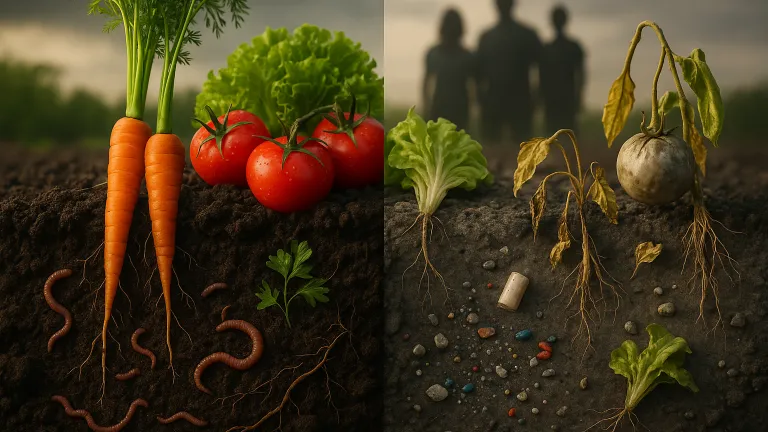
Soil is much more than just dirt beneath our feet. It is a complex, living ecosystem filled with microorganisms, minerals, and organic matter that work in harmony to sustain life on Earth. A single handful of healthy soil contains more living organisms than the entire human population of the planet. These organisms play crucial roles in decomposing organic matter, cycling nutrients, and maintaining soil fertility.
However, decades of unsustainable agricultural practices, rampant industrialization, and improper waste disposal have turned vast stretches of fertile soil into contaminated and unproductive land. This degradation not only threatens our ability to produce enough food for a growing global population but also poses serious risks to human health and environmental balance.
In this article, we will explore the main sources of soil pollution, its consequences for human health and the environment, and viable solutions to protect this invaluable resource for future generations.
## The Hidden Sources of Soil Contamination
Soil contamination can occur through various pathways, many of which are invisible to the naked eye. Understanding these sources is the first step in combating the problem.
### Pesticides and Chemical Fertilizers
Modern intensive agriculture heavily relies on pesticides, herbicides, and synthetic fertilizers. While these products increase productivity in the short term, their excessive application results in the accumulation of toxic substances in the soil. Compounds like organophosphates, neonicotinoids, and glyphosate not only eliminate pests but also destroy beneficial microorganisms essential for soil health.
Nitrogen fertilizers, when applied excessively, are not fully absorbed by plants. The residual nitrogen can contaminate groundwater, cause soil acidification, and contribute to nitrous oxide emissions, a potent greenhouse gas. Additionally, heavy metals present as impurities in some phosphate fertilizers accumulate in the soil over time.
### Industrial Waste and Mining
Industrial and mining activities are responsible for releasing large quantities of heavy metals and toxic chemicals into the environment. Lead, mercury, cadmium, arsenic, and chromium are some of the most concerning contaminants, as they persist in the soil for decades or even centuries.
Areas near factories, smelters, and mines often exhibit alarming levels of contamination. These pollutants can be transported by wind and water, spreading to areas far from the original source. Industrial contamination affects not only abandoned industrial lands but also nearby agricultural soils.
### Improper Waste Disposal
Improper disposal of household and industrial waste is one of the main causes of soil contamination. Poorly managed landfills allow toxic liquids (leachate) to seep into the soil, carrying dangerous chemicals, heavy metals, and pathogens.
Electronic waste, in particular, poses a growing challenge. Discarded devices contain heavy metals like lead, mercury, and cadmium, which can leak into the soil when improperly disposed of. As highlighted in our article on how to turn waste into opportunity, proper recycling practices are essential to minimize these impacts.
### Persistent Organic Pollutants
Persistent organic pollutants (POPs) are chemical substances that resist degradation and accumulate in the food chain. They include compounds like DDT (still used in some countries), PCBs (polychlorinated biphenyls), and dioxins. Although many have been banned in past decades, their persistence means they remain present in the soil, posing ongoing health risks.
## Human Health Impacts: A Growing Threat
Soil contamination is not just an abstract environmental problem; it has direct and severe consequences for human health. Exposure to contaminated soils can occur through various pathways: direct ingestion of soil (particularly common in young children), consumption of food grown in polluted soils, inhalation of contaminated dust, and dermal contact.
### Heavy Metals and Chronic Diseases
Heavy metals are among the most dangerous contaminants found in soil. Lead, for example, is a potent neurotoxin that especially affects children, causing cognitive deficits, behavioral problems, and reduced IQ. There is no safe level of lead exposure.
Cadmium accumulates in the kidneys and can cause kidney failure, as well as being associated with an increased risk of cancer and cardiovascular diseases. Arsenic, naturally present in some regions but also introduced by human activities, is linked to various types of cancer, heart disease, and diabetes.
### Pesticides and Endocrine Disruption
Many pesticides used in agriculture function as endocrine disruptors, interfering with the hormonal systems of humans and animals. This interference can result in reproductive problems, early puberty, developmental alterations, type 2 diabetes, and certain types of cancer.
Epidemiological studies show concerning correlations between occupational exposure to pesticides and increased incidence of neurodegenerative diseases such as Parkinson’s, as well as lymphomas and leukemias. Even low-dose exposures during critical developmental periods can have lasting effects.
### Contamination of the Food Chain
When we grow food in contaminated soils, pollutants are absorbed by plants and accumulate in their roots, stems, leaves, and fruits. Leafy vegetables and tubers are particularly efficient at absorbing heavy metals from the soil.
This transfer of contaminants from soil to food creates a direct pathway of exposure for human populations. The problem is exacerbated by the phenomenon of bioaccumulation: as contaminants move up the food chain, their concentrations increase, reaching particularly high levels in animals that feed on contaminated plants.
## Environmental Consequences: An Ecosystem in Collapse
Beyond the direct impacts on human health, soil pollution triggers a cascade of environmental effects that compromise the integrity of entire ecosystems.
### Loss of Soil Biodiversity
Soil hosts approximately 25% of all biodiversity on the planet. Earthworms, fungi, bacteria, protozoa, and countless other organisms play essential roles in maintaining soil fertility and structure. Chemical contamination decimates these microbial communities, drastically reducing soil biodiversity.
This loss of biodiversity has cascading effects: without the organisms that decompose organic matter and cycle nutrients, soil becomes progressively less fertile, requiring even greater applications of chemical fertilizers and perpetuating a vicious cycle of degradation.
### Contamination of Water Resources
Soil acts as a natural filter, purifying water as it percolates through its layers. However, when soil is contaminated, it becomes a source of pollution for surface and groundwater.
Contaminants can be transported by rain to rivers, lakes, and reservoirs, affecting aquatic ecosystems and compromising drinking water sources. The leaching of nitrates from fertilizers into groundwater represents a particularly difficult problem to remediate, as contaminated aquifers can take decades to recover.
### Reduction of Agricultural Productivity
Soil contamination reduces its ability to support plant growth. Degraded soils have lower water retention capacity, compromised structure, and nutritional imbalances. This results in reduced agricultural yields, threatening global food security.
According to estimates from the United Nations Environment Programme (UNEP), soil degradation is contributing to annual agricultural production losses estimated at hundreds of billions of dollars globally.
## The Future of Food at Risk
The connection between healthy soil and nutritious food is direct and unquestionable. However, decades of degrading practices are compromising our ability to produce enough and nutritious food to feed the growing global population.
### Nutritional Decline of Food
Research shows that foods grown today contain significantly fewer nutrients than decades ago. This phenomenon, known as “nutrient dilution,” is a result of soil degradation and the prioritization of high-yield crop varieties over nutritional content. As a result, even as we produce more food, its nutritional value is declining, posing a challenge to global health and nutrition security.
