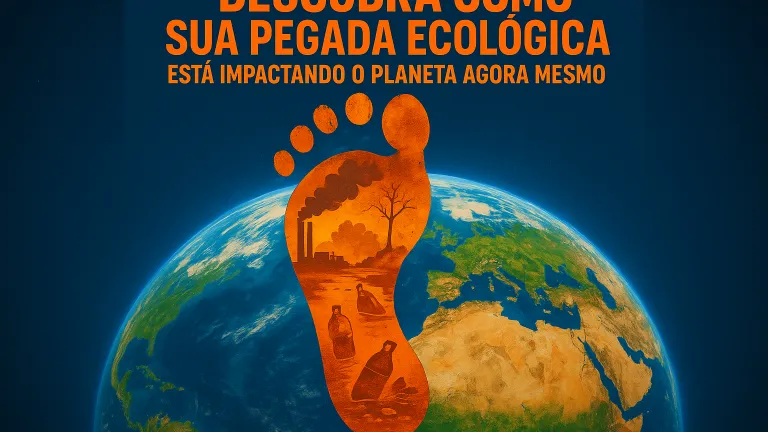
# How Your Ecological Footprint is Impacting the Planet Right Now
Have you ever considered how many natural resources you consume daily? From the moment you wake up until you go to sleep, every action leaves a mark on the planet. This mark is known as the ecological footprint, a concept that measures the impact of human activities on Earth’s natural resources. Understanding and reducing our ecological footprint has become an urgent necessity in light of growing evidence of climate change and environmental degradation.
The ecological footprint is not just an abstract number or a distant statistic. It represents real choices we make every day: what we eat, how we commute, how much we consume, and what we do with our waste. In this article, we will explore in detail how each aspect of our daily lives contributes to environmental impact and, more importantly, how we can change our habits to ensure a sustainable future for the next generations.
What Ecological Footprint Really Means
The ecological footprint is a metric that calculates the amount of biologically productive land and water needed to produce all the resources we consume and absorb the waste we generate. Developed in the 1990s by researchers Mathis Wackernagel and William Rees, this concept revolutionized the way we understand our environmental impact.
According to the Global Footprint Network, humanity is currently using the equivalent of 1.75 Earths per year. This means we are consuming natural resources much faster than the planet can regenerate them. If everyone in the world lived like the average American, we would need 5 Earths to sustain that lifestyle.
The ecological footprint is measured in global hectares (gha), a unit that represents the average productive capacity of a hectare of land. An average Brazilian citizen, for example, has an ecological footprint of approximately 3 gha, while the available biocapacity per capita on the planet is only 1.6 gha.
Components of Your Ecological Footprint
Carbon Footprint: The Invisible Villain
The carbon footprint represents the greenhouse gas emissions generated by our activities. Currently, it accounts for more than 60% of humanity’s total ecological footprint. Every time we drive a car, use electricity, or consume industrial products, we add carbon dioxide to the atmosphere.
Transportation is one of the biggest contributors. A combustion car emits approximately 2.3 kg of CO2 per liter of gasoline burned. A flight from São Paulo to Rio de Janeiro generates about 90 kg of CO2 per passenger. These emissions accumulate rapidly, contributing to global warming and its devastating consequences.
Food: You Are What You Eat and How It Impacts
Our diet has a profound impact on the ecological footprint. Food production is responsible for approximately 26% of global greenhouse gas emissions, according to data from the Food and Agriculture Organization (FAO).
Beef is particularly problematic. Producing 1 kg of beef requires approximately 15,000 liters of water and the emission of 27 kg of CO2 equivalent. In comparison, 1 kg of legumes requires only 4,000 liters of water and emits about 2 kg of CO2 equivalent.
Additionally, food waste significantly worsens the problem. About one-third of all food produced worldwide is wasted, representing not only an ethical scandal in a world where millions go hungry but also a monumental waste of natural resources.
The Impact of Consumerism on the Ecological Footprint
We live in a society of rampant consumption, where planned obsolescence and disposable culture have become the norm. Every product we buy carries a story of resource extraction, industrial processing, transportation, and eventually, disposal.
The fast fashion industry perfectly exemplifies this problem. A single cotton t-shirt requires 2,700 liters of water to produce – enough for a person to drink for 2.5 years. The fashion industry is responsible for 10% of global carbon emissions, more than all international flights and maritime shipping combined.
Electronics also contribute significantly. Producing a smartphone requires about 13,000 liters of water and generates approximately 55 kg of CO2. With billions of devices being produced annually and a shorter lifespan, the accumulated impact is staggering.
To reduce this impact, it is essential to adopt reuse and recycling practices. As demonstrated in the article 5 Creative Ways to Turn Trash into Treasure, there are numerous creative ways to give new life to objects we would normally discard.
Energy and Housing: The Impact of Where and How We Live
Our home is much more than a shelter; it is one of the biggest contributors to our individual ecological footprint. Heating, cooling, lighting, and operating electrical appliances consume significant amounts of energy, much of which still comes from non-renewable sources.
An average household in Brazil consumes approximately 160 kWh of electricity per month. Depending on the regional energy matrix, this can result in considerable CO2 emissions. Additionally, water consumption in urban Brazilian homes ranges from 100 to 200 liters per person per day, putting pressure on already scarce water resources in many regions.
The choice of building materials and house design also matters. Sustainable constructions that use local materials, have good solar orientation, and adequate thermal insulation can reduce energy consumption by up to 50% compared to conventional constructions.
Solid Waste: The Problem of Trash That Doesn’t Disappear
Each Brazilian generates, on average, about 1 kg of solid waste per day. Multiplied by the population, this results in millions of tons of trash annually. The destination of this waste has profound environmental impacts.
Sanitary landfills, although better than open dumps, still generate methane – a greenhouse gas 25 times more potent than CO2. Additionally, the leachate produced by decomposition can contaminate soil and groundwater, as detailed in the article Soil in Danger: How Invisible Pollution Threatens Our Health.
Plastic deserves special attention. We produce about 300 million tons of plastic annually, and an estimated 8 million tons end up in the oceans each year. This plastic fragments into microplastics that enter the food chain, affecting not only marine life but also human health.
Recycling is a crucial part of the solution. As explored in Turn Waste into Opportunity: How Recycling Can Save the Planet and Your Wallet, recycling not only reduces the volume of waste but also saves resources and energy in the production of new materials.
Water: The Invisible Resource in Your Footprint
When we think of water consumption, we usually only consider the water we see coming out of taps. However, there is a much larger hidden dimension: virtual water, which is the amount of water used in the production of goods and services we consume.
A simple hamburger requires approximately 2,400 liters of water to produce, considering the water needed to grow cattle feed, hydrate the animals, and process the meat. A cup of coffee requires about 140 liters of water, from cultivation to your table.
According to the UN, agriculture accounts for 70% of global freshwater consumption. With the world population growing and consumption patterns increasing, pressure on water resources is intensifying.
Water scarcity already affects more than 40% of the global population, and climate change is worsening this situation. Reducing our virtual water consumption through conscious food choices and waste reduction is essential.
How to Calculate Your Ecological Footprint
There are several online tools that allow you to calculate your personal ecological footprint. Sites like the Footprint Calculator offer detailed questionnaires that assess your consumption habits, transportation, diet, and waste generation.
When calculating your footprint, you answer questions about:
– How many kilometers you travel by car, public transport, or plane
– What types of food you consume and how often
– How much waste you generate and how much you recycle
– How much energy and water your residence consumes
– How many new products you buy annually
The result is usually presented in global hectares or the number of Earths needed if everyone lived like you. This powerful visualization helps contextualize the impact of our daily choices.
Practical Strategies to Reduce Your Ecological Footprint
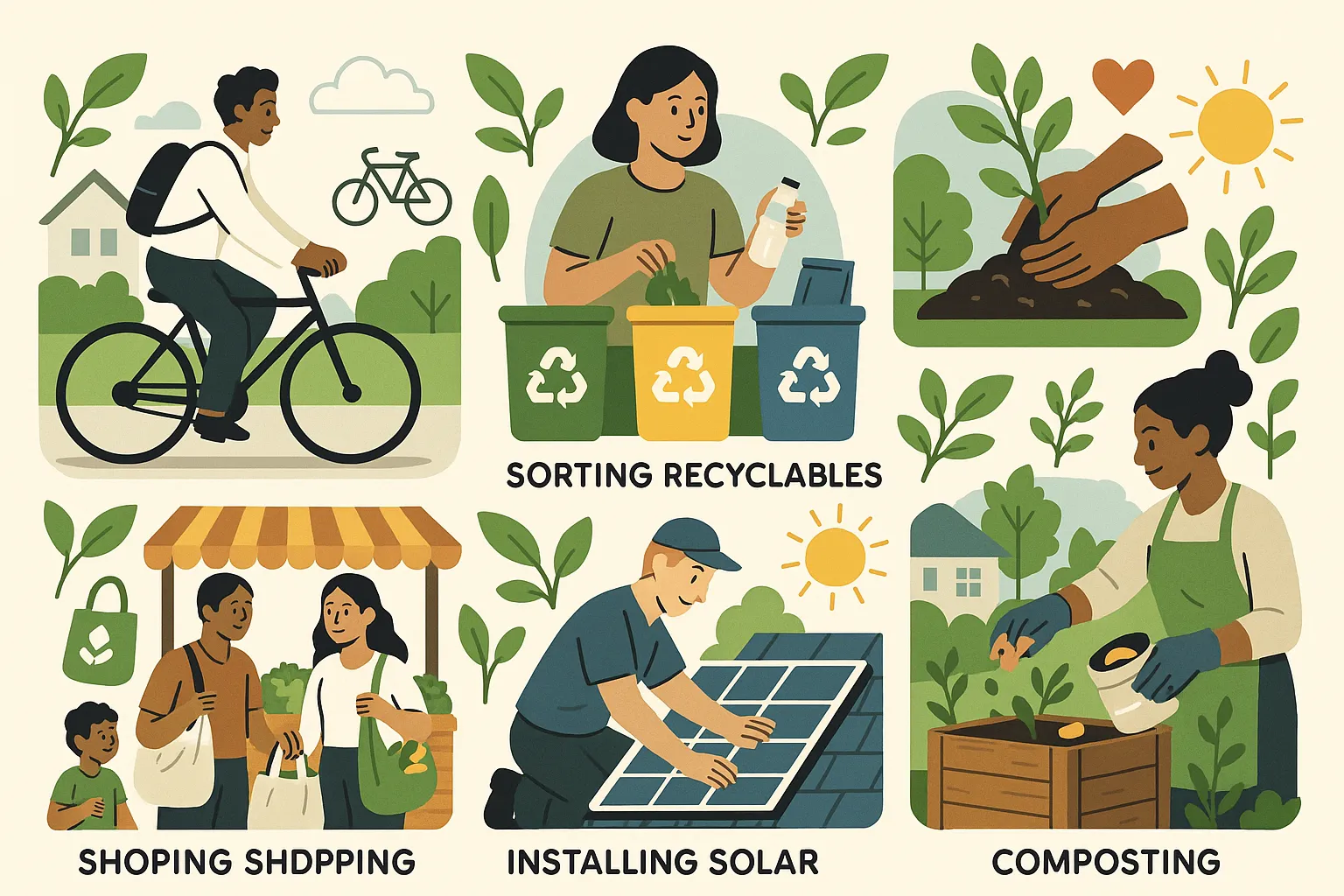
Dietary Changes
Reduce
