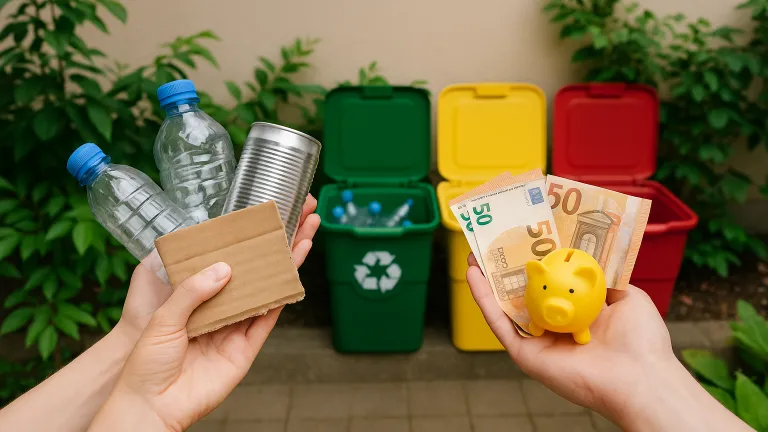
Turn Waste into Opportunity: How Recycling Can Save the Planet and Your Wallet
We live in an era of accelerated consumption, where tons of waste are generated daily worldwide. However, within every discarded soda can, every thrown-away plastic bottle, and every abandoned cardboard box lies a transformative potential that few recognize. Recycling is not just an environmentally responsible practice—it’s a silent revolution that can save our planet while generating significant economic benefits for individuals, communities, and entire nations.
According to data from the United Nations, the world produces over 2 billion tons of municipal solid waste annually, and this number continues to grow exponentially. While many see only trash, visionaries and conscious communities see valuable raw materials, business opportunities, and a solution to some of today’s most urgent environmental problems. Just as renewable energy is transforming the world, recycling represents an essential paradigm shift for our collective survival.
This article explores how recycling can be the key to a more sustainable and prosperous future, demonstrating that caring for the environment and improving your financial situation are not conflicting goals, but rather complementary ones.
The Global Waste Crisis: Understanding the Scope of the Problem
Before we understand the solutions, we need to properly gauge the problem. Global waste production has been growing at an alarming rate, significantly outpacing population growth. It is estimated that by 2050, global waste generation will increase by 70%, reaching an astounding 3.4 billion tons annually.
The environmental impact of this mountain of waste is devastating. Landfills occupy vast areas of land, contaminate groundwater with toxic leachate, and release methane—a greenhouse gas 25 times more potent than carbon dioxide. In the oceans, plastic islands the size of entire countries float, killing millions of marine animals annually and introducing microplastics into the food chain that eventually return to our plates.
In Brazil, the situation is no different. According to data from the Solid Waste Panorama in Brazil, only about 4% of municipal solid waste is effectively recycled, while countries like Germany and Austria achieve rates above 60%. This represents not only an environmental disaster but also a monumental economic waste of valuable resources.
The Transformative Power of Recycling: Concrete Environmental Benefits
Recycling offers measurable and scientifically proven environmental benefits. Each recycled material represents a saving of natural resources, a reduction in greenhouse gas emissions, and a decrease in pollution.
When we recycle a ton of paper, we save approximately 17 mature trees, conserve 26,000 liters of water, and prevent the emission of 2.5 tons of CO2 into the atmosphere. In the case of aluminum, the numbers are even more impressive: recycling aluminum cans saves 95% of the energy required to produce the material from virgin bauxite. A single recycled can saves enough energy to keep an LED bulb lit for 20 hours.
Plastic, the modern environmental villain, also presents significant benefits when recycled. Although technically more complex, plastic recycling can save up to 80% of the energy needed for virgin production and drastically reduce marine pollution. Each ton of recycled plastic prevents the emission of approximately 1.5 tons of CO2.
In addition to direct benefits, recycling contributes to the circular economy—a model where products and materials are kept in use for as long as possible, extracting maximum value from them before recovering and regenerating them at the end of their life cycle.
Recycling and Economy: How to Turn Waste into Profit
Contrary to the common perception that sustainable practices are necessarily expensive, recycling represents a robust economic opportunity at multiple levels—from individuals to entire national economies.
For individuals and families, recycling can generate direct income through the sale of recyclable materials. Collectors organized in cooperatives report monthly earnings that vary according to the volume collected and market prices of materials. Additionally, practices like home composting eliminate the need to buy chemical fertilizers, saving money while producing high-quality compost.
Companies that implement robust recycling programs often discover significant reductions in operational costs. Reducing the volume of waste sent to landfills lowers collection and disposal fees. Many organizations also find markets for their waste, turning what was a cost into a source of revenue. Large corporations like Unilever and Coca-Cola have set ambitious recycling goals not only out of environmental responsibility but because they have identified tangible competitive and economic advantages.
On a national scale, the recycling industry moves billions of dollars annually and employs millions of people globally. In the United States, the sector generates over 750,000 jobs and contributes approximately $200 billion to the economy. In Brazil, it is estimated that about 800,000 people work as recyclable material collectors, often in precarious conditions that could be drastically improved with adequate public policies and recognition of the economic value of this activity.
How to Start: Practical Steps to Implement Recycling
Turning intention into action requires practical knowledge and simple systems. Implementing effective recycling in your life doesn’t have to be complex or labor-intensive.
The first step is to establish a separation system at home. Start simple: have separate containers for dry recyclables (paper, plastic, metal, glass) and organics. Many people feel overwhelmed trying to separate all types of materials from the start. A gradual approach is more sustainable and effective in the long run.
Know your local recycling rules, as they vary significantly between municipalities. Some accept all types of plastic, while others are more selective. Glass may have restrictions on colors or types. Spend a few minutes researching your city’s guidelines—this knowledge will eliminate contamination and make your efforts more effective.
Clean recyclable materials before discarding them. Food residues in packaging can contaminate entire batches of recyclables, making them unsuitable for processing. A quick rinse is usually sufficient.
For organic waste, consider starting a home composter. Apartments can use compact systems like worm bins, while homes with yards can implement larger composters. Approximately 50% of household waste is organic—composting it drastically reduces the volume of waste sent to landfills while producing valuable compost.
Just as it’s important to awaken consciousness regarding our automatic habits, developing awareness about our consumption and disposal is fundamental for effective recycling.
Beyond Basic Recycling: Upcycling and Creative Economy
While traditional recycling breaks down materials for reprocessing, upcycling transforms waste into higher-value products without completely altering them. This practice combines sustainability with creativity and can generate significant economic opportunities.
Plastic bottles become decorative vases, lamps, or drip irrigation systems for gardens. Discarded wooden pallets turn into modern and stylish furniture. Old clothes are redesigned into unique fashion pieces. Used tires become swings, vertical gardens, or even durable shoes.
The maker movement and creative economy have embraced upcycling as both philosophy and practice. Creative entrepreneurs have discovered lucrative niches by turning “waste” into desirable products. Fashion brands use recycled materials to create entire collections, attracting conscious consumers willing to pay a premium for sustainable products with authentic stories.
This approach not only reduces waste but also questions our relationship with consumption. Every object has the potential for multiple lives, limited only by human creativity.
Environmental Education: Shaping Conscious Generations
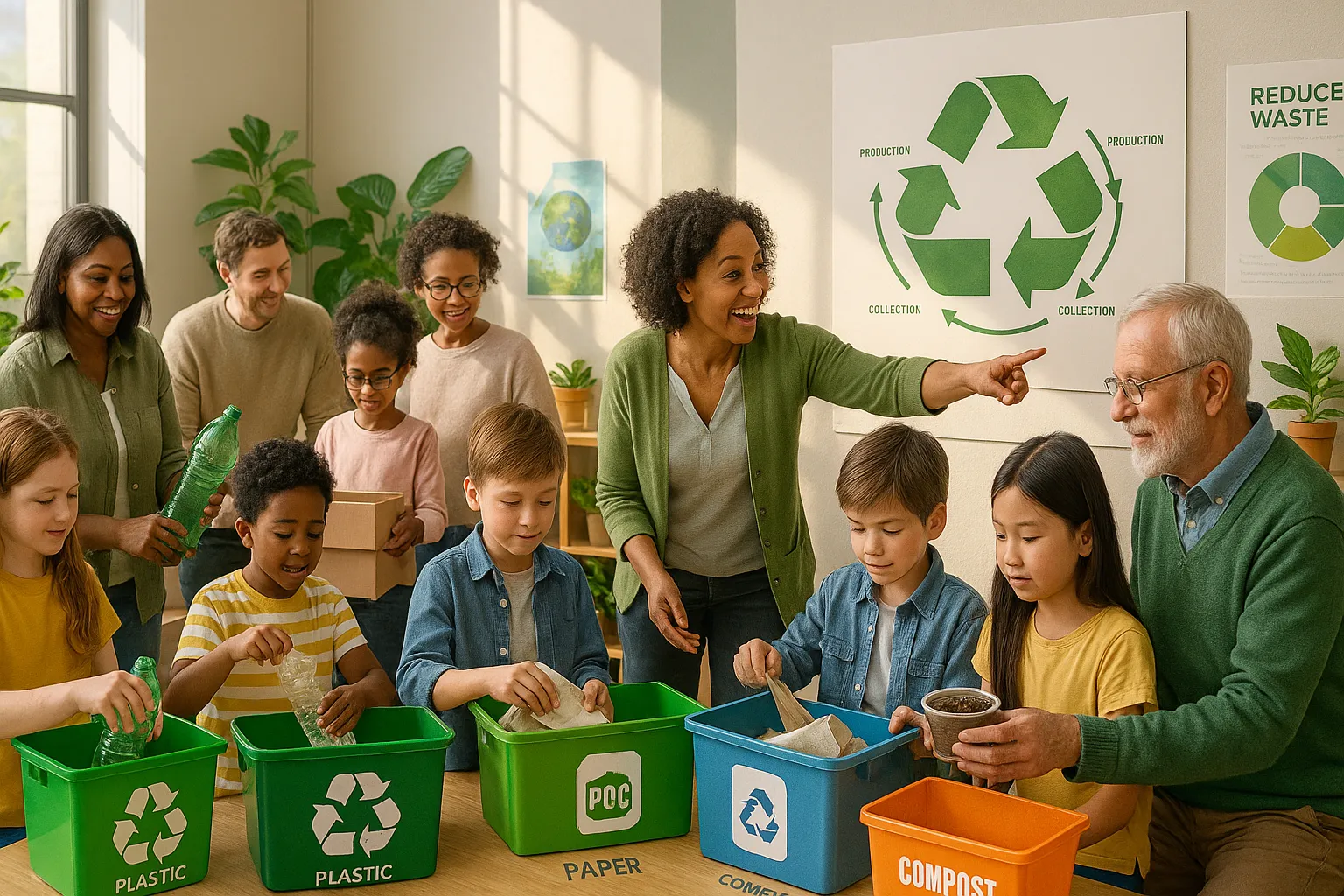
Lasting transformations require deep cultural changes, and this begins with education. Teaching children and young people about recycling and sustainability creates environmentally conscious citizens who will carry these values throughout their lives.
Schools around the world implement recycling programs that go beyond theory, involving students in practical projects. From school gardens fueled by composting to recycling competitions between classes, these initiatives make sustainability tangible and engaging.
