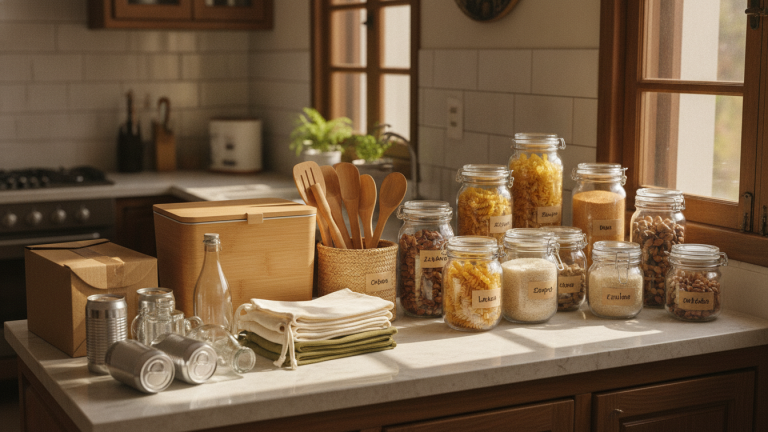
The garbage bag that never ends
Think about the last garbage bag you closed and threw away. Now multiply that by every day of the month, by every resident of your building or street, by every Brazilian city. According to data from Abrelpe (Brazilian Association of Public Cleaning and Solid Waste Companies), Brazil generates more than 80 million tons of urban solid waste per year. A small part of this is actually recycled or composted; most of it goes to landfills or, worse, to open dumps.
The zero waste movement doesn’t ask you to be perfect. It proposes something quite different: rethink what enters your home before thinking about what leaves through the back door. The logic is simple: the waste you don’t generate doesn’t need to be discarded, transported, buried, or recycled. And this translates into real savings in your monthly bill, less housework, and a more organized home.
Throughout this text, you’ll understand what zero waste is in practice, what are the first concrete steps to start without stress, and how to avoid the most common mistakes of those who try to change everything at once.
What is zero waste and why it works in the Brazilian context
Zero waste is not a lifestyle for those who live in a cabin in the countryside. It’s a consumption philosophy that anyone can apply in an apartment in São Paulo, a house in Belém, or a studio in Porto Alegre. The central principle was popularized by Bea Johnson, author of the book “Zero Waste Home”, and is organized in five steps known as the 5 Rs: refuse, reduce, reuse, recycle, and compost (in that order of priority).
In Brazil, the context has important particularities. Law 12.305/2010, the National Solid Waste Policy (PNRS), determines that municipalities must offer selective collection and that manufacturers are co-responsible for the life cycle of their products. In practice, implementation is unequal: many cities still don’t have efficient selective collection, and eco-points operate with varying regularity. This means that the most powerful strategy for Brazilians is not to recycle better, but to consume less and generate less waste from the start.
Another typically national point: the open market. Buying fruits, vegetables, and produce without packaging at a neighborhood fair is already zero waste without needing to label it as such.
How to diagnose your garbage in seven days
Before any change, it’s worth understanding what you really discard. This exercise seems simple, but it often surprises.
Materials needed: a piece of paper or notes app, seven days of observation, no cost.
- During a week, note (or photograph) everything you throw away: packaging, food scraps, paper, plastic, glass, electronics.
- At the end of the week, mentally or physically separate these residues into three groups: organic (food, peels), recyclable (paper, plastic, metal, glass), and reject (what has no useful destination).
- Look at the organic group: in most Brazilian homes, it represents more than half the weight of trash. It’s the easiest to divert from the landfill.
- Look at the recyclable group: ask if your municipality has selective collection in your neighborhood and where the nearest voluntary drop-off point is.
- Look at the reject: identify the two or three items that appear most frequently. They will be your initial focus.
This diagnosis takes only a few minutes per day and delivers a personalized map. There is no universal recipe because a house with small children generates different waste than a house where someone lives alone.
The first practical steps: where to really start
Starting with organic waste is the most impactful decision most Brazilians can make. Home composting transforms food scraps into fertilizer, eliminates trash odor, and drastically reduces the volume discarded. You can set up a composter with a perforated plastic box for less than 30 reais, or use worms (vermicomposting) in apartments without outdoor space.
For those who live in a condominium, it’s worth proposing a collective composter in the garden or common service area. Many condominiums in cities like Curitiba, Florianópolis, and Belo Horizonte have already adopted the model and significantly reduced the volume of waste generated monthly.
After solving the organic issue, the next steps are:
- Refuse what wasn’t asked for: plastic straw, bag at the supermarket, extra packaging in delivery. A “no, thank you” is already a zero waste action.
- Switch gradually: instead of throwing away everything disposable at once, replace when it runs out. Start with the kitchen sponge (switch to vegetable brush), paper towel roll (use old kitchen cloths), and plastic bags (use eco-bags or cloth bags).
- Buy in bulk when possible: bulk product stores let you take exactly the amount you need, with your own packaging. Less packaging, less spending, less waste.
- Repair before discarding: a shoe, an appliance, a piece of clothing. Brazil has a strong culture of shoemakers, tailors, and appliance technicians that is often cheaper than it seems.
- Prefer glass and paper to plastic when you have the option, as both have more established recycling chains in the country.
Common mistakes of those starting out and how to avoid each one
The most frequent mistake is trying to change everything at once. The person buys 15 zero waste products in a week, feels overwhelmed, and quits. This is the opposite of what the movement proposes: the idea is to consume less, not trade one type of consumption for another.
Another misconception is believing that recycling is enough. Recycling has energy and logistic costs and doesn’t always actually happen. According to Abrelpe data, only a fraction of the material placed in Brazilian selective collection actually goes through the recycling process, because much of it arrives contaminated or mixed. Recycling is the fourth option in the list of 5 Rs, not the first.
There is also confusion with greenwashing: products sold as “eco”, “sustainable”, or “biodegradable” don’t always deliver on what they promise. If you want to understand how to identify these traps on labels, it’s worth reading about how greenwashing works on labels and how to protect yourself before making new purchases.
Finally, many people ignore the impact of energy consumption within a more sustainable living proposal. Solid waste is an important chapter, but household electricity consumption and transportation also count. If you’re already thinking about reducing impact broadly, understanding how much you can save with solar energy on your electricity bill can complement the zero waste journey well.
What you really gain by adopting zero waste
The quickest change people report is financial. Refusing what you don’t need and buying less packaging means spending less. Those who start buying in bulk, attending open markets, and avoiding disposable products see the difference in their supermarket bill within a few weeks.
Health also appears. Many plastic packages contain substances like bisphenol A (BPA) and phthalates, which studies associate with hormonal disruption. By reducing contact with plastic in food and beverages, you decrease exposure to these compounds, especially important for children and pregnant women. The UN/UNEP has alerted to the problem of microplastic pollution as an emerging health risk to humans.
Practicality comes next. A home with less disposable and less clutter is easier to clean and organize. Trash weighs less, smells less, and needs to be removed less frequently.
Zero waste in different housing contexts
There is no single formula. See how to adapt the approach:
For small apartments:
- Vermicomposting in a 30-liter box fits under the sink or on the balcony
- Selective collection: identify the nearest voluntary drop-off point or cooperative through your municipality’s app
- Reduce packaging when ordering delivery: remove unnecessary items from the order (disposable cutlery, extra bag)
For houses with a yard:
- Wooden composter or plastic box for organics
- Worm bin for more varied scraps
- Small garden using the generated fertilizer
For families with children:
- Cloth diapers (significantly reduce waste volume)
- Snacks in reusable containers in the school backpack
- Involve children in waste separation from an early age
For those living in small cities without selective collection:
- Greater focus on reducing and reusing, since recycling infrastructure is limited
- Seek local waste picker cooperatives that accept direct delivery
- Compost organics at home or with neighbors
Frequently asked questions about zero waste
Is it possible to practice zero waste living in an apartment?
Yes, and it’s more common than you might think. Apartments are controlled spaces where it’s easier to monitor what comes in and goes out. Vermicomposting, bulk purchases, and refusing unnecessary packaging work very well without a large yard or outdoor space.
Do I need to buy many “zero waste” products to start?
No. The zero waste logic is exactly the opposite: consume less. The first steps cost little or nothing, like refusing a straw, using an old cloth instead of paper towels, and bringing your own bag. Purchases of specific products come later, when it makes real sense.
How do I deal with garbage from someone I live with who doesn’t want to change?
Without conflict. Start with your own choices and let the example speak for itself. Changes in the pantry and shopping routine usually happen naturally when the other person sees the practicality and savings in their wallet.
What do I do with waste that isn’t collected in my municipality, like batteries and electronics?
Manufacturers of batteries and electronics are required by PNRS to offer collection points for reverse logistics. Look for drop-off points at stores where you bought the product or at electronics retail chains. Large supermarket and drugstore chains also usually have collection boxes for batteries.
Start today with a single change
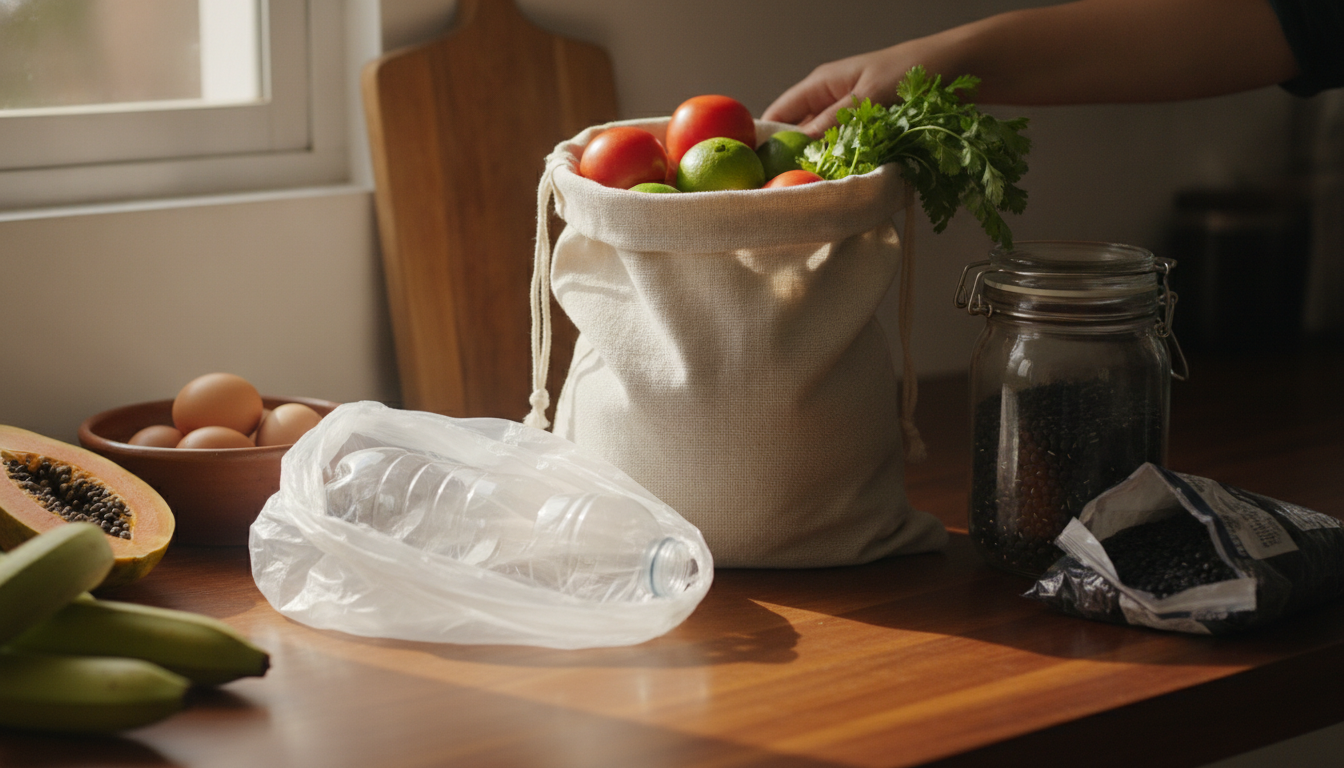
You don’t need a week of planning or a huge shopping list. Choose just one thing: the next time you go to the market, take a cloth bag and refuse the plastic bag from the cashier. Just that. It’s the first step of a journey that becomes more natural each week, without guilt, without pressure, and with real gains in your wallet and your routine.
