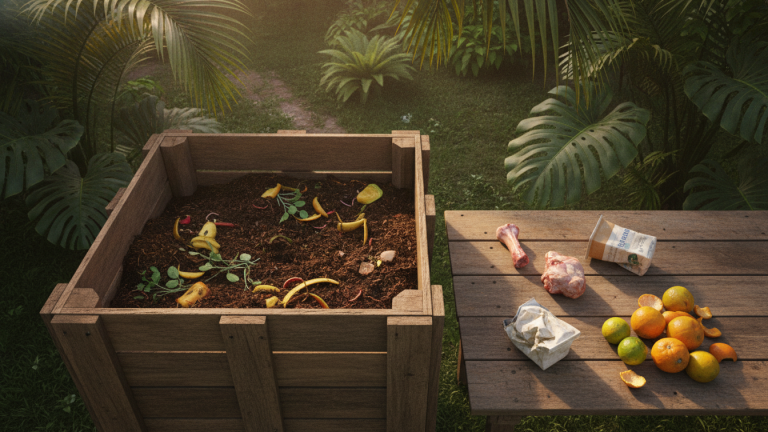
Why your compost bin might be working against you
You tossed in orange peels, coffee grounds, and dried leaves from your houseplant into the compost bin. All good, right? Almost. The problem appears when, along with these materials, other seemingly harmless items slip in that can ruin months of work, attract pests, and even contaminate the compost you wanted to use in your garden.
Composting is one of the most accessible practices for people living in apartments or houses in Brazil. According to Abrelpe, Brazilians generate more than 80 million tons of solid waste per year, and the organic fraction represents about half of that volume. Much of it goes straight to landfills, where it decomposes without oxygen and releases methane, a gas with global warming potential far superior to CO2, according to IPCC data. Composting at home is a concrete way to divert this material from the landfill.
After finishing this article, you’ll know exactly what can’t enter your compost bin, why each item is problematic, and what to do with it in the right place. No guesswork, without losing the work you’ve already started.
What happens when you put the wrong material in
Composting works because microorganisms, fungi, and small invertebrates break down organic matter under specific conditions: adequate moisture, balance between materials rich in carbon and nitrogen, and aeration. When something enters that disrupts this balance, the process falls apart.
The practical result is a compost bin that smells bad, attracts flies and cockroaches, or simply stops progressing. If you live in an apartment with neighbors in the hallway, a strong odor could be the end of your project. In houses, the risk is attracting larger animals, such as rats and opossums, depending on the region.
The final compost, also called compost or humus, can also be compromised. If material contaminated with concentrated pesticide, heavy metals, or pathogens resistant to decomposition heat enters, you could be watering your lettuce with something you shouldn’t. Care with what goes in is therefore care with what comes out.
Materials that should never go into the compost bin
Knowing the complete list prevents unpleasant surprises. Each item below has a specific reason to stay out.
Meat, fish, and seafood
Leftover chicken, red meat, fish, and any other animal product with concentrated protein decompose very differently from vegetables. They attract flies quickly, generate intense odor, and may contain pathogens that home composting, done at room temperature, cannot safely eliminate. Embrapa advises that home composting bins are not suitable for this type of material without temperature control.
Dairy and eggs (except the shell)
Milk, cheese, yogurt, and butter have high concentrations of fat and protein. They sour quickly, create anaerobic environments (without oxygen) where they accumulate, and produce strong odors from improper decomposition. Eggshells, on the other hand, are welcome: they are about 95% calcium carbonate and help correct the acidity of the compost.
Cooking oils and fats
A little olive oil left over in the pan seems like nothing. But fat creates a film around particles, blocking air passage and preventing microbial action. The result is a pasty, smelly mass in the middle of the compost bin. Used oils have a specific destination: collection points in supermarkets, schools, and recycling cooperatives accept the material for reuse.
Highly salted or seasoned foods
Leftover food with lots of salt, soy sauce, preserves, or industrialized seasonings in excess can harm the microorganisms and small animals that do the composting work. High concentrations of sodium are toxic to earthworms, which are essential allies in worm bins, the most popular version of home composting in Brazil.
Feces of carnivorous animals and humans
The feces of dogs and cats contain pathogens, such as parasites and bacteria, that are not eliminated in conventional home composting. Human feces composting exists as a technique (called sanitary composting), but requires structure, controlled temperature, and specific knowledge. For common home use, this material stays out.
Diseased or pest-infested plants
A small plant with fungus or mealybugs might seem slightly harmful. But fungal spores and pest eggs survive well in moderate temperature conditions. When you use the finished compost in your garden or vegetable patch, you could be spreading exactly the problem you wanted to eliminate.
Plasticized paper, carbon paper, and paper with intense ink
Plain paper, like black and white newspaper or smooth cardboard, can be added in small quantities as dry material (rich in carbon). But glossy magazine paper, plasticized packaging paper, and carbon paper have coatings that don’t decompose correctly and may contain heavy metals in the inks.
Treated wood, mineral coal ash, and cigarette residue
Wood with varnish, paint, or chemical preservative releases toxic substances during decomposition. Pure wood ash can enter in small amounts, as it’s rich in potassium, but mineral coal ash (like that used in charcoal grills with industrial briquettes) contains sulfur and other compounds that harm the process. Cigarette butts concentrate heavy metals and nicotine, which are toxic to microorganisms.
What to do with waste that can’t be composted
Knowing what can’t go in is half the solution. The other half is knowing where that material goes.
- Meat, fish, and dairy: wrap well before throwing in the regular trash to reduce odor and animal attraction. In some cities, there are separate organic collection initiatives for this type of material.
- Cooking oil: store in a PET bottle and take to collection points. Many larger supermarket chains already have this infrastructure.
- Diseased plants: place in a closed bag and discard in regular trash, never in selective collection or open areas.
- Plasticized paper and metallized packaging: goes in regular trash, as most Brazilian recycling cooperatives still can’t process this material.
- Treated wood waste: check with your local city hall about voluntary drop-off points for construction waste, which in many municipalities accept this type of material.
If you’re still organizing waste separation at home, it’s worth checking a guide with simple steps to separate recyclable waste at home and better understand the destination of each type of waste.
How to keep your compost bin healthy day to day
Maintaining balance doesn’t require much effort once you understand the logic. The secret is in the proportion between wet materials (greens, rich in nitrogen) and dry materials (browns, rich in carbon).
- For each layer of fruit and vegetable scraps, add an equivalent layer of dry material: dried leaves, shredded cardboard, untreated sawdust, or crushed eggshells.
- Turn the contents every three or four days to ensure aeration. In worm bins, this step is unnecessary, but maintaining the right moisture (the material should feel like a lightly damp sponge, not waterlogged) is essential.
- If ammonia smell appears, there’s an excess of green material; add more dry material. If the process stalls and the material becomes too dry, moisten with a spray bottle.
- Avoid compacting the material too much; leave space for air to circulate.
- In apartments, prefer closed worm bins with a lid, which better control odor and prevent insect entry.
Common composting myths that confuse beginners
“Citrus peels kill worms” – This is one of the most repeated myths. Orange, lemon, and passion fruit peels can go into the compost bin, but in moderate amounts, because they’re acidic. In excess, they lower pH and can bother worms. Little by little, there’s no problem.
“Onion and garlic can’t go in” – They can, without real technical restriction. What’s said is that the strong smell attracts flies if left on the surface. The solution is simple: bury these pieces in the middle of the pile.
“The more you add, the faster it’s done” – Overloading the compost bin without balance between materials is the recipe for a slow, smelly process. Volume matters less than proportion and aeration.
Frequently asked questions about home composting
Can I compost used napkins and paper towels?
Napkins and paper towels without chemicals, used only to clean food or dry hands, can go into the compost bin in small amounts as dry material. If they were used with cleaning products, like degreaser or bleach, discard in regular trash.
What about old potting soil, can it go in the compost bin?
Yes, potting soil can go in and even helps introduce microorganisms. If the plant was diseased, prefer to discard in regular trash to avoid spreading the problem.
How long does it take for compost to be ready in Brazil?
In warm climates like Brazil’s, the process in a worm bin usually takes between two and four months to produce the first humus. In compost piles without worms, it can take three to six months, depending on temperature, moisture, and frequency of turning.
Can I use the compost directly on plants without any care?
Mature compost, with the appearance and smell of soil, can be used directly as fertilizer. Immature compost, still with visible pieces and strong smell, can harm plants because the process is still consuming soil nutrients. Wait for the right moment.
One step to start right now
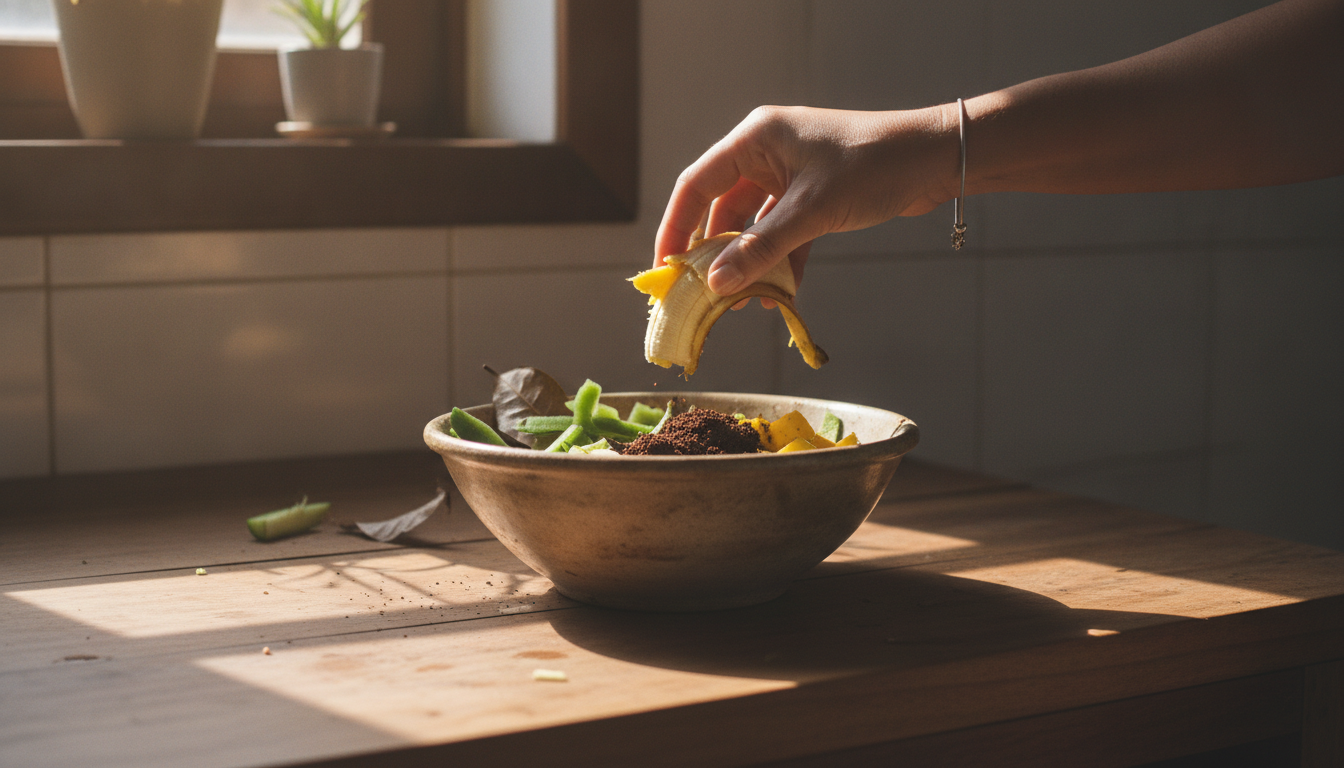
If you already have a compost bin or worm bin, review what went in over the last few days based on the list in this article and remove any unsuitable material before it compromises the process. If you haven’t started yet, the first step is to choose a container with a lid and aeration holes and start only with fruit peels, coffee grounds, and dried leaves.
Composting doesn’t need to be perfect from the start. It needs to be consistent. Every banana peel that goes into the compost bin instead of the landfill already makes a real difference, for your garden and for the planet.
