Why separating recyclable waste seems difficult (and how to change that today)
Have you ever stood in front of the trash can unsure whether the pizza box goes in the recycling or not? This doubt is more common than it seems. According to Abrelpe data, Brazil generated over 81 million tons of urban solid waste in 2023, but only a small fraction of that underwent any type of effective recycling. The problem is often not lack of willingness: it’s lack of clear and practical information.
The good news is that separating recyclable waste doesn’t require a kitchen overhaul or buying expensive products. With a few simple adjustments to your routine, you can correctly separate waste in less than five minutes a day, without confusion and without guilt.
In this guide, you’ll learn exactly what is recyclable, how to organize your space, what the most common mistakes are, and what to do when selective collection in your neighborhood falls short.
What the law says and why it matters to you
Brazil has one of the world’s most comprehensive environmental legislations for waste. Law 12.305/2010, known as the National Solid Waste Policy (PNRS), requires municipalities to offer selective collection and establishes shared responsibility among manufacturers, distributors, consumers, and government. This means that separating waste is not just an individual act: you’re part of a chain that the law recognizes and structures.
In practice, the law guarantees you have the right to demand selective collection in your municipality. Many cities still don’t fully comply with this obligation, but knowing this gives you tools to hold your mayor’s office, neighborhood associations, and city council accountable. Those living in condominiums can also pressure the building management to set up a voluntary delivery point (PEV) in the building itself.
What’s actually recyclable: the list that solves the confusion
The biggest obstacle to separating waste correctly is not knowing what goes or doesn’t go into recycling. The general rule is simple: dry and clean materials are usually recyclable; organic waste and mixed rejects are not.
Materials you can safely separate
- Paper and cardboard: cereal boxes, cardboard boxes, newspapers, magazines, scrap paper, kraft paper bags
- Plastic: PET bottles, shampoo containers, yogurt containers, bottle caps, plastic bags
- Glass: beverage bottles, preserves jars, perfume bottles (without metal caps)
- Metal: aluminum cans, steel cans (beans, corn), metal caps, clean aluminum foil
What doesn’t go in recycling
- Pizza box with grease (contaminated cardboard contaminates the entire batch)
- Disposable coffee cup (made of laminated paper, not recycled by most facilities)
- Mirror and window glass (different composition from bottles; cannot be melted together)
- Very thin plastic film from supermarket bags (many cooperatives don’t accept)
- Styrofoam (depends on the city; check your city hall website)
- Toilet paper, napkins, paper towels (contaminated by organic matter)
A quick tip: when in doubt, look for the recycling symbol on the packaging. But remember: the symbol indicates that the material can be recycled under ideal conditions, not that it will necessarily be collected in your city.
How to organize your space without turning the kitchen into a storage facility
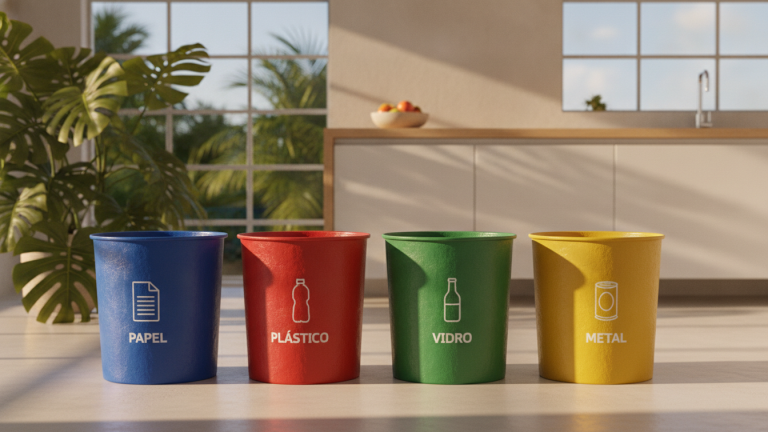
You don’t need five color-coded trash cans. For most Brazilian homes, two trash cans are enough: one for organic waste (food scraps, peels, dirty paper) and one for dry recyclables.
Step-by-step guide to set up your separation station
- Choose the location: an area near the sink or balcony works well. In small apartments, under-sink space is enough.
- Define the containers: it can be a large cardboard box for recycling and a sealed bucket for organic waste. Approximate cost: zero, if you reuse boxes you already have at home.
- Rinse containers before throwing away: no need to wash with soap. A quick rinse with water that’s already been used (the water left from cooking, for example) is enough to prevent contamination and odor.
- Compress the packaging: PET bottles, cans, and small boxes compressed take up less space and are easier to transport.
- Set a disposal day: tying recycling collection to the day the truck passes your neighborhood creates an automatic habit.
If you live in a condominium, check the schedules and locations of communal trash cans. Many buildings already have separate space for recycling; using it incorrectly wastes the effort of the entire condominium.
Common mistakes that compromise recycling (and how to avoid them)
Separating waste is a start, but some common habits undermine the effort before the material even reaches the cooperative.
Mixing organic waste with recyclables is the most frequent mistake. A banana thrown into the recycling bag can contaminate all surrounding packaging, making it unsuitable for processing. Recycler cooperatives must discard contaminated batches, which increases work and reduces income for these families.
Not cleaning the containers is the second most common problem. Margarine container with grease residue, oil bottle with oily bottom, unwashed tuna can: all of this makes recycling difficult and attracts insects.
Storing recycling in a black bag seems like a detail, but some municipalities direct collectors not to open black bags (associated with regular trash). Use transparent or recyclable bags, or deposit the material directly into colored street containers.
To deepen your relationship with reducing household waste, reading about zero waste in practice: where to start your journey will show you complementary steps that go beyond separation.
What to do when there’s no selective collection in your neighborhood
The absence of regular selective collection is a reality in many Brazilian cities, especially in smaller municipalities. This doesn’t mean you’re helpless.
Voluntary Delivery Points (PEVs) exist in supermarkets, pharmacies, gas stations, and schools in much of the country. A quick search on the city hall website or the municipal urban cleaning program map usually indicates the closest ones to your home.
Recycler cooperatives accept direct delivery of recyclable materials. The National Movement of Recycled Materials Pickers (MNCR) maintains information about registered cooperatives. Delivering directly to a cooperative ensures the material goes to those who need it most and know best what to do with it.
Fairs and recycling material exchange programs exist in cities like São Paulo, Curitiba, and Belo Horizonte, where you bring recyclables and receive credits in exchange for food or service discounts. Check if your city has an active program in 2026.
The real impact of your separation: beyond feeling good
Correctly separating waste has concrete consequences that go beyond the feeling of doing the right thing. Aluminum recycling, for example, uses a fraction of the energy needed to produce virgin aluminum from bauxite. This translates to less pressure on electricity generation and less greenhouse gas emissions, relevant data in a country where the aluminum industry is significant.
For recycler cooperatives, every ton of recyclable material collected represents direct income for families depending on this activity. According to MNCR, there are over 800,000 pickers in Brazil, and a significant portion operates informally, without structured collection. Your properly separated, clean recycling bag arrives valued and ready for processing.
If you’ve already thought about going beyond separation and reducing the volume of waste you generate, it’s worth exploring conscious consumption practices. A natural path forward is understanding how the concept of zero waste in practice can be adapted to Brazilian reality, without extremes.
Frequently asked questions about recyclable waste separation
Is milk carton (Tetra Pak) recyclable?
Yes, but with caveats. Tetra Pak packaging is composed of layers of paper, plastic, and aluminum, requiring a specific recycling process. Many Brazilian cities now have cooperatives equipped for this, but not all. Check if your local collection accepts this type of packaging before mixing with other recyclables.
Can I use any plastic bag to store recyclables?
You can, but prefer transparent or light-colored bags. Some municipalities adopt blue for recyclables and black for regular waste. Confirm your city’s guidance to avoid confusion during collection.
What do I do with old electronics, batteries, and cells?
These materials are special waste and should not go into any regular trash can. The PNRS requires manufacturers and retailers to provide collection points for batteries, cells, phones, and electronic waste. Pharmacies, supermarkets, and electronics stores usually have specific collection containers for these.
My condominium mixes everything in the same truck. Is it worth separating?
It is. Even if your condominium doesn’t have ideal infrastructure, you can take your recyclables directly to a nearby PEV or cooperat. Additionally, pressure from organized residents is the main driver for building management to implement separation in the building.
Start today with one small, concrete action
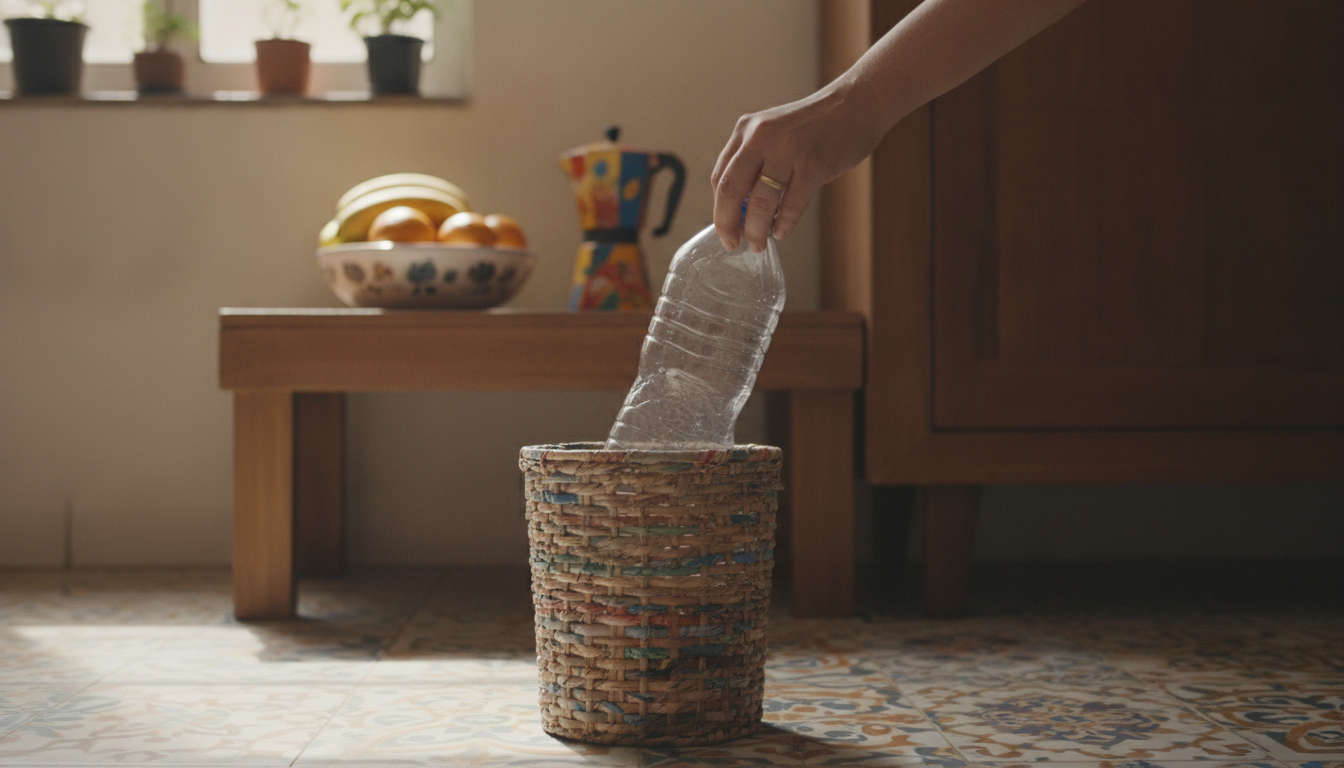
You don’t need to change everything at once. Start this week with one action: place a cardboard box next to your current trash can and use it only for clean, dry packaging. That alone is a real step.
Once the habit becomes automatic, add the next one: identify the nearest PEV to your home or the selective collection day in your neighborhood. Each small adjustment adds up, and the result, over time, is concrete for the planet and for the people who work with recycling near you.

2 thoughts on “Easy Steps to Separate Recyclable Waste at Home”