Why the water you throw away could be costing you more
You turn off the tap while brushing your teeth, avoid long showers, but your water bill still arrives high at the end of the month. What many people don’t realize is that a considerable portion of the water used inside the house could be reused before going to the sewer, reducing both consumption and monthly expenses.
In Brazil, access to treated water remains unequal. According to IBGE data, a significant portion of the Brazilian population does not have regular access to quality water supply, while metropolitan regions face rising tariffs due to scarcity and treatment costs. Reusing water inside the house is not a whim of those wanting to seem sustainable: it’s an economic and practical choice.
By the end of reading this article, you will know exactly which types of water generated in your home can be reused, how to do it safely, what Brazilian legislation allows, and where to start today, even if you live in an apartment.
What is greywater and what is blackwater
Before thinking about reuse, you need to understand where each type of discarded water in your home comes from. The classification is simple and changes everything when deciding what to do with it.
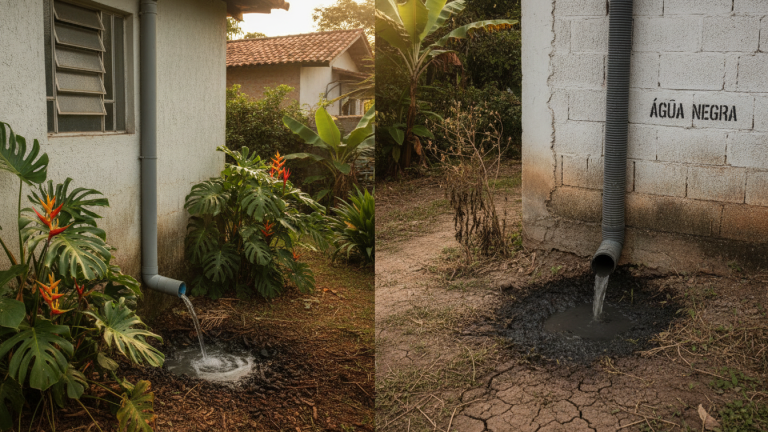
Greywater is water used in sinks, showers, bathtubs, washbasins, and washing machines. It carries soap, shampoo, dirt residues, and, depending on the source, small amounts of grease. It does not come into contact with feces or urine, which makes it much less contaminated than conventional sewage.
Blackwater comes from toilets. It contains pathogenic microorganisms, such as bacteria, viruses, and parasites, in concentrations that represent real risk to human health. Domestic reuse of untreated blackwater is dangerous and, in practice, unfeasible for most residences without specific infrastructure.
There is also an intermediate category called dark greywater, generated in the kitchen sink and dishwasher. It carries oils, fats, and food scraps, which increases the degree of contamination compared to water from the shower or bathroom washbasin. This water requires additional care before any reuse.
What Brazilian legislation says about domestic reuse
Brazil has advances in environmental legislation, but water reuse in residences is still a topic regulated in a fragmented way. The Federal Law 9.433/1997, which established the National Water Resources Policy, recognizes reuse as a water management tool. The Law 14.026/2020, the new Sanitation Legal Framework, encourages conservation and reuse practices, but delegates much of the specific regulation to states and municipalities.
In practice, this means rules vary depending on where you live. In São Paulo, for example, State Decree 48.138/2003 establishes criteria for non-potable water reuse. In other states, legislation may be less detailed. The safe approach is to consult the local sanitation utility before installing any reuse system connected to your home’s water network.
What is allowed and relatively simple throughout the country is informal and direct reuse: saving water from rinsing clothes to wash the yard, reusing rainwater collected in barrels, or using shower water to flush the toilet through buckets. These practices don’t require approval and already make a real difference in the bill.
Which greywater can you reuse at home
The good news is that most of the greywater generated in your home has potential for reuse for uses that don’t require potable water. See the most common sources:
- Shower and bathtub: bath water, especially the volume that flows while you wait for it to heat up, is among the cleanest and easiest to capture with a bucket or collection box.
- Washing machine (final rinse): the last rinse cycle contains very little soap and can be redirected to wash sidewalks, water gardens, or fill the flush box.
- Bathroom washbasin: water used for washing hands has a low load of contaminants and can be captured with simple systems.
- Air conditioner: the condensate generated by the air conditioner is almost distilled water, without chemical or biological impurities, and serves directly for watering plants or washing floors.
For what should not be done with untreated greywater:
- Irrigation of vegetables to be consumed raw (leafy greens, tomatoes, cucumbers)
- Washing fruits and vegetables
- Use in environments where small children play on the floor
- Any direct skin contact for extended periods
How to set up a simple home reuse system
You don’t need construction or high investment to get started. There are solutions that fit in apartments and others more elaborate for those with houses with yards.
Level 1: no installation (apartment or immediate start)
- Place a 20-liter bucket in the shower to capture the cold water at the beginning of the bath.
- Use this water to flush the toilet, pouring the bucket directly into the toilet.
- Save the air conditioner condensate in a gallon and use it to water pots and plants.
- At the rinse of the washing machine, position a bucket at the hose outlet and store in barrels with lids.
Estimated cost: less than R$ 50 in buckets and plastic barrels. Installation time: zero, it’s immediate.
Level 2: system with simple diverter (house)
- Install a discharge diverter at the shower outlet, which directs water to an external reservoir.
- Connect this reservoir to a simple low-pressure pump.
- Connect the pump outlet to the entrance of the flush box of the toilets in the house.
- Place a protective screen at the reservoir entrance to retain hair and coarse residues.
Estimated cost: between R$ 300 and R$ 800 in materials, depending on the region and installation complexity. An experienced plumber will solve it in a day.
Level 3: system with basic filtration (house with higher volume)
For those wanting to use greywater also to water vegetable gardens with cooked species or wash the car, it’s worth adding a filtration step. A coarse sand filter followed by activated charcoal removes much of the physical contaminants and reduces odors. This type of system already requires design and, ideally, guidance from a sanitation professional.
Blackwater: what to do (and what not to try)
Blackwater has no viable reuse within the common residence. The treatment necessary to make it safe involves biodigesters, anaerobic filters, stabilization lagoons, or membrane systems, technologies that demand space, cost, and technical maintenance.
What you can do regarding blackwater is different: reduce the volume generated. Toilets with dual flush (3 and 6 liter discharge) consume much less than old tank-coupled models. According to Sabesp, replacing a conventional toilet with a dual flush model can reduce bathroom water consumption by up to 40%.
If you live in a rural area or have large land, a properly sized septic system followed by a seepage pit or constructed wetland allows blackwater to be treated on the lot itself and safely returned to the soil. This solution requires a project approved by the municipality and technical monitoring.
Common mistakes when starting to reuse water
Those who start with enthusiasm sometimes stumble on some points that compromise health or practical results. The most frequent are:
- Storing untreated greywater for more than 24 hours. Standing water without chlorine begins to proliferate bacteria rapidly, especially in Brazil’s heat. Use or discard.
- Mixing greywater with blackwater in the same reservoir. This contaminates all the greywater and makes reuse unfeasible.
- Using kitchen greywater directly on plants. Oil and grease clog the soil and harm roots.
- Not covering the reservoir. Water standing in the open becomes a breeding ground for mosquitoes, including the Aedes aegypti. Always cover.
- Ignoring odors. If the greywater smells strong, it’s a sign it’s past its time or received incompatible products. Discard and review the process.
Those who take care of water at home usually also rethink other consumption habits. If you’re on this journey of reducing waste, you may be interested in Zero waste in practice: where to start your journey, which brings a similar path of small steps with real results.
Frequently asked questions about water reuse at home
Can I use shower water to water my vegetable garden?
It depends on what you grow. For ornamental plants and adult fruit trees, shower greywater is suitable as long as used fresh and without accumulation. For leafy vegetables consumed raw, the risk of contamination by pathogens present in soap or skin residues doesn’t justify it. Prefer rainwater or tap water for these cases.
Can an apartment do greywater reuse?
Yes, with limitations. Capturing the cold water at the beginning of the shower in buckets and using it to flush the toilet is a simple, safe practice that doesn’t require any hydraulic modification. Air conditioner condensate is also an easy source to capture without construction. More elaborate systems depend on condo authorization and evaluation of the building’s water structure.
Can reused greywater cause health problems?
It can, if used inappropriately. Occasional skin contact poses no serious risk to healthy adults, but accidental ingestion or use on open wounds should be avoided. The greatest risk is improper storage, which favors bacterial proliferation. Following guidelines for immediate use and covered storage, reuse is safe for the intended purposes.
Are there any financial incentives for installing reuse systems?
In some municipalities and states, there are discount programs on water rates for consumers who adopt certified reuse or rainwater collection systems. It’s worth checking with the local utility. At the federal level, there is no national program for direct domestic reuse incentives in 2026, but the new Sanitation Legal Framework opens space for states and municipalities to create these mechanisms.
Start with a bucket in the shower today
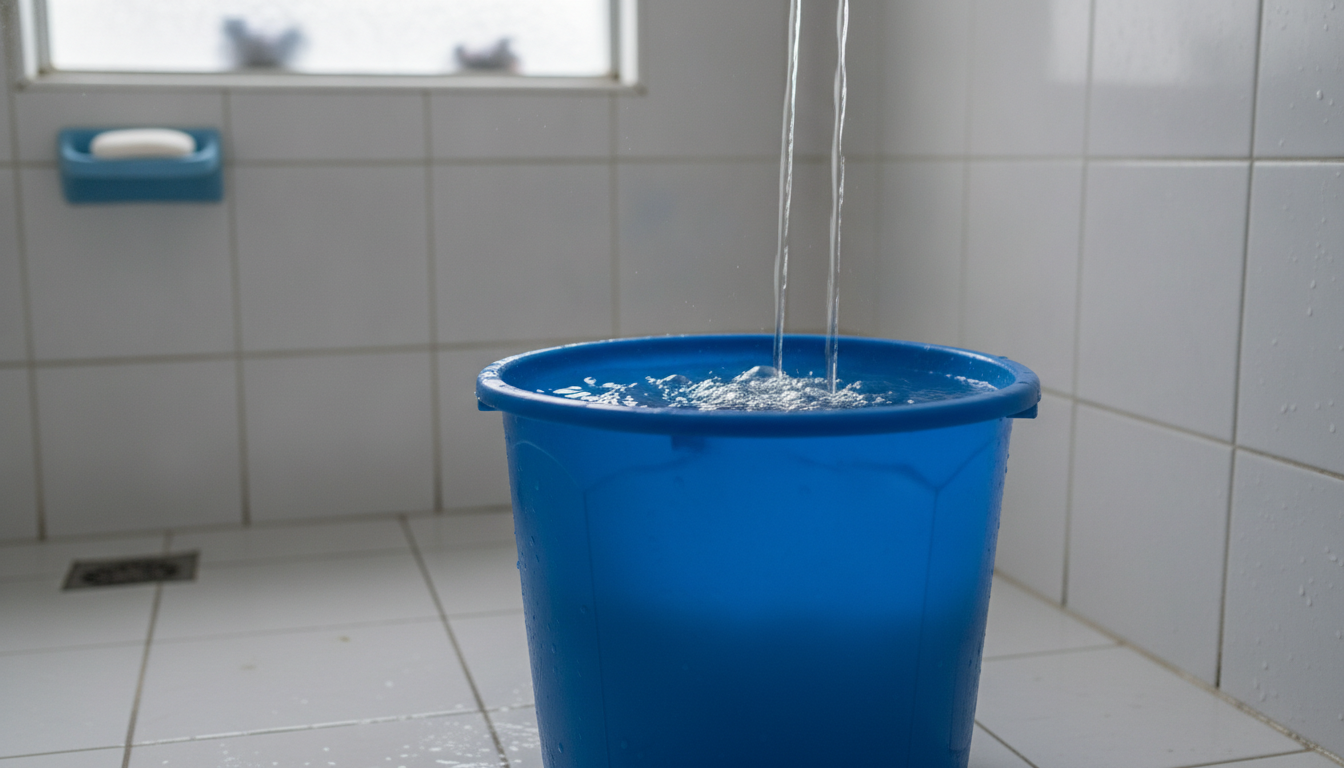
You don’t need to wait for a renovation or a big investment. Put a 20-liter bucket in the shower tomorrow morning and see how much you capture just while waiting for the water to heat up. This water goes straight to the flush, and the result shows up in next month’s bill.
Small changes made consistently have real impact. And if you’re already reorganizing your home’s consumption, it’s also worth looking at other simple practices, such as separating recyclable waste, which together with water reuse forms a set of habits that reduce pressure on natural resources without requiring sacrifice in your daily life.
