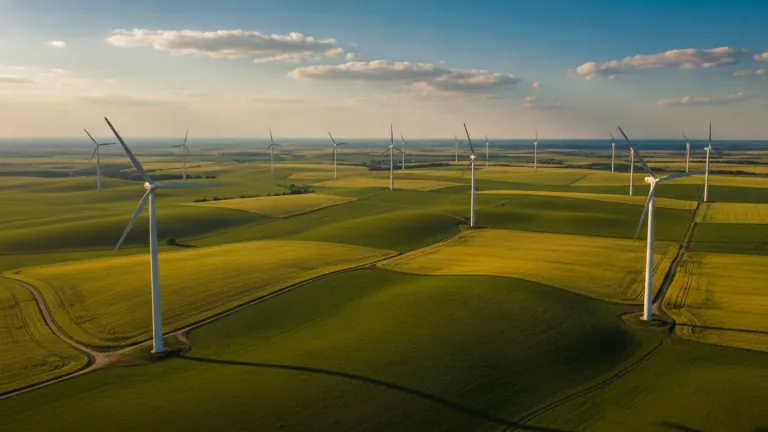
What Is Wind Energy and Why Wind Is Changing the World
Imagine that every time you turn on a light at home, part of that energy has traveled an incredible journey: it was born from the invisible movement of air, spun the blades of a giant turbine, and traveled miles of cables to reach your outlet. This isn’t science fiction — it’s wind energy, and it’s already an established reality in Brazil and around the world.
Wind energy is now one of the fastest-growing sources of electricity globally. Brazil, in particular, holds a prominent position in this scenario: the country has one of the best wind potentials on the planet, especially in the Northeast, where regular and intense winds blow practically year-round. It’s no surprise that Brazilian wind generation has grown consistently over the past decade, representing a significant share of the national electricity matrix.
But how exactly does wind become electricity? What are the real environmental impacts of this technology? And what do you, as a citizen, have to do with all of this? In this article, we’ll answer these questions clearly and practically — because understanding where the energy we use comes from is the first step toward more conscious consumption.
How Wind Energy Works: From Wind to Your Outlet
The basic principle of wind energy is surprisingly simple: wind pushes the blades of a turbine, which spins a shaft connected to an electric generator. This generator converts mechanical movement into electricity, which is then transmitted through the power grid to homes, businesses, and industries.
The Inner Workings of a Wind Turbine
A modern wind turbine consists of several fundamental parts:
- Tower: a steel or concrete structure that supports all the equipment, usually tens of meters tall to reach stronger and more stable winds.
- Nacelle: the “cabin” at the top of the tower, housing the generator, gearbox, and control systems.
- Rotor and blades: the propellers that capture the kinetic energy of the wind. The blades are aerodynamic, working similarly to airplane wings.
- Yaw system: a mechanism that rotates the nacelle so the blades always face the wind.
When wind hits the blades with sufficient speed — generally between 3 and 4 meters per second to start generation — the rotor begins to spin. This rotation drives the generator, producing alternating electric current. The generated electricity passes through transformers and enters the distribution grid.
Onshore and Offshore Wind: What’s the Difference?
- Onshore (on land): this is the most common model in Brazil, with wind farms installed mainly in the northeastern semi-arid region and along the coast. It’s cheaper to build and maintain.
- Offshore (at sea): turbines are installed on platforms in the ocean, where winds are stronger and more consistent. Still in development in Brazil, but with ongoing projects and great potential off the coasts of Rio Grande do Norte and Ceará.
Brazil’s Position in Global Wind Energy
Brazil is a global reference case in wind energy. According to data from the Brazilian Wind Energy Association (ABEEólica) and the National Electric Energy Agency (ANEEL), Brazil’s installed wind capacity exceeds 30 gigawatts (GW), making the country one of the largest wind energy producers in the world.
The Northeast concentrates the vast majority of national wind farms, especially in the states of Rio Grande do Norte, Ceará, Bahia, and Piauí. The region has exceptional climatic conditions: regular winds that blow most of the year, with good average speed and low turbulence.
A relevant fact is that wind energy represents a significant portion of Brazil’s electricity matrix, alongside hydroelectric and solar photovoltaic generation. This diversification is important: during drought periods, when hydroelectric reservoirs drop, wind and sun compensate for much of the demand — reducing dependence on fossil fuel thermal plants, which are more polluting and expensive.
Environmental Impacts of Wind Energy: What Science Says
No energy source is completely free of environmental impact, and wind energy is no exception. Understanding these impacts honestly helps us make better decisions as a society.
Clear Environmental Advantages
- Virtually zero emissions during operation: unlike thermal power plants, wind turbines don’t burn fuel and don’t emit greenhouse gases while operating.
- Small carbon footprint over the life cycle: life cycle analysis studies show that wind energy has one of the lowest CO₂ emissions per kilowatt-hour generated among all energy sources.
- Shared land use: in onshore parks, most of the land between turbines can continue to be used for agriculture or grazing, coexisting with energy production.
Real Challenges and Impacts
- Impact on birds and bats: operating turbines can cause mortality of flying animals, especially along migratory routes. This is a topic studied and taken seriously by environmentalists and regulators. Careful planning of park locations is essential to minimize this problem.
- Noise and visual impact: residents near wind farms may be affected by turbine noise and landscape alteration. Brazilian regulations require impact studies and environmental licensing processes.
- Blade disposal: turbine blades are made of composite materials that are difficult to recycle. This is one of the industry’s main current challenges, with ongoing research to develop recyclable or biodegradable blades.
- Communities and territories: in Brazil, there are documented cases of conflicts between wind projects and rural and indigenous communities. Adequate consultation and social participation processes are essential for a just energy transition.
Wind Energy and the Global Energy Transition
The larger context in which wind energy fits is the transition to a low-carbon economy. The Intergovernmental Panel on Climate Change (IPCC) is clear in stating that expanding renewable energies is indispensable for limiting global warming to levels that avoid the worst climate impacts.
Wind energy, along with solar, is repeatedly cited as one of the most accessible and scalable options for replacing fossil fuels in electricity generation. In recent years, the cost of wind generation has dropped significantly globally, making it competitive — and often cheaper — than new coal or natural gas plants.
For Brazil, which already has a historically cleaner electricity matrix than most industrialized countries thanks to hydroelectricity, the expansion of wind and solar reinforces this advantage and helps address supply challenges during prolonged drought periods — a problem that, as we showed in Climate Change in Brazil: What Is Already Happening, tends to intensify with climate change.
Quick Comparison: Wind vs. Other Energy Sources
| Source | Emits CO₂ during operation? | Water use | Intermittency | Current cost |
|---|---|---|---|---|
| Wind | No | Minimal | Yes (depends on wind) | Low |
| Solar photovoltaic | No | Minimal | Yes (depends on sun) | Low |
| Hydroelectric | No (operation) | High | Depends on rainfall | Medium |
| Natural gas | Yes | Medium | No | Medium |
| Coal | Yes (very high) | High | No | Variable |
| Nuclear | No (operation) | High | No | High (construction) |
What You Can Do: Practical Everyday Actions
You might ask yourself: “But what do I have to do with wind energy expansion?” The answer is: more than you think. Daily energy consumption choices send signals to the market and government. Here’s what’s within your reach:
- Opt for renewable energy rates, if available from your utility. Some Brazilian states already offer this possibility through specific programs.
- Reduce electricity consumption at home — every kilowatt-hour saved means less pressure on the system and less need to activate thermal plants during demand peaks.
- Stay informed and vote consciously on energy and environmental policy issues. Public policies define how much Brazil will invest in renewables.
- Support and spread clean energy initiatives around you — solar energy cooperatives, for example, are growing in Brazil and can be an accessible option.
- Talk about the topic at home, at work, and on social media. Environmental education starts in everyday conversations.
- Demand transparency from energy companies you hire — many already publish sustainability reports and decarbonization goals.
- Follow wind projects in your region and, if there are public consultations, participate. The energy transition needs to be fair and inclusive.
If you want to take even more steps, the article Sustainability in Everyday Life: Where to Start? provides a complete and practical guide.
The Future of Wind Energy in Brazil and the World
The wind sector is in full technological evolution. Turbines are becoming increasingly efficient, with larger blades that capture weaker winds at higher altitudes. Offshore wind energy — at sea — promises a new phase of expansion, with projects under study along the Brazilian coast that could add tens of gigawatts to national capacity in the coming decades.
Another important development is the integration between wind, solar, and battery storage systems. This combination largely solves the intermittency problem: when there’s no wind, there may be sun; when there’s neither, batteries supply the demand. This hybrid model is increasingly common in new projects.
Green hydrogen — produced with electricity from renewable sources, including wind — is another promising field. Brazil has advanced green hydrogen production projects in the Northeast, which could transform the country into a clean energy exporter in the coming years.
Conclusion: The Wind Is on Our Side
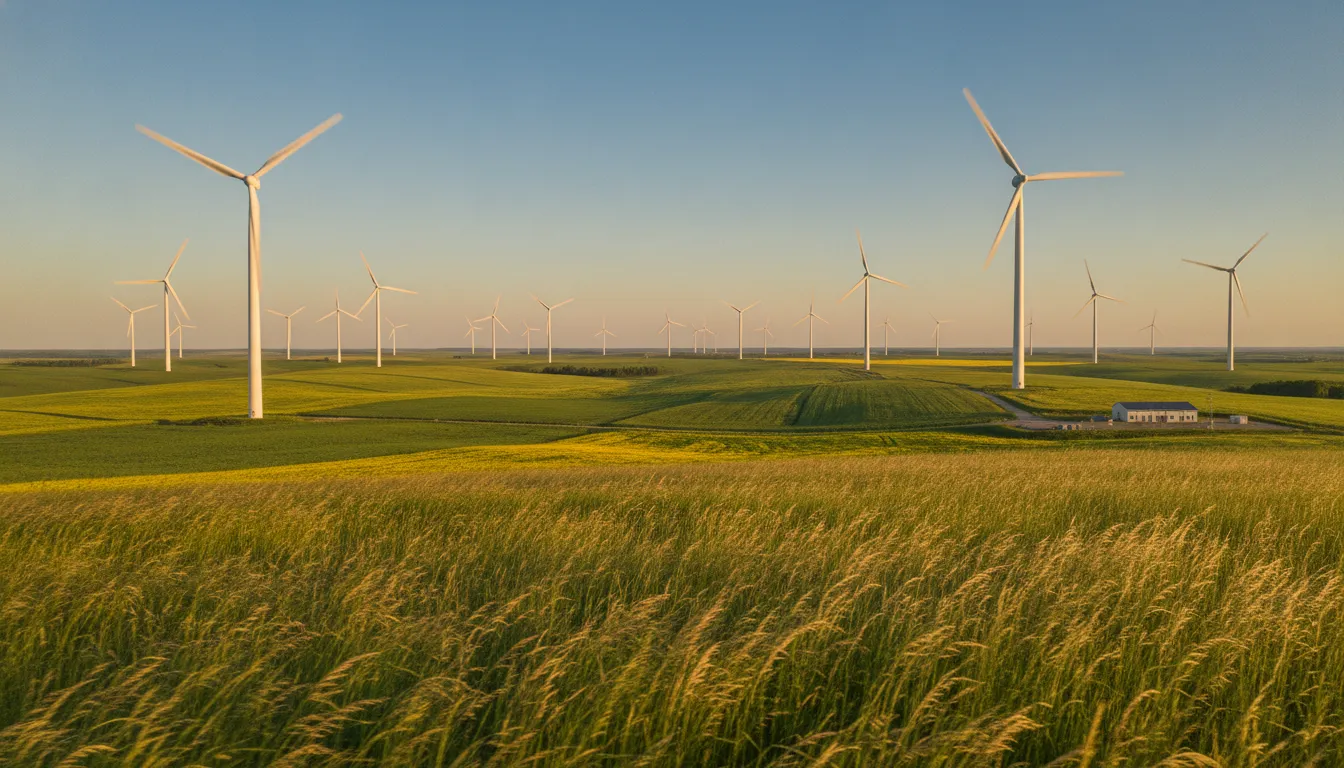
Wind energy is one of the best answers we have today for the challenge of generating electricity cleanly, affordably, and at scale. Brazil is in a privileged position in this transition — with natural resources, industrial capacity, and an electricity matrix that already has solid renewable foundations.
This doesn’t mean everything is perfect: impacts on biodiversity, local communities, and material disposal need to be addressed seriously and responsibly. The energy transition we want is one that combines efficiency, social justice, and environmental care.
The good news is that you’re part of this story. Every conscious choice in energy consumption, every conversation about the topic, every informed vote contributes to Brazil continuing to advance toward a cleaner energy system. The wind blows strong in this direction — and we can make great use of this force.
