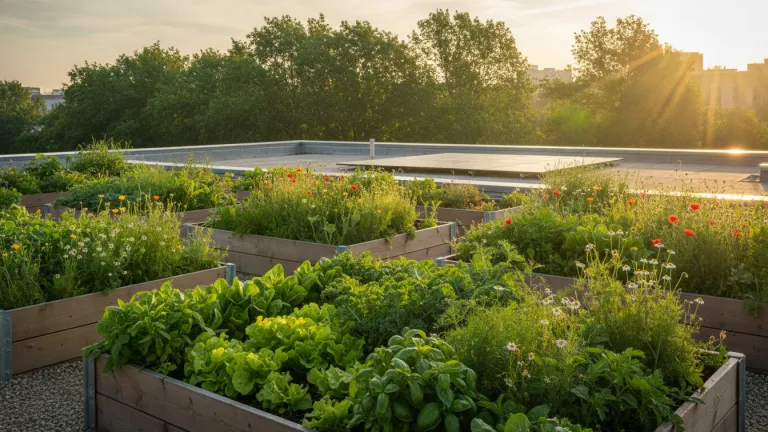
Everyday Sustainability: Where to Start?
Have you ever felt the urge to do something for the planet but found yourself paralyzed by the enormity of the problem? Climate change, biodiversity loss, ocean pollution — the news hits hard, and it’s easy to conclude that what one person does alone changes nothing. But this feeling, while understandable, doesn’t match reality. Science and practice show that behavioral changes at a collective scale have real impact — and it all starts with individual choices that, when combined, form a powerful force.
The good news is that everyday sustainability doesn’t mean giving up comfort or turning your life upside down. It mostly means making smarter choices within the routine you already have: at the supermarket, on your electricity bill, in the waste you generate, in the transportation you use. Small decisions, repeated daily, create habits — and habits create cultures. And cultures, yes, change the world.
In this article, we’ll cover the main areas of daily life where you can act now, with concrete and realistic steps. No guilt, no perfectionism. The goal is for you to leave here with at least three things you can start today.
Why Act Now? The Context in 2026
This isn’t alarmism: climate data from recent years confirms that we’re at a critical moment. The Intergovernmental Panel on Climate Change (IPCC) warned in its reports that limiting global warming to 1.5°C above pre-industrial levels requires rapid and profound transformations in all spheres of society — including individual consumption patterns.
In Brazil, the effects are already visible: extreme droughts in the Central-West and Northeast, increasingly intense floods in the South, and growing pressure on the Amazon and Cerrado — the country’s second-largest biome and one of the most threatened in the world. To better understand what’s already happening on national territory, read Climate Change in Brazil: What’s Already Happening.
The transition to a more sustainable lifestyle isn’t just an ecological issue — it’s also economic and social. Consuming less electricity reduces your bill at the end of the month. Wasting less food saves money. Using more public transportation or bicycles improves health. Sustainability, when practiced well, benefits you as much as it benefits the planet.
Start at Home: Energy and Water Are the Starting Point
The home is where most people have the most control — and therefore the most power for change.
Electricity consumption
Power generation is still one of the main sources of greenhouse gas emissions globally. In Brazil, the electrical grid has a significant renewable share (mainly hydroelectric), but conscious consumption remains essential, especially given the growing pressure on reservoirs and the expansion of thermoelectric plants during dry periods.
Practical actions to reduce energy consumption at home:
- Replace incandescent or fluorescent bulbs with LED — they consume significantly less energy and last much longer
- Unplug devices when not in use (“standby mode” continuously consumes energy)
- Use the washing machine with a full load and prefer cold water when possible
- Set the air conditioner to temperatures between 73°F and 75°F (23°C-24°C) — each degree lower can represent a considerable increase in consumption
- Check energy efficiency ratings when buying appliances: A-rated equipment is the most efficient
If you own your home or live in a condo, it’s worth researching solar photovoltaic energy. Brazil is one of the countries with the greatest solar potential in the world, and system costs have dropped significantly over the past decade. See more at Solar Energy: Advantages and Disadvantages You Need to See.
Conscious water use
Brazil holds a significant portion of the planet’s fresh water, but its distribution is extremely unequal — and waste is a real problem in urban areas.
- Fix leaks as soon as you notice them: a simple dripping faucet can waste hundreds of liters per month
- Prefer showers over baths
- Reuse rinse water from laundry for cleaning sidewalks
- Install flow reducers on faucets and showerheads — they’re inexpensive and make a real difference
Conscious Consumption: Buy Less, Buy Better
The logic of the linear economy — produce, use, discard — is at the center of the environmental crisis. Every product we buy carries an “ecological backpack”: the cost in water, energy, emissions, and waste from its manufacturing and transportation.
This doesn’t mean stopping consumption. It means consuming with more intention.
How to make more sustainable consumption choices
- Ask before buying: Do you really need this item? Can it be borrowed, rented, or bought used?
- Prefer durability over novelty: A quality product that lasts years has a much lower environmental impact than constantly replacing cheap items.
- Buy local when possible: Local products travel less distance to reach you, which reduces transportation emissions and supports the regional economy.
- Reduce consumption of single-use products: Reusable bags, water bottles, cups, and utensils eliminate a surprising amount of plastic throughout the year.
- Research before dismissing second-hand: Thrift stores, swap meets, and used item platforms offer great options with much less environmental impact.
Food: One of the Choices with the Greatest Impact
How we eat is one of the individual variables with the greatest environmental impact. Food production accounts for a significant portion of global greenhouse gas emissions, as well as being responsible for much of the planet’s water and land use — data widely documented by organizations like the FAO (Food and Agriculture Organization of the United Nations).
What you can do in practice:
- Reduce food waste: Plan the week’s meals, make shopping lists, and store food properly. Food waste is one of the most underestimated environmental problems
- Reduce (not necessarily eliminate) red meat consumption: Cattle farming has a high carbon and water footprint. You don’t need to go vegan — reducing frequency already makes a difference
- Value seasonal and regionally sourced foods: They’re fresher, more nutritious, and generate fewer transportation and storage emissions
- Prefer products with organic or agroecological certification when accessible: These production systems better preserve soil, water, and biodiversity
- Compost organic waste: If you have space (even a small apartment can accommodate compact composters), turning food scraps into fertilizer is one of the most impactful actions you can take at home
Waste and Disposal: Closing the Loop Is Essential
Brazil still faces serious challenges in solid waste management. Separating waste for recycling is an important step — but it’s only part of the equation.
Waste hierarchy: what to prioritize
The correct logic isn’t “recycle everything,” but rather:
- Reduce — generate less waste from the start
- Reuse — give objects a second life before discarding them
- Recycle — when there’s no other option, properly direct to recycling
- Dispose properly — never throw waste in incorrect locations
Special attention deserves items that require specific disposal: batteries, electronics, expired medications, and pesticide containers should never go in regular trash. To find out where to dispose of these materials in your city, check Where to Dispose of Batteries and Electronics Near You.
Urban Mobility: How You Get Around Matters
The transportation sector is one of the main sources of CO₂ emissions in Brazilian cities. Changing how you get around has a direct and measurable impact.
Alternatives that make a difference:
- Use public transportation whenever possible
- Walk or bike on short trips — besides reducing emissions, it brings direct health benefits
- If you need a car, prefer carpooling
- Consider transitioning to electric or hybrid vehicles at your next purchase — Brazil’s electric vehicle market is expanding and charging infrastructure is growing in major cities
- Work from home when the job allows — days without commuting are days without emissions
Engagement: Sustainability Is Also Collective
The deepest transformation happens when individual practices combine with collective participation. You don’t need to be a full-time activist to contribute to this.
- Talk about the topic with family and friends, without judgment — positive habit contagion is real
- Support local initiatives: organic markets, community composting groups, cleanup efforts
- Demand environmental positioning from the brands you consume and the political representatives you elect
- Share reliable information about the environment — fighting environmental misinformation is also an act of sustainability
For a broader view of how small individual actions add up to real impact, read Small Actions That Protect the Environment.
Where to Start: A Practical Summary
If you’ve made it this far and are still unsure about which step to take first, use this list as a starting point:
| Area | Immediate Action | Impact |
|---|---|---|
| Energy | Switch bulbs to LED | Reduced consumption and electricity bill |
| Water | Fix leaks | Water and financial savings |
| Food | Plan purchases to reduce waste | Less waste, fewer emissions |
| Waste | Separate recyclables and dispose of electronics properly | Less landfill, more recovered resources |
| Consumption | Ask “do I really need this?” before buying | Less unnecessary production |
| Mobility | Replace one car trip per week with bike or public transit | Fewer emissions, better health |
Conclusion: Start Imperfect, But Start
Sustainability isn’t a destination you reach all at once — it’s a path you walk day by day, with successes, adjustments, and learning. There’s no 100% sustainable person in an economic system that still depends so heavily on fossil resources and intensive disposal. The goal isn’t perfection, it’s direction.
Choose one or two actions from this list and incorporate them into your routine over the next few weeks. When they become habits, add more. Over time, you’ll realize you’re not just helping the planet — you’re also living more consciously, economically, and healthily.
The planet needs many people doing what’s possible — not a few people doing the impossible. And what’s possible, as you’ve just seen, starts now, with what you already have at hand.
