
Have you ever stopped to think about where the old batteries you remove from the remote control or the phone you retired to a drawer end up? These everyday objects hide a little-known reality: when disposed of in regular trash, they release substances like lead, mercury, cadmium, and lithium into soil and water, contaminating ecosystems and putting the health of entire communities at risk. The problem is real, it’s happening right now, and the solution starts with a simple choice: knowing where to take these items.
Brazil is one of the largest generators of electronic waste in Latin America. According to the Global E-waste Monitor report, published by the UN, the country ranks among the world leaders in this category — and the formal collection and recycling rate is still far below its potential. The legislation exists: the National Solid Waste Policy (Law 12.305/2010) and Decree 10.240/2020 establish shared responsibility among manufacturers, distributors, and consumers for the correct disposal of electronics and batteries. What’s often missing is accessible information about how and where to act.
If you’ve made it here, you’ve already taken the first step. In this article, you’ll find a practical, straight-to-the-point guide to locate collection points near you, understand what can be dropped off, and discover how to make this habit a natural part of your sustainable routine.
Why Proper Disposal of Batteries and Electronics Is So Urgent
Batteries contain heavy metals that, in contact with moist soil in landfills, slowly leach and can reach groundwater. A single common alkaline battery, although less toxic than the old mercury ones, still contains zinc and manganese in concentrations that become concerning when added up on a large scale. Lithium batteries — found in cell phones, laptops, and tablets — pose an additional fire risk when crushed or punctured inside collection trucks or landfills.
Electronics, in turn, are a valuable source of secondary raw materials: gold, silver, copper, palladium, and rare earth elements can be recovered and reinserted into the production chain, reducing the need for mining. When thrown in regular trash, this value is lost — and the environmental liability remains. Proper electronics recycling is one of the most efficient forms of circular economy available today.
Adopting proper disposal is also one of the small actions that protect the environment with real and measurable impact, even if it seems like a small individual gesture in the face of a global problem.
What You Can (and Should) Take to Collection Points
Before heading out to find a disposal point, it’s worth knowing exactly what falls into these categories. The list below covers the most common items in everyday Brazilian life:
Batteries:
- Common batteries (AA, AAA, C, D, 9V)
- Cell phone, tablet, and laptop batteries
- Camera and camcorder batteries
- Power tool batteries
- Watch batteries (so-called “button batteries”)
- Electric and hybrid vehicle batteries (collected by specialized networks)
Electronics:
- Cell phones, smartphones, and accessories (cables, chargers, headphones)
- Computers, laptops, and tablets
- Televisions (including old CRT tube TVs)
- Printers and scanners
- Small appliances (mixers, blenders, irons)
- Radios, speakers, and DVD players
- Cameras and video game consoles
Note: fluorescent lamps also contain mercury and have specific collection points, often the same ones that accept electronics. It’s worth asking when dropping off.
How to Find Disposal Points Near You: Step by Step
Locating a collection point has become much simpler in recent years thanks to digital platforms and municipal initiatives. Follow this roadmap:
- Access the Descarte Certo program website (descartecerto.com.br), maintained by manufacturers and distributors. The interactive map allows you to search by ZIP code or city and filter by type of waste (batteries, electronics, lamps, etc.).
- Check your city hall’s website. Many municipalities have their own reverse logistics programs. Look for the environmental or urban cleaning department and search for “eco-points” or “voluntary drop-off points” (PEVs).
- Look at retail chains. Large chains like Leroy Merlin, Ponto (formerly Ponto Frio), Magazine Luiza, Lojas Americanas, and supermarkets like Extra and Carrefour usually have battery and battery collectors at store entrances. Just ask an attendant.
- Phone carriers. Claro, TIM, Vivo, and Oi maintain cell phone and accessory collection programs at many of their physical stores. Confirm before going on each carrier’s official website.
- Check pharmacies. Chains like Drogasil, Droga Raia, and Ultrafarma have joined battery collection programs at various locations.
- Check your city’s app. Capitals like São Paulo, Rio de Janeiro, Belo Horizonte, and Curitiba have municipal urban services apps that include eco-point locations.
- Contact the manufacturer. Companies like Samsung, Apple, Dell, Philips, and Sony are legally required to ensure reverse logistics. Many offer pickup scheduling or provide information about the nearest point through customer service or their institutional website.
Programs and Initiatives That Facilitate Disposal in Brazil
The reverse logistics ecosystem in Brazil involves different actors, and knowing them helps find the shortest path to proper disposal.
The ABINEE System and the Electronics Sector
The Brazilian Electrical and Electronics Industry Association (ABINEE) coordinates collective reverse logistics programs among manufacturers. Through these sectoral agreements — required by the National Solid Waste Policy — companies install and maintain collection points throughout the national territory.
The Recicla Pilhas Program
Managed by Green Eletron, a reverse logistics management entity, the Recicla Pilhas Program brings together manufacturers and importers to finance and operate the battery collection and recycling chain. Green Eletron also works with electronics and has partnerships with hundreds of collection points throughout Brazil. The entity’s website (greeneletron.org.br) provides a map of partner points.
Municipal Eco-Points
Eco-points are physical structures maintained by city halls where residents can dispose of a variety of waste for free, including electronics, batteries, cooking oil, debris, and old furniture. São Paulo, for example, operates dozens of eco-points distributed throughout the city. Curitiba, a historical reference in waste management in Brazil, has a consolidated network of voluntary drop-off points. Even in smaller cities, it’s worth researching: the number of eco-points has grown significantly after Decree 10.240/2020 expanded manufacturer obligations.
Precautions Before Dropping Off Your Electronics
Dropping off your device is an important gesture, but some simple precautions protect your privacy and ensure the process is safer for recycling workers:
- Back up and factory reset any cell phone, tablet, or computer before dropping it off. This erases your personal data.
- Remove SIM chips and memory cards. They can be reused or disposed of separately.
- Don’t disassemble lithium batteries at home. If they are swollen or damaged, inform the collection point so handling can be done safely.
- Package old televisions carefully. Tube TVs contain lead in the glass and should be transported so they don’t break.
- Avoid throwing batteries in plastic bags with other waste. Separate them in a small box or individual bag to facilitate handling.
How to Turn Proper Disposal Into a Lasting Habit
Knowing where to dispose is half the battle. The other half is creating a routine so it actually happens, without depending on memory or motivation in the moment.
Practical tips to incorporate the habit:
- Place a small box in a kitchen or laundry cabinet exclusively for used batteries. When it fills up, take it to the nearest collection point.
- Associate dropping off old electronics with a visit you’ll already make to the store — when you’re going to trade in your phone, for example, already bring the old one for drop-off.
- Team up with neighbors or coworkers to do a periodic collective collection. Many points accept any quantity.
- Mark on your calendar a “digital and electronic cleanup” every six months to review drawers and closets for forgotten devices.
- If your city doesn’t have enough points, contact the environmental department and demand expansion of the network — you have this right as a citizen.
Conclusion: Your Action Is Part of Real Change
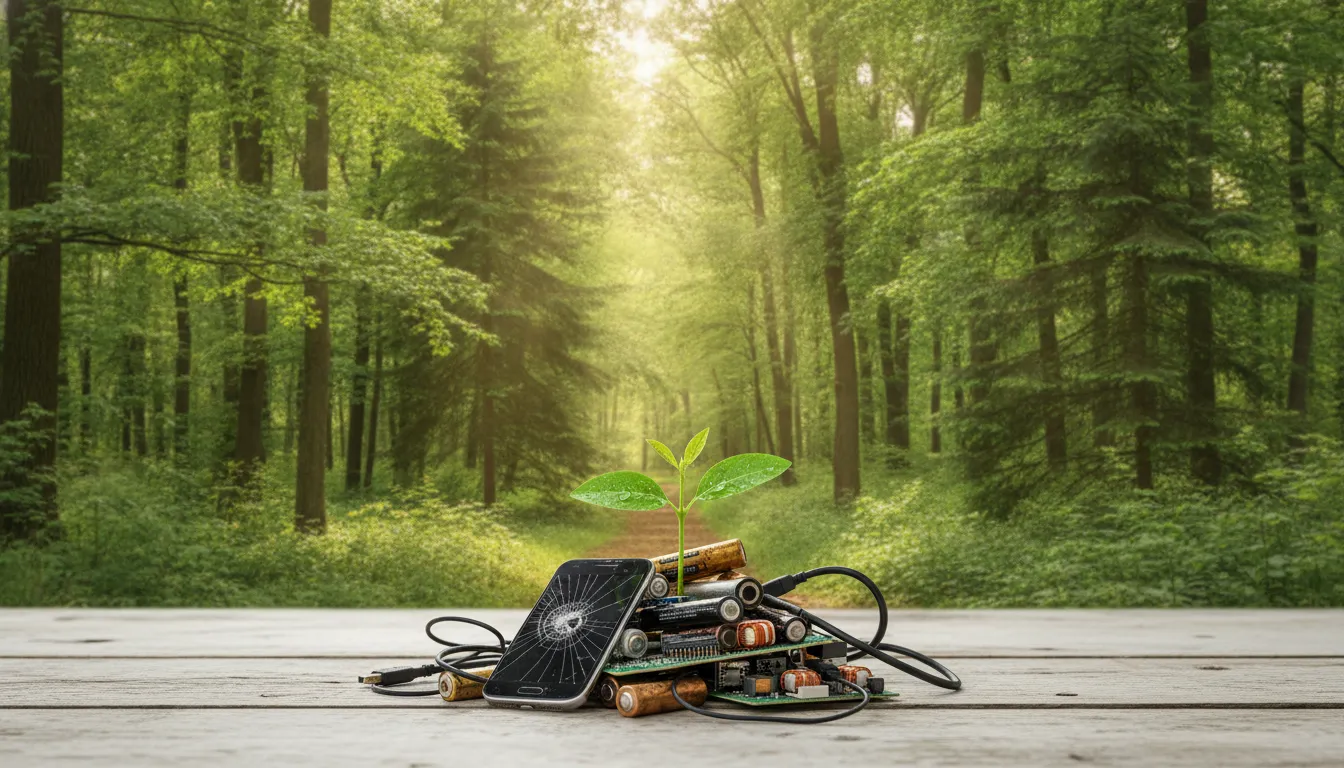
Disposing of batteries and electronics properly doesn’t require great sacrifices or technical knowledge. It mainly requires information — and now you have it. Every battery delivered to a collection point, every cell phone taken to reverse logistics, is a concrete step toward reducing soil and water contamination and recovering materials that have real value.
Brazil has robust legislation in this area and a growing network of collection points. What makes the difference is people’s participation. When consumers know their rights and fulfill their part in the shared responsibility chain, they also pressure manufacturers and government to maintain and expand the available infrastructure.
Start today: identify the collection point closest to your home using the resources indicated in this article, separate the electronics and batteries accumulated in your drawer, and schedule the drop-off for this week. This gesture, repeated by many people, has the power to change the trajectory of tons of waste — and protect the quality of water, soil, and health for future generations. The planet thanks you, and you’ll feel good about it.
