
Why Every Small Choice Matters More Than You Think
Have you ever stopped to consider how many decisions you make each day that directly affect the planet? From leaving the tap running while brushing your teeth to accepting a plastic bag without thinking at the checkout — these gestures seem insignificant, but multiplied by billions of people, they concretely shape the state of our environment. The good news is that the reverse is also true: small positive actions, multiplied by millions of people, have real power to make a difference.
Brazil occupies a unique position in this equation. We are home to one of the world’s greatest biodiversities, with the Amazon, Cerrado, Atlantic Forest, and Pantanal among the richest biomes on the planet. At the same time, we face serious challenges including deforestation, urban pollution, improper waste disposal, and excessive consumption of natural resources. We don’t need to wait for major public policies to start taking action — although they are fundamental and must be demanded.
This article is not a guilt list or a catalog of catastrophes. It’s a practical and honest guide about actions you can adopt today, in your routine, with real and measurable impact. Shall we go together?
Water Consumption: Simple Habits That Preserve a Vital Resource
Accessible freshwater represents a small fraction of all water on the planet, and its distribution is profoundly unequal — including within Brazil. Regions of the Northeastern Semi-arid have historically dealt with scarcity while other areas waste the resource without awareness.
How to reduce water consumption in daily life
- Turn off the tap while brushing your teeth. Common faucets release between 6 and 12 liters per minute. Two minutes of unnecessary running water can waste more than 20 liters in a single brushing.
- Prefer showers of up to 5 minutes. Common electric showers consume about 6 to 9 liters per minute. A 15-minute shower can use more than 100 liters.
- Fix leaks. A dripping pipe can waste dozens of liters per day. Water companies provide free guidance for leak detection.
- Reuse washing machine water to clean sidewalks or for toilet flushing.
- Install aerators on faucets. These small devices mix air with water and can reduce consumption by up to 50% without perceived pressure loss.
- Collect rainwater to water plants — a simple and effective practice, especially for those with a garden or vegetable patch.
Electricity: Less Waste, Fewer Emissions
Although Brazil’s electrical matrix is predominantly renewable — with emphasis on hydroelectric, wind, and solar power — energy waste still contributes to pressure on the system, higher rates, and during water crises, greater use of thermoelectric plants that emit greenhouse gases.
Practical actions to save energy at home
- Replace incandescent or fluorescent bulbs with LED. LED bulbs consume significantly less energy for the same amount of light — the difference compared to incandescent bulbs is substantial.
- Unplug devices from the outlet. The “standby mode” of televisions, chargers, and electronics can represent a relevant portion of your electricity bill throughout the month.
- Regulate the air conditioner temperature. Keeping the unit between 23°C and 24°C is comfortable and much more efficient than setting it to the minimum.
- Prefer washing clothes with cold water — most modern detergents work very well without heating.
- Take advantage of natural light. Opening curtains and rearranging spaces to use sunlight reduces artificial light use during the day.
If you’re interested in going a step further and generating your own energy, check out Energia Solar: Vantagens e Desvantagens que Você Precisa Ver — the photovoltaic panel market in Brazil has grown significantly in recent years and there are options for different profiles and budgets.
Conscious Eating: Your Plate Is Also an Environmental Choice
The global food system is responsible for a significant portion of worldwide greenhouse gas emissions, according to IPCC reports. This includes everything from deforestation for pasture and agriculture to transportation, processing, and especially food waste.
In Brazil, food waste is a serious problem — tons of food are lost between production and final consumption. And at the household level, the situation repeats in millions of kitchens.
How to reduce food waste at home
- Plan the week’s meals before going to the market. Objective shopping lists avoid excess.
- Store each food properly. Green leaves last longer wrapped in paper towels inside closed containers in the refrigerator.
- Use stems, peels, and seeds. Collard stems, zucchini peels, and pumpkin seeds are nutritious and delicious when well prepared.
- Freeze what you won’t consume soon. Bread, vegetables, meats, and even fresh herbs can be frozen without significant quality loss.
- Compost organic waste that inevitably remains. Home composting transforms scraps into fertilizer and prevents organic matter from going to landfills, where it produces methane.
For more detailed tips, see our guide Menos Lixo na Cozinha: Reduza o Desperdício de Alimentos.
Beyond waste, reducing red meat consumption — even if only on some days of the week — is one of the individual actions with the greatest proven environmental impact. Extensive cattle ranching is one of the main causes of deforestation and methane emissions in Brazil, according to data from the Ministry of Environment and Climate Change.
Waste and Disposal: The Right Trash in the Right Place
Brazil still faces serious challenges in solid waste management. Open-air dumps still exist in many regions, and selective collection, despite being present in most municipalities, is not used by most people due to lack of habit or information.
How to dispose of waste responsibly
- Separate recyclable waste from organic. Paper, plastic, glass, and metal should be clean, dry, and separated for selective collection or delivered to receiving points.
- Never throw electronics and batteries in regular trash. These items contain heavy metals that contaminate soil and groundwater. Manufacturers and retail chains are required by law to offer collection points.
- Reduce disposable plastic use. Bring your own bag, use reusable bottles, and avoid products with excessive packaging.
- Buy products with recyclable or reusable packaging whenever an equivalent option is available.
- Donate or sell what you no longer use — clothes, furniture, electronics — before throwing away.
Urban Mobility: Small Transportation Choices with Big Impact
The transportation sector is one of the main sources of CO₂ emissions in Brazilian cities. Fossil fuel-powered cars represent a significant portion of urban air pollution, with impacts on both climate and public health.
More sustainable mobility alternatives
| Option | Environmental advantage | Viable for whom |
|---|---|---|
| Public transportation | Reduces vehicles in circulation | Large urban centers |
| Bicycle | Zero emissions, low cost | Short and medium routes |
| Walking | Zero emissions, health benefit | Shorter distances |
| Carpooling | Reduces number of cars | Any profile |
| Electric vehicle | Zero local emissions | Those planning to change cars |
Even those who depend on cars can adopt more efficient practices: keeping tires properly inflated, avoiding sudden accelerations, and combining errands in a single trip reduce fuel consumption measurably.
Conscious Consumption: Buy Less and Better
The culture of excessive consumption is one of the drivers of environmental degradation. Every product we buy carries an ecological footprint: raw material extraction, production energy, transportation, packaging, and eventually, disposal.
Buying less doesn’t mean living worse. It means choosing with more intention.
Some useful questions before any purchase:
- Do I really need this right now?
- Is there a more durable or secondhand version available?
- Was this product made responsibly?
- How will I dispose of it when it’s no longer useful?
Prioritizing local products also makes a difference: besides supporting the regional economy, it reduces emissions associated with long-distance transportation.
Nature Around You: Taking Care of the Green Near You
Protecting the environment is not just a global issue — it starts on the sidewalk, at the window, in the backyard. Planting native trees in the neighborhood, maintaining a small garden at home or in an apartment, and not using pesticides in home gardens are actions that strengthen local biodiversity and improve urban quality of life.
- Prefer plants native to your region. They are adapted to the climate, need less water, and attract native pollinators like bees and butterflies.
- Avoid chemical pesticides and herbicides in residential gardens. There are effective natural alternatives for pest control.
- Don’t release domestic animals into nature. Exotic species can devastate local fauna and flora populations.
- Participate in or support urban tree planting initiatives in your neighborhood or city.
Start Today: Every Action Counts
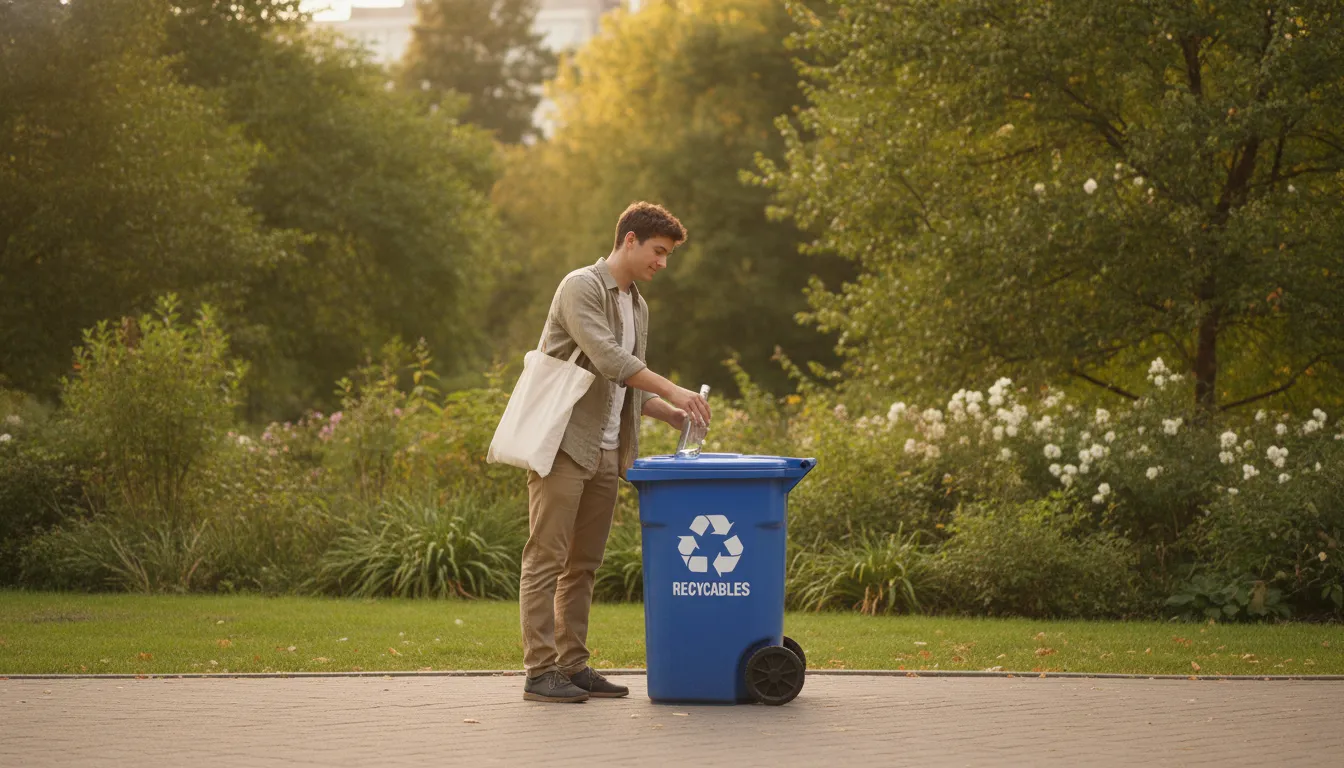
The environmental change the world needs requires action on multiple fronts — governments, companies, and each of us. But history shows that profound cultural transformations begin with individual choices that become collective.
You don’t need to change everything at once. Choose one or two actions from this list and incorporate them into your routine over the next 30 days. When they become habit, add others. Share with people close to you — not with judgment, but with genuine enthusiasm. The power of example is real.
The planet we want to preserve is the same one where we live, eat, raise children, and find beauty every day. Taking care of it is, in the end, taking care of ourselves.
Start today. The environment thanks you — and you’ll feel better for it too.
