Climate Change in Brazil: What’s Already Happening
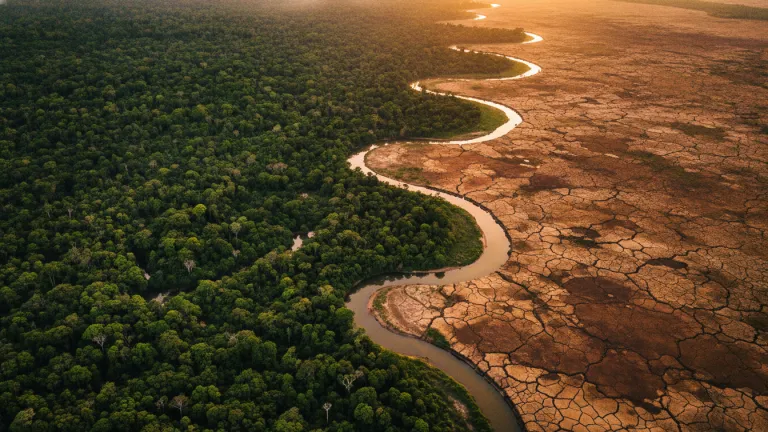
Brazil isn’t waiting for climate change to arrive. It’s already here. Anyone who lived through the summer of 2024 in the Southeast, witnessed the flames that swept through the Pantanal and the Amazon in 2024, or followed the floods that devastated Rio Grande do Sul in May 2024 knows firsthand what scientists have been warning about for decades. The country’s climate is changing at a visible pace, and the effects are felt from North to South, from rural areas to major cities.
To understand the present — and act on the future — we need to look at the data without catastrophism, but also without naivety. Brazil is a country of continental dimensions, which means climate change manifests very differently depending on the region. Extreme drought in the Northeast, record heat in São Paulo, intense rainfall in the South, and historic wildfires in the Central-West: there isn’t a single crisis, but a mosaic of interconnected crises.
The good news — and it does exist — is that Brazil also plays a central role in global solutions. We are the country with the greatest biodiversity on the planet, we have an energy matrix with significant participation from renewable sources, and we possess the technical and human knowledge to lead the ecological transition. But everything starts with an honest diagnosis. So let’s get to it.
What the Data Says About Brazil’s Climate
The National Institute for Space Research (INPE) and the National Institute of Meteorology (INMET) have been monitoring Brazil’s climate for decades, and the records are unequivocal: average temperatures in Brazil increased throughout the 20th century and continue to rise in the 21st century.
The Intergovernmental Panel on Climate Change (IPCC), in its Sixth Assessment Report (AR6), published between 2021 and 2022, indicates that South America has already warmed by an average of more than 1°C compared to pre-industrial levels, with some regions recording even more significant increases. The report also projects that, without significant emission reductions, Brazil will face more frequent and intense extreme events throughout the century.
In 2024, Brazil recorded the hottest year in its history since systematic measurements began, according to INMET data. This record is not an isolated coincidence: it’s part of a global trend that 2024 also confirmed worldwide, according to the World Meteorological Organization (WMO).
Amazon and Pantanal: Biomes on Alert
The Amazon is often called Brazil’s “climate heart” — and for good reason. Besides harboring about 10% of all species on Earth, the forest regulates the hydrological cycle of much of the continent through the so-called “flying rivers,” moisture currents that feed rainfall in the Southeast and South of the country.
Accumulated deforestation over recent decades, combined with global climate change, is bringing parts of the Amazon closer to a concerning tipping point. Researchers like Carlos Nobre and Thomas Lovejoy describe a threshold beyond which portions of the forest could begin transforming into savanna — a self-reinforcing process. Although the scientific debate about the exact limits of this process continues, there is consensus that forest cover loss reduces the biome’s climate resilience.
The Pantanal, the world’s largest tropical wetland, experienced its worst recorded fire year in 2020, with more than 30% of the biome burned, according to INPE. In subsequent years, including 2024, the biome again recorded critical levels of fires amid prolonged droughts — a cycle that combines human and climate factors inseparably.
Extreme Events: Drought, Floods, and Heat Waves in Daily Life
If there’s one element that marks public perception of climate change in Brazil, it’s extreme events. And they have become more frequent and intense.
- Rio Grande do Sul (May 2024): The floods that hit the state were considered the largest climate disaster in Rio Grande do Sul’s history, affecting more than 400 municipalities, displacing hundreds of thousands of people, and causing human and economic losses of historic scale. Climate attribution studies, which analyze the role of climate change in specific events, indicated that global warming made rainfall of that magnitude significantly more likely in the region.
- Amazon Drought (2023-2024): Water levels in rivers like the Negro and Solimões reached historic lows, isolating riverside communities, paralyzing river transport, and generating a humanitarian crisis in localities in Amazonas state.
- Urban Heat Waves: Cities like São Paulo, Rio de Janeiro, and Belo Horizonte recorded record temperatures during summer months, with the “urban heat island” phenomenon intensifying discomfort in peripheral areas, where there are fewer trees and more asphalt and concrete surfaces.
- Northeast: The historically semi-arid region faces longer and more intense drought periods, while paradoxically also recording more frequent torrential rains out of season — a characteristic of growing climate instability.
Impacts on Agriculture and Food Security
Brazil is one of the world’s largest food producers and exporters, and national agriculture is already concretely feeling the effects of climate change. Embrapa (Brazilian Agricultural Research Corporation) has been developing extensive research on the topic, projecting shifts in agricultural suitability zones for crops like coffee, soybeans, and corn over the coming decades.
Arabica coffee, for example, is particularly sensitive to temperature variations. Traditional growing regions in Minas Gerais and São Paulo may become less suitable as average temperatures rise, requiring adaptation of cultivated varieties or migration to higher altitudes.
For small family farmers — who represent a significant portion of food production consumed domestically — rainfall irregularity and increased droughts represent direct risks to income and livelihood. Technical support programs, climate agricultural insurance, and access to adapted seeds are essential tools for this segment of the population.
Brazil as Part of the Solution: Renewable Energy and Green Potential
Amid the challenging diagnosis, Brazil has real assets to lead solutions. Our electrical matrix has significant participation from renewable sources — mainly hydroelectric, but with accelerated growth in solar and wind energy in recent years. According to data from ANEEL and the National Electric System Operator (ONS), photovoltaic solar generation expanded notably in the country throughout the first half of the 2020s.
Distributed solar energy — generated by consumers themselves in homes and businesses — grew significantly in Brazil, driven by reduced panel costs and the established regulatory framework. If you’re curious about how this could work for you, it’s worth reading about solar energy: advantages and disadvantages you need to see.
Beyond energy, Brazil has enormous potential in areas such as:
- Forest restoration: The country has made commitments to restore degraded areas under international climate agreements
- Bioeconomy: Sustainable use of biodiversity as a basis for economic development
- Transition to electric vehicles: With the advantage of an electrical grid with relevant renewable participation
- Low-carbon agriculture: Techniques like no-till farming and crop-livestock-forest integration already have a track record in Brazil
What Each Person Can Do Now
Talking about climate change can’t just be expert conversation or international summit agenda items. Each daily choice carries weight — and together they form the pressure that transforms markets and policies.
Here are concrete actions you can start today:
- Reduce food waste at home: Decomposition of organic matter in landfills generates methane, a potent greenhouse gas. Check out practical tips at less waste in the kitchen: reduce food waste
- Dispose of electronics and batteries correctly: This waste contains toxic materials and, when improperly discarded, contaminates soil and water
- Reduce beef consumption: Extensive cattle ranching is one of the main sources of methane emissions and pressure on deforestation in Brazil
- Prioritize public or active transportation (bicycle, walking) whenever possible
- Support companies and brands with verifiable environmental practices — conscious consumption sends signals to the market
- Participate in public life: Vote for representatives who take the climate agenda seriously and stay informed about environmental policies in your municipality and state
- Plant trees or support reforestation projects locally or nationally
- Talk about the topic with family and friends — cultural change begins in everyday dialogue
Conclusion: The Time to Act Is Now
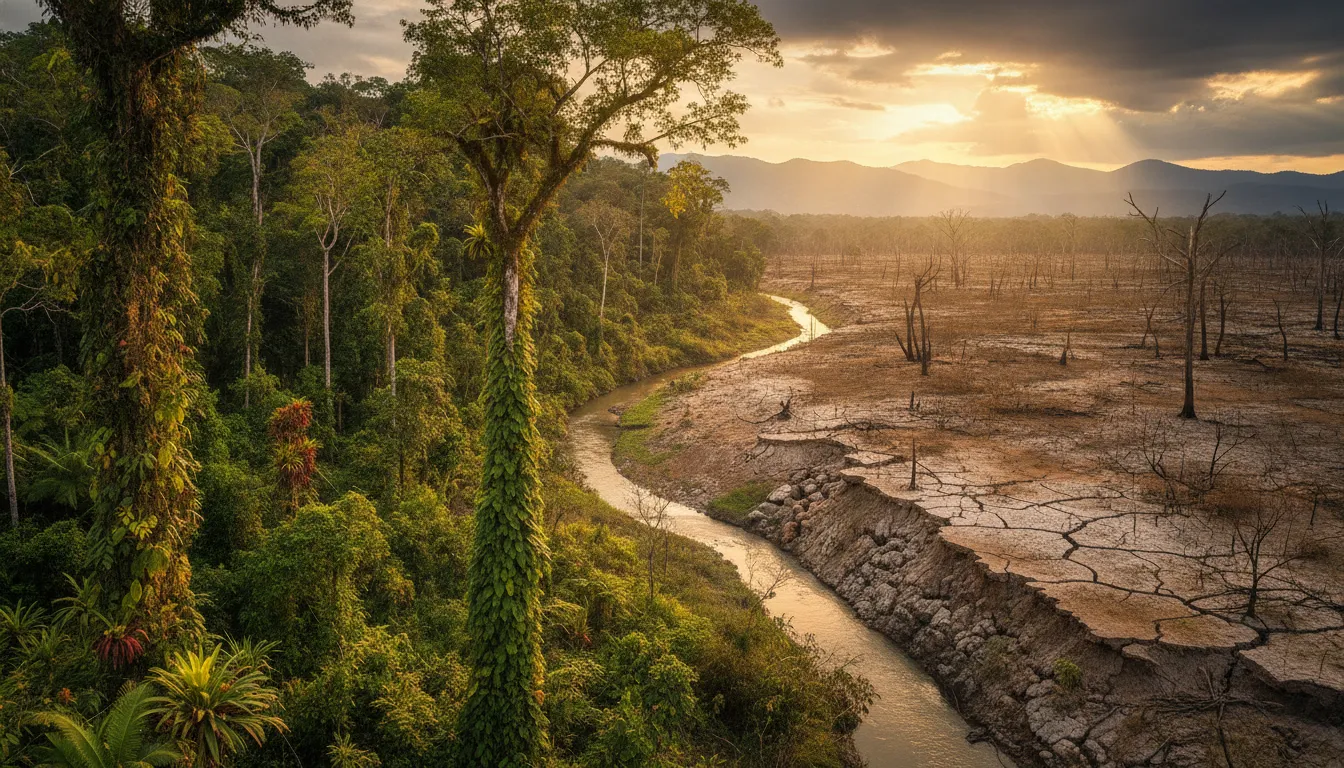
Climate change in Brazil is not a distant threat in time or space. It’s happening now, in the floods of the South, in the droughts of the North, in the heat waves of cities, in the crops that need to adapt. Recognizing this is not cause for paralysis — it’s the first step toward action.
Brazil has history, natural resources, scientific knowledge, and human capital to be a protagonist in this transition. And every person who understands the problem and acts in their own way — in consumption choices, in voting, in conversation with neighbors — is part of this story.
Start with what’s within your reach. Small actions that protect the environment may seem insufficient given the scale of the challenge, but they are what, when combined, form the necessary pressure for larger transformations. The planet needs many people doing what they can — not a few people doing everything perfectly.
