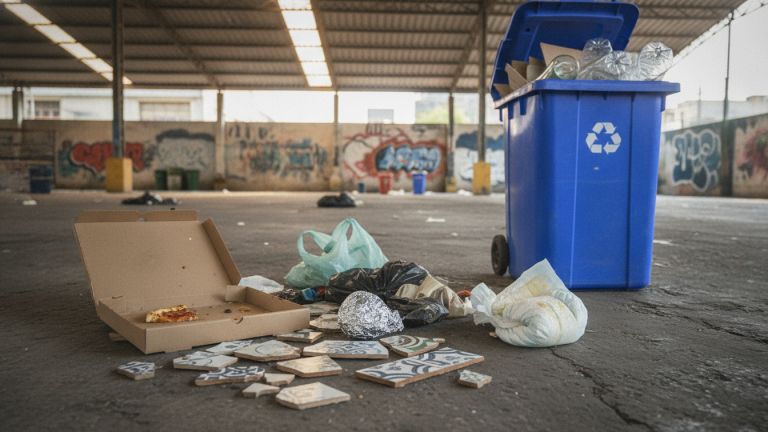
Why doesn’t that greasy paper go into recycling?
You sort the trash at home, put the packaging in the blue selective collection bag and think you’ve done everything right. But part of that material will probably end up in the landfill anyway, because many items that seem recyclable simply aren’t accepted by Brazilian cooperatives and recycling plants. It’s not your carelessness, it’s a lack of information that the system never communicated properly.
According to surveys by Abrelpe (Brazilian Association of Public Cleaning and Solid Waste Companies), Brazil recycles a small portion of the total urban solid waste it generates. Law 12.305/2010, known as the National Solid Waste Policy (PNRS), determines responsibilities for manufacturers, distributors and consumers, but the sorting infrastructure still has many bottlenecks. The practical result: contaminated or technically non-recyclable materials reach cooperatives, disrupt the process and end up discarded the same way as regular trash.
By the end of reading this article, you’ll know exactly what you can’t throw into selective collection, why each item is problematic, and what to do with it instead of just throwing it away.
What Brazil’s recycling system really processes
Before talking about what doesn’t work, it’s worth understanding what does work. Sorting cooperatives in Brazil can process, with good efficiency, materials that are dry, clean and non-composite, such as:
- Paper and cardboard without grease or excessive moisture
- Rigid plastics (PET bottles, shampoo bottles, buckets)
- Metals (aluminum cans, steel cans)
- Glass (bottles, jars)
The problem lies in materials that seem to belong to these categories but carry some characteristic that makes the process unfeasible, whether contamination, mixture of materials or absence of a buyer market. In Brazil, sorting is done mainly manually by waste pickers in cooperatives. Any material requiring specialized equipment or that contaminates the sorting line becomes a problem.
Deceptive plastics: not all plastic is recyclable
The recycling symbol with a number inside (1 to 7) doesn’t mean the item will be recycled. It only means the plastic was identified. In the current Brazilian context, plastics with the highest real recycling rate are PET (1) and HDPE (2), used in water bottles, soft drinks and cleaning product containers.
Problematic plastics include:
- Plastic film (thin plastic bags, bread packaging, supermarket stretch film): jams on cooperative conveyors and breaks equipment
- Styrofoam (EPS): technically recyclable, but very few Brazilian plants process this material, and transportation costs are high because of the volume
- Metalized plastics (snack packaging, sauce sachets): are a mixture of plastic and aluminum in layers too thin to separate
- Straws and disposable cutlery: too small for the sorting conveyor, fall between equipment
- Packaging with food residue without cleaning: contaminate the entire surrounding load
For styrofoam, some municipalities and companies have specific collection points. It’s worth checking on your city’s website or in how the voluntary delivery point works in Brazil.
Paper and cardboard: the grease mistake
Paper is paper, you might think. But there’s a huge difference between a shoe box and a pizza box. Grease makes cellulose fibers waterproof and prevents paper from dissolving correctly in the recycling process. The resulting paste becomes contaminated and ruins the entire batch.
Outside conventional recycling, therefore:
- Pizza boxes with grease or cheese residue
- Parchment paper and aluminum foil
- Toilet paper, paper tissues and used napkins (besides hygiene, fibers are too short)
- Long-life packaging (juice or milk cartons): are recyclable, but require specific plants with technology to separate paper, plastic and aluminum. Not all Brazilian cities have this structure
- Carbon paper, photographic paper and paper with heavy glossy coating (some invitations and luxury packaging)
The juice carton deserves special attention. When your city has the process available, it should be emptied, rinsed and crushed before going to selective collection. If not, it goes to regular trash anyway.
Glass, metal and electronics: where disposal requires extra care
Glass is one of the most recyclable materials that exist, technically it can be recycled infinitely without losing quality. But there are important exceptions in Brazil:
- Tempered glass (windows, bathroom enclosures, glass plates): has different composition and melts at a different temperature, contaminating the process
- Mirrors: have metallic coating that makes recycling unfeasible
- Fluorescent and LED lamps: contain mercury and other components that require specific disposal. Ibama regulates reverse logistics programs for lamps
Metals like aluminum and steel cans have good acceptance. The problem lies in:
- Batteries and battery packs: contain heavy metals (cadmium, lead, mercury) and have mandatory reverse logistics under PNRS. Should be delivered to collection points at supermarkets, stationery stores or pharmacies
- Electronic equipment (old cell phones, chargers, computers): also have mandatory reverse logistics. Manufacturers and retailers are required by law to receive these items back
Materials that never go to conventional recycling
Some items create confusion because they look like “material” but have no solution within standard selective collection. Meet the main ones:
| Material | Why it doesn’t recycle | What to do |
|---|---|---|
| Disposable diapers | Material mixture + biological residue | Regular trash, well wrapped |
| Feminine hygiene products | Same reason as diapers | Regular trash |
| Cotton swabs and flexible stems | Small size + material mixture | Regular trash |
| Old clothes and fabrics | Different process from conventional recycling | Donation, thrift stores or textile collectors |
| Expired medicines | Health and soil risk | Pharmacies with specific collection |
| Used cooking oil | Contaminates water and isn’t collected in selective collection | Collection points in supermarkets and farmers markets |
| Syringes and sharps | Biological hazard | Health units |
Cooking oil deserves special mention: one liter of oil can contaminate up to one million liters of water, according to estimates from the Ministry of Environment. Storing in a closed PET bottle and taking it to collection points is simple and makes a real difference.
Common mistakes in selective collection and how to avoid them
Some well-intentioned practices end up harming the process. See the most frequent ones:
- Washing too much packaging: you don’t need to sterilize. A quick rinse to remove visible residue is enough. Excess water in the recycling bag creates moisture and ferments the material
- Mixing organic trash with recyclables: a piece of food contaminates everything around it. If the packaging is too dirty and won’t be washed, it goes to regular trash
- Crushing steel cans: unlike aluminum (which can be crushed), crushed steel cans complicate manual sorting. Leave in original shape
- Putting a plastic bag full inside the recycling bag: the cooperative doesn’t open bag by bag. The material goes to trash
- Assuming the recycling symbol guarantees collection: as we’ve seen, the symbol identifies the material, but doesn’t guarantee your city processes that type
Frequently asked questions about recycling in Brazil
Can bread paper and paper towels be recycled?
No. Paper towels and used bread paper have fibers that are too short and usually carry grease or moisture. The correct destination is organic or regular trash. If they are completely clean and dry, bread paper can go to recycling, but this is rare in daily use.
Can I recycle cleaning product packaging?
Yes, as long as they are empty and rinsed. Bottles of detergent, fabric softener and disinfectant are usually made of HDPE (plastic 2), which has good acceptance in Brazilian cooperatives. The care is to ensure there is no concentrated product left over, which can contaminate other materials.
What do I do with old batteries if there’s no collection point nearby?
Many supermarkets, stationery stores and electronics stores are required by PNRS to accept used batteries and battery packs. If you can’t find any nearby point, keep the batteries in a closed container until you can take them. Never throw them in the toilet or on land, as heavy metals contaminate soil and groundwater.
Can long-life cartons (milk, juice) go into selective collection?
It depends on your city. Long-life packaging is recyclable, but requires a plant with specific technology to separate the layers of paper, plastic and aluminum. Before putting it in selective collection, check if your city has an agreement with a plant that processes this material. If in doubt, the Tetra Pak website has a map of partner collection points in Brazil.
One action to start today
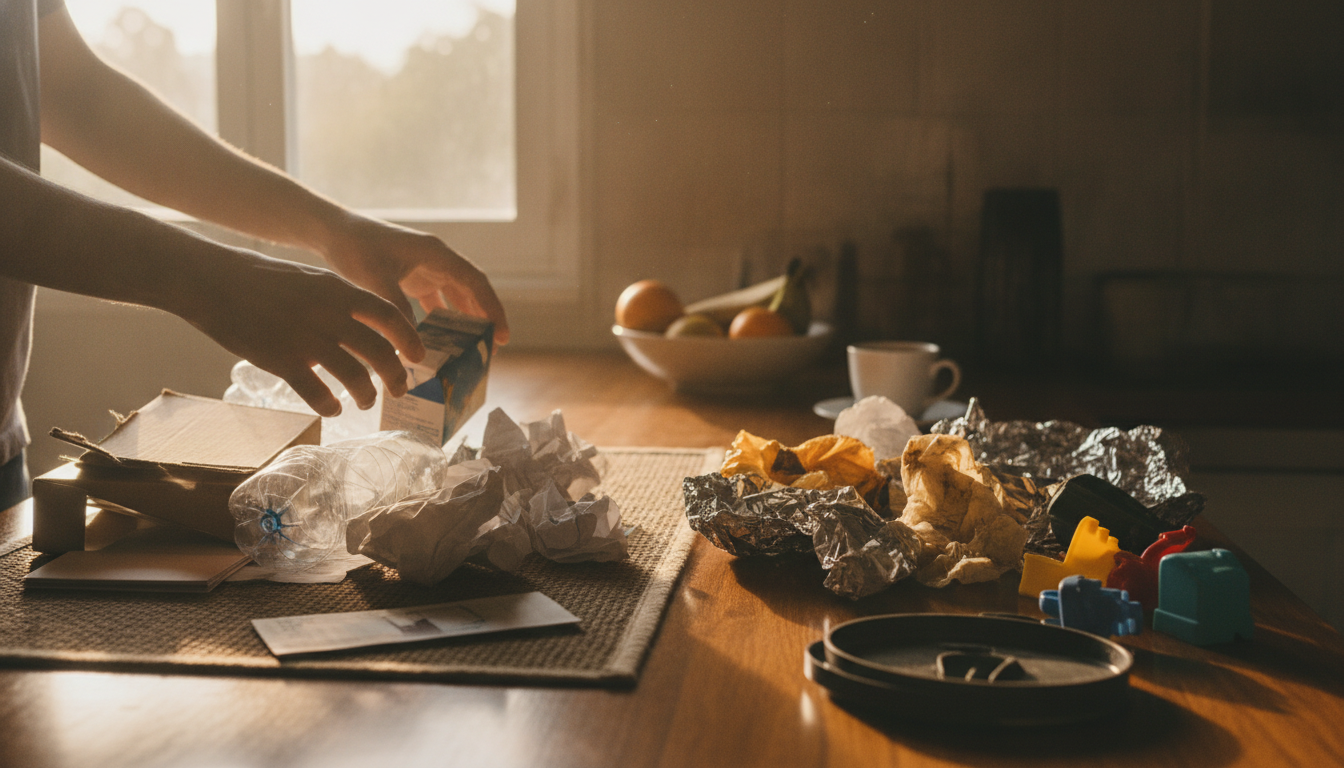
Take three minutes now and look at your recyclable trash. Remove any item with food residue, any thin plastic bag and any metalized snack packaging. These three types alone account for much of the material that reaches cooperatives unable to be used.
Recycling well is more valuable than recycling a lot. A clean and correctly sorted load reaches the cooperative with real potential to become raw material again. And every time you dispose of it correctly, you’re directly helping the work of waste pickers who depend on it to guarantee their income.
