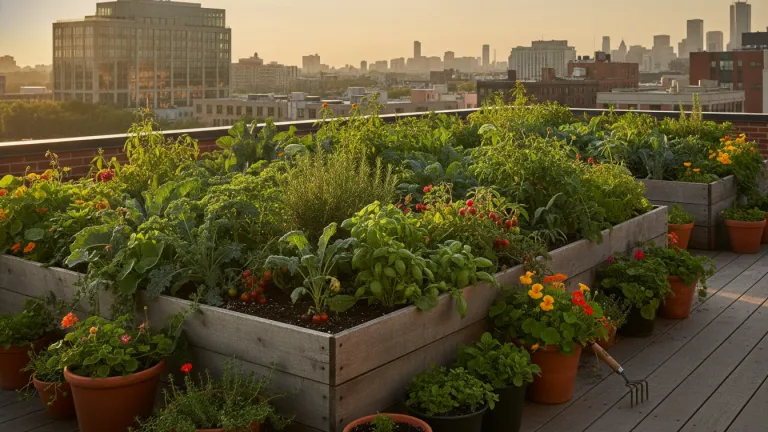
Imagine picking a fresh basil leaf right from your window before preparing dinner, or harvesting cherry tomatoes grown on a tenth-floor apartment balcony. Does it sound like a scene from a distant future? In reality, this is already happening in thousands of households — and the movement that makes it possible has a name: urban agriculture.
More than an aesthetic trend of well-decorated pots on social media, urban agriculture is a serious, growing practice deeply connected to the sustainability of cities. In 2026, with advancing climate change, rising food prices, and increased environmental awareness, growing food in urban centers has shifted from curiosity to strategy — both individual and collective.
In this article, you’ll understand what urban agriculture is, how it works in practice, what its real benefits are, and most importantly, how you can start today, regardless of your available space.
What Is Urban Agriculture and Why It Matters
Urban agriculture can be defined as the cultivation of food — vegetables, fruits, herbs, mushrooms — and, in some cases, raising small animals within or near urban areas. It ranges from a simple herb garden on a windowsill to large-scale vertical farms installed in industrial warehouses.
The Food and Agriculture Organization of the United Nations (FAO) recognizes urban agriculture as a strategic component of global food security. According to the FAO, more than 55% of the world’s population already lives in urban areas — a number expected to grow in the coming decades. Feeding these populations with less dependence on long transportation and distribution chains is a real challenge, and local food production is part of the answer.
In Brazil, Embrapa (Brazilian Agricultural Research Corporation) has invested in research and support programs for urban and peri-urban agriculture, recognizing its role in both income generation and promoting healthy eating in vulnerable communities.
Types of Urban Agriculture: From Pots to Vertical Farms
Urban agriculture is not a one-size-fits-all model. It adapts to the space, resources, and goals of those who practice it. Here are the main formats:
Home and apartment gardens
The most accessible format. It can be done in pots, wooden crates, reused PET bottles, or balcony planters. Ideal for aromatic herbs (basil, parsley, mint, chives), lettuce, and peppers.
Community gardens
Shared spaces on vacant lots, parks, building rooftops, or areas provided by city governments. Besides producing food, they function as gathering places and environmental education centers. Cities like São Paulo, Rio de Janeiro, Curitiba, and Belo Horizonte already have municipal programs supporting community gardens.
Productive green roofs (rooftop farming)
Using building rooftops for installing planters or hydroponic systems. Besides producing food, they contribute to the building’s thermal insulation and reduce the urban heat island effect.
Urban hydroponics and aquaponics
Systems that eliminate the need for soil. In hydroponics, plants grow in aqueous nutrient solutions. In aquaponics, fish and plants coexist in a closed circuit: fish waste feeds the plants, and plants filter the water for the fish. Both systems are highly efficient in water usage.
Vertical farms (vertical farming)
The most technological model. Multi-story structures with artificial LED lighting and full climate control allow intensive production in reduced space. Companies in this sector already operate in Brazilian cities, supplying food to supermarkets and restaurants.
Real Benefits of Urban Agriculture
The gains from urban agriculture go far beyond the plate. Here are the main ones:
- Food security: local production reduces dependence on long supply chains, especially important during logistics or economic crises.
- Carbon footprint reduction: locally produced food travels shorter distances to the consumer, decreasing emissions associated with transportation.
- Organic waste management: composting, often integrated into urban gardens, diverts organic waste from landfills.
- Well-being and mental health: studies published in public health journals associate contact with plants and the act of gardening with stress reduction and mood improvement.
- Environmental education: children and adults who participate in gardens develop greater awareness about the origin of food and natural cycles.
- Urban biodiversity: productive gardens attract pollinators like bees and butterflies, contributing to the maintenance of urban wildlife.
- Household savings: growing herbs and leafy greens at home generates real savings in the family budget, especially during periods of high food prices.
How to Start Your Urban Garden: Step by Step
You don’t need a backyard, farming experience, or high investment to get started. Follow this guide:
- Assess your available space. Window, balcony, terrace, rooftop, or backyard — any area with direct sunlight for at least four to six hours a day is enough to start.
- Choose the right plants for your level. Beginners should start with aromatic herbs (basil, parsley, chives, mint) and short-cycle leafy greens (lettuce, arugula, spinach). They’re forgiving, grow fast, and are very useful in the kitchen.
- Define your growing system.
- Soil in pots or containers: the simplest and cheapest option. Use quality substrate mixed with organic compost.
- Simple hydroponics: affordable kits are available at specialized stores and online. Great for those with little space.
- Repurposed containers: cut PET bottles, cans, produce crates — with creativity, any container becomes a planter.
- Prepare the substrate. Mix soil, organic compost (homemade or purchased), and if possible, some coarse sand or perlite to ensure good drainage. Holes in the bottom of pots are essential.
- Plant and label. Use seeds or seedlings — both work. Label your planters to avoid confusing species.
- Establish a care routine. Water early in the morning or late afternoon, avoiding peak sun hours. Observe your plants regularly: yellow leaves may indicate nutrient deficiency or overwatering.
- Compost your organic waste. Fruit and vegetable peels, coffee grounds, and vegetable scraps turn into quality fertilizer for your garden. If you want to learn more about how to properly dispose of your waste, check out our guide How to Properly Sort Recyclable Waste.
- Harvest regularly. For leafy greens, cut the outer leaves and let the center grow — this extends the plant’s life for weeks.
Challenges of Urban Agriculture and How to Overcome Them
Not everything is flowers — or leafy greens. Urban agriculture has its real challenges:
| Challenge | How to overcome |
|---|---|
| Low sunlight | Choose shade-tolerant species (mint, parsley) or invest in LED grow lights |
| Very limited space | Opt for vertical growing with shelves or wall panels |
| Lack of time | Start small with a few low-maintenance species |
| Pests and diseases | Use biological control (neem, water with neutral soap) and avoid excess moisture |
| Poor quality soil | In container systems, you control 100% of the substrate — discard poor soil |
| Initial costs | Reuse containers, exchange seedlings with neighbors, seek free municipal programs |
Urban Agriculture in Brazil: What’s Already Happening
Brazil has a promising scenario for urban agriculture. Public and private initiatives have advanced significantly:
- The Hortas Cariocas program in Rio de Janeiro is one of the largest networks of urban community gardens in Latin America, present in dozens of communities.
- The City of São Paulo maintains the Cidades Sem Fome (Cities Without Hunger) program, which supports the creation of gardens in socially vulnerable areas.
- Embrapa develops technologies adapted to the urban context, including compact vegetable varieties and simplified growing systems aimed at non-specialized urban producers.
- Brazilian agtech startups have advanced in vertical farm and low-cost hydroponics solutions, democratizing access to technology.
These examples show that urban agriculture in Brazil is no longer marginal — it is being incorporated into urban planning and food security public policies.
Urban Agriculture and Sustainability: The Essential Connection
Urban agriculture is, at its core, a practice of circularity. It closes loops: organic waste becomes fertilizer, rainwater can be harvested for irrigation, and food travels meters — not kilometers — to the plate.
In the context of climate change, this model gains even more relevance. The IPCC (Intergovernmental Panel on Climate Change) points out that global food systems are responsible for a significant portion of greenhouse gas emissions — and that transforming these systems, including local production and waste reduction, is a fundamental part of mitigation solutions.
Growing food in the city is, therefore, a political, environmental, and personal act all at once. It’s a concrete way to participate in building more resilient cities and a fairer food system. If you want to deepen your sustainable journey even further, also explore our article Urban Agriculture: Grow Food in Your City for even more detailed tips on local cultivation.
Start Today: Your Garden, Your Impact
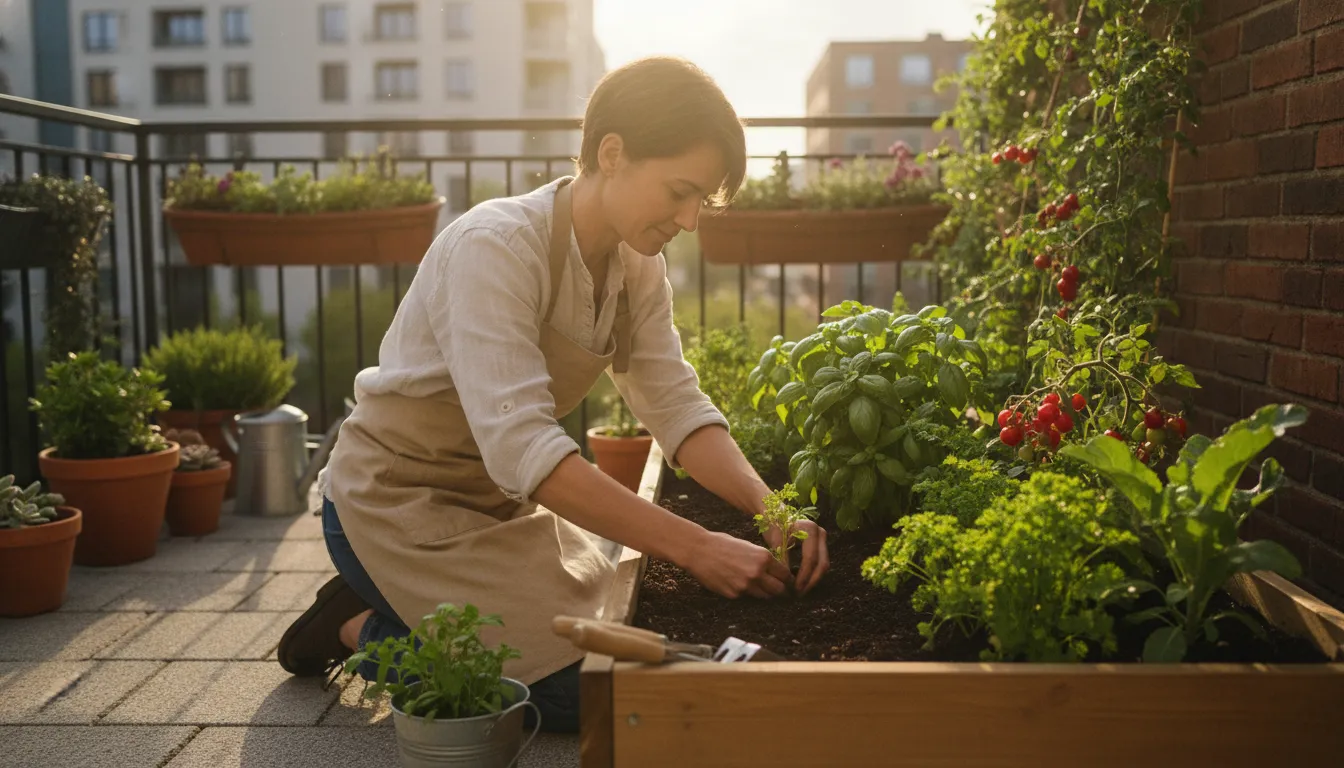
Urban agriculture doesn’t require perfection. It only requires the willingness to start. A pot with parsley on the windowsill is already a gesture of reconnection with nature and responsibility for what we put on our plates.
You can start this week:
- Buy a packet of lettuce seeds and plant them in any container with soil and drainage.
- Research community gardens in your city — many accept volunteers and offer free training.
- Start composting your organic waste, even on a small scale.
- Talk to neighbors about the possibility of a collective garden in your building or street.
Every leaf grown at home is one less leaf transported hundreds of kilometers. Every community garden is a space for gathering, learning, and resilience. The city can — and should — also be a place where food is born.
The planet thanks you. And so does your health.
