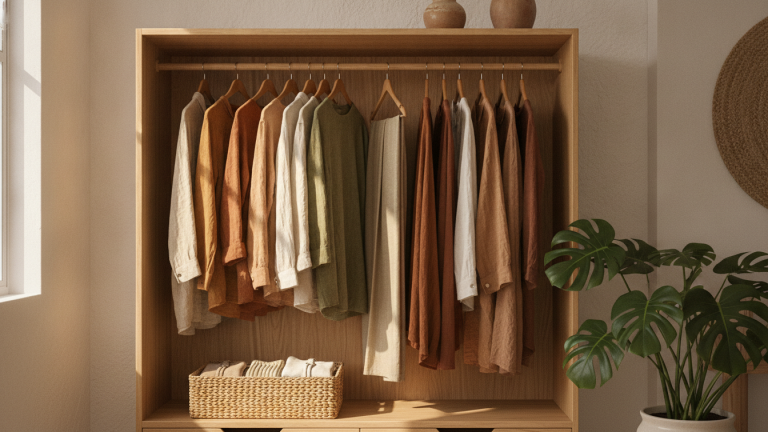
You open your wardrobe in the morning and, even though it’s full, you feel like you have nothing to wear. If that sounds familiar, you’re not alone: research from the global textile industry points out that a large portion of clothes purchased go unused for months or end up in regular trash much sooner than expected. The problem isn’t your wardrobe. It’s a consumption model that was built to make you buy more, faster, and cheaper.
The fashion industry is one of the largest consumers of water and emitter of greenhouse gases in the world, according to data from the United Nations Environment Programme (UNEP). In Brazil, only a small portion of discarded pieces undergoes any type of reuse or recycling; most go straight to landfills or dumps, as indicated by Abrelpe data on urban solid waste.
The good news is that you don’t need to overhaul everything at once, nor spend more to act differently. By the end of this text, you’ll know exactly how to build a more sustainable wardrobe starting with what you already have at home, with practical choices that save money and free up mental space.
What makes clothing truly unsustainable
Before buying anything new, it helps to understand what makes the current system so problematic. Fast fashion works with collections that renew in weeks. This pressures for low prices, which usually means low-quality fabrics, poor working conditions, and dyeing and finishing processes that dump chemical waste into rivers.
Conventional cotton, for example, is one of the crops that demands the most pesticides in Brazil, according to Ibama data. Synthetic fabrics, such as polyester and nylon, release plastic microfibers during washing, which escape through sewage and reach rivers, oceans, and even our food chain, according to UNEP alerts.
This doesn’t mean that every cheap garment is a villain or that natural fabric is always the right solution. As you can see in the article about biodegradable products not always being sustainable, the origin and production process matter as much as the material. An organic cotton t-shirt produced five thousand kilometers away can have a larger carbon footprint than a synthetic piece manufactured locally and worn for ten years.
Wardrobe audit: the most important step before buying
Before looking for sustainable alternatives, do an honest audit of what you already have. This simple exercise usually reveals that you already own much more than you imagine and that the problem lies in usage patterns, not quantity.
How to do the audit:
- Take everything out of your wardrobe and put it on your bed. Everything.
- Separate into three groups: wear frequently, wear rarely, and haven’t worn in over a year.
- In the “rarely wear” group, ask why: doesn’t fit anymore, doesn’t match anything, or simply forgot you had it?
- Decide the fate of each piece in the “don’t wear” group: donation, secondhand store, repair, or proper disposal.
- Note the patterns: which colors and types of pieces do you really wear? This will guide future purchases.
This process takes between two and three hours and costs nothing. The practical result is a smaller, more functional wardrobe with, surprisingly, more possible combinations.
Responsible disposal: what to do with what’s leaving
Throwing clothes in regular trash is a waste that can be avoided. In Brazil, Law 12.305/2010, known as the National Solid Waste Policy (PNRS), provides for shared responsibility for the product lifecycle, and some city halls already include textiles in selective collection programs.
- Donation: churches, CRAS (Social Assistance Reference Centers), and community projects in your neighborhood usually accept clothes in good condition.
- Physical and online secondhand stores: Brazilian used clothing resale platforms have grown significantly in recent years. Selling what you no longer use can still generate extra income.
- Brand collection boxes: some retail networks have installed collection points in stores for clothes of any brand. Check if there’s one near you.
- Repair and customization: a fallen button, broken zipper, or out-of-fashion clothing don’t have to mean disposal. Neighborhood seamstresses and tailors offer affordable services.
- Severely damaged textiles: become floor cloths or can be delivered to waste-worker cooperatives that work with textile residues.
Pieces that no longer serve human use still have utility. Thinking about this before throwing away makes a real difference.
How to shop more consciously when necessary
There comes a time when you really need something new. That’s when conscious choice comes in, and it doesn’t have to be perfect to be better.
Secondhand before anything else. The used clothing market in Brazil has grown significantly, with fairs, neighborhood thrift stores, and accessible digital platforms. A secondhand piece already existed: you didn’t generate new production demand.
Ask yourself before paying: will I wear this at least thirty times? Does it match at least three pieces I already have? If the answer is no, think twice.
Prefer more durable fabrics. Linen, quality cotton, and wool last more washes and keep their shape longer than fabrics with lots of cheap synthetic blends. Pieces that last twice as long already have, in practice, half the impact per wear.
Smaller and local brands. Independent seamstresses, sewing cooperatives, and small Brazilian brands tend to have greater transparency about their supply chain. Asking where the fabric comes from and how the piece is made is already an act of positive pressure.
Taking care of what you have: the most sustainable act of all
Sustainability in your wardrobe doesn’t end at purchase. The way you wash, dry, and store clothes determines how long they’ll last.
- Washing in cold water preserves the fabric and saves electrical energy, as water heating represents a significant portion of consumption in washing machines.
- Washing with a full machine reduces the number of cycles and water consumption.
- Avoiding the dryer when possible, using clotheslines, extends fabric life and reduces electricity bills.
- Storing clothes folded (rather than hung) helps maintain the drape of knitwear and knits.
- Iron only when necessary: many clothes look fine without ironing if removed from the machine at the right time.
These habits seem small, but added up over the years they make a real difference both to your wallet and to the durability of the pieces.
Common mistakes when starting to change your wardrobe
Some pitfalls appear frequently when someone decides to change their clothing consumption habits.
Discarding everything and starting from scratch. That’s the opposite of what makes sense. The most sustainable piece is one that already exists and that you’ll continue wearing.
Swapping fast fashion for expensive “sustainable fashion” without thinking. Not every piece with a green seal or recycled packaging is truly better. Research the brand, ask about the supply chain, and be skeptical of vague promises.
Shopping at thrift stores without criteria. Thrift stores aren’t an excuse to buy more than you need. The logic remains the same: buy what you’ll actually wear.
Ignoring what you already have at home. A piece of clothing that was forgotten at the bottom of the wardrobe and comes back into circulation is as good as a new sustainable piece, at no cost.
Frequently asked questions about sustainable wardrobes
Is natural fabric always better than synthetic?
Not necessarily. Conventional cotton, for example, uses large volumes of water and pesticides in its production, according to Ibama. Meanwhile, some recycled synthetics, made from PET bottles, reuse material that already existed. What matters is to analyze the complete process, not just the label.
Is it worth hand-washing clothes to save water?
It depends on volume. Hand-washing a few items might use less water than a machine, but modern machines with economic cycles, used with full loads, tend to be efficient. The most important point is to avoid running machines at half capacity and prefer short cycles with cold water.
How do you know if a sustainable fashion brand is trustworthy?
Look for transparency: serious brands inform where the fabric comes from, where the piece is produced, and what certifications they have. Be skeptical of generic statements like “environmentally friendly” with no concrete data. Search the brand name along with terms like “greenwashing” before buying.
What to do with baby and children’s clothes that become too small quickly?
This is one of the cases where buying used makes more sense, as pieces usually have little wear. Social media exchange groups and children’s thrift fairs are great options. At the same time, when buying new, prefer sizes a little larger and pieces that grow with the child.
Where to start today
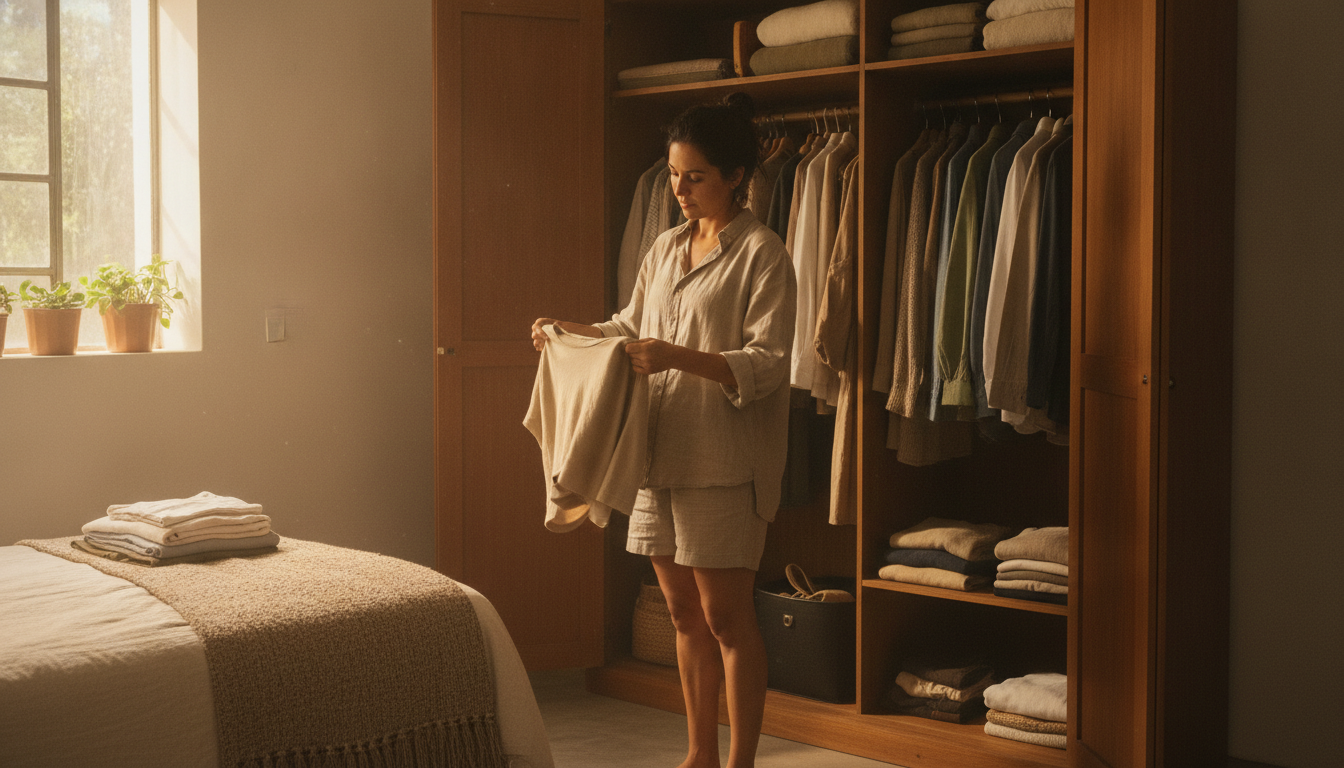
You don’t need to overhaul your wardrobe over the weekend. Pick one drawer or clothing rack and spend fifteen minutes looking at what’s there. Identify one piece you haven’t worn in months and decide its fate now: donation, repair, or sale.
This small gesture has a real effect: you start to see what you already have, and that changes how you consume from here on out. A sustainable wardrobe isn’t one full of expensive green products. It’s one that has less, lasts longer, and makes more sense for your life.
