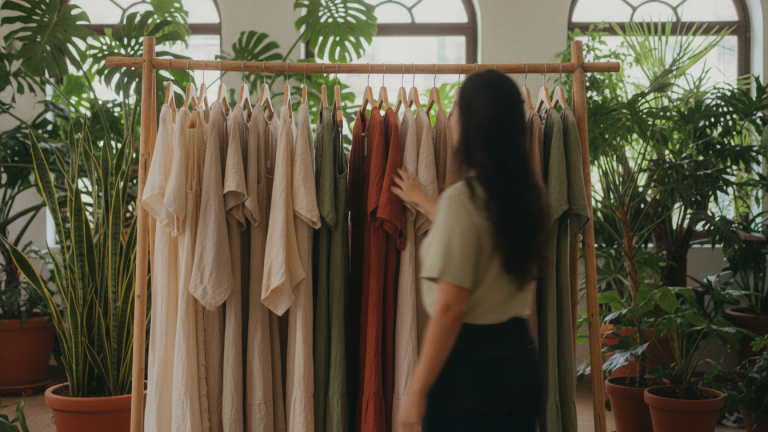
Why the clothes you wear matter more than you think
Have you ever stopped to think about how many clothes you bought last year and how many you actually wear? A UN Environment Programme (UNEP) report shows that the textile industry is responsible for about 10% of global carbon emissions, more than aviation and maritime shipping combined. These numbers place fashion among the most polluting industries on the planet, and much of the problem starts right with our consumption choices.
In Brazil, the impact is significant. The country is one of the world’s largest fashion consumers, and a large portion of the clothes we buy end up in the trash within less than a year. Abrelpe, an association that monitors solid waste in Brazil, has pointed out that textile waste represents a growing volume in Brazilian landfills, with most receiving no proper disposal.
The good news is that you don’t need to become a fashion designer or spend a fortune to change this scenario. By the time you finish reading this article, you’ll understand what sustainable fashion really is, how to apply it in your daily Brazilian life, and what concrete steps you can take today.
What sustainable fashion is, plain and simple
Sustainable fashion is not an expensive brand, a green label stuck on a store shelf, or a passing trend. It’s a way of thinking and acting about everything involving clothing: purchasing, wearing, caring for, and disposing. The central goal is to reduce the environmental and social impact of each piece throughout its entire useful life.
The concept spans from the fibers used in production to working conditions in factories. It also involves you as a consumer when you decide to repair a torn pair of pants instead of throwing them away, or when you swap clothes with a friend instead of buying something new. Sustainability in fashion is, above all, a matter of how long each piece lasts and how it leaves circulation.
How the fashion industry pollutes
Conventional clothing production is intensive in water, energy, and chemical substances. Cotton, one of the most widely used fibers in the world, demands an enormous amount of water to grow. According to the WWF, producing a single conventional cotton t-shirt can consume about 2,700 liters of water, equivalent to what a person drinks in more than two years.
In Brazil, the textile sector also carries historical weight in industrial emissions and water consumption in states like Santa Catarina, São Paulo, and Bahia, where production is concentrated. The production chain involves dyeing with colorants that, when released without treatment, contaminate rivers and soil.
There’s also the problem of fast fashion, a model based on quick collections, low prices, and constant renewal. This system encourages impulsive consumption and premature disposal. Most pieces produced in this model are made of synthetic fibers derived from petroleum, such as polyester, which release microplastics during washing and take decades to decompose.
How to adopt sustainable fashion in practice
You don’t need to overhaul your wardrobe all at once. The most effective change begins with small adjustments in daily choices.
Rethink before you buy
- Apply the 30-use rule: before buying a piece, ask yourself if you’ll wear it at least 30 times. If the answer is no, it’s a sign that purchase probably isn’t worth it.
- Wait 72 hours: if you felt like buying something on sale, wait three days. Often the impulse passes.
- Prefer versatile pieces: a neutral t-shirt that goes with many other pieces is more sustainable than a specific pattern piece you’ll wear only a few times.
- Research the brand: some Brazilian brands already publish transparency reports with information about material origins and production conditions. It’s worth researching before spending.
Take better care of what you already own
Washing clothes unnecessarily frequently, at the wrong temperature, and without checking labels is one of the quickest ways to wear out a piece. Wash with cold water whenever possible, use the shortest cycle, and avoid the electric dryer, which consumes considerable energy and damages fabrics. Hanging on a clothesline not only saves on your electricity bill but also preserves fibers.
Learn to make simple repairs. Sewing on a button, mending a small tear, or taking shoes to a cobbler costs little and extends the item’s lifespan considerably. In Brazilian cities, it’s increasingly common to find repair studios and neighborhood tailoring shops with affordable prices.
Buy secondhand or swap
The used clothing market has grown in Brazil in recent years. Physical thrift stores and digital platforms make it easy to buy good-condition pieces at prices well below market value. You can find everything from everyday clothes to party wear and accessories, many never worn.
Clothing swap fairs have also been gaining space in neighborhoods of major cities. They work simply: you bring what you no longer use and trade for something someone else brought. Nobody spends anything and pieces get a new life.
Dispose responsibly
When a piece no longer serves you or can’t be repaired, the right destination isn’t the regular trash. Many municipalities and retail chains have collection points for clothes and textiles. Some textile recycling cooperatives transform the material into tow, acoustic insulation mats, and other products. Research whether your neighborhood or city has any program like this.
Law 12.305/2010, the National Solid Waste Policy, establishes that manufacturers and retailers have shared responsibility for the product lifecycle. In practice, this means the textile sector is obligated to develop solutions for disposing of clothes it puts on the market, even though this part of the law is still poorly enforced.
Common mistakes for beginners
- Thinking “sustainable” means only buying brands with that label. Conscious consumption starts long before opening your wallet.
- Discarding clothes in good condition because you got bored with them. The piece you got tired of might be exactly what someone else is looking for.
- Buying too much secondhand thinking there’s no limit because it’s cheap and used. The problem isn’t where the clothes come from, but how much we accumulate.
- Washing clothes at 60 degrees thinking it gets cleaner. Most clothes get perfectly clean in cold cycles, and you still save energy.
- Ignoring the wardrobe you already have. Many people discover, when organizing what they have, forgotten pieces that solve the need for a new purchase.
If you’re also thinking about reducing waste in other areas of your life, the article How to adopt a zero-waste lifestyle at home now brings practical strategies that fit well with wardrobe changes.
What you gain from these changes
Sustainable fashion is good for the planet not just. For your budget, the savings can be significant. Buying fewer pieces but of higher quality and maintaining them well reduces total spending on clothes over the year. Those who adopt thrift stores as their first option before buying new also often find better pieces from brands they wouldn’t buy at original price.
For health, avoiding clothes with aggressive chemical finishes, like some fast fashion pieces that release substances during wear, can make a difference especially for those with sensitive skin. Natural fabrics like organic cotton and linen tend to be more breathable and comfortable in Brazil’s heat.
There’s also a personal benefit. Many people who adopt a leaner wardrobe report less stress when getting dressed, more clarity about their own style, and a less anxious relationship with shopping.
Frequently asked questions about sustainable fashion
Is recycled fabric really more sustainable?
It depends on the recycling process and how the fiber was obtained. Recycled polyester, made from PET bottles for example, still releases microplastics during washing, just like virgin polyester. It represents progress over virgin petroleum use, but it’s not the final solution. Certified natural and organic fibers tend to have lower impact throughout the piece’s entire lifespan.
How do you know if a brand is really sustainable?
Be suspicious of brands that use vague terms like “eco” or “green” without any explanation of what that means in practice. Committed brands tend to disclose where they manufacture, what certifications they have, and what their disposal policy is for pieces. Internationally recognized certifications, like GOTS for organic cotton, are a good indicator.
Can I be sustainable buying at mass-market and fast fashion stores?
Occasionally buying at mass retailers won’t destroy the planet by itself. The problem is the volume and frequency. If you buy little, wear it for a long time, and dispose of it correctly, the impact drops significantly. Sustainability in fashion is more about behavior than which store you enter.
Is there any Brazilian government program for textile waste disposal?
Most programs are still local or led by private initiatives and NGOs. Some municipalities, especially in larger cities, have eco-points that accept used clothes. The Ministry of Environment has advanced in regulations within the National Solid Waste Policy, but practical implementation for the textile sector is still developing in 2026.
A small step to start today
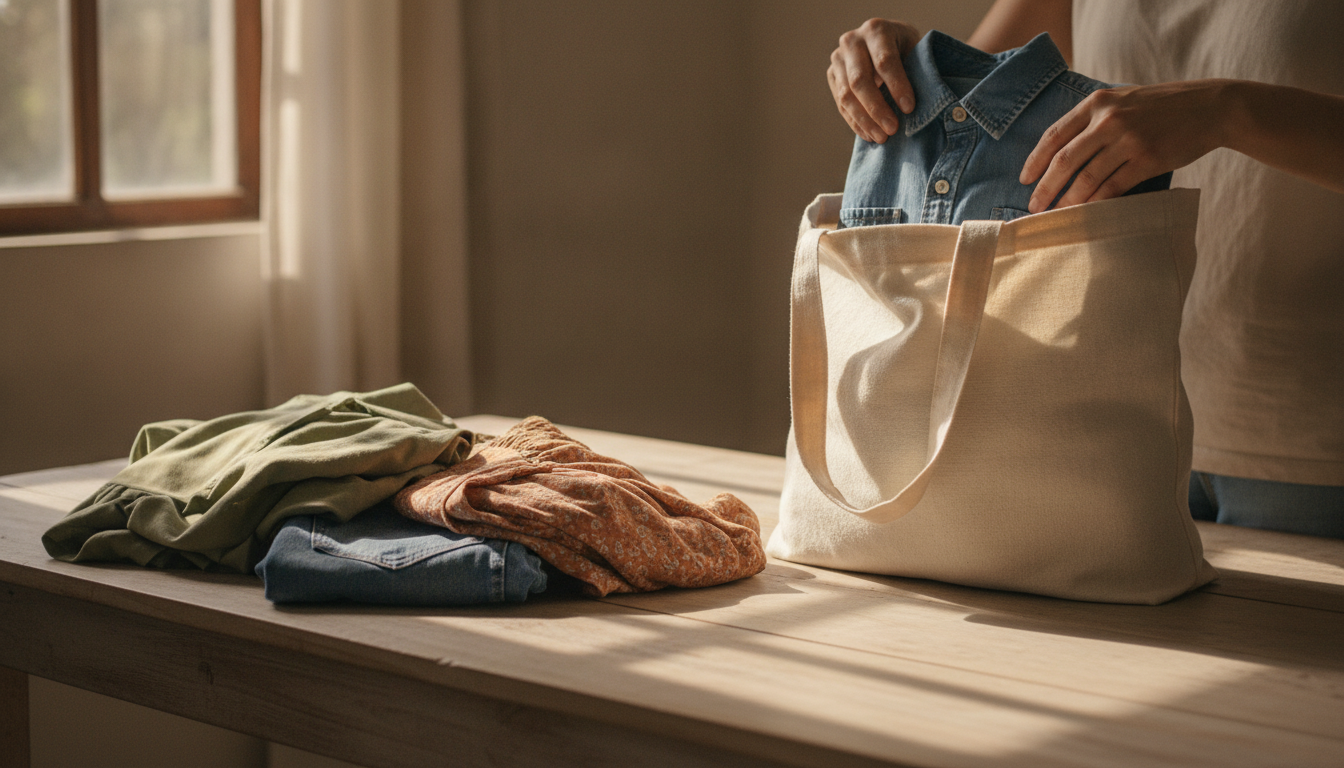
You don’t need to change everything at once. Open your wardrobe now and set aside three pieces you haven’t worn in more than six months. Decide: can it be repaired, donated to a thrift store, or taken to a collection point? This simple gesture already puts you inside a more conscious cycle.
Sustainable fashion isn’t about perfection. It’s about making slightly better choices with each purchase, wash, and disposal. Each piece that lasts longer, that goes to the right place, or that gets a new life in someone else’s hands is a real victory, small but concrete.
