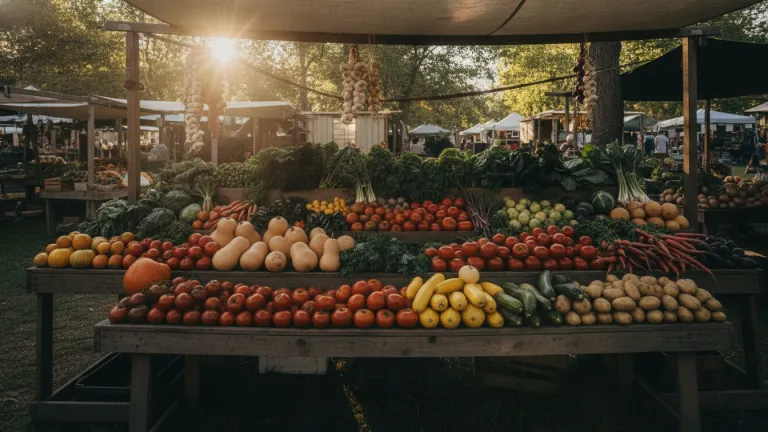
Imagine walking through the market and finding fragrant red strawberries in the middle of July, ripe tomatoes in February, or juicy mangoes in the dead of winter. Tempting, isn’t it? But behind this year-round availability of any fruit or vegetable at any time lies a cost that rarely shows up on the price tag: more agrochemicals to force off-season production, more energy to maintain cold storage for months, more miles traveled by trucks and planes to bring food from regions where the season is still favorable. This cost is environmental, economic, and nutritional.
Buying seasonal foods — those that grow naturally during the period when you’re purchasing them — is one of the most impactful positive food choices anyone can make on a daily basis. And the best part: this choice almost always results in tastier, more nutritious, and cheaper products. You don’t need to radically change your diet or spend more. Sometimes, you just need to pay closer attention to what’s abundant at your local farmers’ markets.
In this article, we’ll explore why seasonal foods make a difference for the planet, your health, and your wallet, and how you can start incorporating this habit into your routine today.
Why seasonal foods have a lower environmental impact
The logic is simple: when a plant grows at the right time of year and in the right region, it needs much less human intervention to thrive. The sun, rain, and temperature are already on its side. This translates directly into fewer external inputs.
Fewer agrochemicals: Off-season crops are more vulnerable to pests and diseases because weather conditions don’t favor the plant’s natural development. To compensate, producers tend to increase the use of pesticides and fungicides. According to Embrapa, Brazil is one of the world’s largest consumers of pesticides, and a significant portion of this use is associated with intensive production and cultivation under non-ideal conditions. Opting for seasonal products helps reduce this demand.
Lower carbon footprint from transportation: Foods produced out of season locally often come from other regions or even other countries. Every mile traveled in refrigerated transport consumes fossil fuel and emits greenhouse gases. The concept of food miles illustrates this problem well: the farther food travels, the greater the emissions associated with getting it to your plate.
Less need for prolonged cold storage: Keeping fruits and vegetables in cold chambers for weeks or months consumes energy continuously. In Brazil, where much of the electrical grid still depends on variable sources and energy demand grows every year, reducing this consumption matters. The fresher and more local the food, the less time it has spent in intensive storage.
What science says about the nutritional value of seasonal foods
There’s a reason why a tomato picked ripe in summer tastes completely different from one bought in June that traveled hundreds of miles: the natural ripening process concentrates sugars, vitamins, and antioxidant compounds in a way that artificial ripening in ethylene chambers simply cannot fully replicate.
Research published in food science journals shows that fruits and vegetables harvested at their optimal ripeness tend to have higher concentrations of vitamin C, polyphenols, and other micronutrients than products picked green to withstand transport and artificially ripened. The time between harvest and consumption also matters: vitamins like folic acid and vitamin C degrade progressively after harvest.
This doesn’t mean out-of-season foods are harmful — far from it. But it does mean that by choosing in-season strawberries bought directly at the farmers’ market, you’re probably taking home a product with a more complete nutritional profile than imported strawberries available year-round at supermarkets.
The economic impact: why seasonal foods are usually cheaper
Supply and demand work quite clearly in this case. When a particular food is in its production season, supply increases, prices drop, and quality tends to be better. This is why cashews become much more affordable between November and January in Northeast Brazil, why fresh corn appears in abundance during June festivals, and why oranges become cheaper and juicier during winter.
When you buy out of season, you’re paying for the extra production effort, longer-distance transportation, and prolonged storage. This cost is passed on to the consumer. Making seasonal choices, therefore, is also a smart household budgeting strategy.
For families looking for ways to save water at home with simple practical tips and reduce their overall environmental impact, adding food seasonality to your list of habits is a change that pays both environmental and financial dividends.
Seasonality calendar: what to eat in each season in Brazil
Brazil has continental dimensions and great climatic diversity, which means seasonality varies between regions. In general, however, there’s an approximate pattern for the main temperate and tropical regions of the country.
| Season | Featured Fruits | Featured Vegetables and Greens |
|---|---|---|
| Summer (Dec–Feb) | Mango, watermelon, pineapple, grapes, peach | Tomato, zucchini, cucumber, eggplant |
| Fall (Mar–May) | Orange, tangerine, passion fruit, starfruit | Carrot, beet, chayote, collard greens |
| Winter (Jun–Aug) | Orange, lemon, kiwi, persimmon | Potato, yam, cauliflower, broccoli |
| Spring (Sep–Nov) | Strawberry, plum, fig, guava | Lettuce, arugula, spinach, green beans |
Note: this calendar is a general reference for Southeast and South Brazil. Regions like the Northeast and North have their own seasonalities, influenced by local rainfall patterns.
How to start buying seasonal foods in practice
Adopting this habit doesn’t require herculean effort. With a few simple changes to your shopping routine, you’ll already start reaping the benefits.
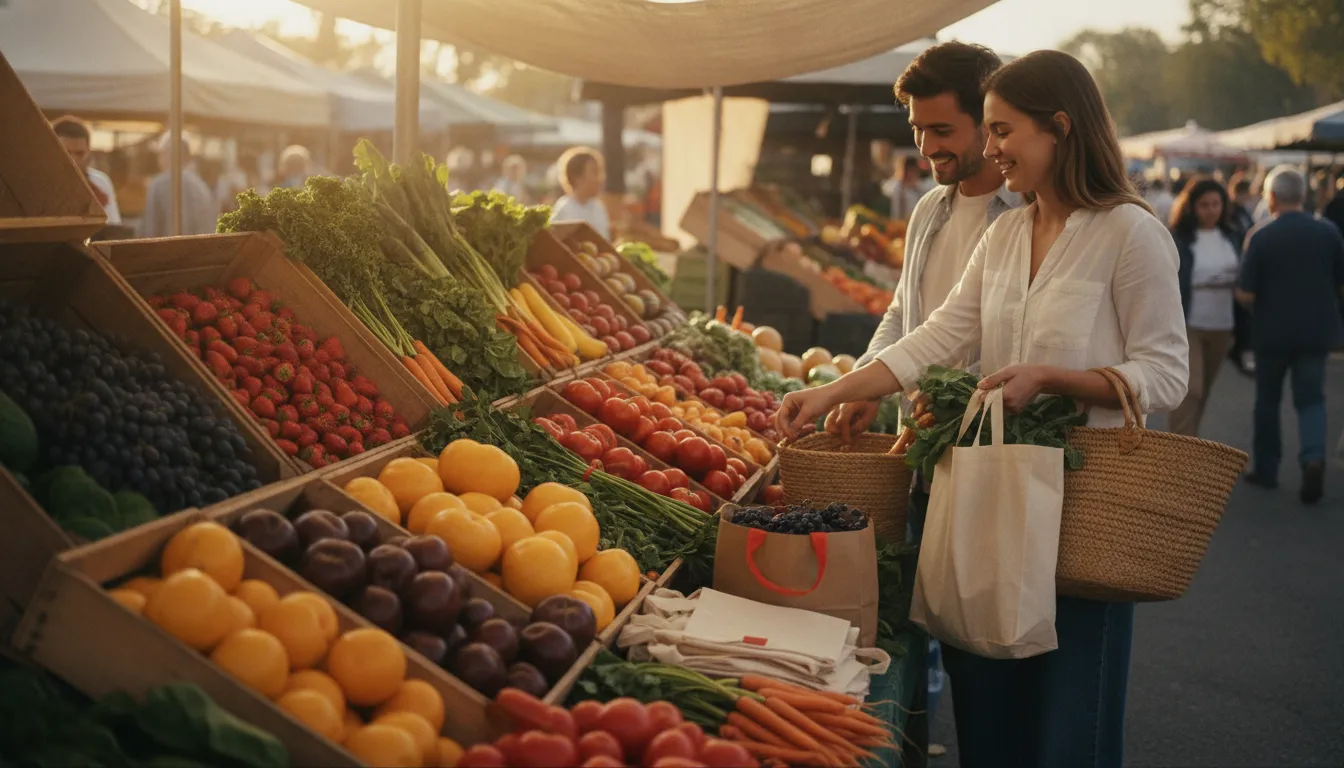
- Visit a farmers’ market near your home. Markets are the best thermometer for local seasonality. What’s abundant and well-priced is usually what’s in season. Farmers and vendors also tend to know what’s at its peak.
- Use price as a signal. If a particular fruit or vegetable is much more expensive than usual, it’s probably out of season. Use price as a quick guide.
- Research your region’s calendar. State agriculture departments, Embrapa, and conscious consumption websites publish updated seasonality calendars. It’s worth printing one and sticking it on the fridge.
- Plan your menu based on what’s available. Instead of deciding what to eat and then looking for ingredients, reverse the logic: see what’s fresh and abundant and create the menu from there.
- Learn to preserve and transform. When a food is in season, it often appears in abundance. Learning to make jams, home freezing, fermentations, or preserves is a way to enjoy the best of the season for longer.
- Explore organic producer fairs and local markets. Many Brazilian municipalities have agroecological fairs that prioritize local producers with good practices. Buying directly from the producer reduces the transportation chain even further.
- Share the habit. Talk to family and friends about seasonality. Cooking together based on seasonal ingredients can be a rich and educational social experience, especially with children.
Seasonality and family farming: a fundamental link
When you buy seasonal foods at fairs and local markets, you’re often supporting Brazilian family farming. According to data from IBGE and the Ministry of Agriculture, family farming is responsible for a significant portion of the basic food production consumed in Brazil, such as beans, cassava, vegetables, and fruits.
This form of production tends to be more diversified, uses fewer synthetic inputs, and better preserves local biodiversity than large-scale monocultures aimed at export. By valuing these producers with your consumption choices, you contribute to keeping a more resilient, fairer, and more sustainable food chain active.
The connection between conscious consumption and caring for the planet appears on various fronts of daily life — just as it does with practices like clothing upcycling: give new life to what you already have, which also values what already exists instead of encouraging disposal and excessive production.
Practical checklist: questions to ask before putting food in your cart
Before buying, it’s worth asking yourself a few quick questions that help develop the habit of conscious choice:
- Is this food typical of this time of year in my region?
- Did it come from far away or was it produced nearby?
- Is it affordably priced, indicating good supply?
- Does it have a natural appearance and aroma, without signs of forced ripening?
- Can I buy directly from a local producer or farmers’ market?
These questions don’t need to become a rigid checklist — over time, the answers become intuitive.
Conclusion: small choices, big difference
Eating with the seasons is one of the oldest and wisest ways to relate to food. For most of human history, there was no other option: people ate what the land offered at that moment. Reclaiming this awareness in the current context — with all available technology and logistics — is an act of deliberate choice, and that’s exactly what gives this habit its power.
You don’t need to be perfect. It’s not about never buying an off-season tomato again or giving up a favorite fruit when it’s not in season. It’s about paying attention, asking questions, and connecting a little more with the natural cycles that still govern the production of food that reaches our tables.
Start on your next trip to the market or farmers’ market. Observe what’s abundant, try something you may have never bought at this time of year, talk to the vendor. This simple curiosity is already the first step toward more conscious, flavorful, and sustainable consumption. The planet thanks you — and so does your palate.
