Why clothing upcycling is one of the best things you can do for the planet right now
Have you ever stopped to count how many pieces of clothing in your closet you haven’t worn in over a year? Probably more than you imagine. The fashion industry is one of the largest consumers of natural resources in the world: it produces massive volumes of textile waste, consumes large quantities of water for cotton cultivation and fabric dyeing, and generates greenhouse gas emissions throughout its entire production chain. According to the United Nations Environment Programme (UNEP), the textile and apparel industry accounts for a significant share of global greenhouse gas emissions and is one of the largest sources of microplastic pollution in the oceans.
But here’s the good news: you don’t need to wait for public policies or large corporations to make a difference. Clothing upcycling — the practice of transforming old, damaged, or discarded pieces into something new and more valuable — is one of the most accessible, creative, and effective ways to reduce the environmental impact of your wardrobe. Unlike conventional recycling, which breaks down materials to reprocess them, upcycling maintains the value of the piece and adds creativity to the process.
In this article, you’ll understand what clothing upcycling is, why it matters, how to start even without sewing experience, and which techniques are most practical for giving new life to what you already have at home.
What is clothing upcycling and how does it differ from recycling
The term upcycling can be understood as “creative reuse with added value.” While conventional textile recycling involves shredding, melting, or grinding material to create something new (which consumes energy and can degrade fiber quality), upcycling starts from the principle that the piece already has value — and that this value can be enhanced through creative intervention.
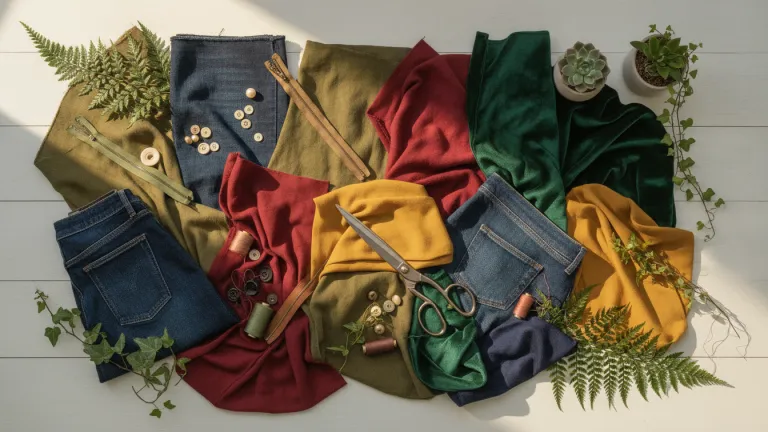
In practice, clothing upcycling means transforming worn jeans into shorts or a bag, converting an old t-shirt into an eco-friendly tote, using fabric scraps to create a patchwork blanket, or revamping a dress with embroidery, appliqués, and natural dyes.
The conceptual difference is important because it changes how we view disposal. Instead of asking “should I throw it away or recycle it?”, the question becomes: “what else can this piece become?”
Why fast fashion is a real environmental problem
To understand the value of upcycling, we need to see the context in which it emerges. The dominant model of the textile industry in recent decades became known as fast fashion: accelerated production of cheap pieces, with collection changes in increasingly shorter cycles, encouraging frequent consumption and quick disposal.
UNEP points out that the fashion industry is responsible for intensive freshwater use — conventional cotton cultivation, for example, is highly dependent on irrigation. Additionally, fabric dyeing and treatment are significant sources of water pollution in producing countries.
From a waste perspective, large volumes of clothing are discarded annually worldwide, and much of this material ends up in landfills. Synthetic fabrics, such as polyester and nylon, can take decades or centuries to decompose. Even natural fabrics, when mixed with synthetics or treated with chemicals, have slow and problematic decomposition.
In Brazil, the scenario is no different. The country is one of the largest producers and consumers of apparel in the world, and textile waste management remains a challenge: most discarded clothing doesn’t go through proper reuse or recycling processes.
Concrete benefits of upcycling in everyday life
Adopting upcycling isn’t just an environmental choice — it’s also a smart economic and creative decision. Here are some of the most tangible benefits:
- Cost reduction: transforming what you already have avoids unnecessary purchases and extends the lifespan of your pieces.
- Uniqueness: recreated pieces are one-of-a-kind. You won’t find anyone with the same top.
- Skill development: learning sewing, embroidery, or natural dyeing techniques is rewarding and valuable.
- Lower environmental footprint: every piece that isn’t discarded is one that won’t go to a landfill and doesn’t need to be replaced by a new one produced with natural resources.
- Connection with the object: when you transform something with your own hands, you create a bond with the piece — and tend to take better care of it.
- Income generation: many people have turned upcycling into a business, selling refurbished pieces at fairs, thrift stores, and digital platforms.
How to start with clothing upcycling: step-by-step guide for beginners
You don’t need to know how to sew to get started. Many upcycling techniques are accessible to anyone with a little time and willingness. Follow this step-by-step guide:
- Diagnose your closet: Separate all the pieces you haven’t worn in more than six months. Evaluate the condition of each one: wear, stains, tears, improper fit.
- Categorize pieces by potential: Some are suitable for simple alterations (size adjustments, button changes), others for more radical transformations (pants become shorts, shirt becomes apron), and others can become raw material for larger projects (patchwork, braids, rugs).
- Choose a project to start: Begin with the simplest one. An old t-shirt transformed into an eco-friendly bag, for example, requires no sewing — just scissors and a knot.
- Gather basic materials: Scissors, needle, thread, pins, iron, and if possible, a simple sewing machine. For dyeing, natural herbs and peels (like onion skins, eucalyptus leaves, annatto) are great options.
- Look for references and tutorials: There’s a huge community of upcyclers in Brazil and worldwide sharing free video and text tutorials. Research the specific project you want to do before starting.
- Execute with patience: Mistakes are part of the process. If a piece was going to be discarded anyway, you have nothing to lose — and much to learn.
- Document and share: Photographing the before and after is motivating and inspires others. Online upcycling communities are welcoming and full of tips.
Upcycling techniques you can apply today
Here are some of the most popular and accessible techniques for those who want to get started:
Natural dyeing for sustainable upcycling
Natural dyeing uses plant-based pigments to renew or transform the appearance of light or faded fabrics. Onion skins produce yellow and golden tones; red cabbage creates blues and greens (depending on water pH); annatto offers intense oranges. The process is simple, doesn’t require synthetic chemicals, and can be done in your home kitchen.
Patchwork: transforming scraps into art
Patchwork is the technique of joining different fabric pieces to create a new item. With scraps from old clothes, you can make pillow covers, bags, quilts, and even new clothing pieces. It’s one of the oldest textile reuse techniques and remains extremely relevant today.
Embroidery and appliqués to refresh pieces
Hand embroidery can hide a stain, cover a tear, or simply completely refresh a plain piece. Fabric appliqués, lace, or buttons also transform the look of pants, blouses, and jackets with little cost and effort.
Creative denim deconstruction
Denim is the most democratic fabric for upcycling. A pair of jeans can become: shorts, a skirt, a bag, a backpack, an organizer, a rug, or even a jacket. The fabric is resistant, durable, and easy to work with using scissors and basic sewing.
Upcycling, conscious consumption, and being aware of greenwashing
It’s important to have a critical eye when navigating the sustainable fashion universe. Some brands use the concept of “upcycling” or “eco” as a marketing strategy without this reflecting genuinely more responsible practices — a phenomenon known as greenwashing. Watch out for vague claims, lack of transparency about the production chain, and “eco-friendly” products that still encourage excessive consumption.
True upcycling starts with what you already have. Before buying anything — even if it’s a “refurbished” or “sustainable” piece from a brand — it’s worth asking: do I need this or can I create something equivalent with what I already own?
Adopting upcycling as a habit also connects to other small everyday gestures of caring for the planet. If you already save water at home with simple practical tips, know that upcycling goes in the same direction: better using what already exists, reducing waste, and making consumption more conscious and intentional.
Conclusion: your next favorite piece is already in your closet
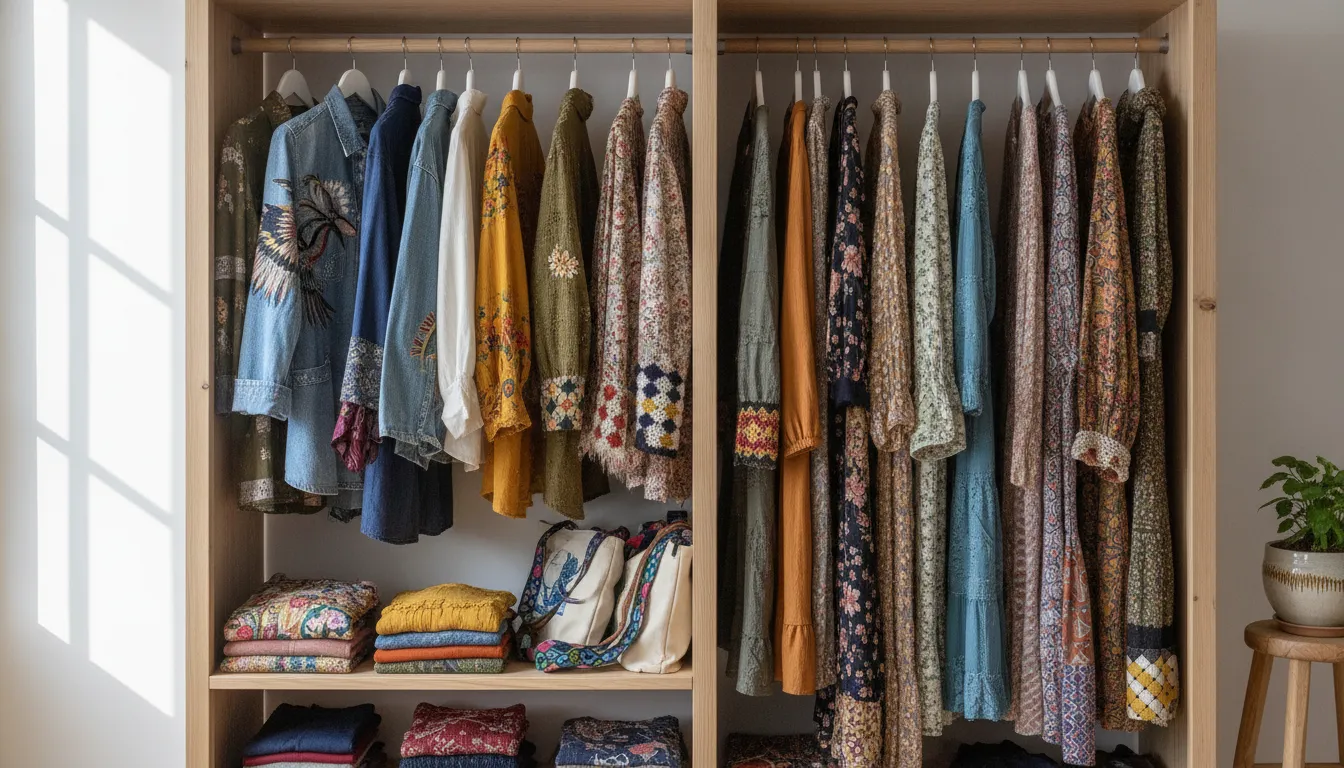
Clothing upcycling doesn’t require perfection, advanced skills, or significant investment. It requires a different perspective on what you already have — and willingness to experiment. Each transformed piece is a small victory: for your wallet, for your creativity, and for the planet.
Start today. Open your closet, choose a piece you don’t wear, and ask: what else can it become? The answer may surprise you — and inspire those around you. The movement starts with a pair of scissors, a needle, and the certainty that small actions combined build real change.
