Why Buying from Local Producers Is an Act of Community Transformation
Have you ever stopped to think about what happens to every dollar you spend at a big chain supermarket? Most of the time, that money travels a long path before reaching anyone in your city — it passes through regional distributors, national distribution centers, corporate offices, and often ends up in the hands of shareholders who may be thousands of miles from where you live. Now imagine the opposite: you buy a box of tomatoes directly from a family farmer in your county. That same money tends to circulate locally, paying wages, suppliers, and services within your own community.
Buying from local producers isn’t just a conscious consumption trend — it’s a choice with real, measurable consequences for the environment, for your region’s economy, and for the quality of food that reaches your table. In 2026, with global supply chains still feeling the effects of recent crises and with climate change making the transition to more resilient food systems increasingly urgent, this choice has gained even greater relevance.
In this article, you’ll understand why this seemingly simple purchasing decision can transform your community — and how to start today, regardless of where you live.
The Environmental Impact of Food Transportation
One of the most visible aspects of the globalized food system is the distance food travels before reaching the consumer. The concept of food miles helps illustrate this problem: the farther food travels, the greater the greenhouse gas emissions associated with its logistics tend to be.
The global food system, broadly speaking, is responsible for a significant portion of global carbon emissions — estimates from organizations like the FAO (Food and Agriculture Organization of the United Nations) indicate that the food chain as a whole, including production, transportation, processing, and waste, represents about one-third of global greenhouse gas emissions. Food transportation is part of this problem.
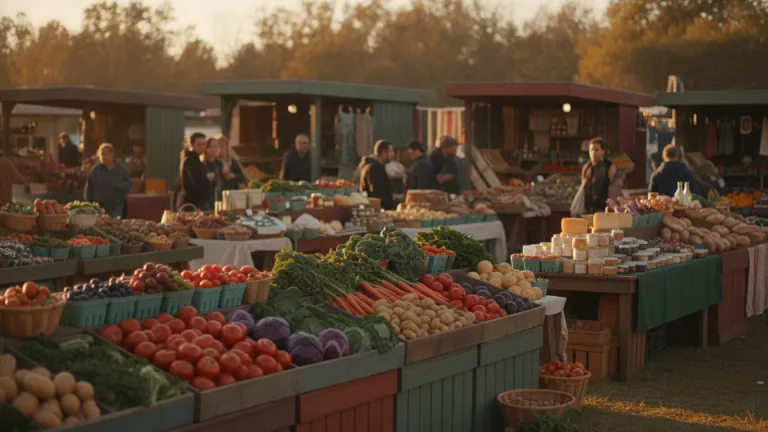
When you buy from a local producer, the distance traveled by the food drops dramatically. A farmers market, a CSA (Community Supported Agriculture), or a local cooperative can mean your vegetables traveled 30 miles instead of 1,200. Less fuel burned, fewer packages needed for preservation during transport, and less food lost along the way — since fresh products deteriorate on long journeys, generating waste.
Additionally, many small producers work with agricultural practices that preserve soil and reduce the use of chemical inputs, especially those certified as organic or working in agroecological transition. Research institutions have documented over the years how diversified, smaller-scale production systems can contribute to local biodiversity conservation and agroecosystem health.
How Money Circulates When You Buy Local
The local economy benefits from a phenomenon called the multiplier effect: when you spend money with a local business, a portion of that value is reinvested in the community itself — the producer buys inputs from a supplier in town, pays a local employee, uses services from a neighborhood accountant, and so on.
Research in different countries has shown that purchases from local businesses tend to generate a greater regional economic impact than purchases from large national or multinational chains, precisely because of this recirculation effect. This is especially relevant for smaller municipalities, where family farming represents a significant portion of local income and employment.
According to agricultural census data, family farming accounts for a substantial portion of agricultural establishments while representing a significant share of production value. This means there are millions of families whose income depends directly on who decides to buy their products. Each purchasing choice, in this sense, has a face.
Local Producers and Your Region’s Food Security
Recent global crises have shown how fragile long, centralized supply chains can be. When there are logistical, climate, or health disruptions, regions that depend almost exclusively on food from far away become very vulnerable.
Strengthening local production is, therefore, a way to build regional food resilience. Municipalities that encourage family farming and local markets tend to have greater capacity to ensure access to food during times of crisis. This is recognized by international organizations like the FAO and by government programs aimed specifically at strengthening these short marketing circuits.
Beyond resilience, there’s the question of quality and seasonality. Foods purchased close to their origin are usually harvested at a more appropriate point of maturation, with better flavor and, frequently, better nutritional profile — since they don’t need to withstand long periods of transport and storage. If you want to understand more about how to make the most of foods from each season, check out our article on seasonal foods: why it’s worth buying.
The Social Bond: When Buying Becomes Community
There’s something no delivery app can fully replicate: the human contact of a farmers market, a visit to a small neighborhood grocery store, or a conversation with the farmer who grows your food. This social bond has real value.
Knowing who produces your food changes the relationship you have with what you eat. You learn how the tomato was grown, what conditions the workers live in, what challenges that specific producer faces this season. This creates empathy and also responsibility — it’s much harder to waste food when you know the story behind it.
Farmers markets, responsible consumer groups, collective buying cooperatives, and CSAs are also spaces for meeting and building trust between people. In many cities, these spaces have become genuine community gathering points, where neighbors get to know each other and where children learn from an early age where food comes from.
How to Start: Step by Step to Buy from Local Producers
You don’t need to change everything at once. Small, consistent steps generate real transformations over time.
- Map what exists near you. Research farmers markets in your neighborhood or city, family farming cooperatives, collective buying groups, and producer markets. Online platforms and groups on messaging apps frequently connect consumers to regional producers.
- Start with one product. Choose an item you buy regularly — fruits, eggs, vegetables, artisan bread — and start buying it from a local producer. Don’t try to transform your entire shopping list at once.
- Visit a market before deciding. Go without rushing, talk to the vendors, ask about the products and cultivation methods. This conversation is, in itself, a step of transformation.
- Consider a CSA or weekly basket. Many producers offer basket subscriptions with the week’s foods. This guarantees predictable income for the producer and guaranteed freshness for you.
- Use the seasonality criterion. Buy what’s in season. Besides being cheaper, seasonal produce tends to be more flavorful and requires fewer resources to produce.
- Involve other people. Invite neighbors, friends, or coworkers to buy together. Collective purchases often allow access to better prices and reduce the logistical effort for the producer.
- Give feedback and create bonds. When a product is good, say so. When you have questions, ask. This trust relationship benefits both sides.
Real Challenges — and How to Deal with Them
It would be dishonest to ignore that buying local isn’t always simple. Some obstacles are real:
- Price: Products from small producers, especially organic ones, may cost more than their supermarket equivalents. One way to deal with this is to prioritize the most consumed items and seek collective purchases to reduce costs.
- Availability: Not every neighborhood has easy access to markets or producer fairs. In this case, online buying groups with scheduled deliveries can be a practical alternative.
- Convenience: The practicality of solving everything in a single supermarket is real. The key here is to start small — one trip to a farmers market per month already makes a difference.
- Lack of information: Many people simply don’t know where to find local producers. City governments, agriculture departments, and various organizations often maintain lists or apps with this information.
The idea isn’t perfection. It’s direction.
A Practical List of Habits That Transform
To make it easier, here are concrete actions you can incorporate into your routine:
- Dedicate at least one purchase per month to a local producers market
- Ask restaurants and cafes in your neighborhood if they buy from local suppliers — and prefer those that do
- Share on social media the producers you discover, helping to expand their visibility
- When receiving a basket or buying at a market, photograph and present the products to those who live with you
- Reduce waste: buying local is already a step, wasting less closes the cycle
- If you have space, consider a small home or community garden — even if small, it connects you to the production process
Conclusion: Every Purchase Is a Vote
We live in a time when many of the big changes we need seem far from our hands. But the act of buying — something we do several times a week — is a transformation tool available to most people right now.
When you choose to buy from a local producer, you’re voting for a fairer food system, for a more resilient economy, for fewer emissions in transportation, for more biodiversity in the fields, and for a more connected community. You don’t need to be perfect, nor change everything at once. You need to start.
Your next purchase can be that beginning. Go to the market, meet the farmer, try the tomato that came from nearby — and feel the difference it makes, for you and for those around you.
