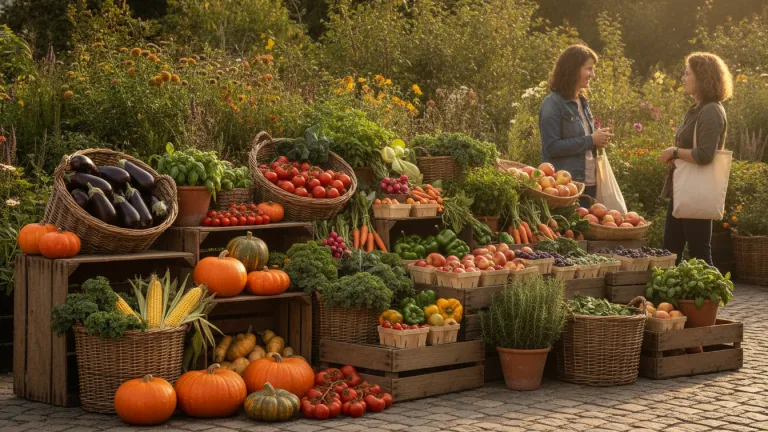
Imagine arriving at a farmers’ market on a Saturday morning and finding fragrant mangoes, fresh corn on the cob, and bright red strawberries — all harvested just hours ago. Now imagine the opposite: the same fruit on a supermarket shelf, picked green weeks earlier, traveling hundreds or thousands of miles in refrigerated trucks before reaching your table. The difference isn’t just in the taste. It’s in the environmental impact, your health, and the economy of the communities around you.
Eating seasonal foods is one of the simplest and most powerful choices anyone can make to reduce their ecological footprint. And the best part: this decision doesn’t require sacrifice. On the contrary, it opens doors to tastier, more nutritious, and more affordable eating. In this article, we’ll explore why this habit change matters so much — and how you can start today.
What are seasonal foods and why do they exist
Seasonal foods are those grown and harvested during the time of year when they naturally grow best, without the need for climate-controlled greenhouses, prolonged artificial lighting, or intensive environmental manipulation. Every agricultural crop has its cycle: strawberries thrive in autumn and winter in southern Brazil, tomatoes flourish in summer, and squash appears in abundance during fall.
This cycle exists for a simple biological reason: plants evolved alongside the climate. Specific sunlight, temperature, and humidity conditions determine when each species produces most efficiently, with fewer pests and higher nutritional quality. When we force a plant to produce outside its natural time, we need to compensate with more energy, more pesticides, and more infrastructure.
Brazil, with its climate diversity — from the equatorial climate of the Amazon to the subtropical climate of Rio Grande do Sul — has one of the richest agricultural calendars in the world. This means that at almost any time of year, there’s some fresh and tasty food available near you.
The environmental impact of ignoring the seasons
Carbon emissions from out-of-season foods
When we buy foods that aren’t in local season, we’re usually buying products that came from far away — from other states or even other countries — or that were produced under artificial conditions with high energy consumption.
Food transportation is a significant source of greenhouse gas emissions. According to data from the Food and Agriculture Organization of the United Nations (FAO), food systems as a whole account for about one-third of global greenhouse gas emissions. Transportation and prolonged refrigeration contribute significantly to this total.
Additionally, climate-controlled greenhouses for off-season production consume large amounts of electricity. In the context of global warming — whose effects the IPCC has documented with increasing urgency in recent reports — every kilowatt-hour the food system saves matters.
Pesticide use and depleted soil
Growing crops outside their natural time often requires more agricultural chemicals, since ideal conditions for pests and fungi often coincide with the wrong growing periods. This affects long-term soil health and can contaminate groundwater. Embrapa has extensively documented how agricultural practices outside natural cycles demand greater chemical intervention to maintain productivity.
Health benefits: what science says
More nutrients on your plate
Foods harvested at peak natural maturity contain higher concentrations of vitamins and antioxidants. This happens because the plant completes its metabolic cycle normally, without being interrupted by premature harvest. Studies published in nutrition journals indicate that fruits and vegetables picked green to withstand long transport can lose significant percentages of vitamin C and other micronutrients during storage — although values vary depending on the food and transport conditions.
Flavor as a quality indicator
Flavor isn’t just pleasure: it’s a biochemical indicator. Sugars, acids, and aromatic compounds develop fully when fruit or vegetables ripen at the right time. Anyone who has eaten a tomato picked ripe straight from the garden knows exactly what we’re talking about. This superior flavor tends to make people eat more fruits and vegetables — which, in itself, is already a huge health gain.
Economic and social benefits: money that stays in your community
Supporting family farming
When you buy seasonal foods at farmers’ markets or directly from small producers, a good portion of the amount paid goes into the farmer’s pocket, without excessive intermediaries. Family farming in Brazil accounts for a very significant share of food production that reaches Brazilians’ tables, according to IBGE Agricultural Census data. Strengthening these producers means keeping rural communities alive and reducing rural-to-urban migration.
More affordable prices
Seasonal foods are generally cheaper. The logic is simple: abundance reduces prices. When strawberries are in season in southern Brazil, supply is high and prices drop. When they’re out of season, they need to be brought from far away or produced at higher cost — and this is reflected at the supermarket checkout.
For families on tight budgets, eating seasonally is a concrete strategy to save money without sacrificing nutritional quality. A good tip: notice what’s cheapest at the market. It’s probably what’s in season.
How to know what’s in season: practical guide for Brazil
Brazil is large and what’s in season varies by region. But some general references help:
Summer (December to March):
- Watermelon, mango, pineapple, passion fruit
- Tomato, eggplant, zucchini, okra
- Corn on the cob, cucumber
Autumn (March to June):
- Strawberry (South and Southeast), persimmon, orange
- Kale, broccoli, cauliflower
- Squash, sweet potato
Winter (June to September):
- Orange, tangerine, apple (South)
- Cabbage, carrot, beet
- Potato, onion, garlic
Spring (September to December):
- Peach, nectarine, plum
- Lettuce, arugula, spinach
- Peas, green beans
> Important tip: consult Embrapa or your state’s agriculture departments for more precise calendars. The climate conditions of 2025 and 2026 — marked by extreme events in various regions — may alter usual harvests.
How to incorporate seasonal foods into daily life
Here’s a step-by-step guide for those who want to start practically:
- Visit a farmers’ market near you. Farmers’ markets generally reflect local seasonality better than supermarkets, which buy from various places to keep shelves always stocked.
- Notice what’s cheapest and most abundant. Low prices and large quantities are clear signs that the food is in season.
- Talk to the vendors. They know exactly what’s arriving fresh and what was harvested nearby. It’s a valuable and free source of information.
- Plan meals based on what’s available, not the other way around. Change your logic: instead of deciding the menu and going out to buy ingredients, see what’s good and create the recipe.
- Try one new food per month. Seasonality is a great excuse to discover ingredients you’ve never tried. Jackfruit, chayote, ora-pro-nóbis — Brazil has enormous food biodiversity that’s still underexplored.
- Learn to preserve the excess. When a food is cheap and abundant, buy a little extra and learn to freeze, ferment, or make preserves. This reduces waste and extends the benefit.
- Take children to the market. Teaching from an early age about where food comes from is part of a complete environmental education — something we address more deeply in Sustainable Kids: How to Teach from an Early Age.
Seasonal foods and the food system of the future
In 2026, discussions about sustainable food systems have never been more present on international agendas. The UN Food Systems Summit, held in 2021, left a legacy of goals and commitments that many countries are still trying to operationalize. One of the central pillars of these discussions is precisely the relocalization of food production — that is, bringing producers and consumers closer together, reducing long supply chains, and valuing regional diversity.
Every time you choose the tomato from your region’s farmer instead of the imported one, you’re voting with your money for a fairer and more resilient food system. This isn’t a metaphor: markets respond to consumption patterns. When demand for local and seasonal foods grows, more farmers are encouraged to produce this way.
This type of individual choice, combined with appropriate public policies and more robust food education, has the potential to transform how we relate to food — and to the planet. To understand how other everyday actions add up to this change, it’s worth reading Preserve the Environment with Everyday Actions.
Conclusion: a delicious choice that changes the world
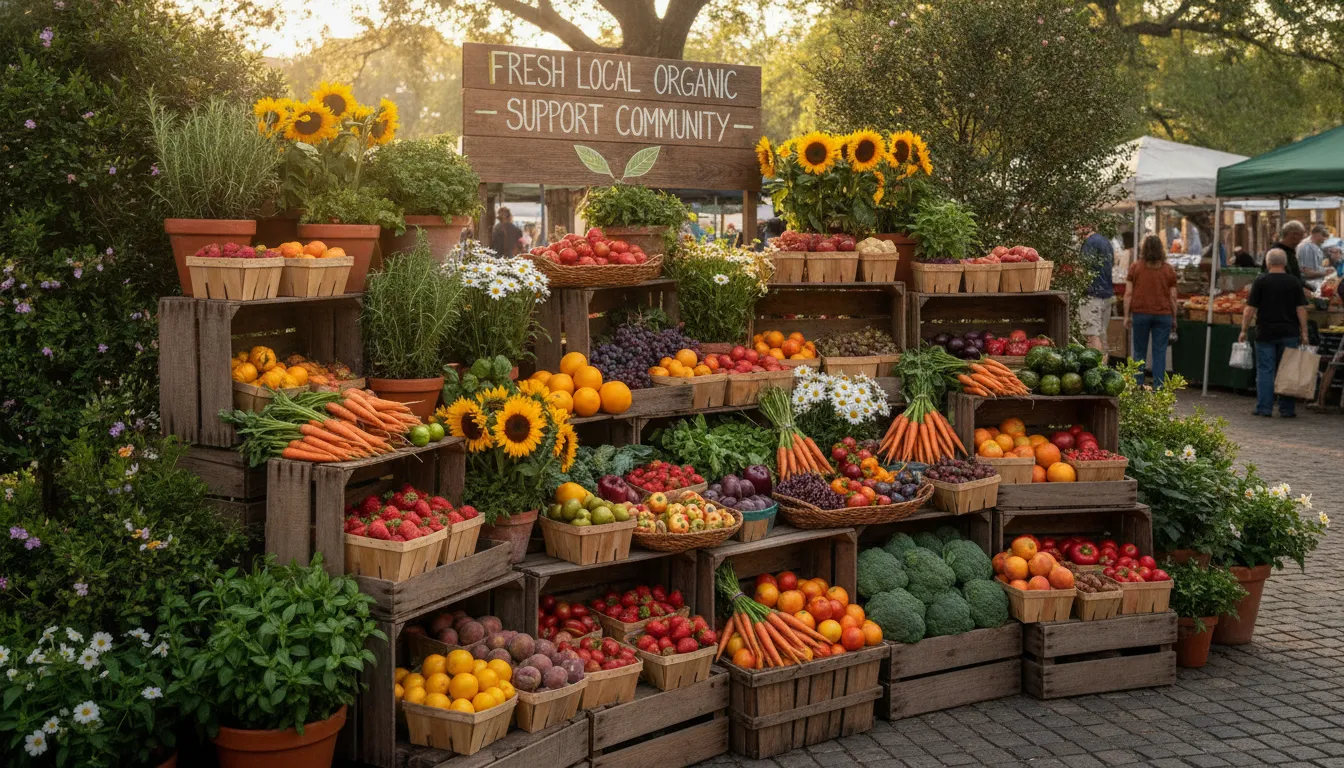
Eating seasonal foods isn’t a sacrifice or a return to the past. It’s actually an act of ecological and gastronomic intelligence at the same time. You gain in flavor, nutrition, and savings. The local farmer gains income. The planet gains from fewer emissions, less pesticide use, and less energy waste.
The change starts on your next trip to the market. Look for what’s fresh, abundant, and affordably priced. Ask where it came from. Try something new. These are small choices with real consequences — and they’re choices you can make today.
Food is one of the most intimate ways we relate to the natural world. When we respect nature’s cycles in what we put on our plates, we are, in a way, reconnecting with something that modern urban life made us forget: that we are part of this planet, and that caring for it starts at home — and in the kitchen.
