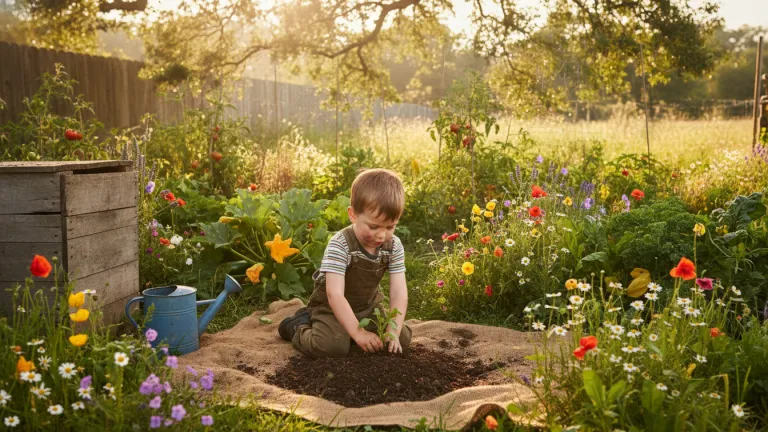
There’s a quote attributed to educator and philosopher John Dewey that perfectly captures what’s at stake: “Education is not preparation for life; education is life itself.” When we talk about sustainability, this idea takes on an even more urgent dimension. Today’s children will inherit a planet that, according to the latest IPCC (Intergovernmental Panel on Climate Change) report, is already experiencing irreversible climate changes — and they will be the ones responsible for building the most creative and effective responses to the challenges ahead.
The good news is that children are naturally curious, empathetic, and open to new habits. Unlike adults, who need to deconstruct decades of ingrained behaviors, a young child is still shaping their relationship with the world. Teaching the value of water, forests, waste separation, and conscious consumption from an early age isn’t a burden — it’s an adventure. And parents, caregivers, and teachers play an irreplaceable role in this journey.
This article is a practical guide for anyone who wants to start today. You don’t need to be an environmental expert or have a perfect zero-waste home to take the first steps. What matters is consistency, leading by example, and honest conversation. Shall we begin?
Why Teaching Sustainability in Childhood Makes All the Difference
Childhood is the period when the deepest values are internalized. Studies in developmental psychology show that children between 3 and 8 years old are in a particularly receptive phase for developing emotional connections with their surrounding environment — whether it’s the backyard garden, the neighborhood park, or the school playground.
When a child learns early on that leaving the tap running wastes water, that plastic takes hundreds of years to decompose, or that bees are essential for food production, they’re not just memorizing facts. They’re building an identity: one of someone who cares, who belongs to nature, and who has the power to act.
Furthermore, children influence adults. Research in environmental communication has documented the so-called “reverse socialization effect”: children who learn about sustainability at school frequently bring these topics home, changing their own parents’ behaviors. In other words, investing in children’s environmental education means investing in the transformation of entire families.
Sustainability at Home: The Home as the First Classroom
The home environment is where most children spend the majority of their time and where the most lasting habits are formed. You don’t need to renovate your house or install solar panels tomorrow morning to get started — small everyday changes already teach a lot.
Sustainable habits children can practice at home
- Turning off the tap while brushing teeth (real savings of liters per minute)
- Sorting waste into organic, recyclable, and non-recyclable, with the help of colored bins or illustrated labels
- Turning off lights when leaving a room — and understanding why it matters
- Repurposing materials like cardboard boxes for play before discarding
- Caring for a small plant or a mini garden in a pot or plastic bottle
- Preferring a reusable lunch box instead of disposable plastic bags
- Participating in conscious shopping at the grocery store, understanding labels and packaging
The secret lies in active involvement: it’s not enough to say “don’t waste water.” It’s more effective to say “can you keep the tap off while you brush? Let’s see how long it takes you!” Making the task concrete and even fun completely changes how the child receives it.
For more practical ideas on how to reduce your home’s daily impact, also check out Preserve the Environment with Everyday Actions.
How to Talk About the Environment with Children of Different Ages
There isn’t a single way to approach the topic — it all depends on the child’s developmental stage. The language needs to be adapted so the message gets through without generating anxiety or paralysis.
Ages 2 to 5: sensory connection with nature
At this age, learning happens through the body and the senses. The goal isn’t to teach abstract concepts, but to create emotional bonds with the natural world.
- Take the child to gardens, parks, and playgrounds regularly.
- Observe insects, birds, leaves, and textures together.
- Name what you see: “this is a beetle, it helps keep the soil healthy.”
- Allow the child to put their hands in the dirt, water plants, and collect leaves.
- Use children’s stories and picture books with environmental themes.
Ages 6 to 10: cause and effect
Children at this stage can already understand cause-and-effect relationships. It’s time to introduce concepts like the water cycle, food chains, and where the products we consume come from.
- Show where the water from the tap comes from (explain the cycle in simple terms).
- Visit a farmers’ market or community garden.
- Watch age-appropriate documentaries together (Netflix, educational channels, and YouTube have good options).
- Encourage school projects about the environment.
- Explain what recycling is and how recycling cooperatives work.
Ages 11 to 14: agency and leadership
In pre-adolescence, young people begin to build their identity and seek consistency between values and actions. This is the right time to talk about critical consumption, carbon footprint, and environmental activism.
- Discuss environmental news together, without excessive alarmism.
- Encourage the young person to participate in school or community projects.
- Help them understand consumption choices: fast fashion, electronics, food.
- Show examples of young people making a difference locally and globally.
- Respect their questions and doubts — this is a sign of critical thinking.
Schools as Partners in Environmental Education
In Brazil, environmental education is a legal requirement. Law No. 9,795/1999, which established the National Environmental Education Policy, mandates that the subject must be present at all levels of education, in a cross-cutting and integrated manner. This means schools have a formal role in this mission.
Parents and guardians can — and should — be allies of schools in this process. Some practical ways to do this:
- Ask the school if there’s an active environmental education project and how you can collaborate.
- Support initiatives such as school gardens, environment weeks, and recycling campaigns.
- Talk to teachers about activities that reinforce at home what was taught at school.
- Suggest field trips to recycling facilities, water treatment plants, or local ecological reserves.
Schools that integrate environmental education into daily life — not just on commemorative dates like Earth Day (April 22) or World Environment Day (June 5) — raise citizens with a greater sense of collective responsibility.
Play Is Learning: Games and Activities That Teach Sustainability
One of the most effective ways to teach children anything is through play. Playfulness isn’t a shortcut — it’s the main pathway to childhood learning.
Practical and fun activities by age group
| Age | Activity | What It Teaches |
|---|---|---|
| 3–5 years | Planting seeds in plastic bottles | Plant life cycle |
| 5–8 years | Waste sorting game (with colored boxes) | Recycling and waste categories |
| 7–10 years | Create a “nature journal” with drawings and collections | Observation and love for the environment |
| 9–12 years | Calculate the family’s water consumption for a week | Math + water awareness |
| 11–14 years | Research the origin of household products | Conscious consumption and supply chain |
In addition to activities at home, many cities have free environmental education programs in parks, science museums, and recycling centers. It’s worth researching what’s available in your area.
The Power of Example: Adults Who Practice What They Preach
There’s no point in asking a child to sort waste if the adult throws everything in the same bag. Nothing replaces leading by example. Consistency between what you say and what you do is the foundation of any education, environmental or otherwise.
This doesn’t mean being perfect. It means being honest. When you make a mistake — leave a tap dripping, forget the reusable bag in the car, dispose of something incorrectly — use that moment as an opportunity for joint learning: “I made a mistake today. Next time, I’ll remember. What do you think we can do differently?”
This approach transmits something much more powerful than perfection: it transmits resilience, humility, and real commitment to change. And these are exactly the qualities the world will need in the coming decades.
Remember also that sustainability isn’t just about recycling. Talking about how to reduce household waste with simple habits is a good starting point for the whole family to rethink together what comes in and out of the home.
Conclusion: Every Child Is a Seed
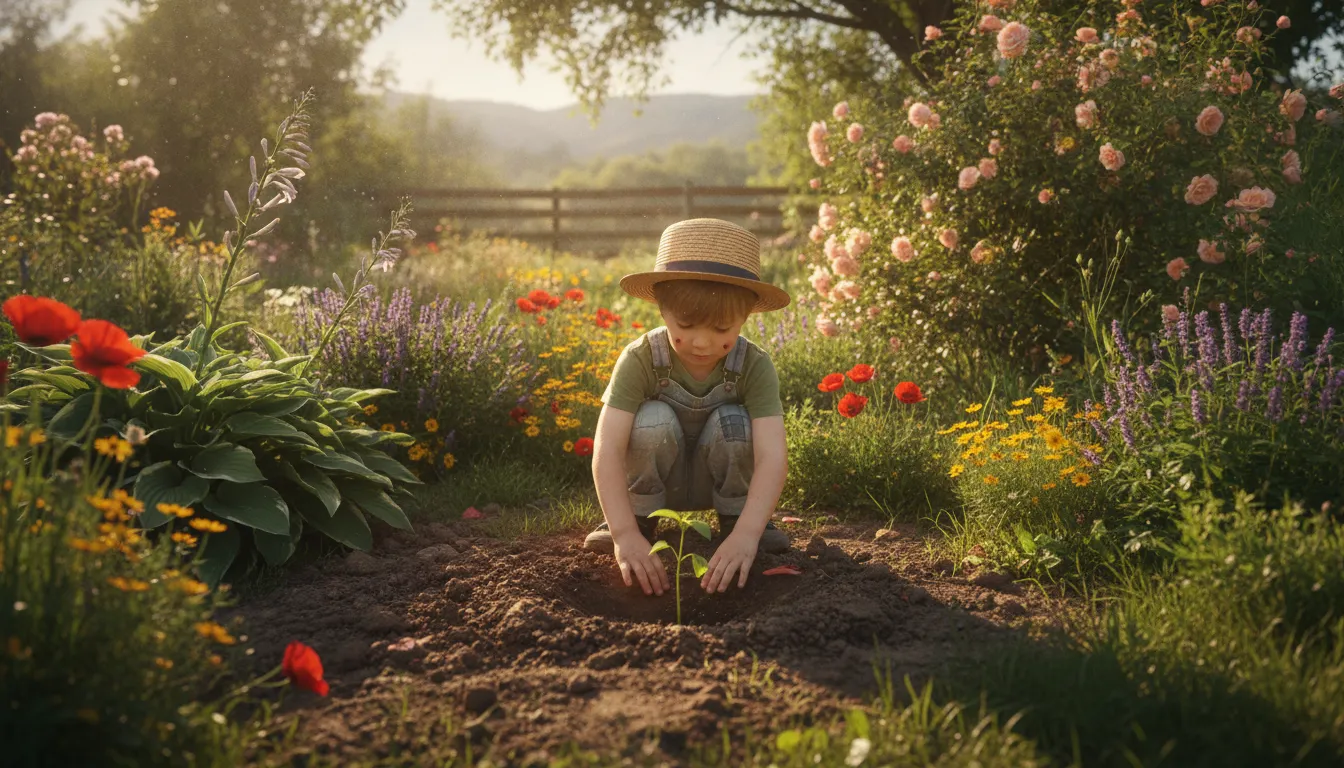
Educating a child for sustainability isn’t a one-day task, nor is it the job of just one person. It’s a continuous process, made up of small daily choices, dinner table conversations, nature walks, and bedtime stories.
The future of the planet doesn’t depend solely on major policies and international agreements — it also depends on millions of families who, today, decide it’s worth planting this seed. Every child who learns to value water, forests, and clean air is a future adult with more tools to make conscious choices and demand fairer actions from society.
You don’t need to have all the answers. You just need to be willing to search for them together. Start small, start today. The Earth will thank you — and so will future generations.
