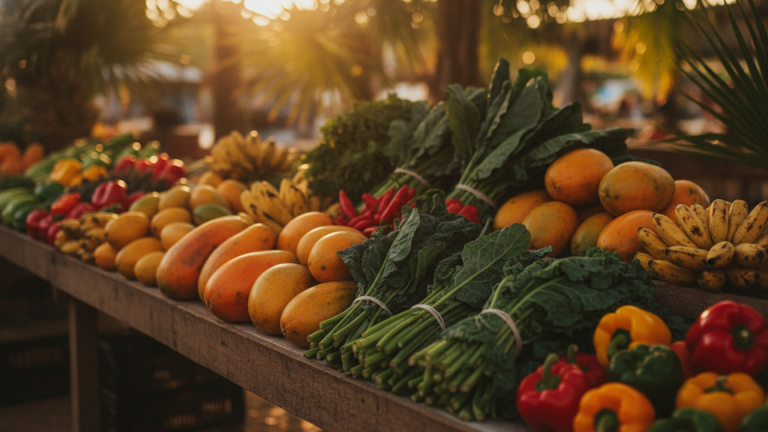
Why tomatoes get expensive in winter (and what you can do about it)
Have you ever arrived at the market or supermarket and gotten a shock from the price of tomatoes? Or bought a mango in July and it came tasteless, hard, like it was made of plastic? This has a simple explanation: when a food is bought outside its natural harvest season, it has traveled a long way, was picked before its time or came from a distant region, which increases the product price and compromises flavor and nutritional value.
Eating seasonal foods is one of the most effective ways to save money at the market, eat better and reduce the environmental impact of your diet. It doesn’t require complicated recipes or radical habit changes. By the end of reading this article, you’ll know which fruits, vegetables and greens to buy in each period of the year, where to find them cheapest and how to plan your meals more intelligently.
The best part: this change starts on your next visit to your neighborhood market.
What it means to eat seasonally and why it matters
Each fruit or vegetable has a natural growth cycle linked to climate, rainfall and temperature. When we respect this cycle, the plant produces in abundance, which naturally lowers the price and improves the quality of the product that reaches your table.
Outside the season, production depends on extra irrigation, heated greenhouses or transportation from very distant regions, sometimes from other countries. All of this consumes more energy, more water and more fossil fuel. According to Embrapa data, Brazil is one of the world’s largest agricultural producers and has enormous climate diversity, which means there is always some food in full harvest, regardless of the time of year.
The problem is that many people don’t know what’s in season now. And the supermarket puts everything side by side, as if it were the same. It’s not.
How seasonality affects the Brazilian consumer’s wallet
The price variation between harvest and off-season can be significant for fruits and vegetables. According to IBGE, fresh foods have strong weight in the Brazilian food inflation index, and seasonality is one of the main factors explaining price fluctuations throughout the year.
A practical example: strawberries have their main harvest between May and September in much of Brazil. Bought during this period, they are cheaper, more flavorful and produced close to home. Bought in January or February, they come from specific regions with mountainous climate, cost more and need more transportation days.
The same logic applies to mangoes, which have concentrated harvest between October and January in states like Bahia and Pernambuco; to persimmons, which appear strongly in autumn in São Paulo and Minas Gerais; and to cassava, which can be found almost year-round, but with better prices and quality at certain times depending on the region.
Environmental impact that goes beyond the plate
When you choose a food produced outside the season or imported from far away, there is an environmental cost embedded in that choice. Transportation of food over long distances contributes to carbon dioxide emissions. UNEP (United Nations Environment Programme) points out that global food systems account for a considerable portion of greenhouse gas emissions, including the food transportation and refrigeration chain.
Furthermore, producing outside the season usually requires more pesticides to protect plants from adverse weather conditions. This affects rural workers, soil and, indirectly, the quality of the product that reaches you.
Buying at local markets from small producers in your region shortens this chain. The food leaves the field and arrives in your kitchen in less time, with fewer intermediaries and less logistical impact. This is what experts call short distribution circuits, and they exist in most Brazilian cities, in free markets regulated by city halls.
Practical calendar: what to eat at each season in Brazil
Brazil has continental dimensions, so the calendar varies by region. The references below are general, focusing on Southeast and South, but serve as a starting point for any region.
Summer (December to February)
- Mango, watermelon, pineapple, passion fruit, guava
- Zucchini, gherkin, okra, green corn
- Cherry tomato and cucumber
Autumn (March to May)
- Grape, persimmon, fig, apple (beginning of harvest in the South)
- Pumpkin, carrot, beet
- Cabbage and cauliflower
Winter (June to August)
- Strawberry, orange, tangerine, lemon
- Sweet potato, yam, cassava
- Broccoli, spinach, watercress
Spring (September to November)
- Melon, peach, plum, nectarine
- Green beans, eggplant, bell pepper
- Lettuce and arugula in greater abundance
These groups are not rigid, but serve as a guide for you to identify what is likely cheaper and fresher in the market now.
How to build a weekly menu with seasonal foods
It’s not necessary to plan everything at once. Starting with one more conscious weekly shopping already makes a difference. See a simple path for this:
- Before going to the market, look at what’s in season at the moment (a printed seasonal calendar or saved on your phone helps a lot).
- Arrive without a closed shopping list. Observe what looks good, abundant and cheap. These are signs that the product is at the right time.
- Ask the market vendor what arrived fresh that week. They usually know what’s in season and where it came from.
- Build the menu around what you bought, not the other way around. If you came back with pumpkin, carrot and cauliflower, the week’s menu revolves around these choices.
- Freeze the excess. If you found strawberries or mangoes at a good price in large quantities, buy more and freeze. This way you have access to seasonal flavor outside the season, without paying more later.
- Repeat the cycle. In a few weeks, you naturally start recognizing what’s in season without needing to check any list.
This process also reduces waste. When you buy what’s abundant and plan its use, the chance of throwing food away decreases significantly. According to Embrapa data, Brazil wastes an expressive portion of food produced along the production chain, and part of that waste begins with choosing out-of-season products, which spoil faster because they were picked before the ideal point.
Tips for those living in apartments or with little time
Not everyone has a market nearby or time to go every week. This is not an obstacle. Some functional alternatives:
- Local produce shops and markets usually work with seasonal products, as it’s cheaper for them too. Keep an eye on trays with larger quantities and lower unit prices.
- Collective buying groups and local producer baskets with home delivery have grown a lot in large Brazilian cities. Many operate with weekly or biweekly subscriptions.
- Homemade preserves and fermented foods are ways to take advantage of harvest season with simple preparation. Pickled cucumber, mango jam, frozen tomato sauce: all of this can be made in an apartment, in little time, using fresh and inexpensive seasonal products.
- If you’re interested in producing part of your own food, even on a balcony or windowsill, fresh herbs like chives, basil and mint grow well in pots and complement any menu.
Frequently asked questions about seasonal eating
Is seasonal food always cheaper?
Generally, yes. When a product is in full harvest, supply is greater and price tends to drop. But this can vary depending on the region of Brazil, the point of sale and weather events that affect harvest. The best reference is the comparison within the market itself: what is in greater quantity and better presentation is usually what’s in season.
How do you know if the food is really fresh and in season?
Observe the appearance: vivid color, firm texture, absence of stains or excessive softening. Smell is also a strong indicator. Fruits in season have pronounced aroma even before opening. Asking the seller about the source also helps: products from nearby regions usually arrive fresher.
Does eating seasonally really make a difference for health?
Yes. Foods harvested at the right time have higher concentrations of vitamins and antioxidants than those picked green to withstand long transportation. Embrapa has research addressing the nutritional quality of produce under different harvesting and storage conditions. Furthermore, the natural diversity that comes from eating what’s in season contributes to a more varied diet throughout the year.
Are organic seasonal products even better?
Organic products grown in season combine two benefits: absence of synthetic pesticides and better nutritional quality from harvesting at the ideal point. The cost tends to be higher, but at organic producer markets it’s possible to find more accessible prices than in supermarket chains, especially when the product is in season.
One market visit per week is already a real start
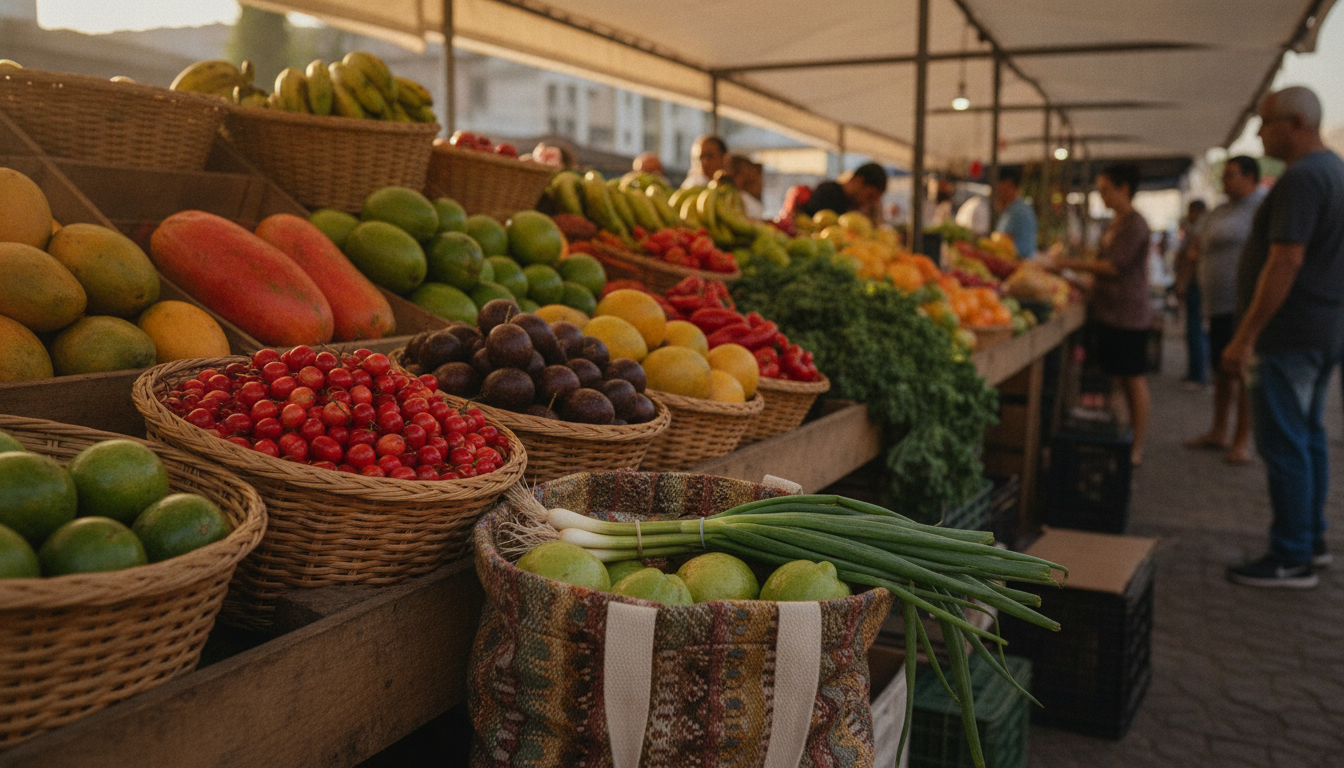
Changing your entire diet at once is not the goal here. The idea is to take a concrete step: the next time you go to the market, observe what’s abundant, ask what arrived fresh and let that answer guide at least one or two choices in your weekly menu.
Over time, you’ll notice the difference in flavor, how long foods last in your refrigerator and, especially, in the money that comes out of your pocket. Eating well and spending less are not opposing goals, they walk together when the choice is aligned with what nature already offers at that moment.
If you want to go further and think about other ways to reduce your home’s environmental impact, it’s worth exploring how renewable energy decisions fit into this same logic of economy and consciousness, as we addressed in solar panel maintenance: how much does it cost per year?.
The first step is simple: at your next market visit, ask what’s in season now.
