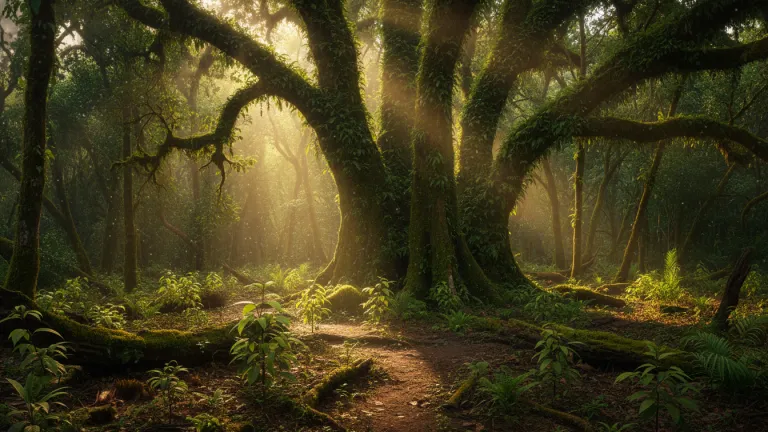
Imagine waking up one day to find that half of the forests you knew have simply vanished. This isn’t science fiction—it’s the reality humanity has faced in recent decades. The destruction of tropical rainforests, riparian forests, and native biomes worldwide is not just an abstract environmental issue: it directly affects the air we breathe, the water we drink, and the climate that sustains us.
The good news is that there is a powerful response to this scenario, and it begins with a seed. Reforestation—the process of replanting and recovering degraded areas with native vegetation—is now recognized by scientists, governments, and international organizations as one of the most effective strategies to combat climate change, restore biodiversity, and ensure the future of upcoming generations.
But what does reforestation really mean in practice? How does it work? And, most importantly: what can you do to contribute to this movement? In this article, we will explore all of this clearly and directly because understanding reforestation is the first step to being part of the solution.
What Is Reforestation and How Does It Work
Reforestation is the process of replanting trees and vegetation in areas that were previously forested but have been deforested, burned, or degraded over time. Unlike simple “tree planting,” well-executed reforestation involves careful ecological planning: selecting native species suitable for the local biome, soil preparation, controlling invasive species, and long-term monitoring.
It’s important to distinguish between two often-confused terms:
- Reforestation: replanting in areas that were previously forested
- Afforestation: planting trees in areas that historically were not covered by forests
Both have their roles, but reforestation with native species is especially valued because it reconnects forest fragments, restores habitats for local wildlife, and recovers the ecosystem services the original forest provided—such as water regulation, nutrient cycling, and carbon sequestration.
How Native Species Reforestation Differs from Commercial Planting
It’s important not to confuse ecological reforestation with commercial planting of eucalyptus or pine, for example. These forest monocultures have significant economic roles but offer far fewer ecological benefits than a biodiverse forest. True reforestation bets on species diversity, replicating the complexity of the original forest and attracting pollinators, birds, mammals, and insects that wouldn’t find shelter in a “green sea” of a single species.
Why the Planet Urgently Needs Reforestation
The numbers behind the forest crisis are hard to ignore. According to the United Nations Food and Agriculture Organization (FAO), the world lost about 420 million hectares of forest between 1990 and 2020—an area larger than the European Union. Brazil, home to the largest tropical forest on the planet, still faces alarming deforestation rates in the Amazon and Cerrado, the country’s second-largest biome and one of the most threatened in the world.
The consequences of this devastation are multiple and interconnected:
- Climate crisis: forests act as carbon sponges. When destroyed, they release the CO₂ they stored into the atmosphere, accelerating global warming
- Biodiversity collapse: the IPCC and IUCN identify forests as ecosystems with the highest concentration of terrestrial biodiversity—and their destruction is the main cause of species extinction
- Water scarcity: forests regulate the rain cycle and protect springs. Deforestation is directly linked to reduced freshwater availability in various regions of Brazil
- Soil erosion and degradation: without vegetation cover, soil loses nutrients quickly, making lands unproductive
Reforestation doesn’t solve all these problems alone, but it is one of the most effective—and proven—tools to reverse some of this damage.
The Benefits of Reforestation: From Local to Global
The benefits of reforestation operate on multiple scales simultaneously, which is what makes it so special.
Carbon Sequestration and Climate Regulation
Trees absorb carbon dioxide during photosynthesis and store carbon in their biomass—trunks, roots, leaves, and the soil itself. Restored tropical forests have a high carbon sequestration capacity, making them crucial allies in achieving the climate goals of the Paris Agreement.
Biodiversity Restoration
A diverse forest creates habitats for countless species. As trees grow and form canopies, they attract birds that bring seeds, mammals that disperse fruits, and insects that pollinate. Ecological reforestation is, in practice, an invitation for life to return.
Protection of Springs and Rivers
Riparian forests—those that border rivers and springs—are legally required in Brazil (Forest Code, Law No. 12,651/2012) precisely because their presence is essential to maintaining water quality and quantity. Restoring these areas is a direct investment in the water security of the entire basin.
Income and Employment Generation
Forest restoration projects generate local jobs, involve communities, and can integrate payment for environmental services (PES), a mechanism where landowners are paid to maintain or restore ecosystems. In Brazil, the carbon market and PES programs are growing, especially after the discussions at COP30, scheduled for Belém in 2025.
Reforestation Initiatives in Brazil and Worldwide
Brazil is a signatory to international commitments that include ambitious forest restoration goals. The 20×20 Initiative, for example, is a regional commitment in Latin America to restore 20 million hectares by 2030, and Brazil is one of the participating countries.
Within the country, initiatives like the Atlantic Forest Restoration Pact have already restored hundreds of thousands of hectares in Brazil’s most devastated biome—less than 12% of the original Atlantic Forest cover remains, according to SOS Mata Atlântica.
Globally, the Trillion Trees initiative, supported by various NGOs and governments, seeks to unite global planting and forest protection efforts. The Convention on Biological Diversity (CBD) also included ecosystem restoration goals in the global agreement signed in 2022 at COP15 in Montreal.
How to Support Reforestation: What You Can Do Today
You don’t need to be a farmer or a forest engineer to contribute to reforestation. There are concrete actions within anyone’s reach.
10 Practical Ways to Support Reforestation
- Donate to reputable forest restoration organizations—in Brazil, NGOs like SOS Mata Atlântica, Fundação Grupo Boticário, and Instituto Terra have audited and transparent projects
- Adopt a tree—many projects offer adoption programs where you finance the planting and care of a specific seedling
- Use tools that plant trees—search engines like Ecosia channel part of their advertising revenue to reforestation projects
- Offset your carbon footprint carefully—choose projects certified by recognized standards (such as Verra or Gold Standard) to ensure carbon is truly being sequestered
- Plant native trees in your backyard, condominium, or school—consult the nearest municipal or state nursery to obtain seedlings for free in many Brazilian cities
- Pressure companies to have forest restoration goals—engaged consumers influence corporate policies
- Support public restoration policies—participate in public consultations, sign petitions, and follow environmental-related votes
- Avoid products linked to deforestation—soy, meat, and uncertified wood are the main deforestation drivers in Brazil
- Reduce and offset your emissions—fewer emissions mean less pressure on the ecosystems we need to preserve and restore
- Share knowledge—explaining to friends and family what reforestation is and why it matters multiplies the impact of each person
Reforestation and Other Sustainable Practices: An Integrated View
Reforestation doesn’t exist in isolation. It is part of a set of practices and choices that, together, build a more balanced future. Renewable energy generation, for example, reduces the need for fossil fuel burning and, consequently, the pressure for more deforestation for mining and energy extraction. If you want to understand how this connection works in practice, check out our article on Solar Energy: See How to Reduce Your Electricity Bill.
Similarly, practices like rainwater harvesting help reduce pressure on water resources—resources that directly depend on the health of forests to remain abundant. Sustainability, at its core, is this: a web of interconnected choices that reinforce each other.
Challenges of Reforestation: Not Everything Is Rosy (But There Is Hope)
It would be dishonest not to mention the real challenges. Planting trees is just the beginning—the success of a reforestation project depends on continuous monitoring, controlling invasive species, protection against fires, and engaging local communities.
There is also the risk of so-called “forest greenwashing”: companies or projects that announce tree plantings as environmental compensation, but without scientific rigor, using inappropriate species or without long-term follow-up. Therefore, when supporting any initiative, research:
- Which species are being planted (native to the local biome?)
- Is there post-planting monitoring?
- Is there certification by independent bodies?
- Is the local community involved?
Transparency is the best indicator of a serious project.
Conclusion: Every Tree Counts—and You Are Part of It
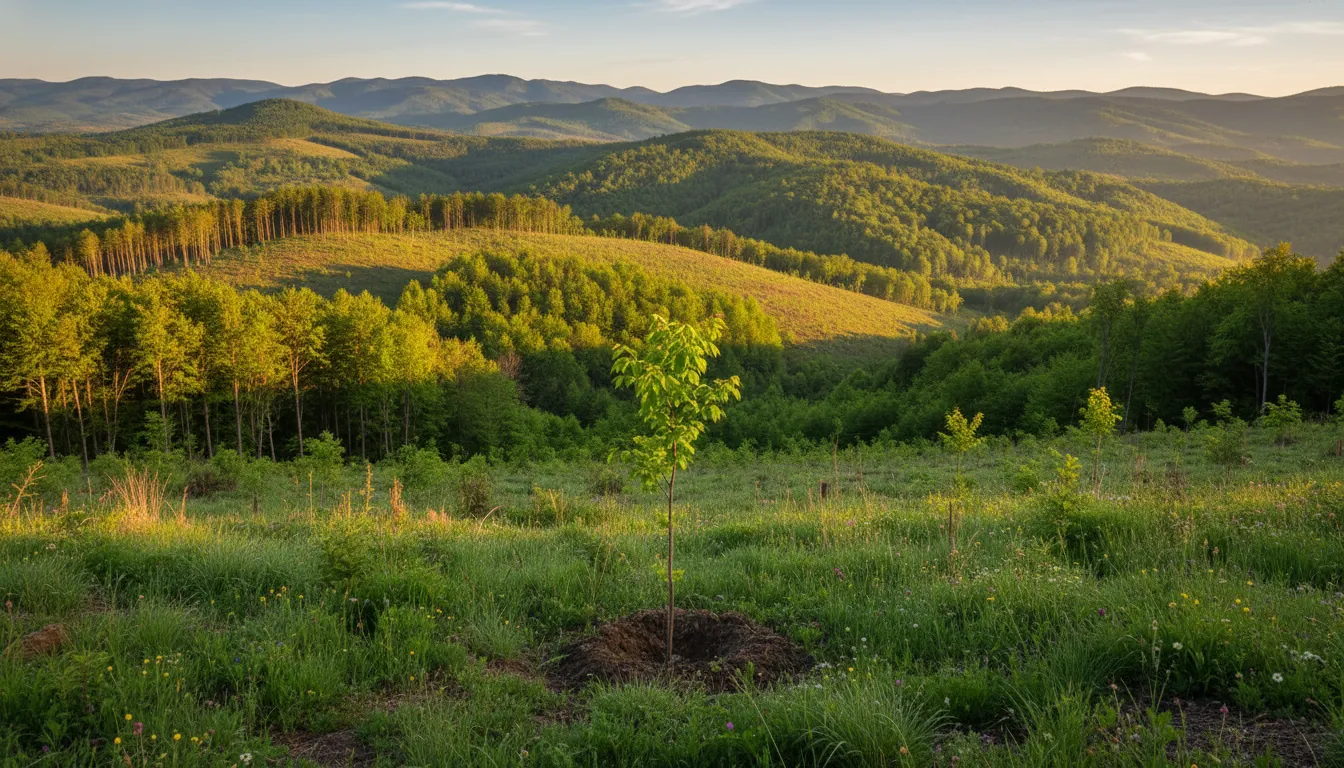
Reforestation is one of the most powerful, concrete, and beautiful responses humanity has to offer in the face of the environmental crisis. It restores habitats, regulates the climate, protects water, and reconnects communities to nature. And the most encouraging part: it can start now, with a single seedling, a single donation, a single conversation.
You don’t need to save the planet alone. But you can do your part—and your part matters. Plant a native tree in your space, support a reliable forest restoration project, reduce your consumption, and spread this awareness. Every tree planted is a vote of confidence in the future.
The planet has an incredible capacity to regenerate when we give it the chance. Let’s help it heal.
- Adopt a tree—many projects offer adoption programs where you finance the planting and care of a specific seedling
- Biodiversity collapse: the IPCC and IUCN identify forests as ecosystems with the highest concentration of terrestrial biodiversity—and their destruction is the main cause of species extinction
- Afforestation: planting trees in areas that historically were not covered by forests
