The plastic straw that broke down a barrier
Have you ever stopped to think how many disposable items you use in a single day? The little cup of coffee at work, the juice straw at the bakery, the plastic bag from the market, the yogurt container that goes straight to the trash. According to data from the United Nations Environment Programme (UNEP), the world produces over 400 million tons of plastic per year, and a significant portion of this volume consists of single-use products that spend minutes in our hands and decades in the environment.
In Brazil, the situation has its own weight. The Brazilian Association of Public Cleaning and Special Waste Companies (Abrelpe) points out that the country generates tens of millions of tons of solid waste per year, with plastic being one of the fastest-growing components in this amount. The National Solid Waste Policy, Law 12.305/2010, establishes shared responsibility among manufacturers, distributors, and consumers, but changing individual habits remains one of the quickest shortcuts to reduce the problem.
The good news is that switching from disposable plastic doesn’t require sacrifice or a generous budget. By the time you finish reading this text, you’ll know which alternatives really work in Brazilian daily life, how much they cost, where to find them, and where to start without getting lost.
Why single-use plastic still dominates our homes
Single-use plastic conquered the world for practical reasons: it’s cheap to produce, lightweight, and resistant enough for a trip from the market to the refrigerator. The problem starts when it leaves your hand. Most single-use plastics are not accepted in municipal selective collection programs because contamination with organic waste makes recycling economically unviable.
Think about the bag that held raw chicken: it arrives at the recycling cooperative dirty, mixed with hundreds of other materials, and frequently goes to the landfill anyway. According to UNEP, less than 10% of all plastic ever produced has been effectively recycled worldwide. In Brazil, recycling infrastructure still serves a small portion of municipalities, especially in the North and Northeast regions.
Understanding this isn’t about generating guilt, but about explaining why reducing use is more efficient than betting only on recycling. And reducing becomes much easier when you have concrete alternatives in your home drawer.
Alternatives that really work in everyday life
Below, an honest view of the most common substitutions: what’s worth it, what requires adjustment, and what can be left for later.
Bags and packaging for shopping
The reusable TNT or cotton bag is already a common presence at Brazilian fairs and supermarkets. A raw cotton bag lasts years if washed carefully, and the average cost today ranges around R$ 10 to R$ 25, depending on the region. If you use one disposable plastic bag per week, in two or three months the reusable bag pays for itself just in what you stop buying.
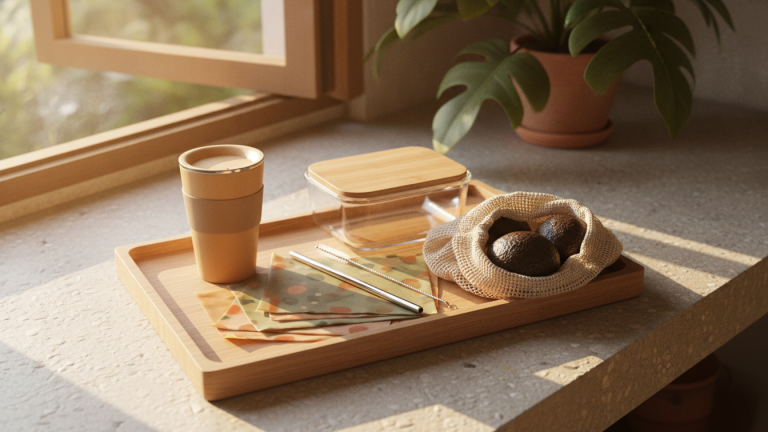
For fruits, vegetables, and bulk grains, mesh or muslin bags are the direct alternative. They weigh almost nothing on the scale, fit in your pocket, and are sold at ecological fairs and natural product stores. Some bakeries and shops already accept you bringing your own container to buy bread or nuts.
Cups, bottles, and thermoses
The reusable water bottle is perhaps the swap with the quickest return. A 500 ml bottle of water bought on the street costs on average R$ 3 to R$ 5. If you buy one a day, in a month you’ve spent between R$ 60 and R$ 100 just on water. A stainless steel thermos of good quality costs between R$ 60 and R$ 150 and lasts easily five years or more.
For coffee, reusable cups with lids made of bamboo or stainless steel are already accepted at many coffee shop chains. Some even offer discounts for bringing your own cup. If you have the habit of having coffee outside the house every day, it’s worth checking if your favorite cafe has this policy.
Straws and utensils
Straws made of stainless steel, bamboo, or glass are easy to find at sustainable product stores and online marketplaces. The stainless steel straw with cleaning brush costs between R$ 10 and R$ 25 and lasts indefinitely. Paper straws, which many establishments have adopted as a quick alternative, soften in hot drinks and leave a pulpy texture in juice, which is quite frustrating. Consider carrying your own if you use straws frequently.
Folding bamboo utensils in a small case are great for those who eat at pay-per-weight restaurants or order delivery frequently. The cost is low and practicality is high.
Kitchen packaging
Here lies one of the biggest sources of disposable plastic: plastic wrap (that transparent PVC) and zip bags. Silicone lids that stretch over bowls and containers eliminate most plastic wrap use. Beeswax wraps are another option for covering food in the refrigerator, with a shelf life of up to a year.
For storing leftovers, glass containers with lids are durable, don’t absorb odors, go in the microwave without releasing substances, and look good on the shelf. Save the containers from tomato sauce or preserves that you already have at home: they work just as well as any newly purchased container.
Comparison: initial cost versus savings over time
| Alternative | Estimated initial cost | Durability | Approximate savings in 1 year |
|---|---|---|---|
| Cotton bag | R$ 10 to R$ 25 | 3 to 5 years | R$ 20 to R$ 40 on disposable bags |
| Stainless steel thermos (500 ml) | R$ 60 to R$ 150 | 5 years or more | R$ 500 to R$ 800 on bottled water |
| Reusable coffee cup | R$ 40 to R$ 90 | 3 years or more | Varies according to cafe discount |
| Stainless steel straw with brush | R$ 10 to R$ 25 | Indefinite | Small but consistent |
| Reused glass containers | R$ 0 (reuse) | Several years | Elimination of plastic wrap |
Cost estimates based on price research in 2026 in physical and online stores in Brazil.
How to transition without becoming overwhelmed
The biggest trap for those who decide to “quit plastic” all at once is buying an entire kit of alternatives at the same time, spending more than planned, and then giving up because the change seems too big. The transition works better in stages.
- Identify the item you discard most. For one week, pay attention to which disposable plastics pass through your hands most frequently. It could be the coffee cup, the grocery bag, or the snack package.
- Replace only that item first. Buy or adapt an alternative and use it for 30 days until it becomes a habit. Only then move on to the next item.
- Use what you already have at home. Before buying any new product, see if an empty glass container, a glass juice bottle, or an old fabric bag can’t solve the problem.
- Include the reusable item in your daily routine. The bottle sits next to the umbrella; the bag sits in the backpack or purse. What’s in the right place is what you won’t forget.
- Don’t discard the plastics you already have before using them completely. The best use of a package that already exists is to use it to the max before replacing it.
If you want to go further and adopt other changes in your daily life, the article about sustainable habits you can adopt right now provides a broader overview of where to start.
Common mistakes for those beginning the switch
The most frequent mistake is thinking that any product sold as “sustainable” solves the problem. A bag made of organic cotton, for example, needs to be used many, many times to compensate for the water and energy needed to produce it. If you buy five cotton bags and use each one a few times, the environmental gain decreases significantly.
Another common misconception is replacing plastic with alternatives that create other problems. Metal straws that are poorly cleaned accumulate bacteria. Beeswax wraps cannot go in the microwave or come into contact with raw meat. Knowing the limitations of each product is part of correct use.
Finally, many people abandon the reusable item because they forget to bring it. The solution is simple: create a “bag kit” with the minimum you use daily and keep it assembled permanently. A folded bag, a straw, and a small bottle take up less space than a pencil case.
Plastic that still doesn’t have an easy substitute
Honesty is part of any useful guide: there are applications where plastic still doesn’t have a viable and practical domestic alternative. Medication packaging, some medical devices, and certain vacuum-sealed packaging that guarantees food safety are examples. In those cases, the focus can be on proper disposal: check if the municipality has selective collection for that type of plastic or if any local cooperative accepts the material.
Producing less plastic waste is also linked to understanding larger phenomena, such as the greenhouse effect, since the production and incineration of plastics emits gases that contribute to global warming. You don’t need to master the entire chain to act, but understanding the connection helps maintain motivation.
Frequently asked questions about single-use plastic alternatives
Is biodegradable plastic a good solution?
Plastic called “biodegradable” or “oxibiodegradable” requires specific conditions of temperature and humidity to degrade, which rarely exist in common landfills. UNEP warns that much of these materials fragment into microplastics without actually disappearing. For now, reducing and reusing remains more effective than relying on these packaging as a definitive solution.
Where to buy sustainable alternatives in Brazil?
Open-air markets, natural product stores, bulk stores, and online marketplaces have a growing supply. Some cooperatives and collective buying groups achieve better prices. Before buying online, check if there’s a local option: besides supporting nearby commerce, you reduce packaging from shipping.
Can I make any plastic alternatives at home?
Yes. Beeswax wraps can be made with cotton fabric and melted beeswax, and the process is simple. Glass containers reused from industrialized foods work just as well as those sold in specialty stores. Fabric bags can also be sewn from scraps or old t-shirts.
Are the alternatives safe for storing food?
Yes, when used and cleaned correctly. Glass containers are neutral and don’t interact with food. Stainless steel for food use (grade 18/8 or 304) is safe for water and beverages. Food-grade silicone approved by Anvisa is also safe. Always check if the product has food use indication on the packaging or in the description.
Start with one switch today
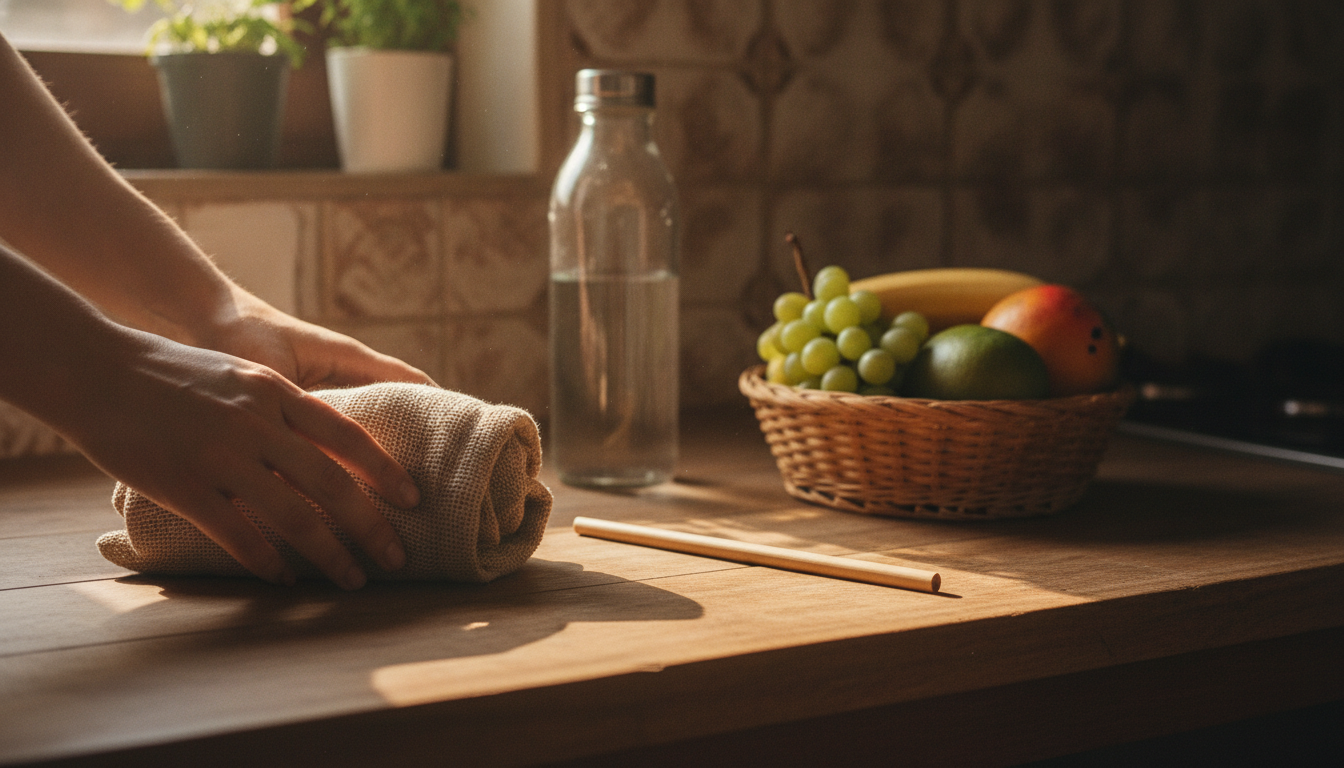
You don’t need to redesign the kitchen or buy a complete kit of sustainable products to start. Choose the disposable plastic that appears most in your week and find a simple substitute for it. It could be a glass bottle you already have at home becoming your thermos, or a fabric bag that was forgotten in a cabinet.
Each reusable item that enters your routine is a disposable product that stops existing, week after week. That’s real, concrete gain that you also feel in your wallet.
