
Have you noticed how Brazilian summers seem longer and hotter than they were ten years ago? It’s not just your impression. The National Institute for Space Research (Inpe) registers consistent increases in average temperature across the country, and 2024 was the hottest year ever recorded in the history of global climate measurement, according to the World Meteorological Organization. Behind this phenomenon lies a mechanism that science has known about for more than a century: the greenhouse effect.
The problem isn’t the greenhouse effect itself. Without it, Earth would be a frozen planet, with an average temperature of about minus 18 degrees Celsius. The problem is the supercharged version we’ve created by burning fossil fuels, deforesting forests, and producing waste on an industrial scale. Understanding what’s happening is the first step to acting intelligently.
By the time you finish reading this article, you’ll know exactly how warming works, which gases are responsible, where Brazilian emissions come from, and most importantly, what an ordinary person can do today to reduce their share of this problem.
How the greenhouse effect really works
Think of the planet as a car parked in the sun. The glass lets sunlight in but traps the heat that forms inside. The atmosphere works similarly: solar radiation passes through layers of air, heats Earth’s surface, and when that energy tries to escape back into space as heat, certain gases intercept it and send it back down.
These gases are called greenhouse gases (GHG). The main ones are carbon dioxide (CO2), methane (CH4), nitrous oxide (N2O), and water vapor. Each has a different “warming force”: methane, for example, heats the planet about 80 times more than CO2 over a 20-year period, according to IPCC data (Intergovernmental Panel on Climate Change).
The natural balance of these gases kept the climate stable for millennia. What changed is the speed at which we’re pushing CO2 and methane into the atmosphere, exceeding the absorption capacity of oceans and forests. It’s like adding extra windows to the car: the internal temperature rises beyond what’s tolerable.
Where Brazil’s emissions come from
Brazil has a very different emissions profile from industrialized countries. In the United States or Europe, the largest share comes from burning fossil fuels in power plants and vehicles. Here, the situation is different.
According to the System for Estimating Greenhouse Gas Emissions (SEEG), linked to the Climate Observatory, deforestation and changes in land use account for the largest share of Brazilian emissions. This means that cutting down a hectare of Amazon rainforest or Cerrado releases decades of carbon accumulated in those trees and soil into the atmosphere.
Agriculture and livestock comes in second place, driven by enteric fermentation in cattle herds (the famous “cow belch,” rich in methane) and the management of animal waste. The energy sector, which includes transportation and electricity generation, also contributes significantly, but our electricity matrix, predominantly hydroelectric, places Brazil in a less carbon-intensive position than the global average in this regard, according to ANEEL data.
Why warming matters for your daily life
Higher temperatures aren’t just discomfort. Global warming alters rainfall patterns, intensifies droughts and floods, and pressures food production. In Brazil, this translates into more expensive farmers markets, higher electricity bills in drought years (because hydroelectric plants produce less and thermoelectric plants come online), and increasingly frequent extreme climate events in cities.
The IPCC indicates that limiting warming to 1.5 degrees Celsius above pre-industrial levels would require drastic emissions reductions by 2030. We’re in 2026 and the window is still open, but narrowing. Every ton of CO2 that stops being emitted today counts, including what comes from the daily choices of millions of people.
There’s also the direct economic side. More energy-efficient homes pay less for electricity. Less food waste means less money thrown away. Active mobility saves fuel. Environmental gains and wallet gains walk together more often than it seems.
The biggest misconceptions about the greenhouse effect
“The climate has always changed, it’s natural.” Yes, the climate changes in long cycles of thousands of years, linked to variations in Earth’s orbit and solar activity. What we’re experiencing now is different: the speed of current warming has no precedent in the geological records of the last 800,000 years, according to analyses of air bubbles preserved in Antarctic ice, studied by the IPCC.
“Brazil emits little, so my action changes nothing.” Brazil is among the ten largest global absolute emitters. And even if individual contribution seems small, behaviors add up and create markets. When more people reduce meat consumption or choose public transportation, it pressures the entire production chain.
“Planting trees solves it.” Reforestation is fundamental, but doesn’t replace reducing emissions at the source. A tree takes decades to absorb the carbon that a car emits in a few months. Forest compensation is a complement, not the only solution.
What you can do now: actions with real impact
If you want to adopt sustainable habits in your daily life without turning your routine upside down, the most efficient path is to focus on higher-impact choices. Here’s where to start:
- Reduce food waste. According to Embrapa, Brazil wastes a huge portion of food production throughout the entire chain. At home, planning your grocery shopping, using peels and stems, and freezing leftovers already makes a difference.
- Decrease beef consumption. You don’t need to be vegetarian. Swapping some beef meals for chicken, fish, eggs, or plant-based proteins significantly reduces your methane footprint.
- Prefer collective or active transport when possible. Buses, subways, bicycles, or walking eliminate individual fuel emissions and benefit your health too.
- Review your home energy consumption. Devices on standby consume electricity all the time. Switching to LED bulbs and setting air conditioning to 23 degrees already reduces your electricity bill and associated emissions.
- Separate waste for selective collection. Organic matter in landfills produces methane. When you compost organic waste or send recyclables to the right place, you reduce emissions from the waste sector, governed in Brazil by Law 12,305/2010 (National Solid Waste Policy).
- Consume consciously. Every product has a “carbon backpack” associated with its manufacturing and transport. Buying less, buying used, and repairing instead of discarding are attitudes with real impact.
How to calculate and reduce your carbon footprint
You don’t need complex spreadsheets to understand where your major personal emissions come from. A simple analysis divides life into four blocks: food, transportation, home energy, and general consumption. In most urban Brazilian families, transportation and food account for the largest share.
Free tools provided by organizations like UNEP (United Nations Environment Programme) allow you to estimate your individual footprint in just a few minutes. The result isn’t meant to generate guilt, but to identify where a small change brings big returns.
A concrete example: reducing one domestic flight per year can equal months of car emissions. Choosing seasonal fruits and vegetables bought at your neighborhood farmers market reduces both transportation carbon and refrigeration storage carbon.
Frequently asked questions about the greenhouse effect
Does the CO2 I exhale also cause warming?
Not in the way it seems. The CO2 you exhale is part of the natural carbon cycle: it came from the food you ate, which in turn absorbed carbon from the atmosphere as it grew. The problem is “fossil” carbon, which has been stored for millions of years and is released rapidly by burning oil, gas, and coal.
Are the ozone hole and the greenhouse effect the same thing?
They’re distinct phenomena, although both are caused by human action. The destruction of the ozone layer was caused mainly by gases like CFCs (chlorofluorocarbons), used in old refrigerators and aerosols. The intensified greenhouse effect is caused by CO2, methane, and other gases. Both affect the climate, but through different mechanisms.
Can Brazil be affected by rising sea levels?
Yes. Inpe and the IPCC point out that Brazilian coastal cities, such as Recife and parts of Rio de Janeiro and Santos, are among those vulnerable to sea level rise caused by melting glaciers and thermal expansion of oceans. It’s not an immediate risk for most people, but it already influences urban zoning policies.
Does home solar energy really reduce emissions?
It does, although the impact varies depending on the region and consumption profile. In Brazil, because the electricity matrix is already predominantly renewable (mainly hydroelectric), the environmental gain from residential solar is less than in countries dependent on coal. Still, in years of intensive thermal activation, solar helps relieve the system and reduces the use of thermoelectric plants powered by fossil fuels.
One step to start today
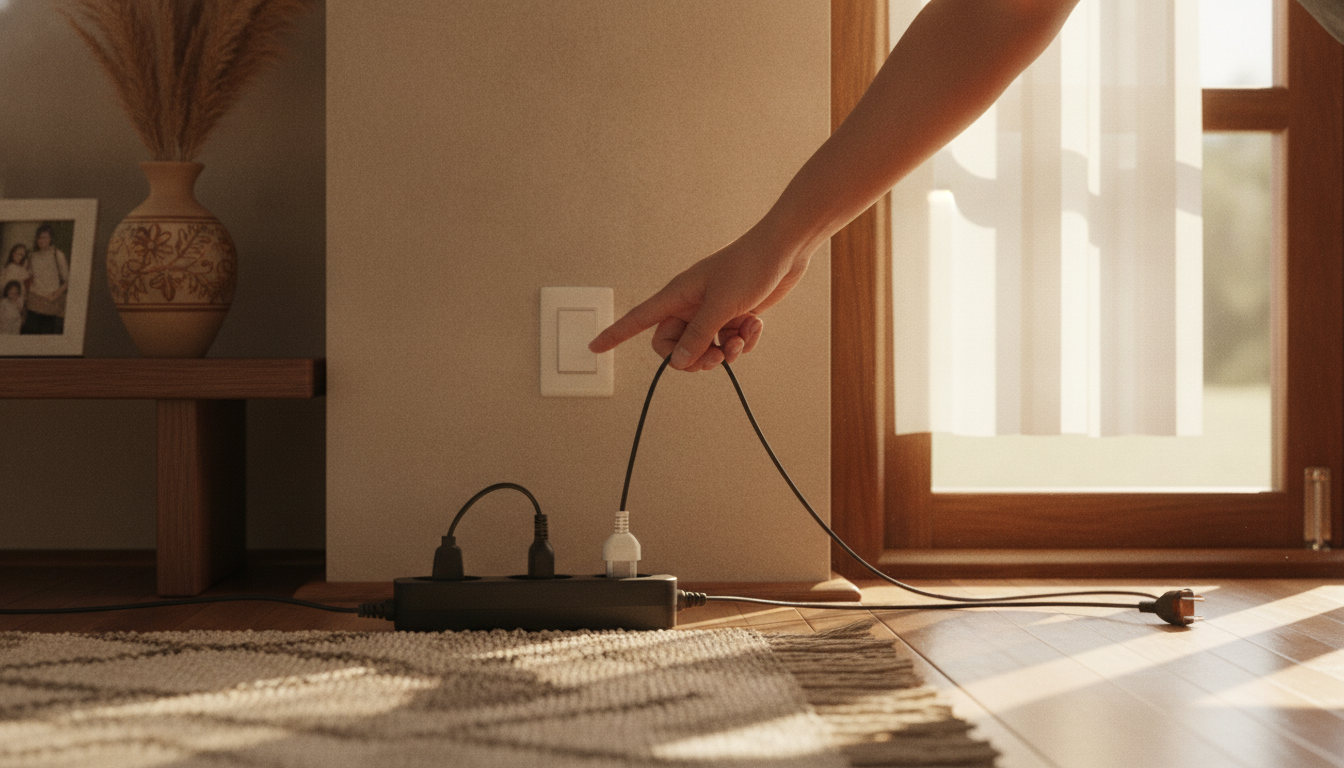
Understanding the greenhouse effect is not a scientist’s task. It’s a citizen’s task. And acting doesn’t require sacrifice: it starts with small choices that, repeated by many people, add up to huge results.
Choose one action from the list above, just one, and put it into practice this week. It could be organizing your freezer to use leftovers, swapping one red meat meal, or checking which appliances stay on standby in your home. If you want to go further, explore how small habit changes build a more sustainable routine without complicating your daily life. The planet warms gradually, and also cools gradually, with every right decision we make.
