Every time you choose where to buy your food, you’re making an environmental decision — even if you don’t realize it. The supermarket with its abundant shelves and seemingly low prices appears to be the obvious choice. But what if the real cost, including the hidden environmental price tag on every imported tomato or factory-farmed chicken, is much higher than what shows up at checkout? The question in this article’s title isn’t rhetorical: it deserves an honest answer, with real data and without naive romanticism.
Buying from local producers has become trendy in certain urban circles, associated with organic markets, colorful baskets, and a certain lifestyle. But the impact goes far beyond aesthetics. In 2026, with Brazil facing increasingly severe climate pressures — prolonged droughts in the Cerrado, extreme events in the South, and the Amazon under constant surveillance — understanding how our food choices connect to the environment is no longer optional. It’s an urgent and practical matter.
In this article, we’ll honestly examine what science and the reality of Brazilian agriculture tell us about local consumption: the real benefits, the limitations no one mentions, and how you can make more conscious decisions without radically changing your routine or budget.
What “Buying Local” Means in the Brazilian Context
Before any analysis, we need to define what we’re talking about. Buying local isn’t a rigid category — it can mean very different things depending on the context:
- Purchasing products from farmers in your municipality or region
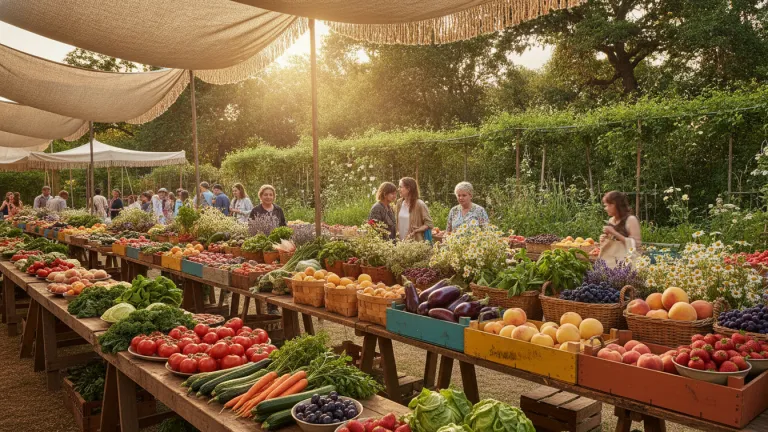
- Frequenting farmers’ markets with identified producers
- Participating in collective buying groups (known as CSAs, or Community Supported Agriculture)
- Buying from small regional agricultural cooperatives
In Brazil, family farming is responsible for a significant portion of domestically consumed food production. According to data from the latest IBGE Agricultural Census, family farming represents more than 70% of the food that reaches Brazilians’ tables, including beans, cassava, fruits, and vegetables. This data alone shows that “local” and “small producer” carry real weight in the country’s food security.
The Real Environmental Benefits of Buying From Local Producers
Reducing Emissions in Food Transportation
One of the most cited arguments in favor of local consumption is reducing so-called food miles — the distance food travels from farm to plate. Foods transported over long distances, especially by air or in refrigerated trucks, carry a significantly higher carbon footprint than those produced and consumed regionally.
The global food system as a whole is responsible for a relevant share of global greenhouse gas emissions, with food transportation contributing to this total — although the proportion varies considerably depending on the type of food and transportation method used. The IPCC recognizes that changes in food systems, including reducing logistics distances, have real climate mitigation potential.
However, it’s important to be honest: transportation isn’t always the biggest emission factor for a food item. How it’s produced — use of synthetic fertilizers, deforestation for land clearing, intensive irrigation — can generate more impact than the mileage traveled. Therefore, buying local and sustainable is more powerful than buying only local.
Less Packaging and Waste
Foods that travel shorter distances arrive fresher and, generally, with fewer layers of plastic packaging. At the farmers’ market or CSA, it’s common to bring your own bag and buy without styrofoam trays or plastic wrap. Less packaging means less solid waste and less demand for petroleum-derived plastic raw materials.
Additionally, fresh and local foods tend to have a lower waste rate throughout the supply chain: they reach consumers in fewer days after harvest, which reduces post-harvest losses that are enormous in long distribution chains.
Preservation of Agricultural Biodiversity
Small local producers frequently cultivate traditional and heirloom varieties of fruits, vegetables, and grains that have no place on large-scale agribusiness shelves. By buying these varieties, you help keep alive a genetic diversity that is fundamental for food system resilience in the face of climate change.
Embrapa maintains germplasm banks precisely to preserve this diversity, but the role of family farmers and consumers who value them is irreplaceable in keeping these varieties in active use.
Social and Economic Benefits That Also Matter
Income That Stays in the Community
When you buy from a local producer, a much larger proportion of the money remains circulating in the local economy compared to when you buy from a large retail chain. The producer uses that money to pay local suppliers, hire workers from the region, and invest in their own land.
This multiplier effect of local income has direct consequences for the quality of life in rural communities — and, indirectly, for the environment, since communities with better income tend to have less pressure on natural resources from immediate survival needs.
Strengthening Regional Food Security
Very long food chains are vulnerable to disruptions — as became evident during the Covid-19 pandemic and subsequent logistics crises. More robust local food systems create resilience: if one part of the chain fails, the region doesn’t run out of supplies.
The Limitations That Need to Be Stated
It would be dishonest to present local consumption as a perfect solution without mentioning its real limits:
- Not everything local is sustainable. A nearby producer may use excessive pesticides, deforest riparian areas, or waste water. Geographic proximity doesn’t guarantee good environmental practices.
- Unequal access. Organic markets and CSAs are still predominantly accessible to middle and upper-income consumers in urban centers. The cost, often higher than conventional supermarkets, is a real barrier for many families.
- Scale and variety. Local producers can’t always offer sufficient variety or consistent quantity throughout the year. Seasonality can be positive (food at the right time), but it also requires consumer adaptation.
- It’s not always cheaper. The perception that farmers’ markets are always cheaper is a myth. It depends on the product, region, and time of year.
Recognizing these limitations isn’t reason to abandon local consumption — it’s reason to do it more intelligently.
How to Choose Better: A Practical Consumer Guide
If you want to incorporate more local and sustainable consumption into your daily life, here’s a realistic step-by-step guide:
- Start by identifying a farmers’ market or producers’ market near you. Many Brazilian cities have municipal websites or apps that map markets by neighborhood.
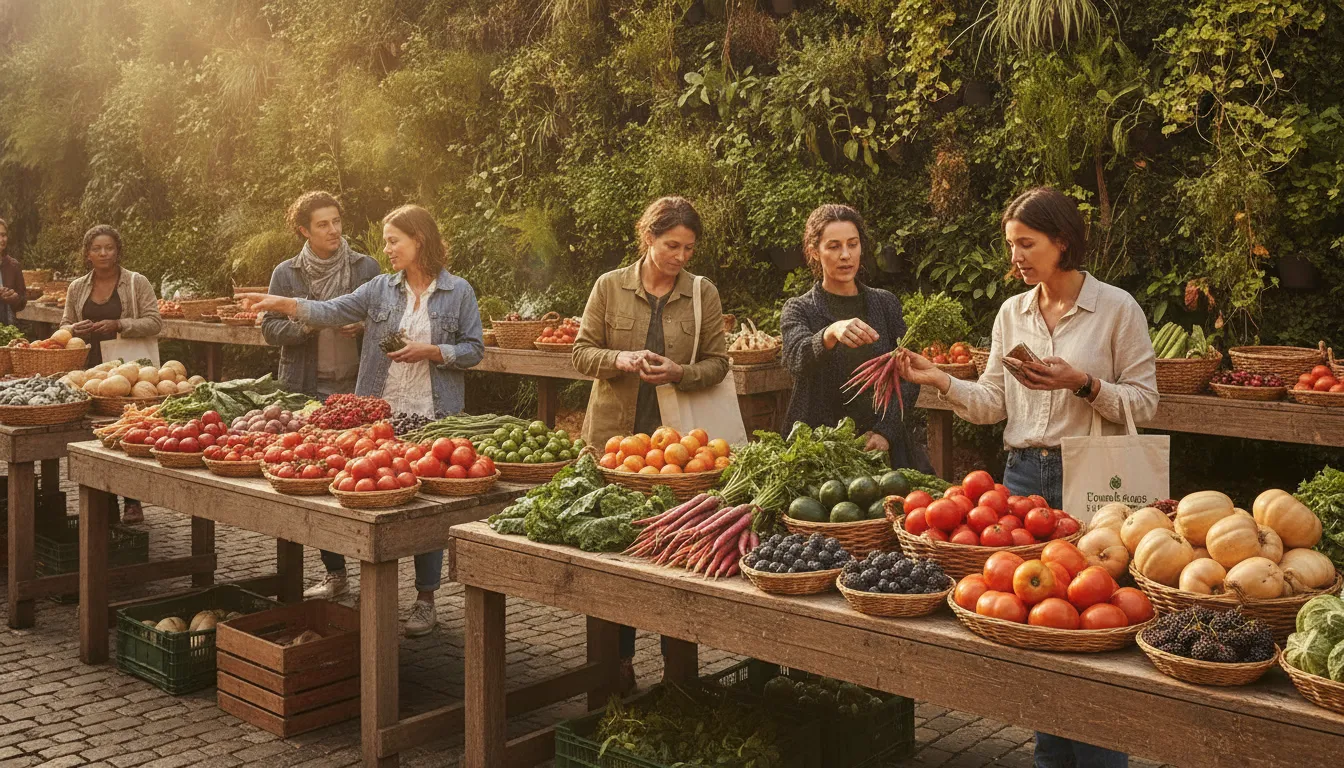
- Talk to the producer. Ask where the product comes from, how it’s grown, whether pesticides are used. Local producers generally appreciate this dialogue — and you learn to distinguish who practices what they preach.
- Prioritize seasonal foods. Buying strawberries in winter from Paraná has a lower environmental impact than buying out-of-season strawberries from another region. Seasonality is an ally.
- Explore CSAs (Community Supported Agriculture). In this model, you pay in advance for a weekly share of products. This guarantees income for the farmer and delivers fresh food to you. Many CSAs operate with agroecological practices.
- Combine strategies. It doesn’t have to be all or nothing. Buy what you can from local and sustainable sources; for the rest, prioritize brands with recognized social and environmental certifications.
- Reduce waste at home. There’s no point in buying sustainable food and throwing it away. Using peels, stems, and leaves — and practicing composting with organic scraps — closes the cycle much more coherently.
- Spread the word and share. Recommending a good market to friends and neighbors amplifies the impact of your individual choice.
Comparison Chart: Local vs. Conventional
| Criterion | Local/Agroecological Producer | Large Conventional Retailer |
|---|---|---|
| Transport emissions | Generally lower | Generally higher |
| Packaging | Often less | More plastic packaging |
| Product variety | Smaller, seasonal | Wide, year-round |
| Price | Variable (may be higher) | Competitive due to scale |
| Traceability | High (you talk to the producer) | Low for consumers |
| Impact on local economy | High | Low |
| Sustainability guarantee | Depends on the producer | Depends on certifications |
Local Consumption and the Forest: A Connection Worth Understanding
It may seem distant, but your food choices have a direct connection to what happens in Brazilian biomes. The advance of export agribusiness over native areas — whether in the Amazon, Cerrado, or Atlantic Forest — is driven, among other factors, by global demand for commodities like soybeans, corn, and meat produced on a large scale.
Strengthening family and local agriculture doesn’t replace public environmental protection policies, but it creates a different market demand — one that values those who produce without deforesting. To better understand what’s at stake in the Amazon, it’s worth reading about what Amazon deforestation is really destroying.
Conclusion: Yes, It’s Worth It — With Open Eyes
The honest answer to the title’s question is: yes, buying from local producers is worth it — as long as it’s done with discernment. It’s not a magic solution, it doesn’t solve the climate crisis alone, and it’s not available with the same ease for everyone. But it’s one of the most direct ways to align your everyday consumption with real environmental and social values.
In 2026, with a global food system under increasing pressure and the consequences of climate change becoming ever more visible in Brazilian daily life, each purchasing choice matters more than before. And the good news is that, unlike many climate actions that seem distant or complex, this one you can start this weekend — by going to the nearest farmers’ market, talking to those who grow your food, and doing your part in a chain that needs to be shorter, fairer, and more sustainable.
Start small. Be consistent. And share what you discover.
