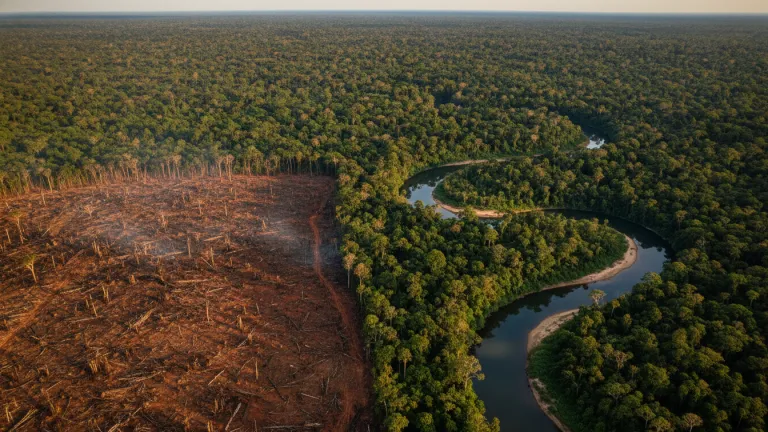
Every time a tree falls in the Amazon, the sound doesn’t just echo through the forest. It reverberates in the rain cycles that irrigate crops in Mato Grosso, in the air we breathe in cities, in pharmacies that haven’t been invented yet, and in the climate of a planet that can no longer afford more losses. Amazon deforestation isn’t a distant problem, confined to satellite maps and technical reports. It affects, in concrete and growing ways, the lives of all Brazilians — and billions of people around the world.
In recent years, Brazil has experienced a rollercoaster of advances and setbacks in Amazon protection. Data from PRODES (Amazon Legal Deforestation Monitoring Project by Satellite), from the National Institute for Space Research (INPE), shows that after alarming peaks between 2019 and 2021, there was a significant reduction in deforestation rates between 2023 and 2024 — a real advance that deserves recognition. Still, the area already devastated over the decades is immense, and the accumulated impacts continue to unfold in real time.
Understanding exactly what is being destroyed is the first step toward action. This article explores the losses that rarely make headlines: the silent biodiversity, the invisible climate services, the millennial knowledge, and the economy that depends on a standing forest.
Amazon Biodiversity: What Numbers Cannot Capture
The Amazon is home to approximately 10% of all wildlife species on the planet, according to estimates widely recognized by the scientific community. There are more than 40,000 plant species, 1,300 bird species, 3,000 types of freshwater fish, and an unknown number of insects, fungi, and microorganisms. The International Union for Conservation of Nature (IUCN) maintains growing lists of threatened Amazon species — and many of these species disappear before being formally studied by science.
The central problem is that deforestation doesn’t need to eliminate 100% of a forest to destroy a species. Habitat fragmentation — when deforested areas divide the forest into isolated islands — prevents animal migration, reduces genetic variability in populations, and increases vulnerability to diseases and climate change. A jaguar, for example, needs vast connected territories to survive. When these ecological corridors are cut by pastures or roads, the species enters a silent collapse.
The Invisible Extinction of Amazon Medicinal Plants
Researchers estimate that a large portion of Amazon plants have not yet been cataloged by Western science. Among those that have been studied, dozens have demonstrated relevant pharmacological properties — antivirals, antibiotics, anticancer agents. Indigenous communities have used hundreds of these plants for generations, with accumulated knowledge that represents, in practice, a living medical library.
Each deforested hectare doesn’t just erase trees. It erases botanical memory, erases therapeutic possibilities we haven’t even imagined, and weakens the ecosystems that keep these plants in balance.
Flying Rivers: How the Amazon Makes It Rain Across Half of Brazil
One of the Amazon’s most strategic environmental services is practically invisible to the naked eye. The forest acts as an enormous water pump: trees absorb water from the soil and release it into the atmosphere through transpiration, generating what scientists call flying rivers — massive water vapor currents that transport moisture from west to east and, upon meeting the Andes Mountains, deflect southward, bringing rain to Brazil’s Central-West, Southeast, and even Southern regions.
Researchers from the National Institute for Amazon Research (INPA) and other institutions have documented the direct relationship between Amazon forest cover and rainfall distribution in food-producing regions. Brazilian agribusiness — which supplies much of the world — depends largely on this rain that originates in the forest.
When deforestation advances, this system enters progressive collapse. Fewer trees means less evapotranspiration, less water vapor in the flying rivers, and consequently, more severe droughts, irregular rainfall patterns, and direct impact on agricultural productivity. The Amazon, therefore, is not just an environmental symbol — it is national water infrastructure.
Carbon and Climate: The Amazon as a Global Regulator
The UN’s scientific climate panel, the IPCC, is categorical: tropical forests like the Amazon are fundamental assets for global climate stabilization. Standing forests store carbon in tree biomass and soil. When they are cut down and burned, this carbon is released into the atmosphere as CO₂, accelerating global warming.
Studies published in leading scientific journals indicate that parts of the Eastern Amazon are already emitting more carbon than they absorb — an alarming reversal that transforms degraded regions from carbon sinks into sources of greenhouse gases. This change is associated with both direct deforestation and fires and changes in rainfall patterns caused by forest degradation.
The Tipping Point: When the Forest Stops Regenerating
Scientists use the term “tipping point” to describe the threshold beyond which the Amazon would no longer be able to sustain itself as a humid tropical forest and would begin an irreversible transition to a state more similar to savanna. While there is debate about exactly where this threshold lies, there is scientific consensus that it exists and that we are approaching critical regions.
Avoiding this scenario is not just an ecological issue — it is a matter of food, water, and climate security for Brazil and the world.
Indigenous Peoples and Traditional Communities: Lives and Knowledge in Collapse
Deforestation doesn’t just destroy nature. It destroys cultures. The Amazon is home to dozens of indigenous peoples with unique languages, cosmologies, forest management systems, and ecological knowledge. FUNAI (National Foundation of Indigenous Peoples) recognizes more than a hundred indigenous peoples in the Amazon region alone, some still in voluntary isolation.
When territories are invaded by land grabbers, illegal loggers, or large projects without prior consultation, entire communities are displaced, fragmented, and forced to abandon millennial practices. Knowledge about plants, animals, climate cycles, and sustainable cultivation techniques — accumulated over centuries — is lost with generations that can no longer pass it on.
There is a painful irony in this process: indigenous peoples are, according to data from INPE itself and organizations like the Socio-Environmental Institute (ISA), the most efficient guardians of the forest. Legally demarcated indigenous lands consistently show lower deforestation rates than comparable areas outside these protections. Protecting indigenous peoples is, literally, protecting the Amazon.
The Standing Forest Economy: What We Are Wasting
There is a flawed argument that anchors much of the pro-deforestation discourse: that cutting down the forest is a condition for economic development. The numbers tell a different story.
The Amazon bioeconomy — which includes sustainable extraction of Brazil nuts, açaí, vegetable oils, managed fishing, ecotourism, and bioprospecting — represents a real and growing economic alternative. Products like açaí have become global market phenomena. Brazil nuts are exported to dozens of countries. Ecological tourism in the Amazon has documented economic potential by researchers from Embrapa and federal universities in the region.
Furthermore, the forest’s environmental services — water regulation, climate stabilization, erosion control — have immense economic value when calculated by environmental economists, although they don’t appear in conventional balance sheets. A standing forest delivers, continuously and renewably, benefits that no pasture or short-cycle monoculture can replicate.
What You Can Do: Concrete Actions Today
You may be in São Paulo, Belo Horizonte, Recife, or any Brazilian city — and yet your daily choices have a direct connection to the Amazon. Here are practical and accessible actions:
- Reduce beef consumption: extensive cattle ranching is the main driver of Amazon deforestation. Reducing (not necessarily eliminating) consumption already makes a statistically relevant difference.
- Choose products with sustainable origin certification: seals like Rainforest Alliance and FSC indicate traceable supply chains.
- Consume Amazon bioeconomy products: açaí, Brazil nuts, cumaru, buriti, andiroba — valuing these products economically strengthens the standing forest. See how to connect this to your diet in Seasonal foods: why buying makes a difference.
- Support grassroots organizations: ISA, Imazon, SOS Mata Atlântica, Greenpeace Brazil, APIB (Articulation of Indigenous Peoples of Brazil) — many accept donations and have concrete projects in the Amazon.
- Demand brand positioning: companies that buy soy or beef without traceability bear responsibility for deforestation. Asking, demanding, and if necessary, switching brands is a real political act.
- Plant and cultivate: creating a connection with nature, even in pots on the balcony, changes your relationship with the living world. If you want to start, see our easy guide for beginners.
- Vote consciously: environmental protection public policies depend on elected representatives. Monitor the environmental record of candidates and elected officials.
- Talk about the subject: normalizing conversations about the Amazon in family, school, and professional environments amplifies collective awareness.
Conclusion: The Forest Can Still Be Saved — And You Are Part of It
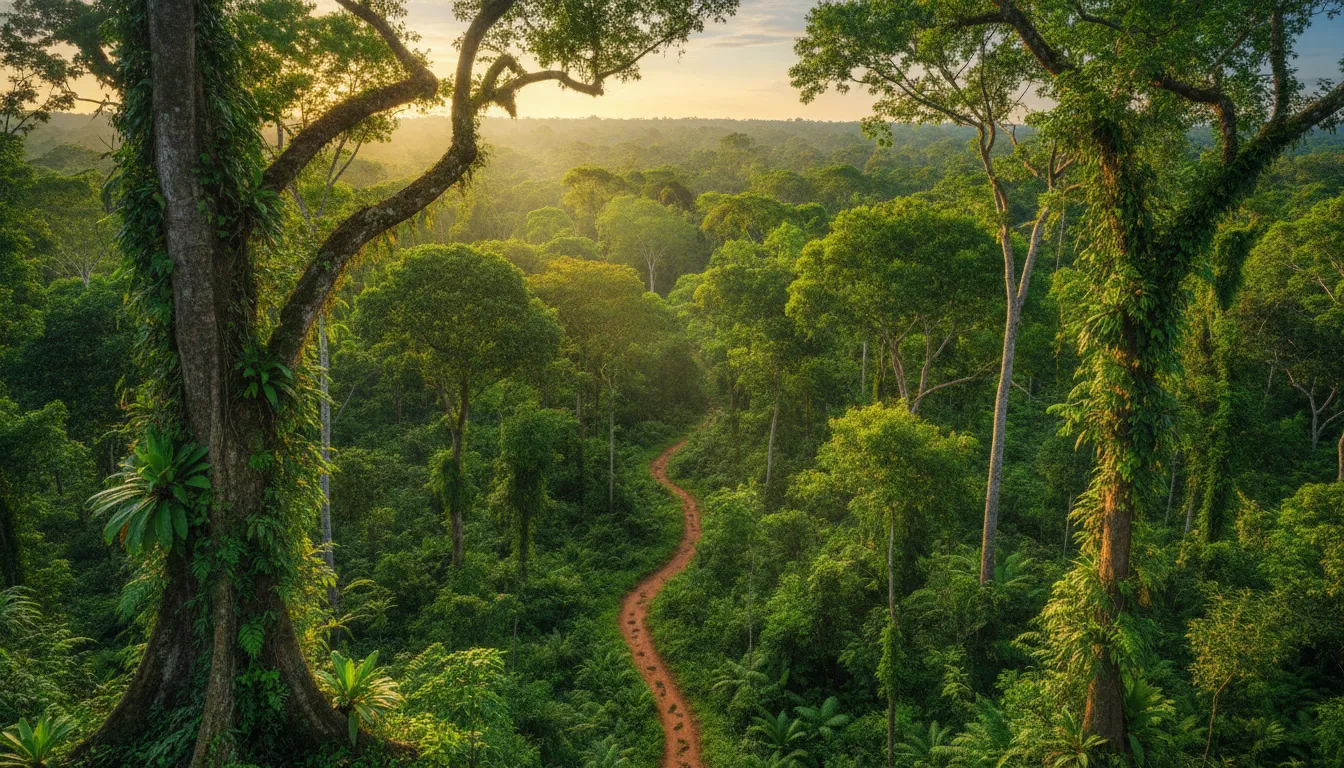
The Amazon is not just the lungs of the world — it is Brazil’s water heart, the largest repository of terrestrial biodiversity on the planet, the home of peoples with irreplaceable cultures, and one of humanity’s greatest natural tools for facing the climate crisis. Deforestation destroys all of this simultaneously, often irreversibly.
But the story is not written. The reduction observed in deforestation rates between 2023 and 2025 proves that public policies work, that enforcement matters, and that societal pressure produces results. The Amazon has an extraordinary capacity to regenerate — as long as the pressure on it is relieved in time.
Every consumption choice, every vote, every conversation, every dollar directed to the forest bioeconomy is a brick in this reconstruction. The forest doesn’t need extraordinary heroes. It needs millions of ordinary people making slightly better choices, every day. You are one of them.
