
The shower that drains your account and the planet (and how to change it)
Have you ever timed your shower? Most people don’t, and when they find out the result, they’re shocked. A fifteen-minute shower with a common electric showerhead uses around 135 liters of water. Multiply that by two people in the house, seven days a week, and you have almost two thousand liters per week going down the drain without anyone missing a single drop.
Brazil is a country with water abundance in some regions, but this doesn’t translate into guaranteed availability for everyone. According to IBGE data, a significant portion of the Brazilian population still faces intermittent water supply, and scarcity events have affected major urban centers more frequently in recent decades. At the same time, the water bill weighs on the budget of many families, especially with sanitation rates that continue to increase in much of the municipalities.
The good news is that reducing water consumption in the shower doesn’t mean taking a cold, lightning-fast shower. With a few simple behavioral adjustments and, when possible, small equipment changes, you can spend significantly less water without sacrificing comfort. This text shows exactly how to do it, with practical steps and without complications.
Why the shower is the right starting point
Inside the home, the shower is responsible for one of the largest portions of water consumption. Studies from Brazil’s Ministry of Environment show that domestic use is mainly concentrated in the bathroom, with the showerhead representing a significant portion of that total.
This makes the shower a logical starting point for those who want to reduce consumption: small changes in this routine have real, visible impact on the bill at the end of the month. Unlike campaigns that ask for sacrifice, here the gain is concrete: less water used, lower bill, and you won’t even notice the difference in your daily comfort.
How to measure your current consumption before changing anything
Before installing any device or changing habits, it’s worth knowing where you’re starting from. Knowing your starting point helps you see the results afterward.
Step-by-step guide to measure your shower consumption:
- Get a stopwatch (your phone works) and time your next shower
- Check your showerhead’s flow rate: fill a ten-liter bucket and time how long it takes to fill
- Divide 10 by the number of seconds and multiply by 60 to get the flow rate in liters per minute
- Multiply the flow rate by your shower time and you’ll have the volume consumed per shower
A common residential electric showerhead has a flow rate between six and twelve liters per minute, depending on the model and water pressure on your street. With this calculation in hand, it’s easy to understand the impact of reducing two or three minutes per day.
Behavioral changes that really work
None of them require renovation or high spending. Most of the waste in showers comes from habits we form without noticing, and that disappear with attention for a few weeks.
Habits that make a real difference:
- Turn off the shower while applying soap and shampoo: this can cut up to a third of the time with water running
- Save washing thicker hair for when the shower is off, using only the water left in your hair
- Avoid using the shower as an “emotional thermometer”: that twenty-minute shower to relax can be replaced by other rituals that don’t use water
- If you live in an apartment, try to take advantage of when the water temperature is already regulated to avoid wasting cold water at the beginning
- Install a simple timer in the shower, whether a silicone shower clock or a kitchen timer: awareness of time changes behavior without effort
The habit change doesn’t need to be abrupt. Start by reducing two minutes per shower in the first week. You’ll notice that the rhythm adjusts naturally.
Equipment that helps without sacrificing comfort
When people talk about changing the showerhead or installing water-saving devices, many imagine weak pressure and cold showers. That’s not what happens with the right equipment.
The flow reducer is the lowest-cost item with the greatest immediate impact. It’s a small rubber or plastic disc that fits into the showerhead outlet and reduces water flow without changing the pressure sensation. They cost between five and twenty reais and are available at hardware stores. Installation takes less than five minutes and requires no special tools.
Showerheads with temperature regulation by pressurization also help avoid waste that occurs while you wait for the water to heat up. Newer models with recirculation technology or more efficient instantaneous heating allow water to come out at the right temperature from the start.
For those thinking long-term, the solar water heater is an option that eliminates part of the electric shower expense and can be combined with conscious use to reduce both water and energy consumption. If you’re already evaluating the cost-benefit of sustainable technologies in your home, it’s worth understanding how other investments with gradual returns work, as explained in this content about solar energy payback: how long until you break even, which helps understand the logic of long-term gains.
Common mistakes from those trying to save water (and how to avoid them)
Many people start well and give up after a few weeks. Usually, the problem isn’t lack of will, but wrong strategy.
Mistake 1: Focusing only on duration without thinking about flow Reducing your shower from fifteen to ten minutes is great, but if your showerhead has high flow, the gain is still limited. Combine both actions: less time and lower flow.
Mistake 2: Tightening too much and creating resistance If you’re used to long showers and cut them in half at once, the chance of returning to old habits is high. Reduce gradually.
Mistake 3: Ignoring waste at the beginning of the shower The time you wait for the water to heat up is usually forgotten in the calculation. During this period, cold water goes straight down the drain. A simple solution is to use a bucket to collect this water and use it to water plants or manually flush the toilet.
Mistake 4: Thinking one person doesn’t make a difference According to UN data, domestic water use adds up to significant volumes when aggregated. A single habit multiplied over months makes a difference in your bill and, at scale, in your municipality’s water supply system.
What to expect from results: bill, comfort, and routine
There’s no single guaranteed savings number for everyone, because it depends on your current flow rate, shower time, and your city’s sanitation rate. But to have an idea of scale, see the difference between common profiles:
| Profile | Shower time | Estimated flow | Liters per shower |
|---|---|---|---|
| Long shower without adjustment | 15 minutes | 10 L/min | 150 liters |
| With flow reducer | 15 minutes | 6 L/min | 90 liters |
| With reducer + habit | 10 minutes | 6 L/min | 60 liters |
| Sustainable goal | 8 minutes | 6 L/min | 48 liters |
Going from 150 to 60 liters per shower, keeping the time at ten minutes with a reducer, represents a 60% drop in consumption per shower. In a house with two people showering daily, this equals saving more than 2,700 liters per month, enough to make a visible difference in the water bill.
Frequently asked questions about shower water savings
Does a flow reducer damage the electric showerhead?
No, as long as you use a reducer compatible with your showerhead model. Flow reducers for electric showerheads respect the minimum pressure that the device needs to function safely. Read the packaging before buying and, if in doubt, consult the showerhead manual.
Is it worth replacing the showerhead with a more economical model?
It depends on your current consumption and how long you plan to stay in the property. Showerheads with water-saving technology cost more to purchase, but the difference can be offset over time in water and electricity bills. For rental apartments, the flow reducer is more practical because you can take it with you when you move.
Does a cold shower save more water than a hot shower?
Temperature itself doesn’t change flow rate, but cold showers tend to be shorter by natural reflex, which reduces time with water running. The greatest gain comes from combining less time and lower flow, regardless of temperature.
Can I use the water from the beginning of the shower for something else?
Yes, and it’s one of the simplest domestic water reuse practices. Place a bucket or basin under the showerhead while you wait for the water to heat up and use that water to water plants, clean the bathroom, or flush the toilet. It requires no investment and uses water that would otherwise go straight to the sewer.
A small step to start today
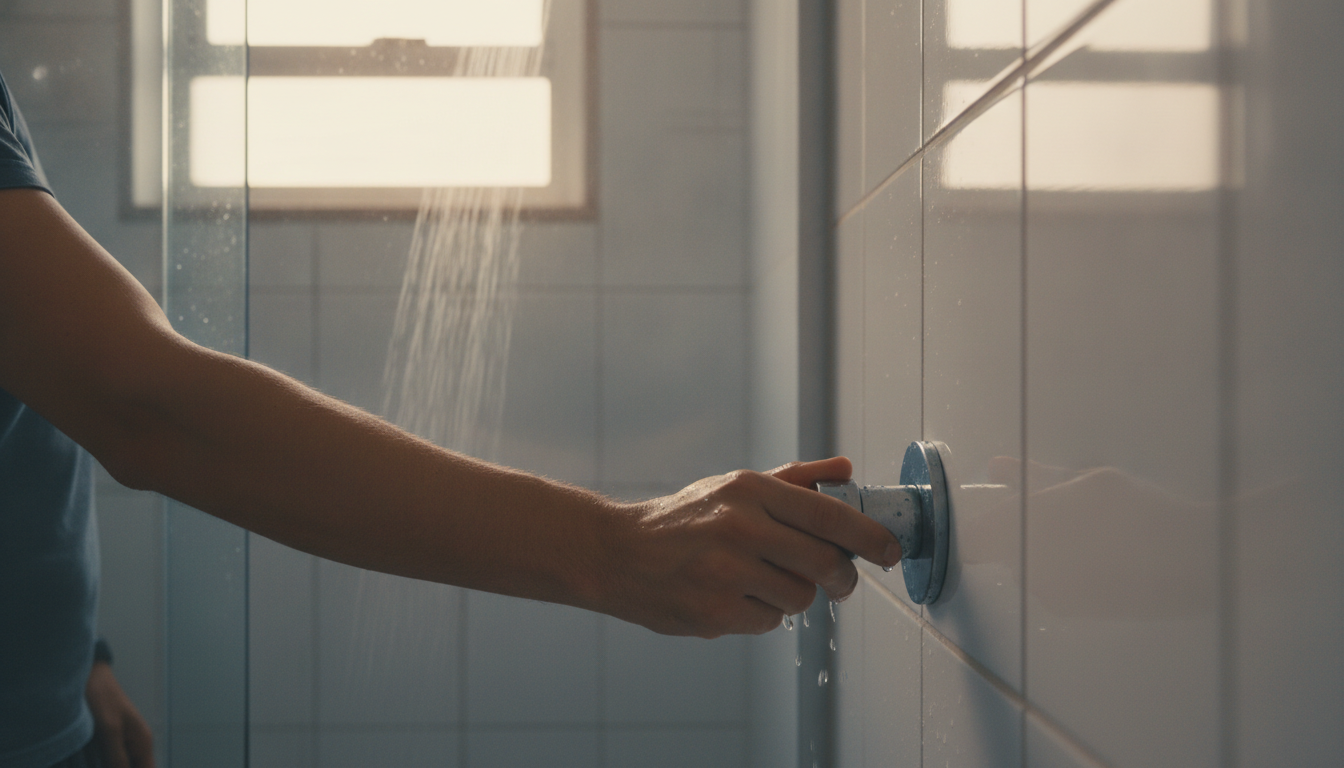
If you’ve read this far, you already have everything you need to make a real change. Start like this: the next time you get in the shower, turn it off while you apply shampoo. That’s it. Do this for a week and observe your total shower time without putting pressure on yourself for anything else.
When that habit becomes natural, add the next step: buy a flow reducer at the nearest store. You can install it in five minutes, and the result shows up on your next month’s bill. Sustainability that works is like this: one step at a time, with real gains for your wallet and for the planet.
